Earth's atmosphere
플레이하며 배우기
이 문제들을 풀어 에너지를 얻은 뒤 낚시하고 탐험하세요. 계정이 필요 없어요.
교육자를 위해: Earth's atmosphere(KS3 Science, Chemistry)을(를) 위한 바로 쓸 수 있는 수업 슬라이드, 복습 노트, 다이어그램 — 수업에 사용하거나, 학습자들이 실시간 게임으로 즐기는 인터랙티브 클래스 활동으로 진행하세요.
수업 노트
Composition of Earth's Atmosphere
- Nitrogen is the most abundant gas, making up 78% of the atmosphere.
- Oxygen is the second most abundant at 21%.
- Argon accounts for 0.9%.
- Carbon dioxide is present at 0.04%, along with small amounts of other gases.
Early Atmosphere
- Earth formed about 4.5 billion years ago with intense volcanic activity.
- The early atmosphere consisted mostly of carbon dioxide and some water vapour.
- As Earth cooled, water vapour condensed to form oceans.
Volcanic gases contributed to Earth’s early atmosphere. Water condensed into oceans, and photosynthetic organisms later increased atmospheric oxygen.
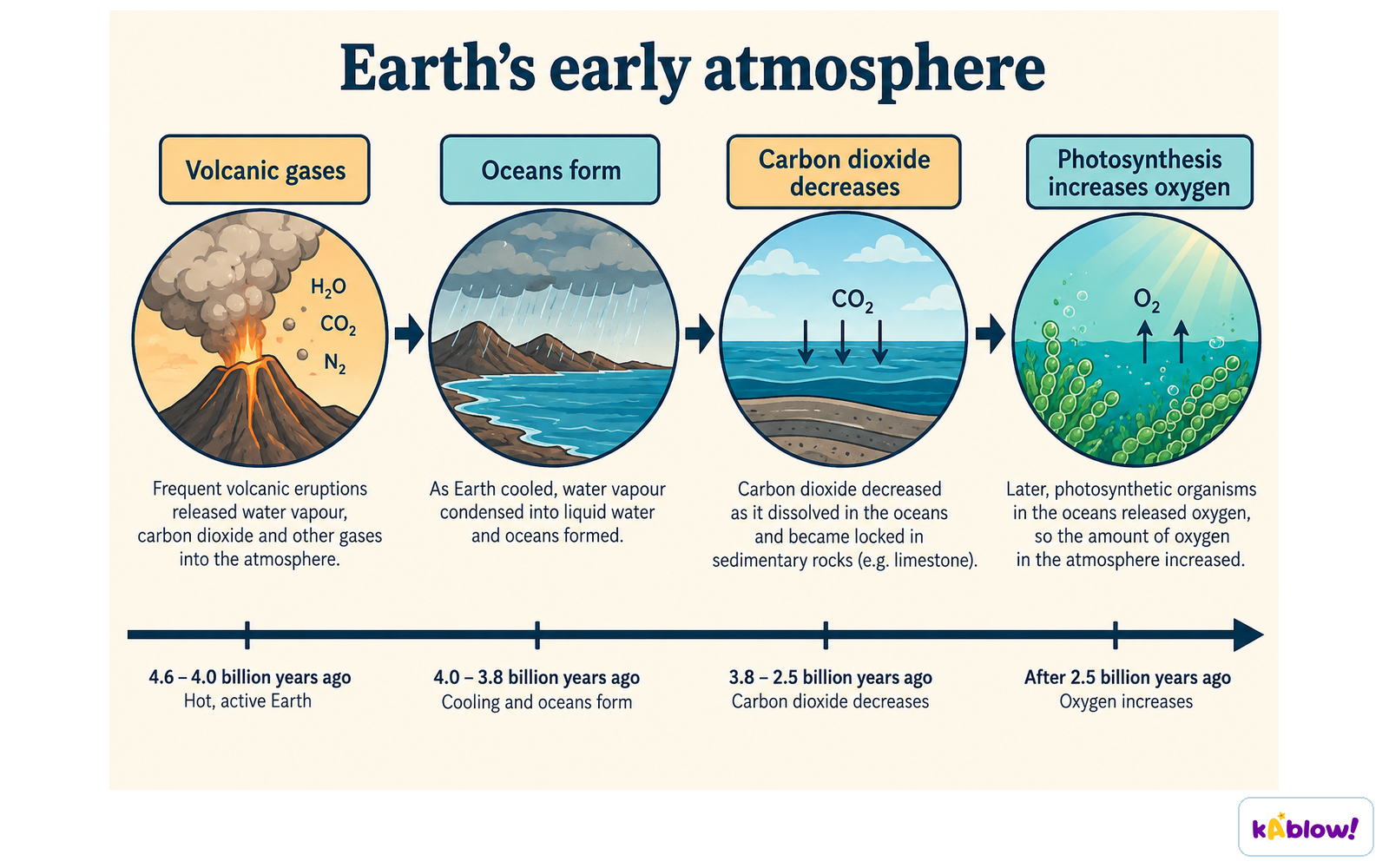
Role of Cyanobacteria
- Cyanobacteria were single-celled organisms that carried out photosynthesis.
- Photosynthesis uses carbon dioxide and water to produce glucose and oxygen.
- Cyanobacteria were responsible for producing oxygen in the atmosphere.
Greenhouse Gases and Global Warming
- Carbon dioxide is a greenhouse gas that contributes to global warming.
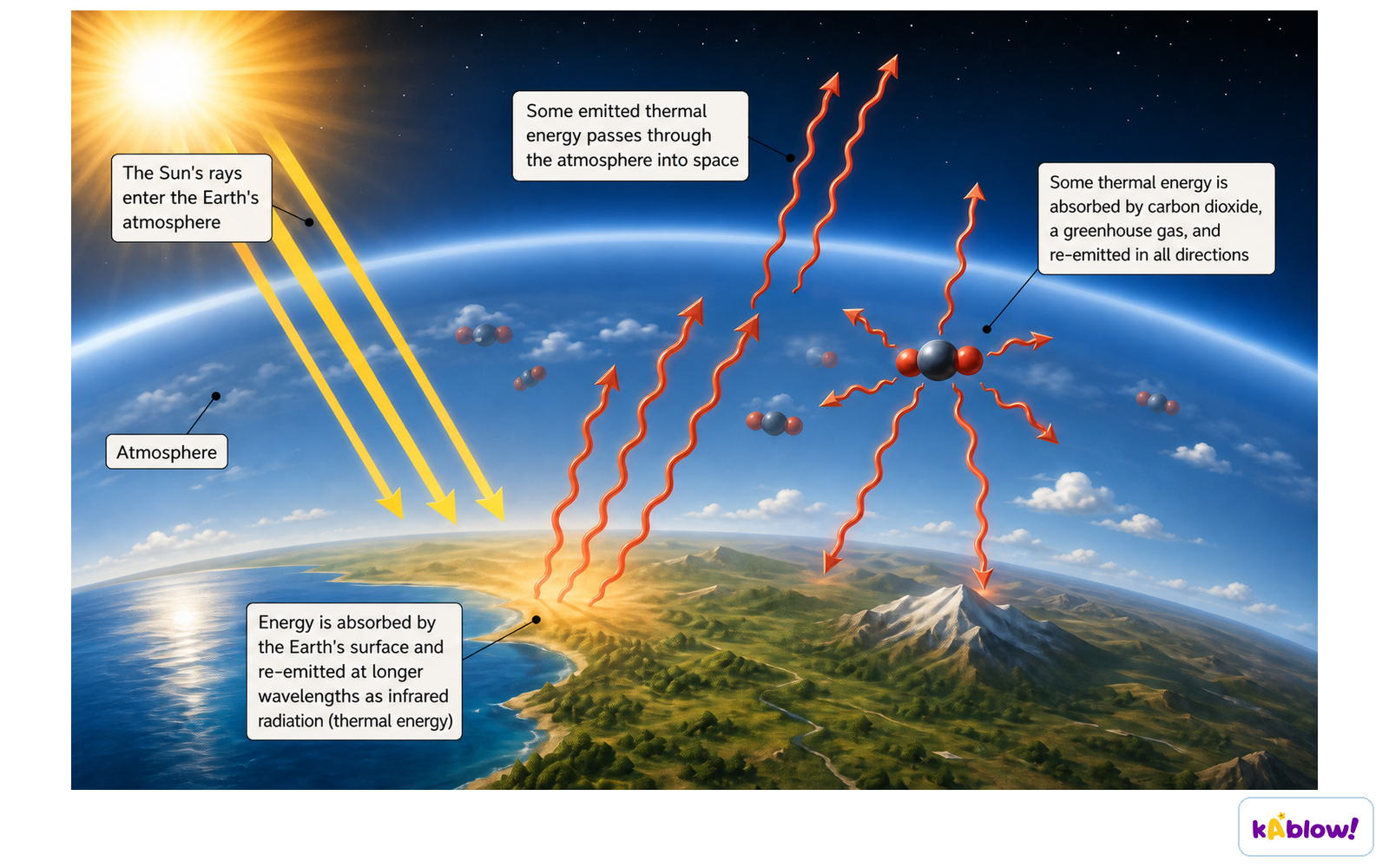
- Greenhouse gases reflect some infra-red radiation back to Earth, raising the average temperature.
- Burning fossil fuels (coal, oil, gas) increases atmospheric carbon dioxide.
- Effects of global warming include extreme weather, melting polar ice caps, and flooding of low-lying areas.
Diagram showing how the greenhouse effect occurs
Particle arrangement in solids, liquids, and gases. The atmosphere is a mixture of gases with particles far apart and moving rapidly.
슬라이드
연습 문제
무료 미리 보기 — 40개 중 8개 문제. 가입하면 전부 볼 수 있어요.
1.Which gas is the most abundant in Earth's atmosphere?
Easy- ANitrogen
- BOxygen
- CArgon
- DCarbon dioxide
2.What percentage of Earth's atmosphere is oxygen?
Easy- A78%
- B21%
- C0.9%
- D0.04%
3.Earth's early atmosphere consisted mostly of which gas?
Medium- ANitrogen
- BOxygen
- CCarbon dioxide
- DArgon
4.Which organism was responsible for producing oxygen in Earth's early atmosphere?
Medium- ACyanobacteria
- BPlants
- CAlgae
- DAnimals
5.How do greenhouse gases cause global warming?
Medium- AThey absorb all incoming solar radiation.
- BThey reflect infra-red radiation back to Earth.
- CThey prevent oxygen from entering the atmosphere.
- DThey increase the amount of water vapour.
6.What is global warming?
Easy- AA decrease in Earth's average temperature.
- BAn increase in Earth's average temperature.
- CAn increase in the amount of oxygen in the atmosphere.
- DA decrease in the amount of carbon dioxide.
7.Burning fossil fuels increases the amount of which gas in the atmosphere?
Easy- ANitrogen
- BOxygen
- CCarbon dioxide
- DArgon
8.Which of the following is NOT a fossil fuel?
Easy- AOil
- BCoal
- CNatural gas
- DWood
기출 문제
이 주제의 기출 문제 연습이 곧 나와요.
곧 출시