Neutralisation
플레이하며 배우기
이 문제들을 풀어 에너지를 얻은 뒤 낚시하고 탐험하세요. 계정이 필요 없어요.
교육자를 위해: Neutralisation(KS3 Science, Chemistry)을(를) 위한 바로 쓸 수 있는 수업 슬라이드, 복습 노트, 다이어그램 — 수업에 사용하거나, 학습자들이 실시간 게임으로 즐기는 인터랙티브 클래스 활동으로 진행하세요.
수업 노트
What is Neutralisation?
- Neutralisation is a chemical reaction between an acid and a base.
- An acid has a pH less than 7; neutralisation raises the pH to 7.
- Signs of reaction include temperature rise and sometimes effervescence.
Bases and Alkalis
- A base is a substance that neutralises an acid.
- Metal oxides and metal hydroxides are bases.
- A soluble base is called an alkali.
Acid + Metal Oxide / Metal Hydroxide
- General equation: acid + metal oxide → salt + water
- General equation: acid + metal hydroxide → salt + water
- Hydrochloric acid forms chloride salts (e.g., iron chloride).
- Sulfuric acid forms sulfate salts (e.g., zinc sulfate).
- Nitric acid forms nitrate salts (e.g., calcium nitrate).
Acid + Metal Carbonate
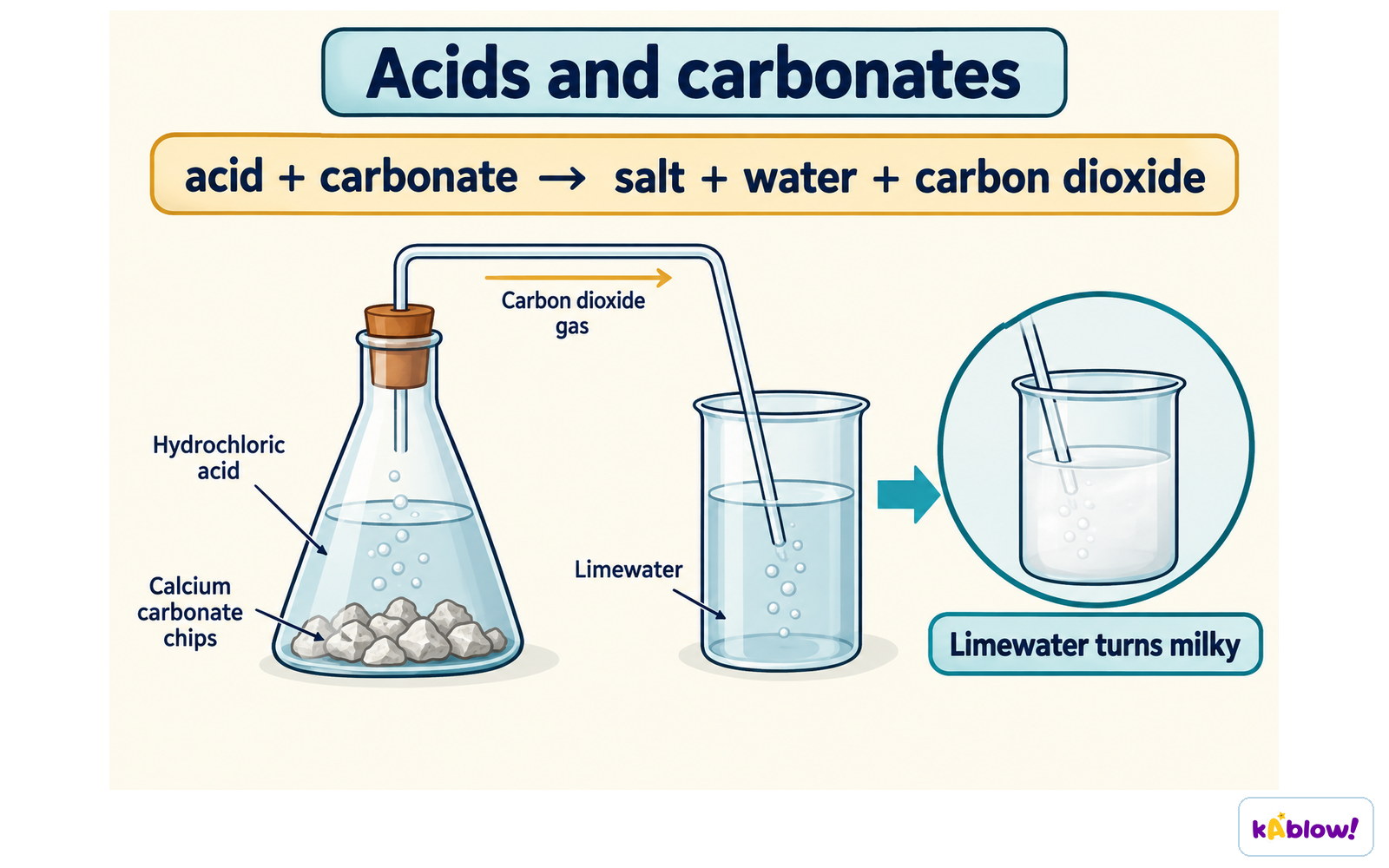
- General equation: acid + metal carbonate → salt + carbon dioxide + water
- Example: hydrochloric acid + calcium carbonate → calcium chloride + carbon dioxide + water
- Example: nitric acid + sodium carbonate → sodium nitrate + carbon dioxide + water
An acid reacts with a carbonate to make a salt, water and carbon dioxide. The carbon dioxide turns limewater milky.
Choosing an Indicator
- Universal indicator shows a gradual colour change, making it hard to pinpoint pH 7.
- Better indicators with sudden colour change: litmus, phenolphthalein, or methyl orange.
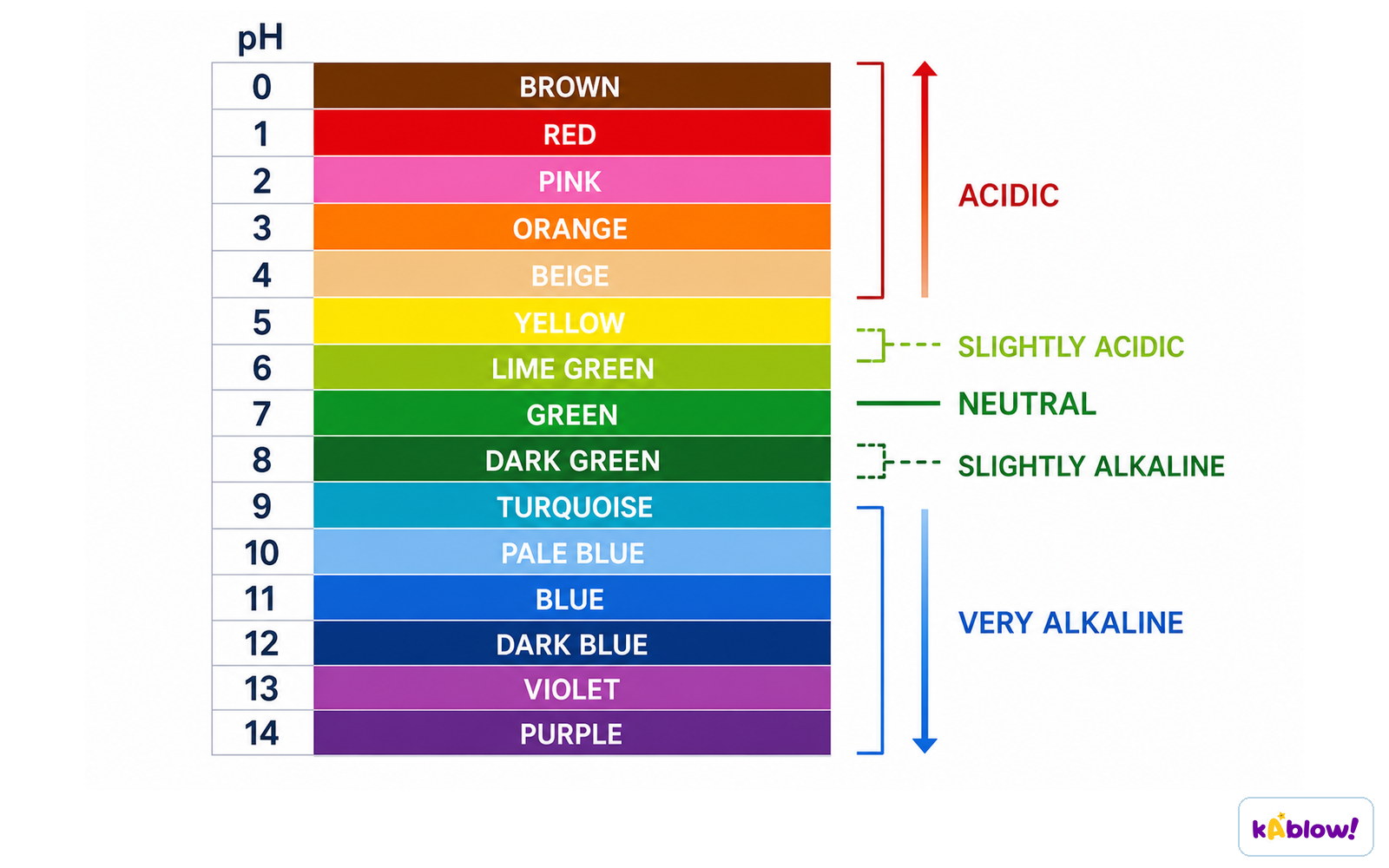
Universal indicator changes colour across pH 0–14; match the observed colour to estimate a solution’s pH.
Particle arrangement in solid, liquid, and gas. Neutralisation often involves mixing solutions (liquids) and may produce gas (effervescence).
슬라이드
연습 문제
무료 미리 보기 — 64개 중 8개 문제. 가입하면 전부 볼 수 있어요.
1.What is the pH of a neutral solution?
Easy- A7
- B0
- C14
- D1
2.Which of the following is the correct general word equation for the reaction between an acid and a metal oxide?
Easy- Aacid + metal oxide → salt + water
- Bacid + metal oxide → salt + hydrogen
- Cacid + metal oxide → salt + carbon dioxide + water
- Dacid + metal oxide → salt + oxygen
3.What is a base?
Easy- AA substance that neutralises an acid
- BA substance that turns blue litmus red
- CA substance with a pH less than 7
- DA substance that produces hydrogen ions in water
4.What is the pH of an acid?
Easy- ALess than 7
- BGreater than 7
- CEqual to 7
- DExactly 14
5.Which of the following is the correct word equation for the reaction between hydrochloric acid and sodium hydroxide?
Easy- Ahydrochloric acid + sodium hydroxide → sodium chloride + water
- Bhydrochloric acid + sodium hydroxide → sodium chloride + hydrogen
- Chydrochloric acid + sodium hydroxide → sodium sulfate + water
- Dhydrochloric acid + sodium hydroxide → sodium nitrate + water
6.What are the products of the reaction between sulfuric acid and calcium carbonate?
Medium- Acalcium sulfate, carbon dioxide and water
- Bcalcium chloride, carbon dioxide and water
- Ccalcium sulfate and water only
- Dcalcium nitrate, carbon dioxide and water
7.Which indicator is most suitable for detecting the endpoint of a neutralisation reaction?
Medium- AMethyl orange
- BUniversal indicator
- CRed cabbage juice
- DPhenolphthalein
8.When nitric acid reacts with magnesium hydroxide, what are the products?
Easy- Amagnesium nitrate and water
- Bmagnesium nitrate and hydrogen
- Cmagnesium sulfate and water
- Dmagnesium chloride and water
기출 문제
이 주제의 기출 문제 연습이 곧 나와요.
곧 출시