Physical changes and chemical reactions
플레이하며 배우기
이 문제들을 풀어 에너지를 얻은 뒤 낚시하고 탐험하세요. 계정이 필요 없어요.
교육자를 위해: Physical changes and chemical reactions(KS3 Science, Chemistry)을(를) 위한 바로 쓸 수 있는 수업 슬라이드, 복습 노트, 다이어그램 — 수업에 사용하거나, 학습자들이 실시간 게임으로 즐기는 인터랙티브 클래스 활동으로 진행하세요.
수업 노트
Physical Changes
- In a physical change, the chemical composition of a substance does not change.
- Physical changes are reversible.
- Example: ice melting to water – both are H₂O.
- All state changes (melting, freezing, boiling, condensing, subliming) are physical changes.
- Another example: dissolving sugar in water – can be reversed by evaporation.
- Mass is conserved in a physical change (e.g., 100 g ice → 100 g water).
Chemical Reactions
- In a chemical reaction, the chemical composition of substances changes.
- Example: iron rusting – iron reacts with oxygen to form iron oxide (colour change grey/silver → reddish/brown).
- Chemical reactions are not easily reversible.
- Mass is conserved in a chemical reaction: mass of reactants = mass of products.
- Example: 70 g iron + 30 g oxygen → 100 g iron oxide.
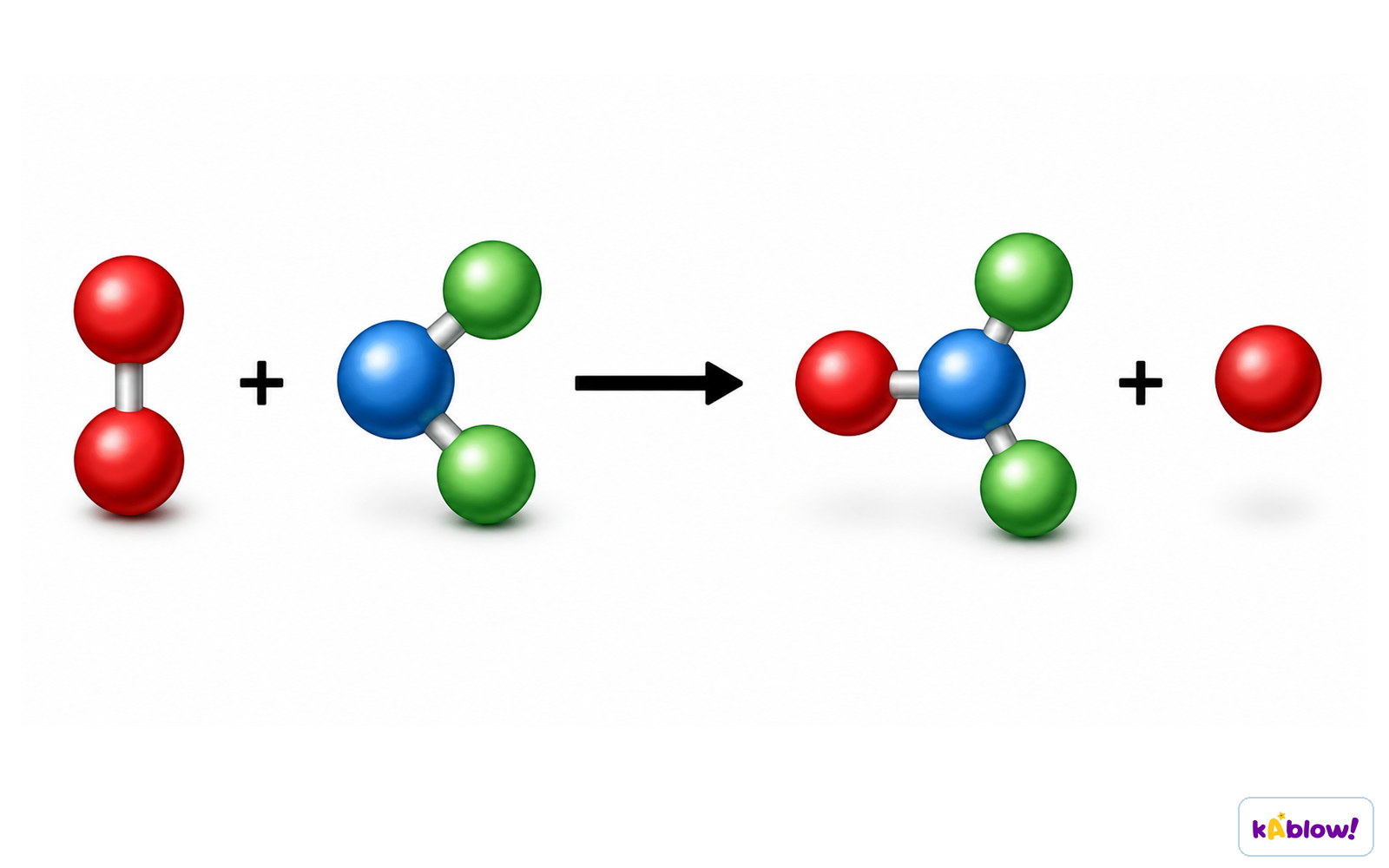
A successful collision has enough energy to break bonds, so the reactant particles rearrange to form the products.
Signs of a Chemical Reaction
- Colour change (e.g., iron rusting).
- Temperature change (usually rise).
- Gas given out – may show as effervescence (bubbles).
- Light emitted.
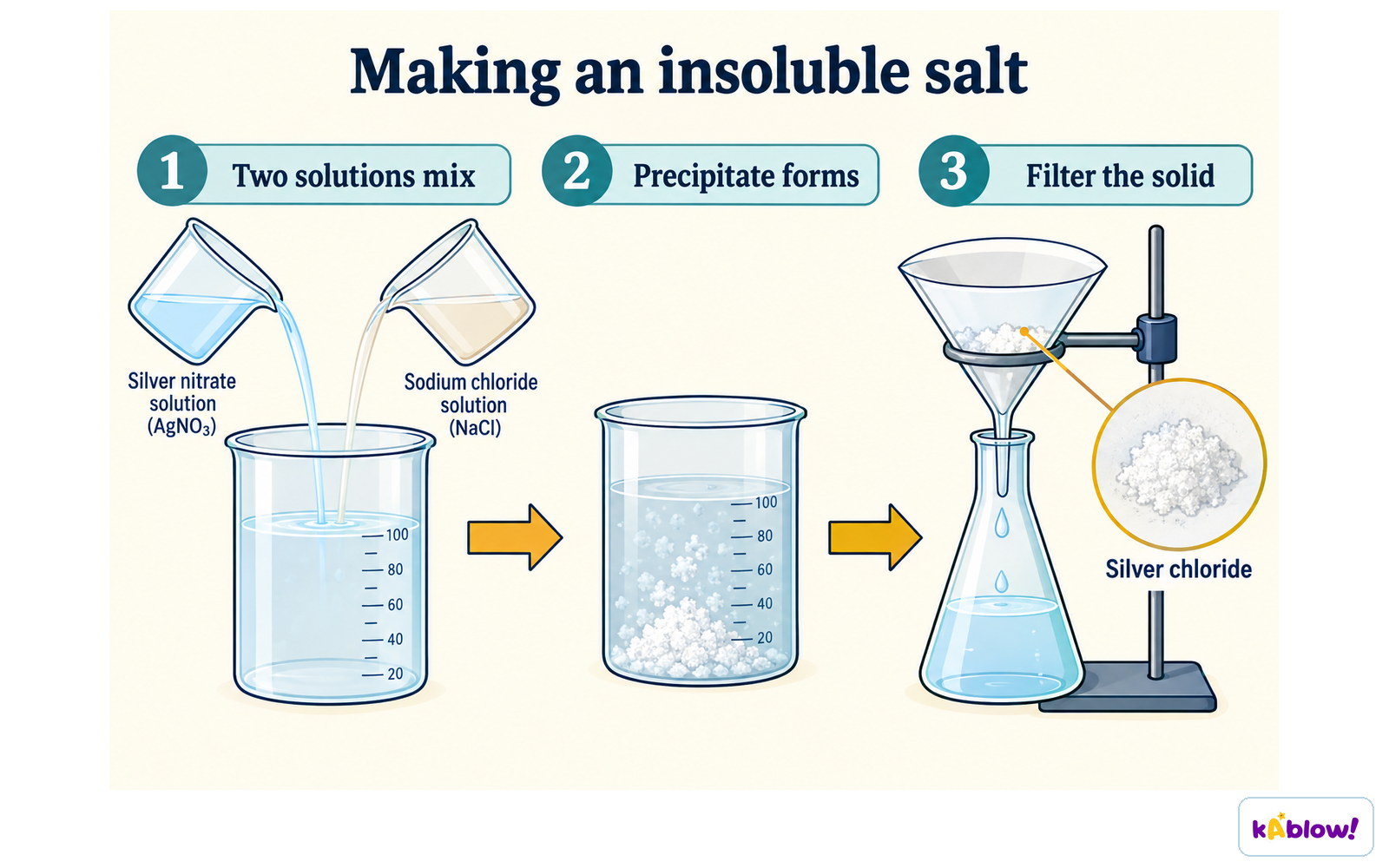
- Precipitation – a solid (precipitate) forms.
Mixing silver nitrate and sodium chloride solutions forms an insoluble silver chloride precipitate, which can be collected by filtration.
Conservation of Mass
- In both physical and chemical changes, mass is conserved.
- The total mass before the change equals the total mass after.
- For a chemical reaction: mass of reactants = mass of products.
- Example: 50 g copper + 12 g oxygen → 62 g copper oxide.
Reversing Physical Changes
- Physical changes can be reversed by changing conditions.
- Melting/freezing: change temperature.
- Dissolving: evaporate the solvent to recover the solute.
- Example: heat salt solution until water evaporates, leaving salt behind.
Particle arrangement in solid, liquid and gas – all state changes are physical changes.
슬라이드
연습 문제
무료 미리 보기 — 59개 중 8개 문제. 가입하면 전부 볼 수 있어요.
1.Which of the following is a sign that a chemical reaction has taken place?
Easy- AA colour change
- BA change of state
- CDissolving
- DA change of shape
2.What is the name of the state change from gas to liquid?
Easy- ACondensation
- BEvaporation
- CMelting
- DFreezing
3.Which of the following is a physical change?
Easy- AIce melting to form water
- BIron rusting to form iron oxide
- CBurning wood
- DCooking an egg
4.A mass of 50 g of copper reacts with 12 g of oxygen to form copper oxide. What is the mass of copper oxide formed?
Medium- A62 g
- B50 g
- C12 g
- D38 g
5.When 200 g of water evaporates, what is the mass of the water vapour formed?
Easy- A200 g
- BLess than 200 g
- CMore than 200 g
- D0 g
6.Which of the following is NOT a sign of a chemical reaction?
Easy- AA change of state
- BA temperature change
- CGas being given out
- DLight being emitted
7.What is meant by the conservation of mass?
Easy- AThe mass of the reactants equals the mass of the products
- BMass is always lost during a reaction
- CMass is created during a chemical reaction
- DThe mass of the products is always greater than the reactants
8.Which of the following is a chemical reaction?
Easy- ADissolving sugar in water
- BMelting ice
- CRusting of iron
- DBoiling water
기출 문제
이 주제의 기출 문제 연습이 곧 나와요.
곧 출시