Pressure in gases
플레이하며 배우기
이 문제들을 풀어 에너지를 얻은 뒤 낚시하고 탐험하세요. 계정이 필요 없어요.
수업 노트
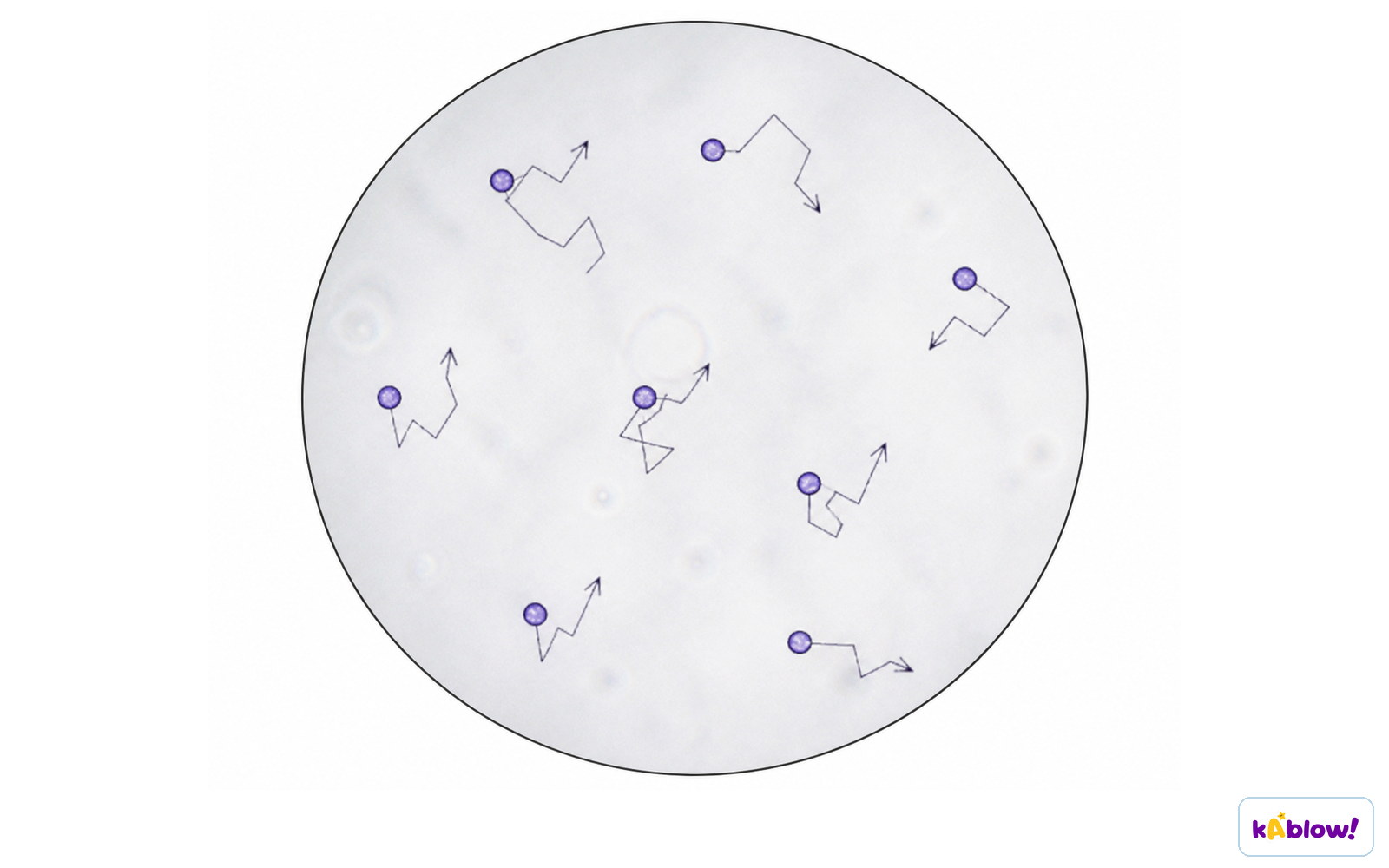
Brownian Motion
- Brownian motion is the random movement of particles in a fluid (gas or liquid).
- It was observed by Robert Brown in 1827 when he saw pollen grains moving randomly in water.
- Smoke particles in air also show Brownian motion due to collisions with fast-moving air particles.
- Gas particles move in random directions at a range of speeds.
- Collisions with invisible gas particles cause larger visible particles to jitter.
Brownian motion: the random motion of particles (e.g. pollen) when observed through a microscope.
Gas Pressure from Particle Collisions
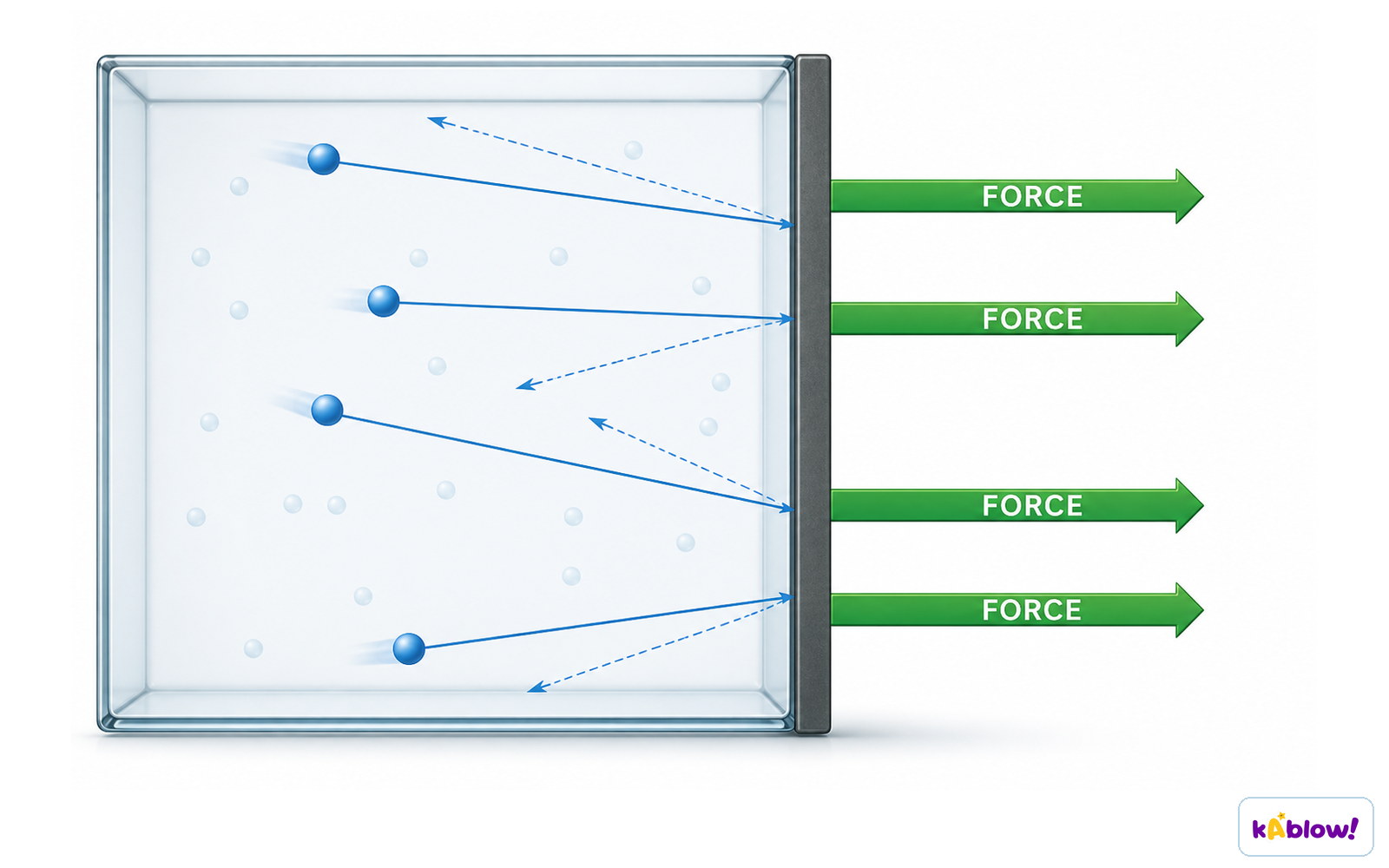
- Gas particles exert pressure when they collide with a surface.
- Each collision exerts a tiny force on the surface; many collisions produce measurable pressure.
- Pressure = force per unit area on the walls of the container.
Gas molecules bouncing off the walls of a container exert a force perpendicular to the surface.
Effect of Adding More Gas
- Adding more gas particles (e.g., pumping air into a balloon) increases the number of particles.
- More particles lead to more frequent collisions with the walls.
- More collisions increase the force on the walls, raising the pressure.
- Higher pressure causes the balloon to expand until internal and external pressures balance.
Effect of Decreasing Volume
- Reducing the volume of a container (e.g., squeezing a gas) forces particles into a smaller space.
- Particles collide with the walls more often because they have less distance to travel.
- More frequent collisions increase the force and therefore the pressure.
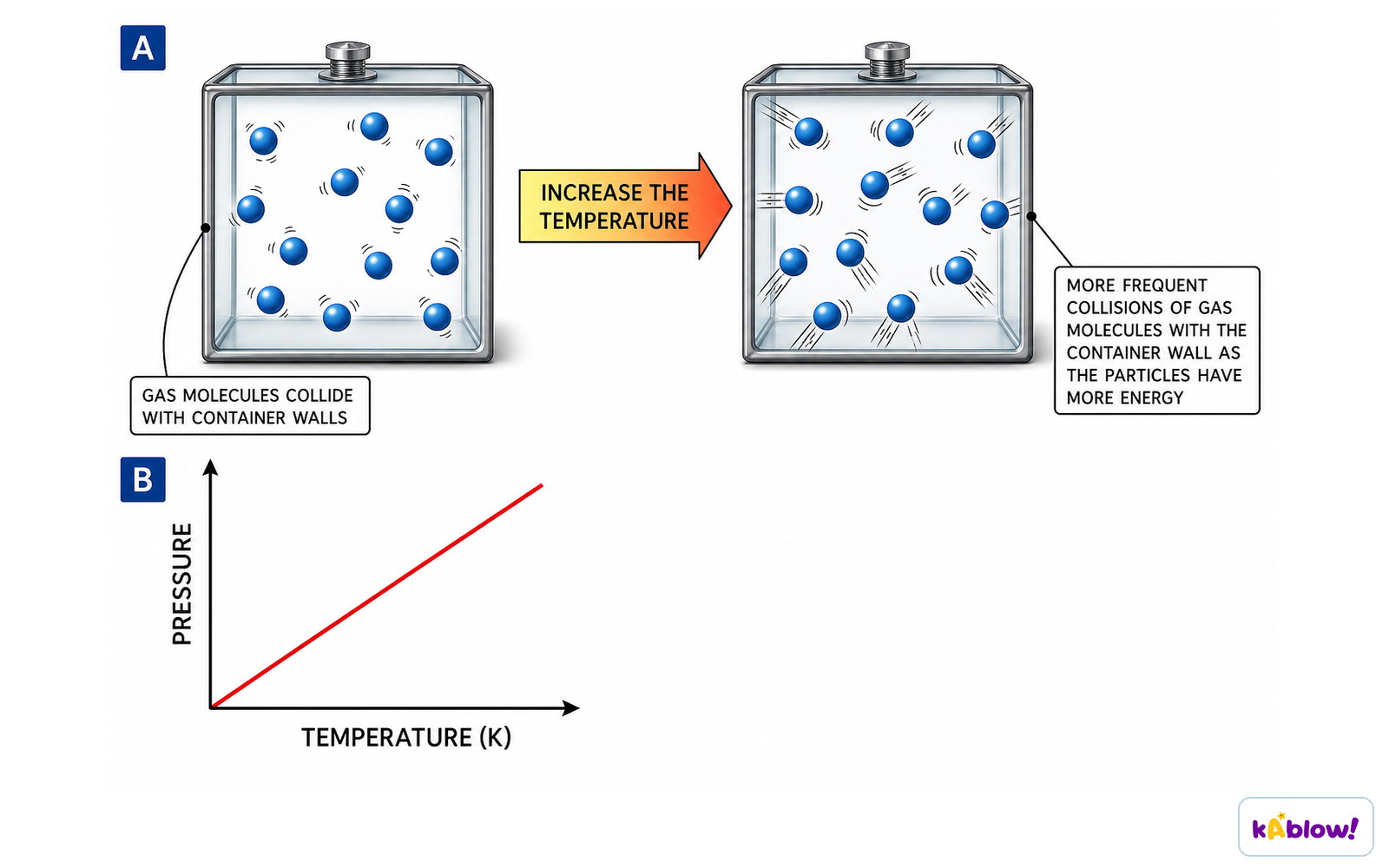
Effect of Increasing Temperature
- Heating a gas increases the kinetic energy and speed of its particles.
- Faster particles collide with the walls more often and with greater force.
- This raises the pressure inside the container.
- If the container is flexible (e.g., a balloon), it expands as pressure increases.
At constant volume, an increase in the temperature of the gas increases the pressure due to more collisions on the container walls.
Effect of Decreasing Temperature
- Cooling a gas reduces the kinetic energy and speed of particles.
- Slower particles collide less often and with less force.
- Pressure inside the container decreases.
- A flexible container (e.g., a balloon) will shrink as internal pressure drops.
Particle model of a gas: particles are far apart, moving randomly at high speed.
슬라이드
연습 문제
무료 미리 보기 — 62개 중 8개 문제. 가입하면 전부 볼 수 있어요.
1.What is the name of the process where smoke particles move in a random way due to collisions with air particles?
Easy- ABrownian motion
- BDiffusion
- COsmosis
- DEvaporation
2.What happens to the number of collisions between air particles and the walls of a balloon when more air is pumped into it?
Easy- AIncreases
- BDecreases
- CStays the same
- DBecomes zero
3.When the volume of a container is reduced, what happens to the pressure of the gas inside?
Easy- AIncreases
- BDecreases
- CStays the same
- DBecomes zero
4.Two containers have the same amount of gas particles. Container A is smaller than container B. Which container has the higher pressure?
Medium- AContainer A
- BContainer B
- CBoth have the same pressure
- DCannot be determined
5.Two containers have the same amount of gas particles. Container A is at a lower temperature than container B. Which container has the higher pressure?
Medium- AContainer B
- BContainer A
- CBoth have the same pressure
- DCannot be determined
6.What happens to the average speed of gas particles when the temperature is increased?
Easy- AIncreases
- BDecreases
- CStays the same
- DBecomes zero
7.A balloon is cooled. What happens to its size?
Easy- AIt shrinks
- BIt expands
- CIt stays the same
- DIt bursts
8.What is the cause of pressure exerted by a gas on the walls of its container?
Easy- ACollisions of gas particles with the walls
- BThe weight of the gas particles
- CThe attraction between gas particles
- DThe repulsion between gas particles