Reactivity series and displacement reactions
플레이하며 배우기
이 문제들을 풀어 에너지를 얻은 뒤 낚시하고 탐험하세요. 계정이 필요 없어요.
교육자를 위해: Reactivity series and displacement reactions(KS3 Science, Chemistry)을(를) 위한 바로 쓸 수 있는 수업 슬라이드, 복습 노트, 다이어그램 — 수업에 사용하거나, 학습자들이 실시간 게임으로 즐기는 인터랙티브 클래스 활동으로 진행하세요.
수업 노트
Reactivity of Metals
- Metals differ in how strongly they react with water or acid; this is due to differences in reactivity.
- More reactive metals produce more bubbles of hydrogen when placed in acid.
- The reactivity series lists metals in order of reactivity, from most to least reactive.
- Carbon and hydrogen are included in the series even though they are not metals, to help predict reactions.
Testing Reactivity
- Place metals in hydrochloric acid; the rate of bubble production shows reactivity.
- Magnesium reacts vigorously, copper shows no reaction.
- Reactions with water also indicate reactivity; more reactive metals react more vigorously.
Displacement Reactions
- A displacement reaction occurs when a more reactive element replaces a less reactive element in a compound.
- Example: iron displaces copper from copper sulfate: iron + copper sulfate → iron sulfate + copper.
- No reaction occurs if the displacing element is less reactive (e.g., gold with copper sulfate).
- Another example: aluminium displaces iron from iron oxide: aluminium + iron oxide → aluminium oxide + iron.
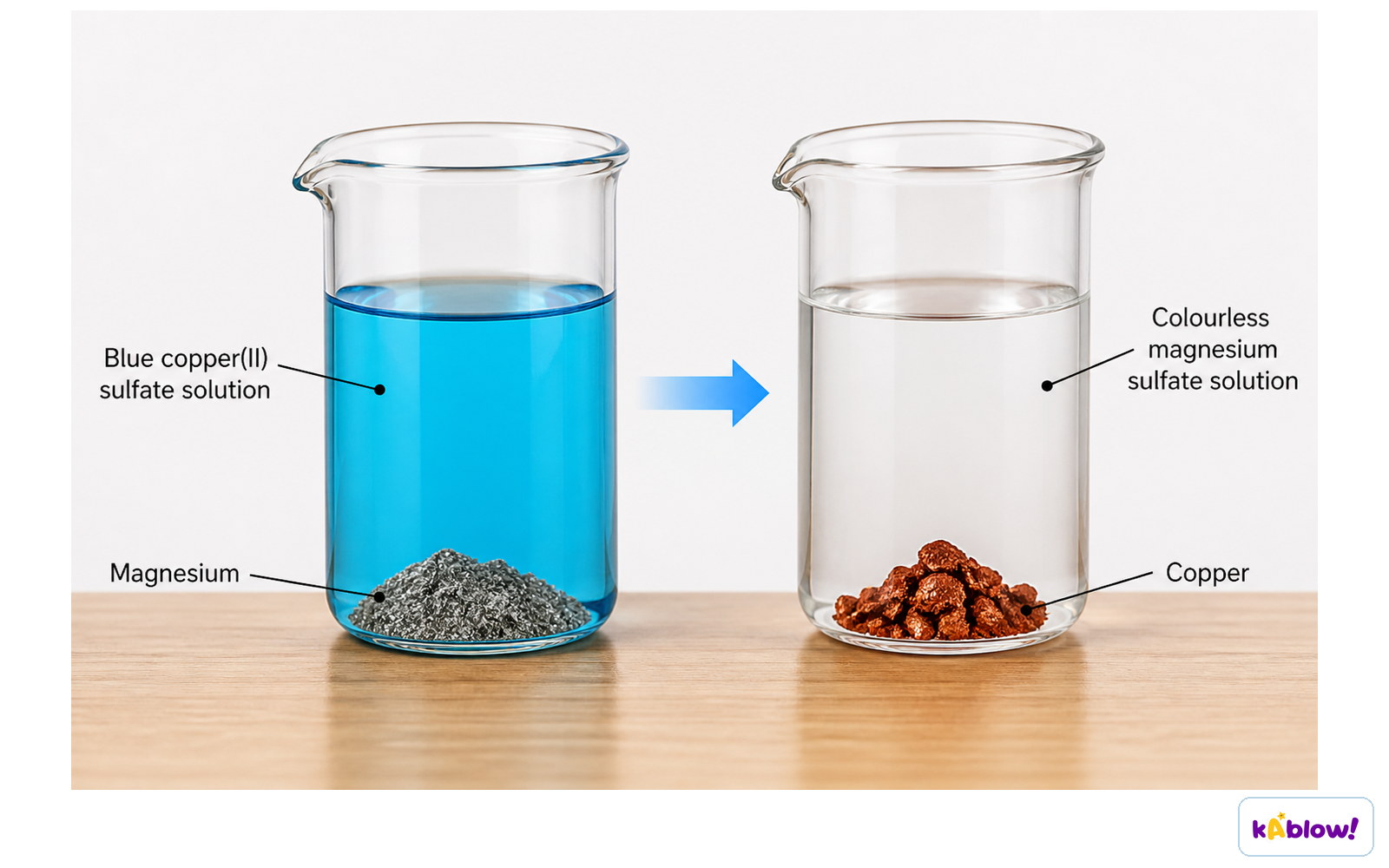
Diagram showing the colour change when magnesium displaces copper from copper(II) sulfate solution.
Signs of a Chemical Reaction
- Gas release (bubbles) indicates a reaction.
- Colour change is another sign; e.g., blue copper sulfate turns green when iron displaces copper.
- In the magnesium–copper sulfate reaction, the blue colour fades to colourless.
Using the Reactivity Series
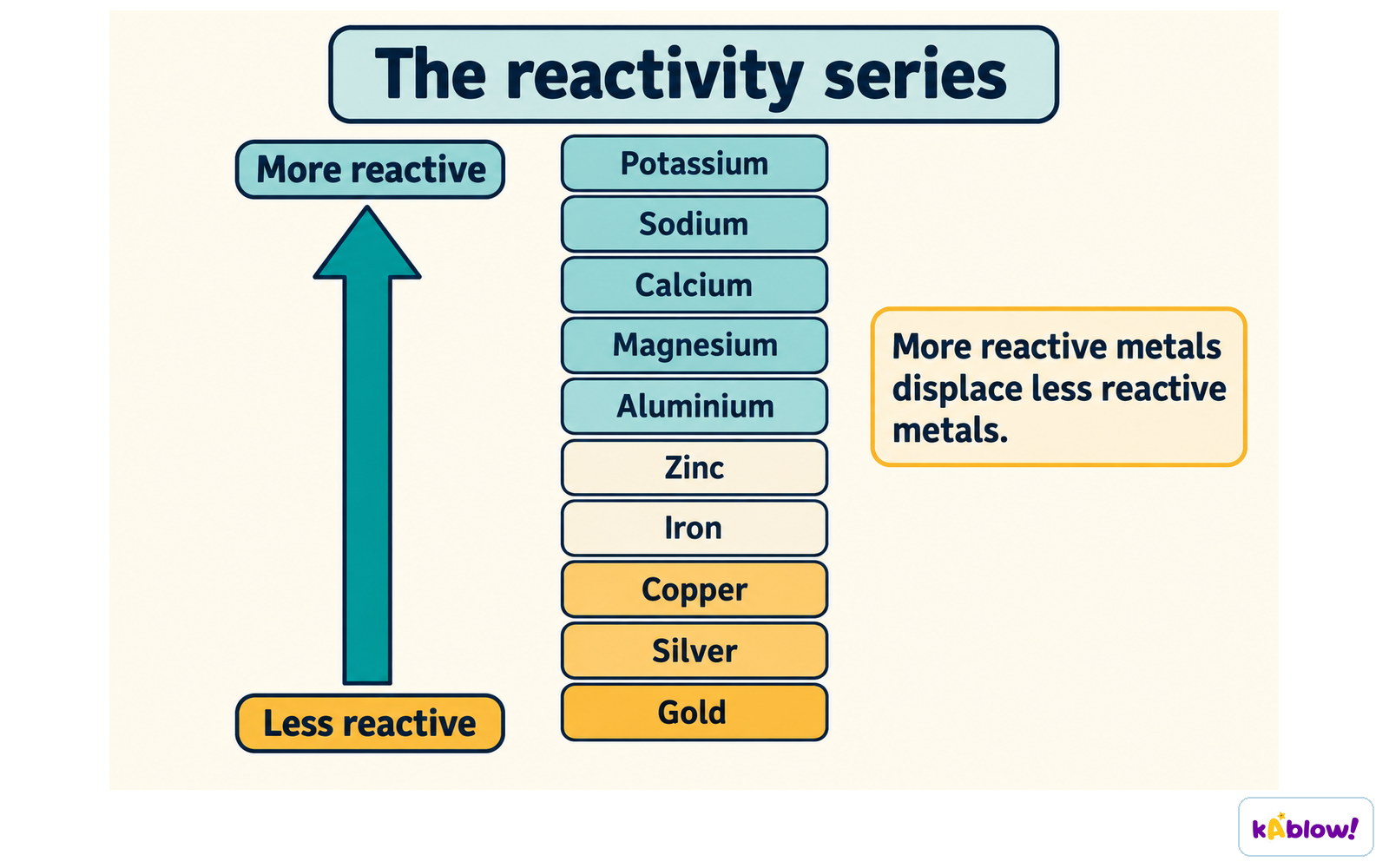
- A metal can only displace another metal if it is higher in the reactivity series.
- For example, magnesium displaces lead from lead nitrate because magnesium is more reactive.
- Calcium cannot displace sodium from sodium carbonate because calcium is less reactive than sodium.
Selected metals in reactivity order: a more reactive metal can displace a less reactive metal from its compound. Carbon and hydrogen are omitted from this comparison.
Example Word Equations
- Aluminium + iron oxide → aluminium oxide + iron
- Magnesium + copper chloride → magnesium chloride + copper
- Zinc + iron sulfate → zinc sulfate + iron
Particle arrangement in solids, liquids, and gases. Reactivity relates to how easily atoms can lose electrons.
슬라이드
연습 문제
무료 미리 보기 — 62개 중 8개 문제. 가입하면 전부 볼 수 있어요.
1.Which of the following is the correct order of reactivity, from most reactive to least reactive?
Easy- AMagnesium > Copper > Iron
- BCopper > Iron > Magnesium
- CMagnesium > Iron > Copper
- DIron > Magnesium > Copper
2.What is the sign of a chemical reaction when a metal is placed in acid?
Easy- AA colour change
- BBubbles of gas
- CA solid precipitate
- DA temperature decrease
3.In the reaction: iron + copper sulfate → iron sulfate + copper, which metal is displaced?
Medium- AIron
- BCopper
- CSulfate
- DBoth iron and copper
4.Which of the following is NOT a sign of a chemical reaction?
Easy- AA colour change
- BA gas being released
- CA change of state
- DThe mixture becoming colder
5.Why is carbon often included in the reactivity series even though it is not a metal?
Medium- ABecause it reacts with metals
- BBecause it helps predict displacement reactions
- CBecause it is the most reactive element
- DBecause it is a metal
6.What colour is copper sulfate solution?
Easy- AGreen
- BBlue
- CColourless
- DRed
7.Which statement about the reaction between gold and copper sulfate is correct?
Medium- AGold displaces copper because gold is more reactive
- BCopper displaces gold because copper is more reactive
- CNo reaction occurs because gold is less reactive than copper
- DNo reaction occurs because both are unreactive
8.In a displacement reaction, a more reactive element replaces a less reactive element in a compound. True or false?
Easy- ATrue
- BFalse
- COnly if both are metals
- DOnly if the compound is an oxide
기출 문제
이 주제의 기출 문제 연습이 곧 나와요.
곧 출시