Introduction to static electricity
플레이하며 배우기
이 문제들을 풀어 에너지를 얻은 뒤 낚시하고 탐험하세요. 계정이 필요 없어요.
교육자를 위해: Introduction to static electricity(KS3 Science, Physics)을(를) 위한 바로 쓸 수 있는 수업 슬라이드, 복습 노트, 다이어그램 — 수업에 사용하거나, 학습자들이 실시간 게임으로 즐기는 인터랙티브 클래스 활동으로 진행하세요.
수업 노트
Atomic Structure and Charge
- All matter is made of atoms and molecules.
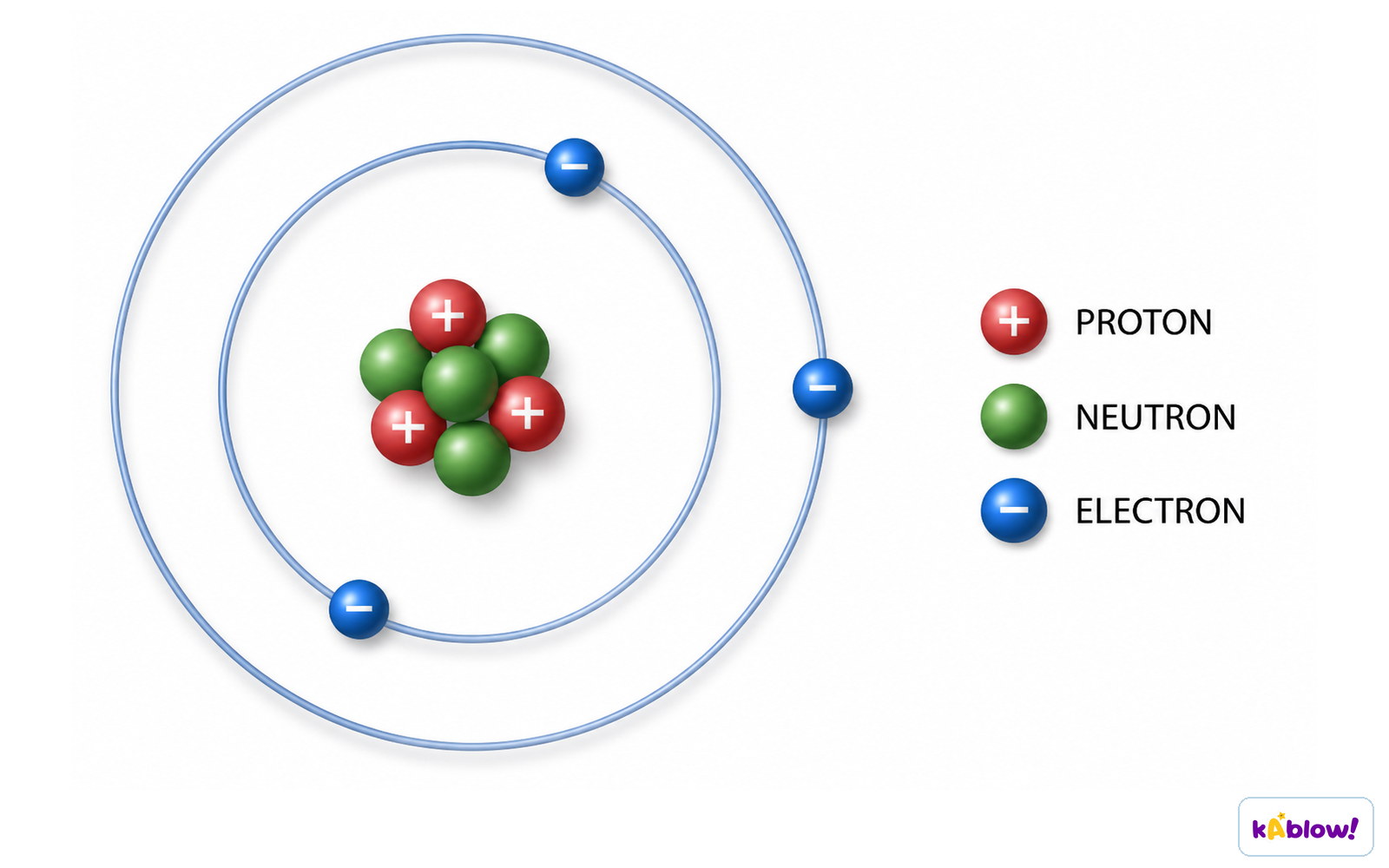
- Atoms have a nucleus containing protons (positive) and neutrons (neutral).
- Electrons (negative) orbit the nucleus.
- Atoms are neutral because they have equal numbers of protons and electrons.
- If an atom loses or gains an electron, it becomes an ion (charged atom).
- Losing an electron gives a positive ion; gaining an electron gives a negative ion.
A neutral atom: protons and neutrons in the nucleus, with electrons in shells around it.
How Objects Gain Static Charge
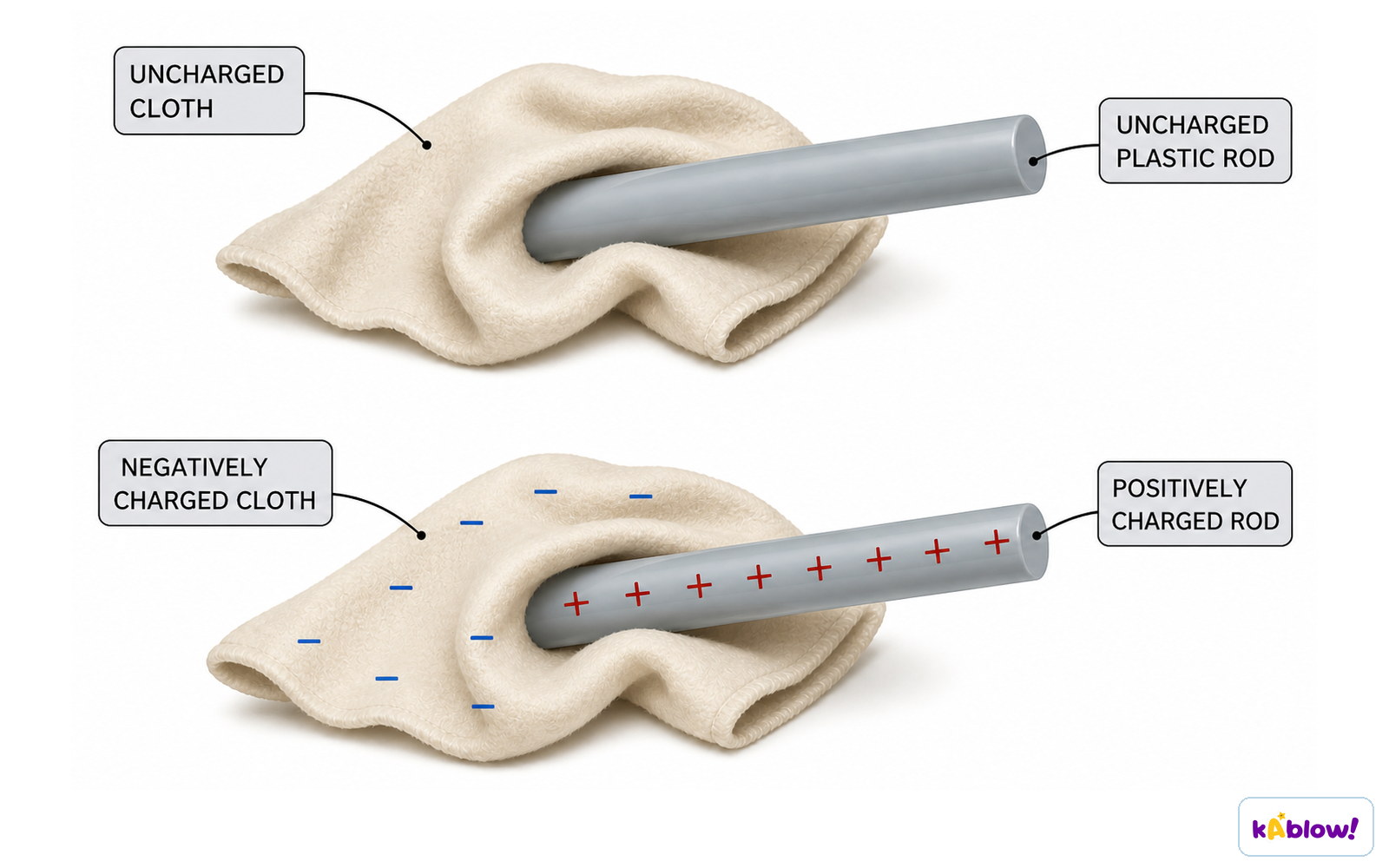
- Static charge builds up when two objects rub against each other (friction).
- Friction causes electrons to transfer from one object to the other.
- The object that loses electrons becomes positively charged.
- The object that gains electrons becomes negatively charged.
- Only electrons move; protons stay in the nucleus.
Rubbing transfers electrons: the cloth becomes negatively charged and the plastic rod positively charged.
Electrostatic Forces
- Charged objects exert electrostatic forces on each other.
- These forces are non-contact (they act without touching).
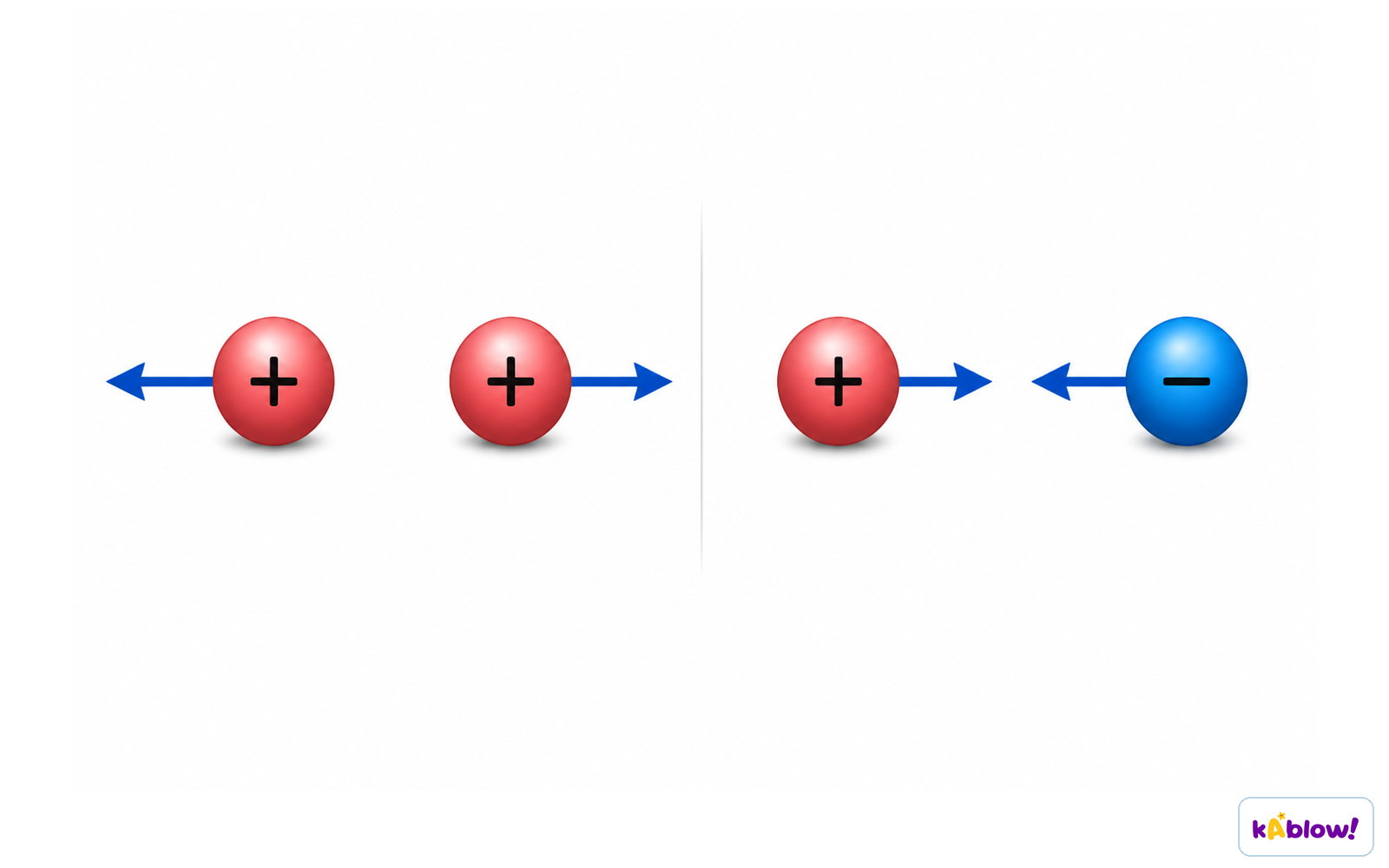
- Like charges repel (positive-positive or negative-negative).
- Unlike charges attract (positive-negative).
Like charges repel each other; opposite charges attract.
Examples of Static Electricity
- Rubbing a balloon on hair transfers electrons from hair to balloon.
- The balloon becomes negatively charged; the hair becomes positively charged.
- The balloon then attracts the hair because opposite charges attract.
- Two negatively charged balloons repel each other.
- A Van de Graaff generator builds up a large static charge.
- If a person touches it (insulated), their hairs gain the same charge and repel, standing on end.
Bohr model of a sodium atom showing nucleus (protons and neutrons) and electron shells.
Particle arrangement in solids, liquids, and gases.
슬라이드
연습 문제
무료 미리 보기 — 59개 중 8개 문제. 가입하면 전부 볼 수 있어요.
1.What are the two particles that make up the nucleus of an atom?
Easy- AProtons and neutrons
- BProtons and electrons
- CNeutrons and electrons
- DProtons, neutrons, and electrons
2.Which particle orbits around the nucleus and has a negative charge?
Easy- AProton
- BNeutron
- CElectron
- DIon
3.Are electrostatic forces contact or non-contact forces?
Easy- AContact forces
- BNon-contact forces
- CBoth contact and non-contact
- DNeither
4.What is the name for an atom that has lost or gained an electron?
Easy- AIsotope
- BMolecule
- CIon
- DProton
5.Why do atoms usually have no overall charge?
Easy- AThey have equal numbers of protons and electrons
- BThey have equal numbers of protons and neutrons
- CThey have more protons than electrons
- DThey have more electrons than protons
6.Which statement is true?
Easy- AA positive charge attracts a negative charge
- BA positive charge attracts a positive charge
- CA negative charge attracts a negative charge
- DLike charges attract
7.Which statement is true about electrostatic charging?
Easy- AProtons are transferred from one object to another
- BElectrons are transferred from one object to another
- CNeutrons are transferred from one object to another
- DBoth protons and electrons are transferred
8.A balloon is rubbed against a jumper and becomes negatively charged. What charge does the jumper become?
Medium- ANegative
- BPositive
- CNeutral
- DIt depends on the material
기출 문제
이 주제의 기출 문제 연습이 곧 나와요.
곧 출시