Reducing unwanted energy transfers
플레이하며 배우기
이 문제들을 풀어 에너지를 얻은 뒤 낚시하고 탐험하세요. 계정이 필요 없어요.
수업 노트
Reducing thermal energy loss in homes
- 35% of heat is lost through walls; reduced by cavity wall insulation (filling the gap between two walls with insulator).
- 25% is lost through the roof/attic; reduced by loft insulation.
- 25% is lost through windows and doors; reduced by double glazing, curtains, and draught excluders.
- 15% is lost through the floor; reduced by improving floor insulation.
- Reducing heat loss lowers electricity and fuel bills.
Cavity wall insulation
- A cavity wall has two separate walls with a gap between them.
- The gap is filled with an insulator (e.g., foam) to reduce heat transfer.
- Insulators like foam contain trapped air bubbles, which are poor conductors.
Double glazing
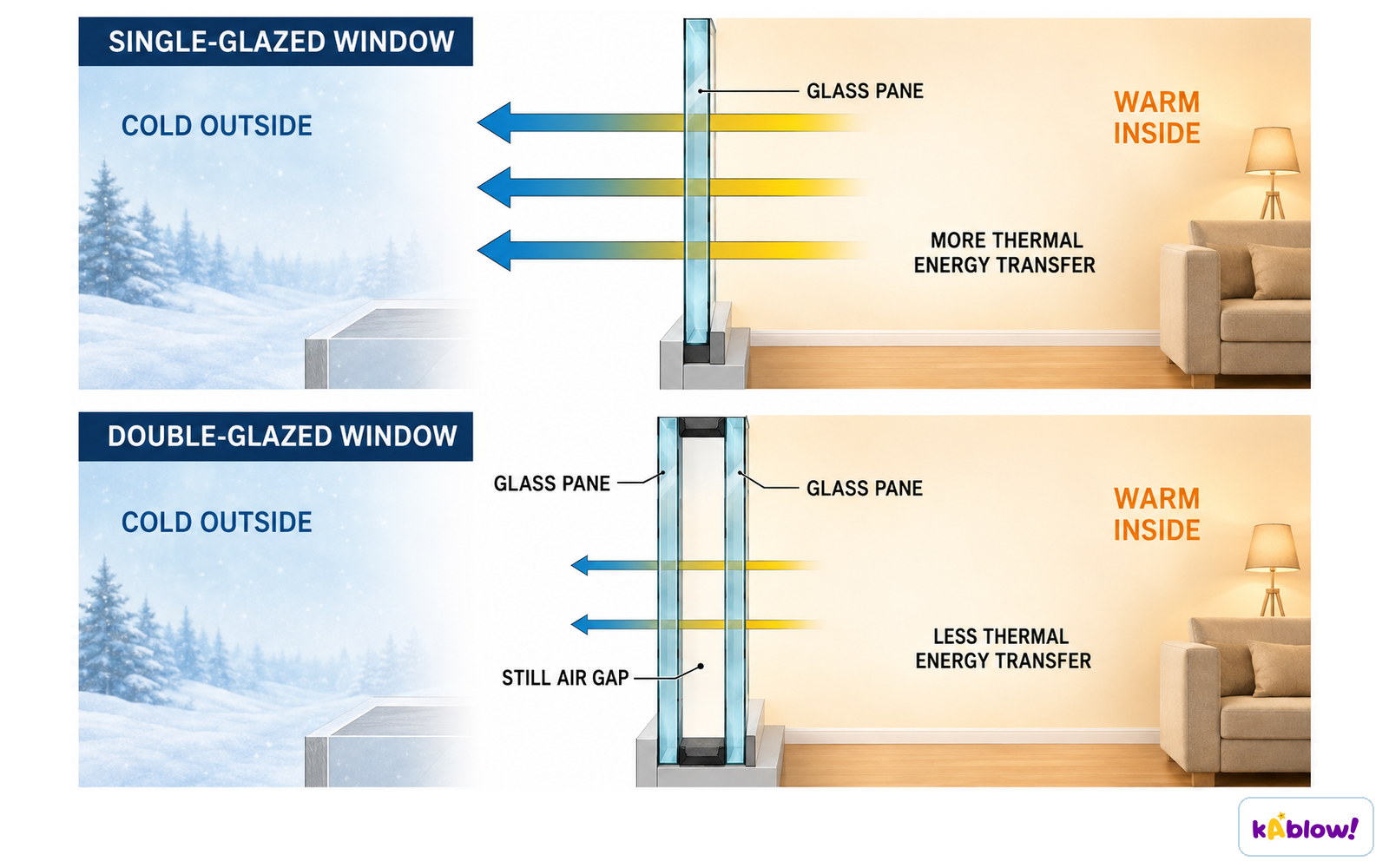
- Double glazing uses two panes of glass separated by a gas (e.g., air or argon).
- The gas layer is a poor conductor, reducing heat loss through windows.
- It also limits convection because the gas is trapped.
Double-glazed windows use a layer of air as an insulator to slow the transfer of thermal energy out of the house
Other ways to reduce heat loss through windows and doors
- Closing curtains adds an extra insulating layer.
- Draught excluders block cold air entering under doors.
Vacuum flasks
- Silvered surfaces reflect infrared radiation back into the liquid (for hot liquids) or away from the liquid (for cold liquids).
- A vacuum has no particles, so it prevents conduction and convection.
- The plastic lid is an insulator, limiting conduction and preventing evaporation.
Reducing radiation with silver surfaces
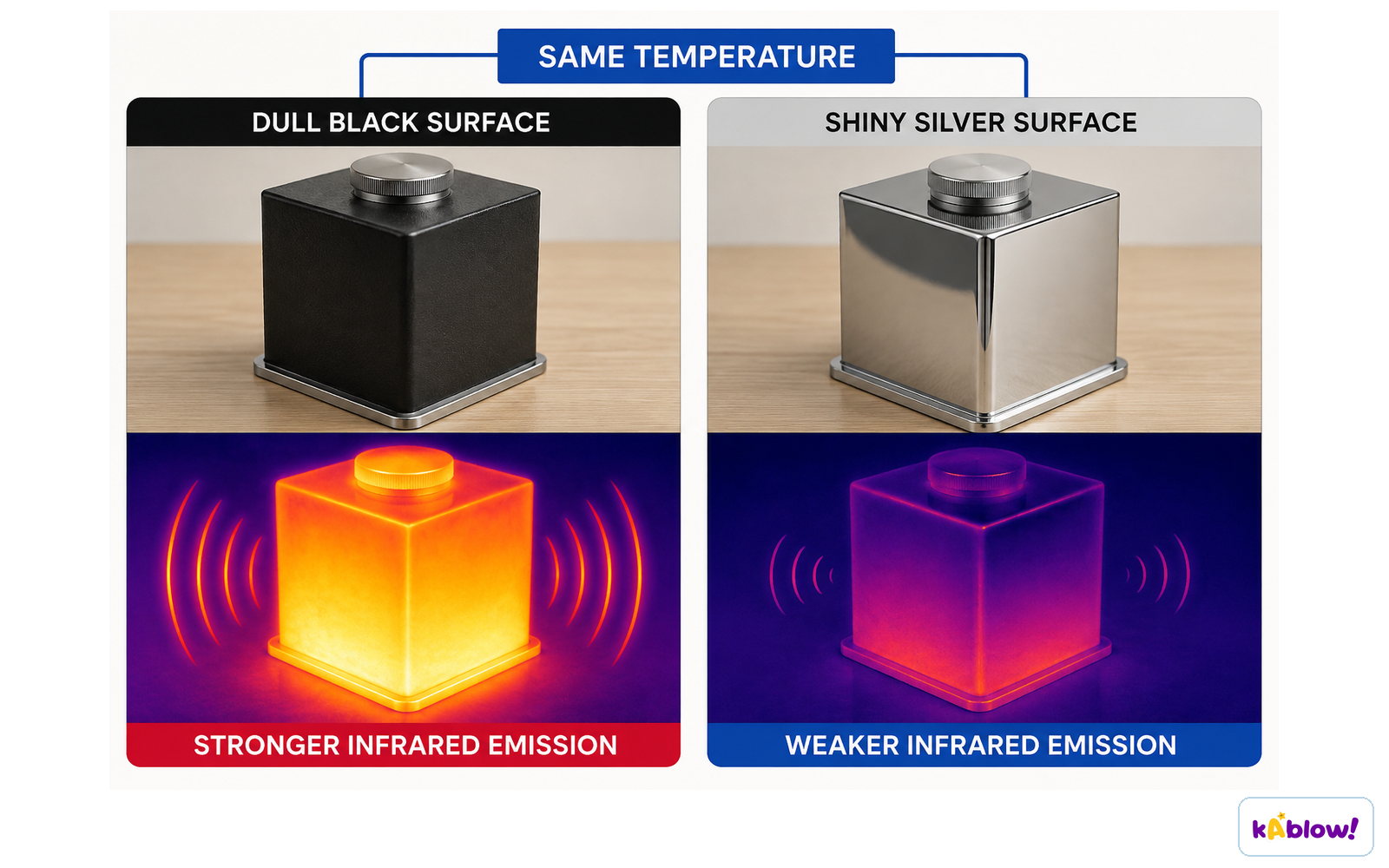
- Silvered or shiny surfaces reflect infrared radiation.
- Takeaway containers are often silvered aluminium to limit heat loss by radiation.
- A silver bottle keeps a cold liquid cooler for longer than a black one because it reflects radiation away.
An infrared camera shows a dull black surface glowing brighter than a shiny surface, because it emits more thermal radiation
Properties of insulators
- Plastic is a good insulator (poor conductor).
- Trapped air is a good insulator because air is a poor conductor.
- A vacuum has no particles, so it cannot transfer heat by conduction or convection.
Particle arrangement in solids, liquids, and gases. A vacuum has no particles, preventing conduction and convection.
Infrared radiation is reflected by silvered surfaces, reducing heat loss.
슬라이드
연습 문제
무료 미리 보기 — 57개 중 8개 문제. 가입하면 전부 볼 수 있어요.
1.What percentage of thermal energy loss in a typical home occurs through the walls?
Easy- A35%
- B25%
- C15%
- D45%
2.Which method is used to reduce thermal energy loss through the roof of a house?
Easy- ALoft insulation
- BCavity wall insulation
- CDouble glazing
- DDraught excluder
3.Why is it important to reduce thermal energy losses from a home?
Easy- ATo reduce electricity and fuel bills
- BTo increase the temperature inside
- CTo prevent condensation
- DTo improve air quality
4.Double glazing limits thermal energy loss through windows because the gas between the panes reduces which type of heat transfer?
Medium- AConduction and convection
- BRadiation only
- CConvection only
- DConduction only
5.Which of the following is a way to reduce thermal energy loss through windows, other than double glazing?
Easy- AClosing curtains
- BCavity wall insulation
- CLoft insulation
- DFloor insulation
6.Silvered aluminium takeaway containers reduce thermal energy loss because the shiny surface reflects which type of radiation?
Easy- AInfrared radiation
- BUltraviolet radiation
- CVisible light
- DMicrowaves
7.Two identical metal bottles contain cold liquid. One is black and the other is silver. Which bottle keeps the liquid cooler for longer?
Medium- AThe silver bottle
- BThe black bottle
- CBoth keep the same temperature
- DIt depends on the liquid
8.Which of the following statements about a vacuum is true?
Easy- AThere are no particles in a vacuum.
- BA vacuum contains air particles.
- CA vacuum conducts heat well.
- DA vacuum allows convection.