Potential energy
플레이하며 배우기
이 문제들을 풀어 에너지를 얻은 뒤 낚시하고 탐험하세요. 계정이 필요 없어요.
교육자를 위해: Potential energy(NGSS Middle School Science, Physics)을(를) 위한 바로 쓸 수 있는 수업 슬라이드, 복습 노트, 다이어그램 — 수업에 사용하거나, 학습자들이 실시간 게임으로 즐기는 인터랙티브 클래스 활동으로 진행하세요.
수업 노트
Definition of Potential Energy
- Potential energy is energy that is stored in an object due to its position or shape.
- Objects have potential energy because of their position (e.g., height) or shape (e.g., stretched or compressed).
- A system is a set of parts that work together; a change in one part affects the others.
Types of Potential Energy
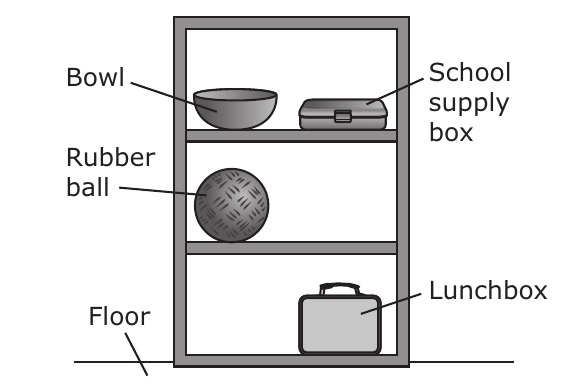
- Gravitational potential energy is stored due to an object's height above a surface; the higher the object, the more gravitational potential energy it has.
- Gravitational potential energy depends on the object's mass and its distance above the ground.
- Elastic potential energy is stored when an object is stretched, compressed, or twisted and tends to return to its original shape.
- Examples of elastic potential energy: stretched rubber bands, inflated balloons, compressed springs, and slingshots.
Examples of Potential Energy
- A marble held at the top of a ramp has potential energy because it can roll down.
- A brick lifted above the ground has gravitational potential energy.
- A stretched elastic band has elastic potential energy.
- Coal and other fuels store energy that can be released, so they have potential energy.
- Batteries store energy for electric circuits, giving them potential energy.
- Food contains stored chemical energy (potential energy) that our bodies use.
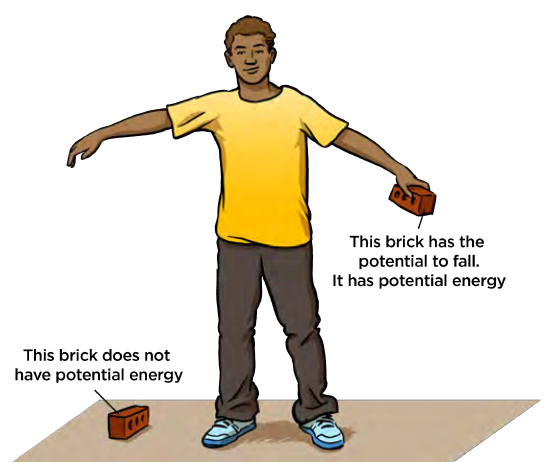
A boy holding a brick out at arm's length has given it potential energy; the brick on the ground has none.
Investigating Potential Energy
- In the marble-ramp investigation, the higher the marble is placed, the further the cup moves, showing more potential energy at greater heights.
- In the elastic band investigation, stretching the band more results in the matchbox moving further, indicating more elastic potential energy.
- The amount of potential energy increases with greater distance (height or stretch) within a system.
- Experiments show that more potential energy leads to more kinetic energy when released.
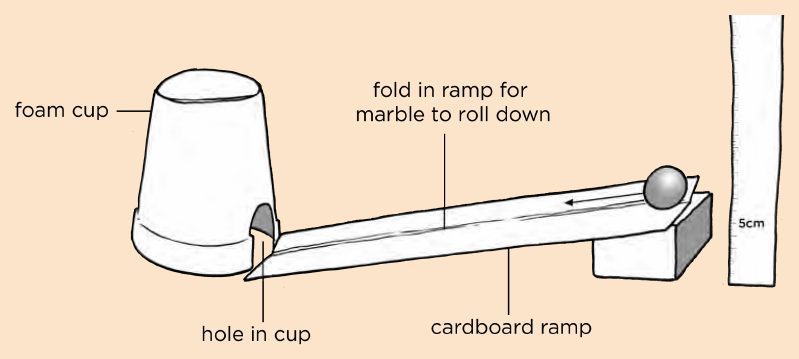
The marble-and-ramp setup: a foam cup with a hole faces a cardboard ramp propped at a measured height.
Energy Transfers and Conservation
- Energy can be transferred from one object to another, e.g., from hand to elastic band to matchbox.
- The Law of Conservation of Energy states that energy cannot be created or destroyed, only transformed or transferred.
- After transfers, energy often becomes less available (e.g., as heat), but it is not lost.
- In a falling brick example, the brick's potential energy converts to kinetic energy, then to heat and sound upon impact.
Measuring Energy
- Energy is measured in joules (J); 1000 joules = 1 kilojoule (kJ).
- The joule is named after physicist James Prescott Joule.
- Food labels show energy content in kilojoules, indicating the potential energy stored in food.
- Recommended daily energy intake varies by age, gender, and activity level (e.g., sedentary vs. active).
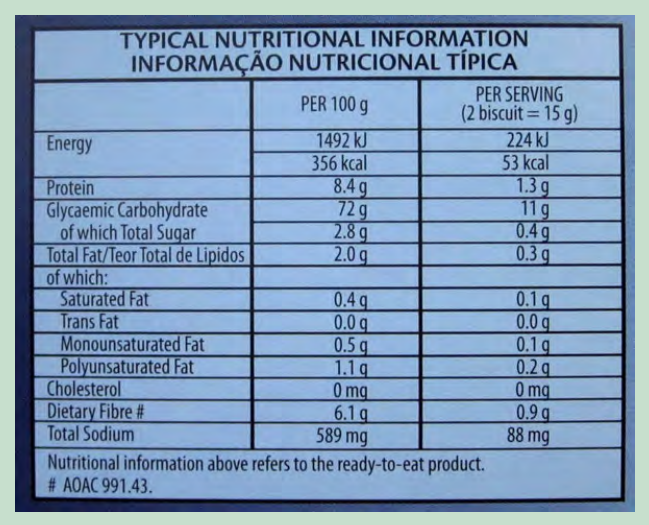
A nutritional information label showing energy content in kilojoules.
Potential Energy and Height
- The higher an object is above a surface, the more gravitational potential energy it has.
- A snowboarder at the top of a hill has the most potential energy; at the bottom, the least.
- As a snowboarder descends, potential energy converts to kinetic energy (movement).
- Data shows that higher hills lead to greater speeds because more potential energy becomes kinetic energy.
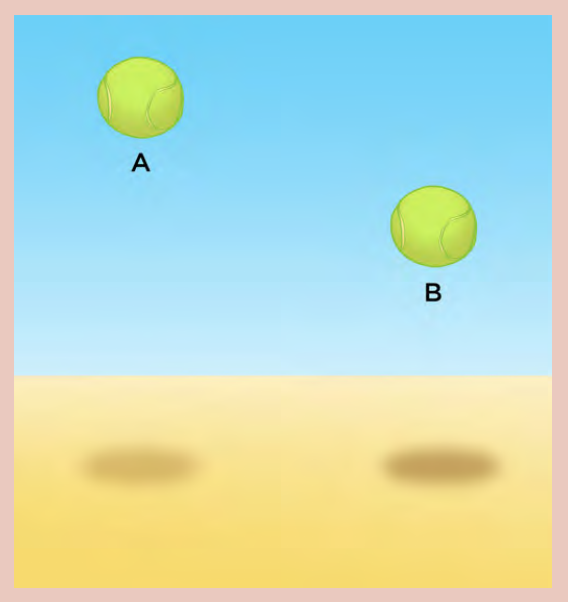
Two tennis balls at different heights above the ground, labeled A and B, to compare their potential energy.
Potential Energy in Systems
- A system includes all interacting parts; energy transfers occur within and between systems.
- Examples of systems: arm-brick-Earth, hand-elastic band-matchbox, skydiver-Earth.
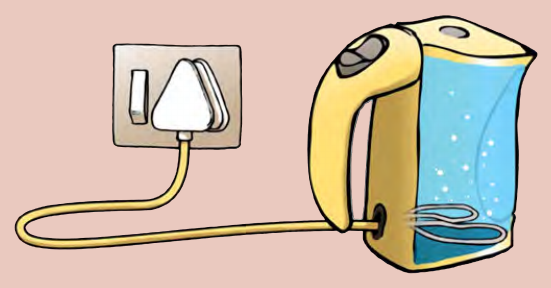
- In a kettle system, electrical energy is transferred to thermal energy to heat water.
- Potential energy can be stored in various forms: gravitational, elastic, chemical, and nuclear.
A kettle plugged into a wall socket, illustrating a system where electrical energy is transferred.
Comparing Potential Energy
- To compare potential energy, consider relative amounts based on position or shape.
- A diver higher above the pool has more gravitational potential energy than one lower.
- A rubber band stretched farther has more elastic potential energy than one stretched less.
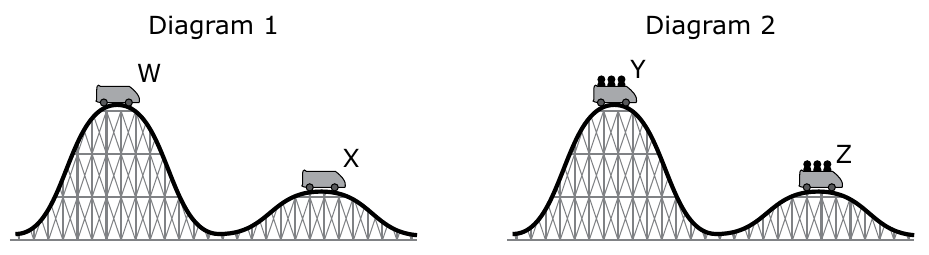
- In a roller coaster, the cart at the highest point has the most potential energy; at the lowest point, the least.
Two rock climbers at different heights on a rock face.

Key Questions and Concepts
- Potential energy is the stored energy in a system.
- Kinetic energy is the energy of motion.
- Energy can be transferred and transformed but not created or destroyed.
- Understanding potential energy helps explain phenomena like snowboarding speeds and why objects fall.
슬라이드
연습 문제
무료 미리 보기 — 48개 중 8개 문제. 가입하면 전부 볼 수 있어요.
1.What is potential energy?
Easy- AEnergy stored in an object due to its position or shape
- BEnergy of motion
- CEnergy transferred by heat
- DEnergy from the Sun
2.Which of the following is an example of potential energy?
Easy- AA moving car
- BA stretched rubber band
- CA spinning top
- DA flying bird
3.What is the SI unit of energy?
Easy- AJoule
- BNewton
- CWatt
- DKilogram
4.The higher an object is above a surface, the more gravitational potential energy it has.
EasyTrue or false?
5.A compressed spring has no potential energy.
EasyTrue or false?
6.Match each example to the type of potential energy it demonstrates.
Easy- A book on a high shelf
- A stretched spring
- A compressed balloon
- Gravitational potential energy
- Elastic potential energy
7.Arrange the following objects in order of increasing gravitational potential energy, assuming the same mass:
Easy- Object at 1 m height
- Object at 5 m height
- Object at 10 m height
8.Where does the high jumper have the most potential energy?
Easy
- AAt the top of the jump
- BJust after leaving the ground
- CJust before landing
- DAt the start of the run



기출 문제
이 주제의 기출 문제 연습이 곧 나와요.
곧 출시