Wave interactions with matter
플레이하며 배우기
이 문제들을 풀어 에너지를 얻은 뒤 낚시하고 탐험하세요. 계정이 필요 없어요.
교육자를 위해: Wave interactions with matter(NGSS Middle School Science, Physics)을(를) 위한 바로 쓸 수 있는 수업 슬라이드, 복습 노트, 다이어그램 — 수업에 사용하거나, 학습자들이 실시간 게임으로 즐기는 인터랙티브 클래스 활동으로 진행하세요.
수업 노트
Types of Waves
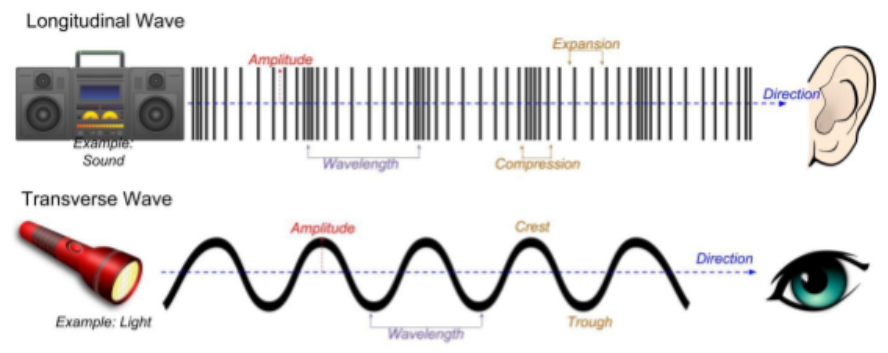
- Light waves (electromagnetic) transmit energy and do not require a medium.
- Mechanical waves (e.g., sound, water) transfer energy by moving particles and require a medium.
- Light waves are transverse; mechanical waves can be transverse or longitudinal.
- Waves can be transmitted, reflected, absorbed, or refracted through materials.
Longitudinal and transverse waves.
Light Waves and Vision
- We see objects when light reflects off them and enters our eyes.
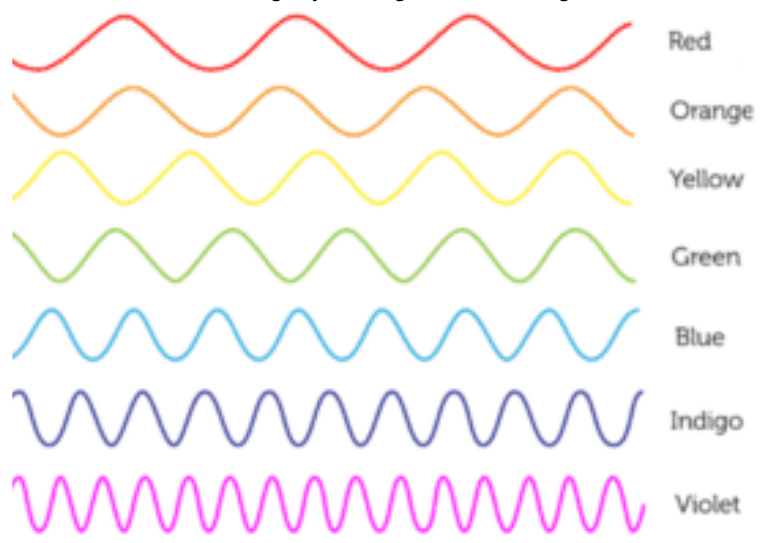
- Brightness is controlled by wave amplitude; color is determined by wavelength.
- Longest visible wavelength appears red; shortest appears violet; the visible spectrum is in rainbow order.
- In darkness, no light waves reflect off objects, so we cannot see them.
The visible spectrum, ordered by wavelength.
Sound Waves
- Sound is energy transfer from vibrating objects through matter.
- Sound waves are mechanical and require a medium.
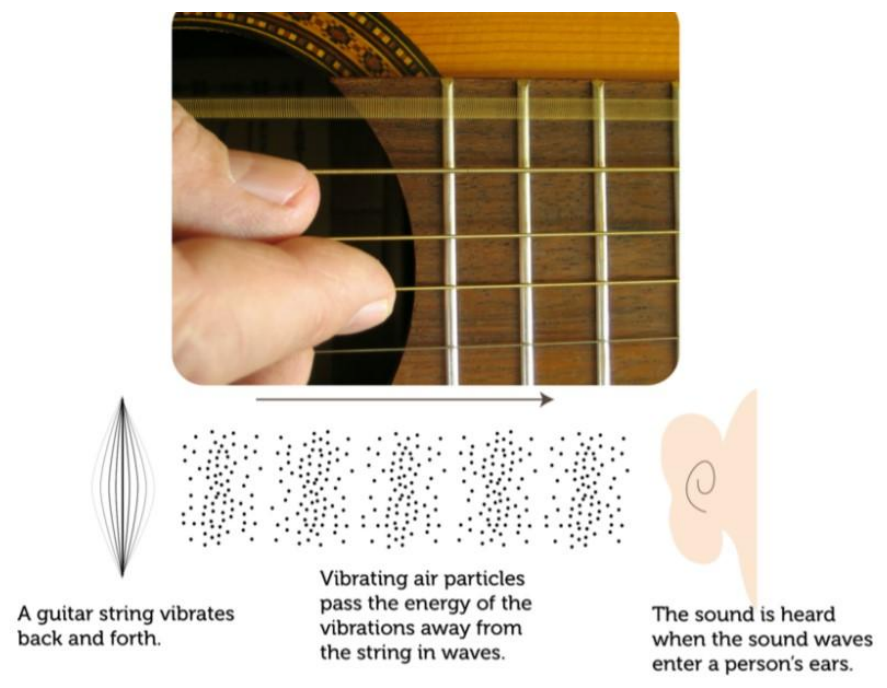
- A vibrating guitar string pushes air particles, creating sound waves that travel to the ear.
- Sound waves vibrate the eardrum; the brain interprets these vibrations as sound.
A vibrating guitar string produces a sound wave that reaches the ear.
Reflection of Waves
- Reflection occurs when a wave bounces off a surface (e.g., light off a mirror, sound causing echoes).
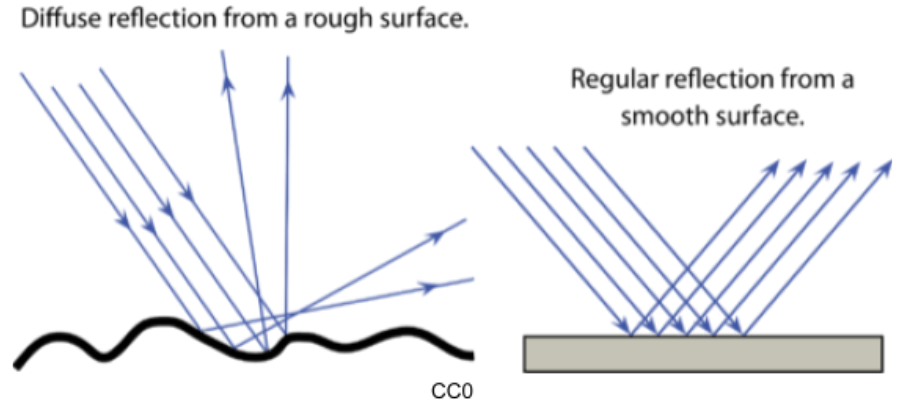
- Even reflection from smooth surfaces produces clear images (mirrors).
- Uneven reflection from rough surfaces scatters light, making objects look dull.
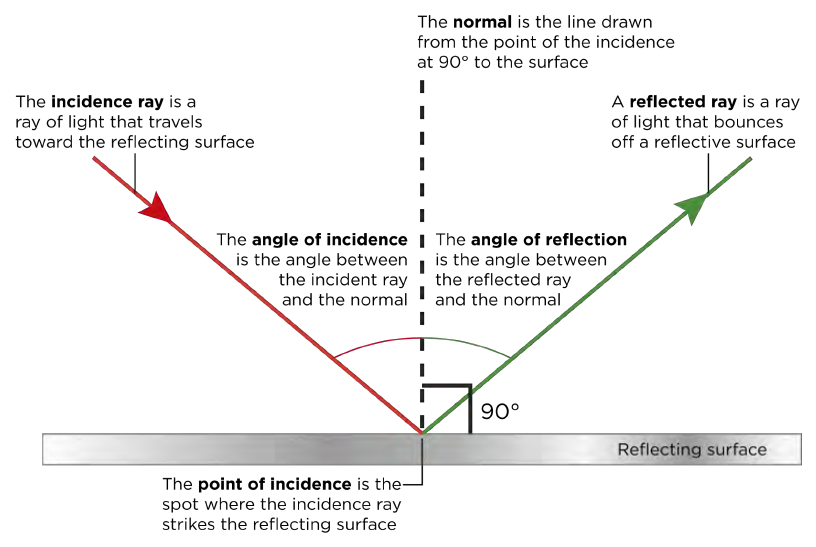
- For reflection, the angle of incidence equals the angle of reflection.
Angle of incidence, angle of reflection, and the normal at a reflecting surface.
Transmission and Refraction
- Transmission is when a wave travels through a medium (e.g., sound through air, light through glass).
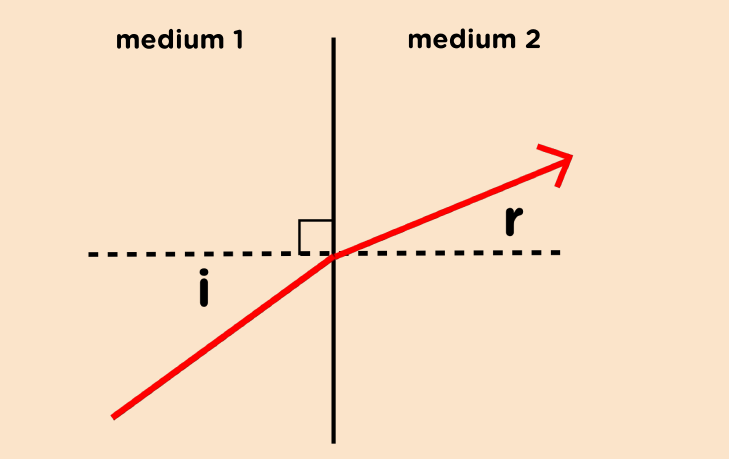
- Refraction is the bending of light due to a change in speed when moving between media.
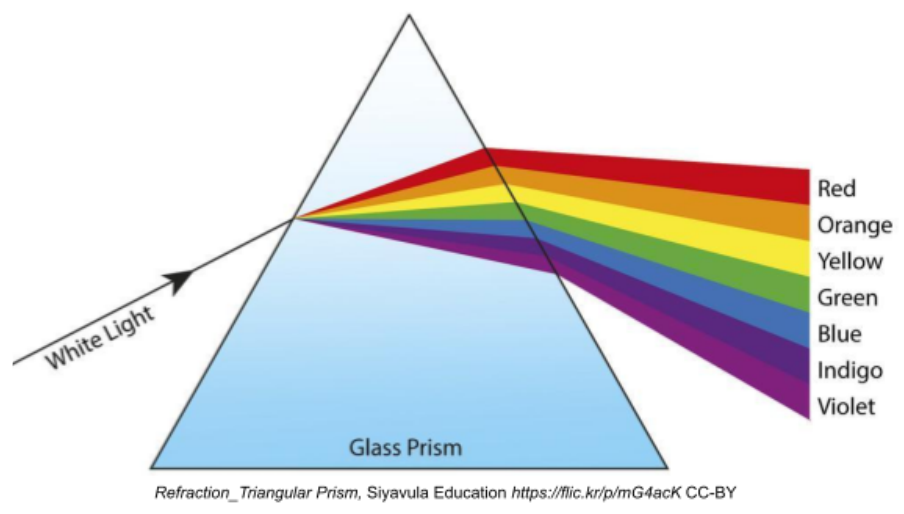
- A prism refracts white light, separating it into colors because different wavelengths bend at different angles.
- Refraction is used in lenses (glasses, microscopes) to focus light for clearer images.
White light entering a glass prism and separating into the colours of the spectrum.
Absorption of Waves
- Absorption occurs when a wave is stopped and its energy is converted to heat.
- Soundproof walls absorb sound energy, making rooms quieter.
- Black pavement absorbs light waves, becoming hotter than lighter surfaces.
- Black objects absorb all colors of light; white objects reflect all colors.
Transparent, Translucent, and Opaque Materials
- Transparent materials transmit most light (e.g., clear glass).
- Translucent materials allow some light through but scatter it (e.g., plastic shopping bag).
- Opaque materials absorb or reflect all light, casting shadows (e.g., cardboard).
- Shadows form because light travels in straight lines and cannot pass through opaque objects.
Color and Absorption
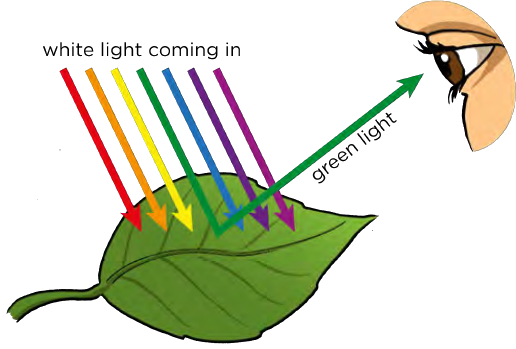
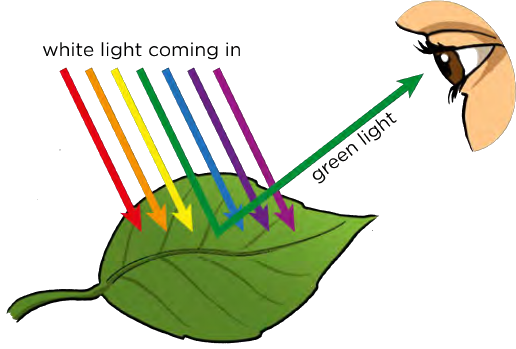
- We see an object's color from the light it reflects; other colors are absorbed.
- A red ladybird reflects red light and absorbs all other colors.
- Green leaves reflect green light and absorb other colors.
- Black spots absorb all colors, reflecting none; black is not a color of light but absence of reflection.
How a green leaf reflects green light and absorbs other colors
How We See Light and Color
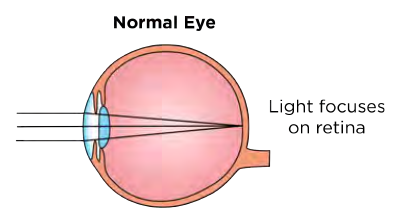
- Light enters the eye through the pupil, is focused by the cornea and lens.
- The retina contains light-sensitive cells that convert light into electrical impulses.
- These impulses travel via the optic nerve to the brain, which interprets them as sight.
- We see color because different wavelengths are reflected and stimulate cone cells in the retina.
A normal eye focusing light onto the retina.
Speed of Sound in Different Mediums
- Sound travels at different speeds depending on the medium: air (346 m/s), water (1498 m/s), steel (5200 m/s).
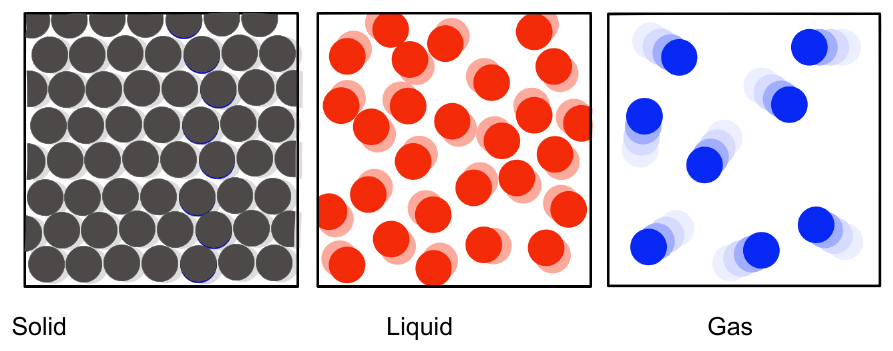
- Sound travels fastest in solids, slower in liquids, and slowest in gases.
- This is because particles are closer together in solids, allowing vibrations to transfer more quickly.
- In gases, particles are farther apart, so sound energy transfers more slowly.
Particle spacing in solids, liquids and gases.
슬라이드
연습 문제
무료 미리 보기 — 57개 중 8개 문제. 가입하면 전부 볼 수 있어요.
1.Light waves are mechanical waves that require a medium to travel through.
EasyTrue or false?
2.Which of the following is an example of a mechanical wave?
Easy- ALight wave
- BSound wave
- CRadio wave
- DX-ray
3.Sound waves travel faster through gases than through solids.
EasyTrue or false?
4.Which of the following materials is the best transmitter of sound?
Easy- AAir
- BWater
- CSteel
- DFoam rubber
5.What happens to the energy of a wave when it is absorbed by a material?
Easy- AIt is converted to heat energy.
- BIt is reflected back.
- CIt is transmitted through.
- DIt is converted to light energy.
6.A student shines a light ray at a mirror. The angle of incidence is 30°. What is the angle of reflection?
Easy- A15°
- B30°
- C60°
- D90°
7.Which of the following correctly describes the speed of light in different media?
Easy- ALight travels faster in glass than in air.
- BLight travels faster in water than in air.
- CLight travels faster in air than in glass.
- DLight travels at the same speed in all media.
8.When light passes from air into glass at an angle, it bends away from the normal.
EasyTrue or false?
기출 문제
이 주제의 기출 문제 연습이 곧 나와요.
곧 출시