Cells, tissues and organ systems
Learn it by playing
Answer these questions to earn energy, then fish and explore. No account needed.
Lesson notes
Cell Structure and Function
- All living things are made of cells, the basic unit of life.
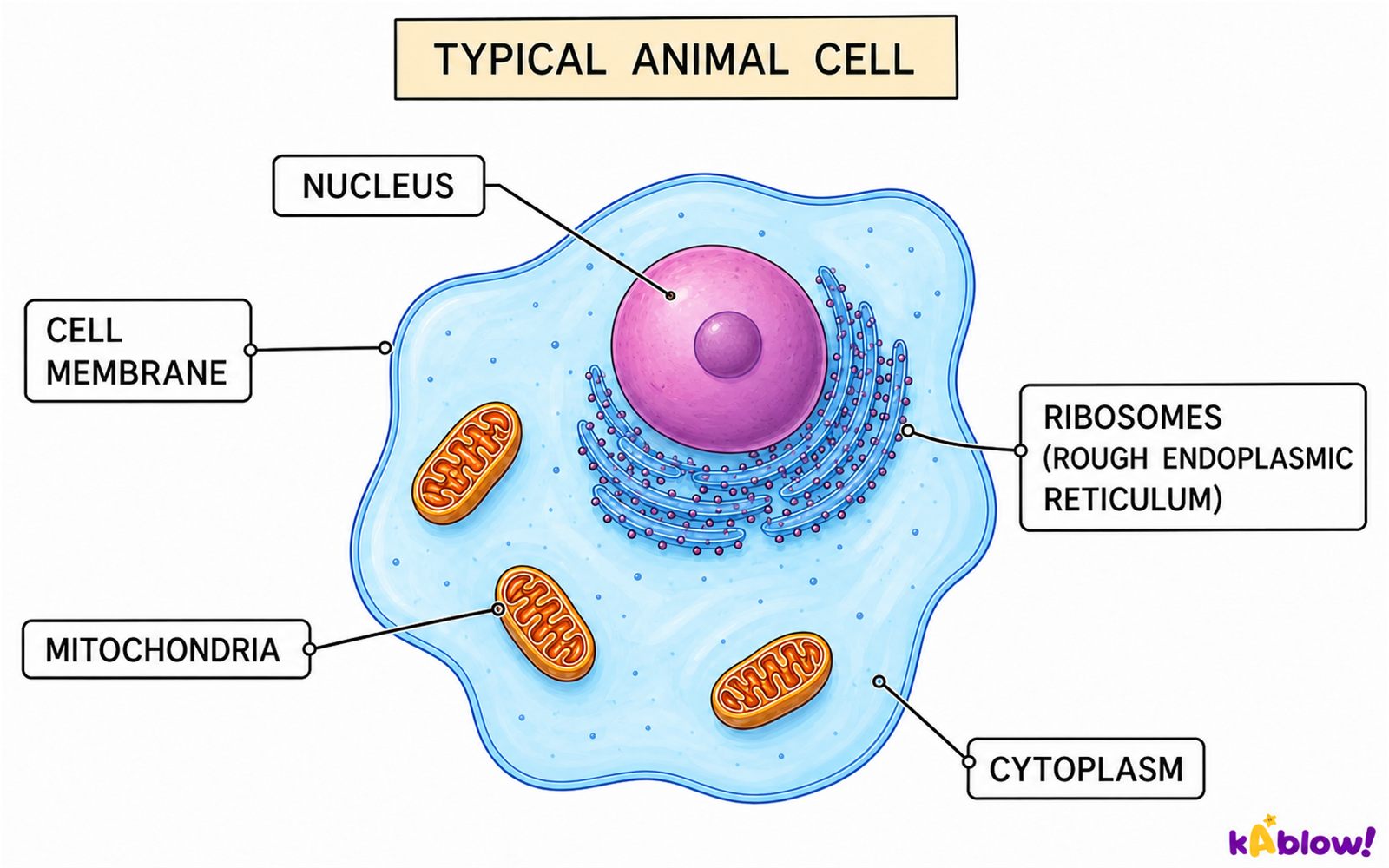
- Cells have specialised organelles that perform specific functions (e.g., nucleus, mitochondria).
- The cell membrane controls what enters and leaves the cell.
- Plant cells have a cell wall, chloroplasts and a large vacuole; animal cells do not.
A typical animal cell and the organelles inside it.
Tissues
- A tissue is a group of similar cells working together to perform a common function.
- Examples: muscle tissue, nervous tissue, epithelial tissue, connective tissue.
- In plants, tissues include meristematic (dividing) and permanent (mature) tissues.
Organs
- An organ is made of different tissues working together for a specific job.
- Examples: heart (pumps blood), lungs (gas exchange), stomach (digestion).
- Plant organs include leaves (photosynthesis), stems (support/transport), roots (absorption).
Organ Systems
- An organ system is a group of organs that work together to carry out a major body function.
- Humans have 11 organ systems (e.g., respiratory, circulatory, digestive, nervous).
- Some organs belong to more than one system (e.g., nose in respiratory and nervous).
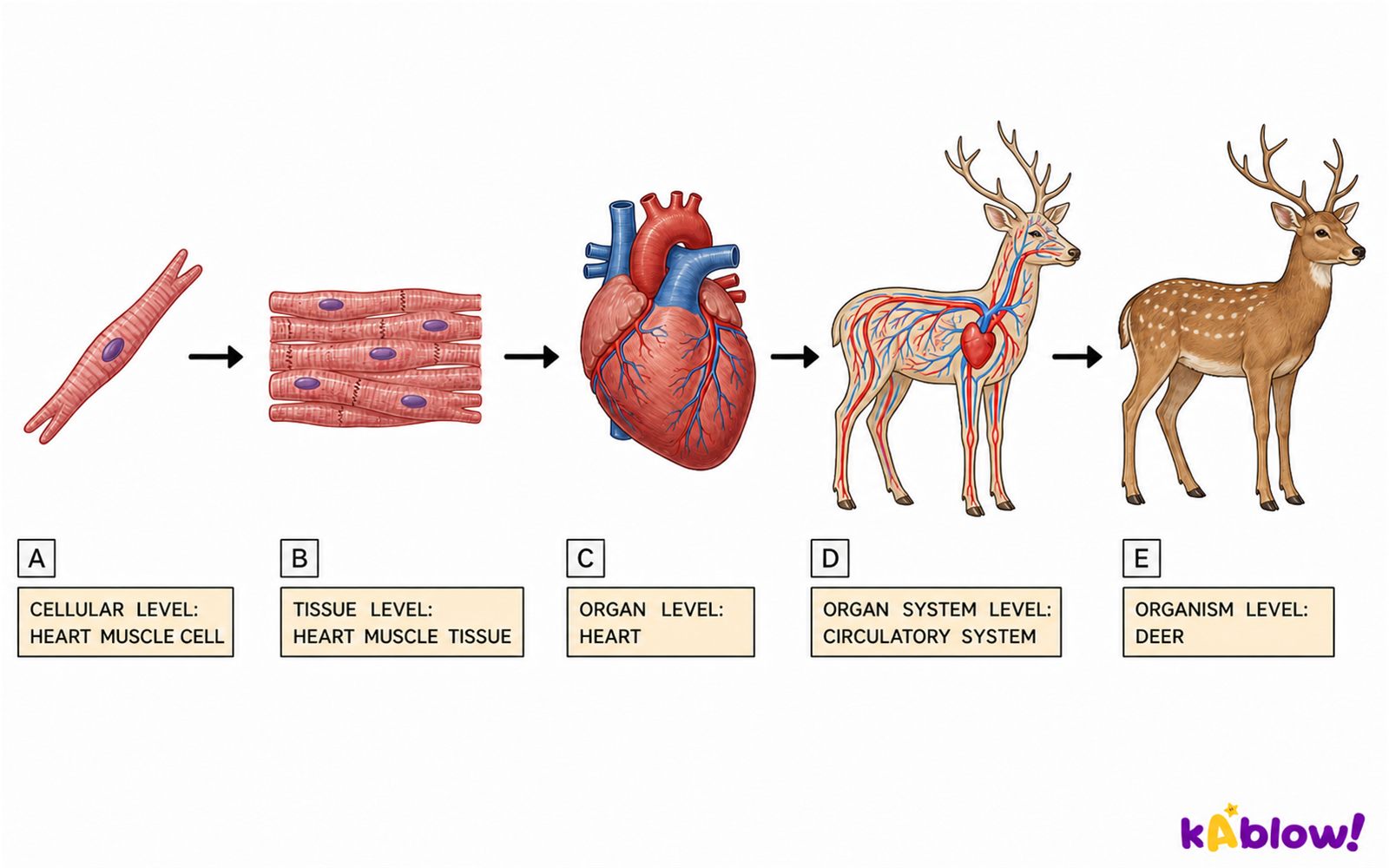
Cells form tissues, tissues form organs, organs form organ systems, and organ systems make up the whole organism.
Human Organ Systems Overview
- Respiratory system: lungs, trachea; gas exchange (O₂ in, CO₂ out).
- Circulatory system: heart, blood vessels; transports nutrients, gases, wastes.
- Digestive system: stomach, intestines; breaks down food, absorbs nutrients.
- Nervous system: brain, spinal cord, nerves; controls responses and coordination.
- Excretory system: kidneys, bladder; removes waste from blood.
- Skeletal system: bones; support, protection, movement.
- Muscular system: muscles; movement, posture.
- Integumentary system: skin; protection, temperature regulation.
- Endocrine system: glands (e.g., thyroid, pancreas); hormone regulation.
- Lymphatic system: lymph nodes, vessels; immunity, fluid balance.
- Reproductive system: ovaries/testes; produces gametes, enables reproduction.
Plant Organ Systems
- Vascular plants have two organ systems: shoot system and root system.
- The shoot system (above ground) includes stems, leaves, flowers, and fruits.
- The shoot absorbs light for photosynthesis and supports reproduction.
- The root system (usually underground) anchors the plant and absorbs water and minerals.
Specialised Cells
- Specialised cells have adaptations to perform specific functions.
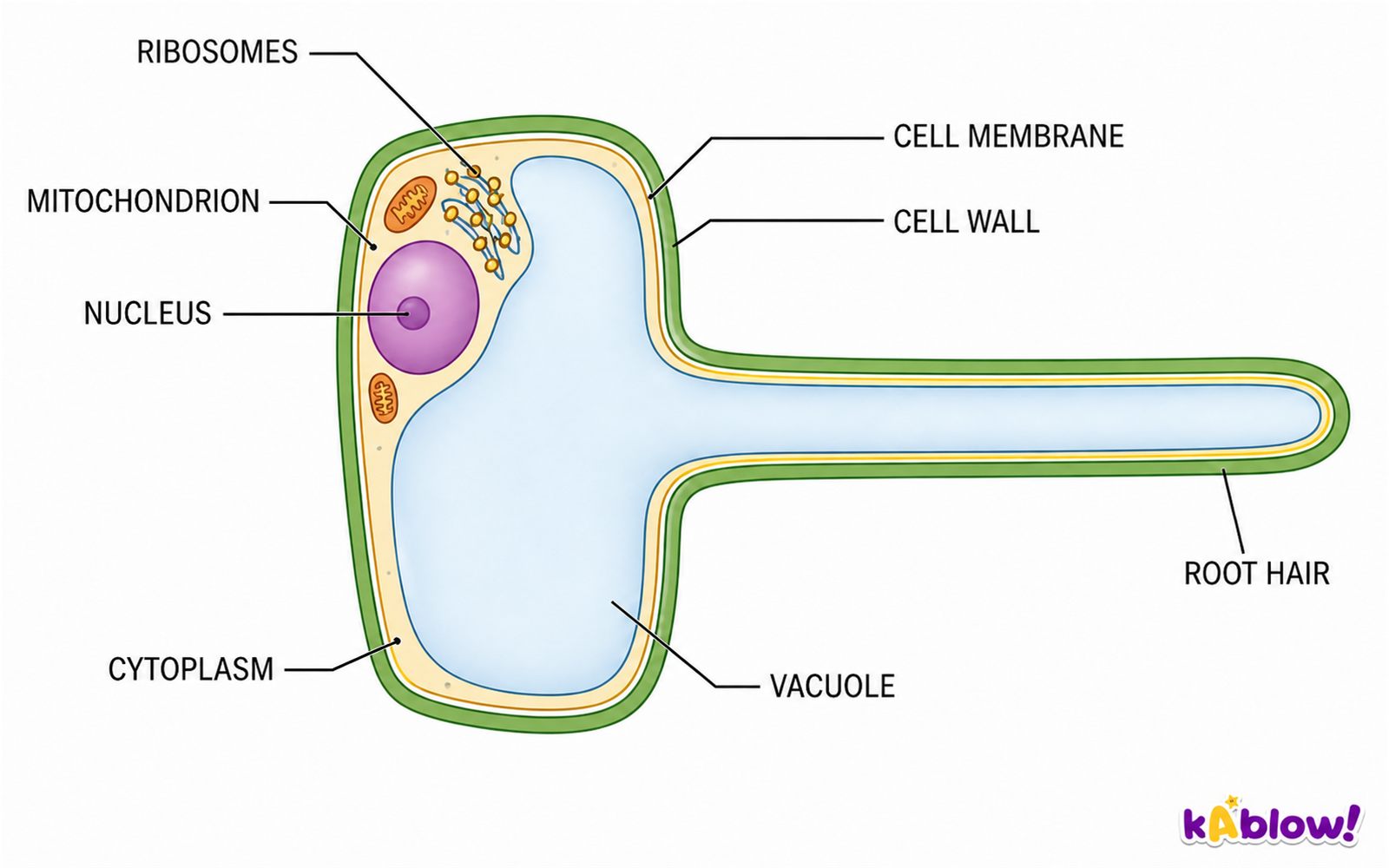
- Examples: red blood cells (biconcave, no nucleus for O₂ transport), nerve cells (long axons for signals), root hair cells (large surface area for water uptake).
- Specialisation allows efficient division of labour in multicellular organisms.
A root hair cell: its long extension increases the surface area for absorbing water.
Animal cell structure showing key organelles.
Plant cell with additional structures: cell wall, chloroplasts, large vacuole.
Slides
Sign up free to view the lesson slides
Step through every slide for this topic — plus flashcards and revision notes — with a free account.
Practice questions
Free preview — 8 of 56 questions. Sign up to see them all.
1.Which of the following is the correct order of biological organisation, from smallest to largest?
Easy- Aorgan → tissue → cell → organ system
- Bcell → tissue → organ → organ system
- Ctissue → cell → organ → organ system
- Dcell → organ → tissue → organ system
2.What is the main function of the shoot system in vascular plants?
Easy- Aabsorb water and minerals from the soil
- Banchor the plant in the ground
- Ccarry out photosynthesis and reproduction
- Dstore food and nutrients
3.Which of the following is NOT an organ system in humans?
Easy- Aimmune system
- Bcirculatory system
- Cnervous system
- Dreproductive system
4.The nose is part of which two organ systems?
Medium- Arespiratory and digestive
- Brespiratory and nervous
- Cnervous and circulatory
- Drespiratory and integumentary
5.How many distinct organ systems are there in the human body?
Easy- A9
- B10
- C11
- D12
6.Which organ system includes the heart and blood vessels?
Easy- Arespiratory system
- Bcirculatory system
- Cnervous system
- Dendocrine system
7.What is the primary function of the root system in plants?
Easy- Aphotosynthesis
- Bsupport and reproduction
- Cabsorption of water and minerals
- Dtransport of sugars
8.Which of the following is true about organ systems in animals?
Medium- AAll animals have exactly 11 organ systems.
- BSimpler animals may have fewer organ systems.
- COrgan systems are identical across all species.
- DPlants have more organ systems than animals.
Unlock all 56 questions, flashcards & more
Create a free account to see every question, the slides, flashcards and revision notes for this topic.