Understanding purpose, audience and form in non-fiction
Learn it by playing
Answer these questions to earn energy, then fish and explore. No account needed.
For educators: ready-to-use lesson slides, revision notes for Understanding purpose, audience and form in non-fiction (English Language, Reading) — use them in your lesson, or run the topic as an interactive class activity your learners play as a live game.
Purpose is why the text was written: to inform, explain, describe, argue, persuade, advise, entertain, or review. Many texts combine purposes.
Audience is who the text is for: children, teenagers, the public, readers of a particular newspaper or magazine, a government, a company.
Form is the type of text: a newspaper or magazine article, letter, speech, leaflet, review, blog, travel writing, diary or advertisement.
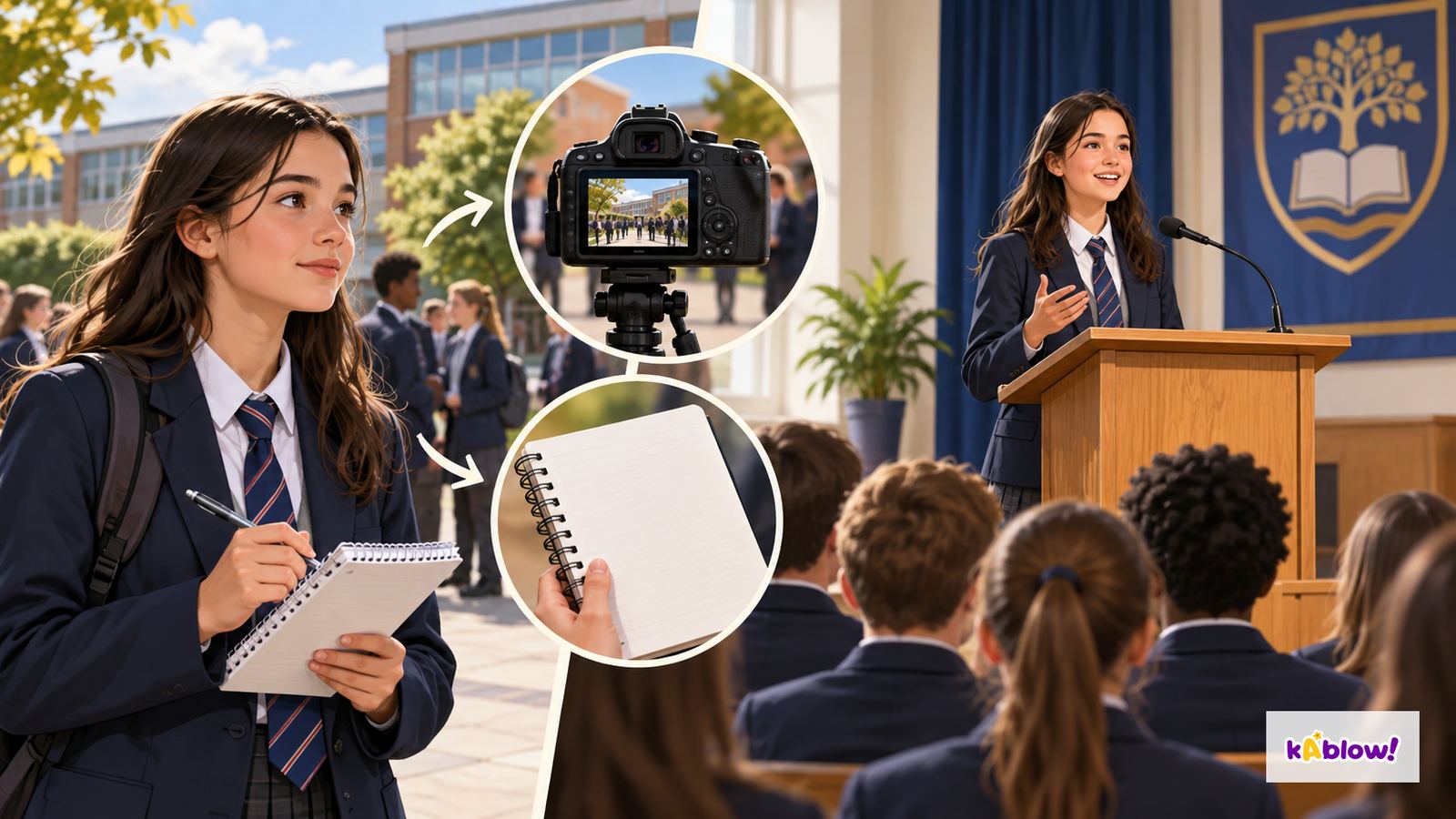
One campaign, different aims
How writers shape a text
Choose register and tone for the particular situation: a formal letter to a headteacher usually uses formal language, while a message to friends may be conversational.
Headings, subheadings, bullet points and images help a leaflet inform; direct address and rhetorical questions help a speech persuade.
A factual claim is verifiable in principle; an established fact has supporting evidence. Opinions are judgements and may be argued with evidence. Neither a number nor a confident assertion guarantees truth.
Reporting and speaking about an event
Identifying the writer's viewpoint
Examine language, selection of evidence, omissions and treatment of other views. Emotional wording may reveal attitude, but calm wording can still conceal bias.
Ask how fairly the text represents relevant evidence. A text can argue a position responsibly, and giving equal space to unsupported claims does not guarantee balance.
Check the kind of claim
Exam skills
Say what the purpose is and prove it with evidence.
Comment on how the form, language and structure suit the audience.
Slides
Sign up free to view the lesson slides
Step through every slide for this topic — plus flashcards and revision notes — with a free account.
Free preview — 8 of 33 questions. Sign up to see them all.
1.What is the purpose of a text?
Easy
Awhy it was written
Bwho wrote it
Cwhere it was printed
Dits length
2.Who is the audience of a text?
Easy
Athe writer
Bthe printer
Cthe publisher
Dthe people it is written for
3.What is the form of a newspaper report?
Easy
Aa play
Ba song
Can article
Da poem
4.Which is a fact?
Easy
ATowers are boring.
BThe Eiffel Tower is in Paris.
CThe Eiffel Tower is beautiful.
DParis is the best city.
5.Which is an opinion?
Easy
ACats make better pets than dogs.
BCats are mammals.
CDogs have four legs.
DCats purr.
6.What purpose does a persuasive advert have?
Easy
Ato describe a place
Bto review a book
Cto record history
Dto encourage a purchase or another desired action
7.Which features suit a leaflet to inform?
Easy
Aa rhyme scheme
Ba plot
Cheadings and bullet points
Ddialogue and stage directions
8.Which feature can help a speech involve its listeners?
Easy
Afootnotes
Bdirect address and a lively tone
Cvery formal legal words
Dno 'you'
More questions
9.Which combination usually suits a formal complaint to a company?
Easy
Aa formal register and a polite, firm tone
Brude and informal
Chumorous slang
Dsilly
10.Which purpose is plausible for a travel article describing a journey?
Easy
Aargue in court
Bgive legal advice
Crecord a will
Ddescribe and entertain
11.What is a 'balanced' text?
Easy
Ait has no verbs
Bit has no facts
Cit considers relevant viewpoints fairly and weighs evidence
Dit is very short
12.Which is a sign of bias?
Medium
Aa neutral tone
Bselecting only evidence that favours one side and dismissing contrary evidence
Cseveral viewpoints
Dstatistics from sources
13.Which style could suit an informal entertainment article for a teenage magazine?
Medium
Ainformal language and humour
Blegal terminology
CLatin
Dpassive voice only
14.Why do writers use statistics in persuasive text?
Medium
Ato rhyme
Bto confuse
Cto entertain
Dto give authority
15.'Every child deserves a chance. Do you want to turn your back?' What device is used in the second sentence?
Medium
Aalliteration
Bonomatopoeia
Crhetorical question
Dsimile
16.What does 'emotive' language aim to do?
Medium
Aconfuse
Barouse feelings
Cgive facts only
Dprovide a list
17.A text written to advise would probably use:
Medium
Aimperatives such as 'Make sure to...'
Bonly questions
Cpoetry
Dlengthy description
18.In this original report, which words most clearly suggest the writer frames the bypass negatively? “The council plans a new bypass. Residents are furious that the beautiful meadow will be destroyed.”
Medium
Afor the bypass
Bneutral
Cunclear
D“beautiful meadow” and “destroyed” frame a loss
19.Which sentence mixes fact and opinion?
Medium
AThe library has books.
BThe library is on Elm Street.
CThe new library, which opened in May, is the best thing to happen to our town.
DThe library opened in May.
20.Which phrase suggests the audience is children?
Medium
A'The party of the first part...'
B'Hey kids, ever wondered why the sky is blue?'
C'Pursuant to the aforementioned statute...'
D'Notwithstanding the foregoing...'
21.How does a charity advert usually persuade?
Medium
Aemotive images and a call to action
Bneutral reports
Cpoetry
Da legal contract
22.Which is a purpose: 'to review'?
Easy
Aa recipe
Ba timetable
Ca telephone number
Da film critic's article
23.What does 'register' mean?
Easy
Athe length
Bthe date
Clanguage choices suited to a situation, including formality
Da list of names
24.If a text uses 'we' and 'us' a lot, what effect is created?
Medium
Aconfusion
Bit may create shared identity, depending on whom the pronouns include
Cdistance
Dformality only
25.Which would be reliable evidence of fact?
Medium
Arelevant evidence traceable to a credible, checkable source
Ba rumour
Ca slogan
Da joke
26.Purpose is the reason a text was written.
Easy
True or false?
27.A factual claim can be checked against evidence; it is not automatically true just because a writer states it.
Easy
True or false?
28.An opinion can always be proved true.
Easy
True or false?
29.A text can have more than one purpose.
Easy
True or false?
30.A formal letter should use slang.
Medium
True or false?
31.Which forms can be used for non-fiction communication?
Medium
Aarticle
Bletter
Cspeech
Dleaflet
Enovel
32.Which are facts?
Medium
APure water boils at about 100°C at standard atmospheric pressure.
BThere are 24 hours in a day.
CChocolate is delicious.
DLondon is the capital of England.
ESummer is the best season.
33.Read: 'Our oceans are drowning in plastic. Do you really want your grandchildren to inherit a poisoned planet? Act now.' State the purpose of the text and explain two methods the writer uses.
Medium
Unlock all 33 questions & more
Create a free account to see every question, the slides, flashcards and revision notes for this topic.