
The USA 1920-73: the civil rights movement
Learn it by playing
Answer these questions to earn energy, then fish and explore. No account needed.
For educators: ready-to-use lesson slides, revision notes for The USA 1920-73: the civil rights movement (History, Period Study) — use them in your lesson, or run the topic as an interactive class activity your learners play as a live game.
Lesson notes
Segregation and early challenges
- Jim Crow laws, intimidation and unequal institutions restricted Black Americans’ lives, especially in the South. Discrimination in housing, jobs and education also existed elsewhere and did not always depend on an explicit segregation law. Plessy v. Ferguson (1896) upheld segregation in its transport context; Brown rejected the separate-but-equal doctrine in public education.
- The NAACP and local organisers pursued legal challenges, anti-lynching campaigns and political action before the 1950s. Randolph’s threatened 1941 march helped pressure Roosevelt to issue Executive Order 8802 on defence employment. Truman’s 1948 Executive Order 9981 concerned equality in the armed services; implementation took further work.
- Brown’s 1954 ruling concerned state-imposed racial segregation in public education. It brought a legal victory after years of cases, but did not instantly integrate every school. In 1957 the Little Rock Nine, their families and supporters confronted resistance; Eisenhower used federal protection and federalised the National Guard.
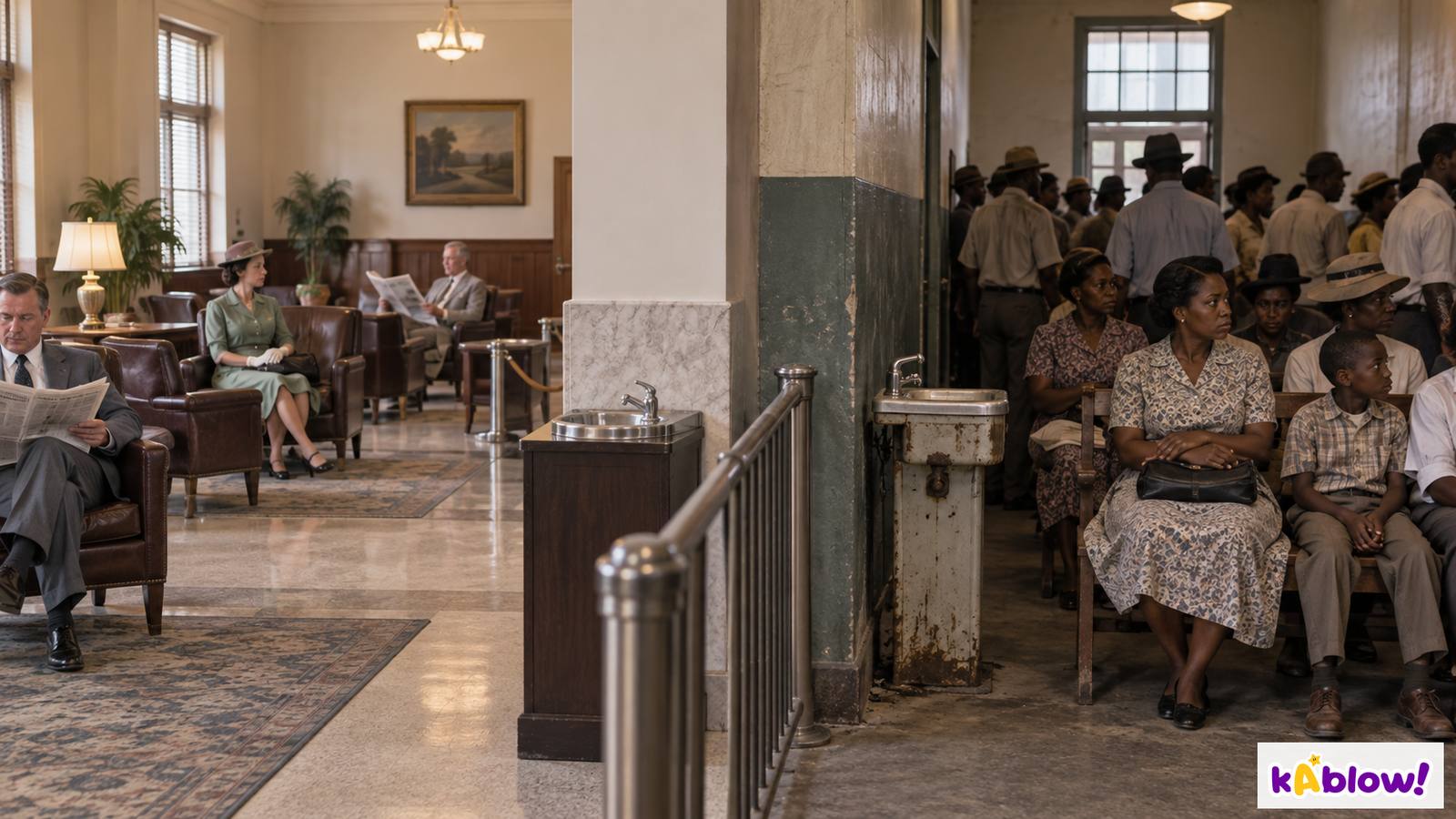
Separate facilities and unequal power
Non-violent protest
- Parks was an experienced NAACP activist when arrested on 1 December 1955. She was not the first to resist. The Women’s Political Council, Jo Ann Robinson, E. D. Nixon, the Montgomery Improvement Association, churches and many residents helped organise the boycott, commonly counted as 381 days. Walking, car pools and fundraising made sustained action possible.
- King gained prominence, and the SCLC formed in 1957. The separate Browder v. Gayle case, not Parks’s own appeal, produced a ruling against bus segregation that the Supreme Court affirmed. Community pressure and litigation should be connected without reducing either to one hero or one moment.
- Greensboro’s 1960 sit-ins helped spread a tactic with earlier precedents. CORE initiated the 1961 Freedom Rides, with other activists including SNCC participants continuing them despite violence. These challenged segregation and non-compliance with existing rulings in interstate transport.
- Birmingham’s 1963 campaign involved local organisers as well as national leadership. Police violence against demonstrators, including young people, became widely visible. Media responses varied; attention had to connect with organising and political pressure. The August 1963 March for Jobs and Freedom was a broad coalition event of around 250,000 people, with King’s speech one part of its programme.
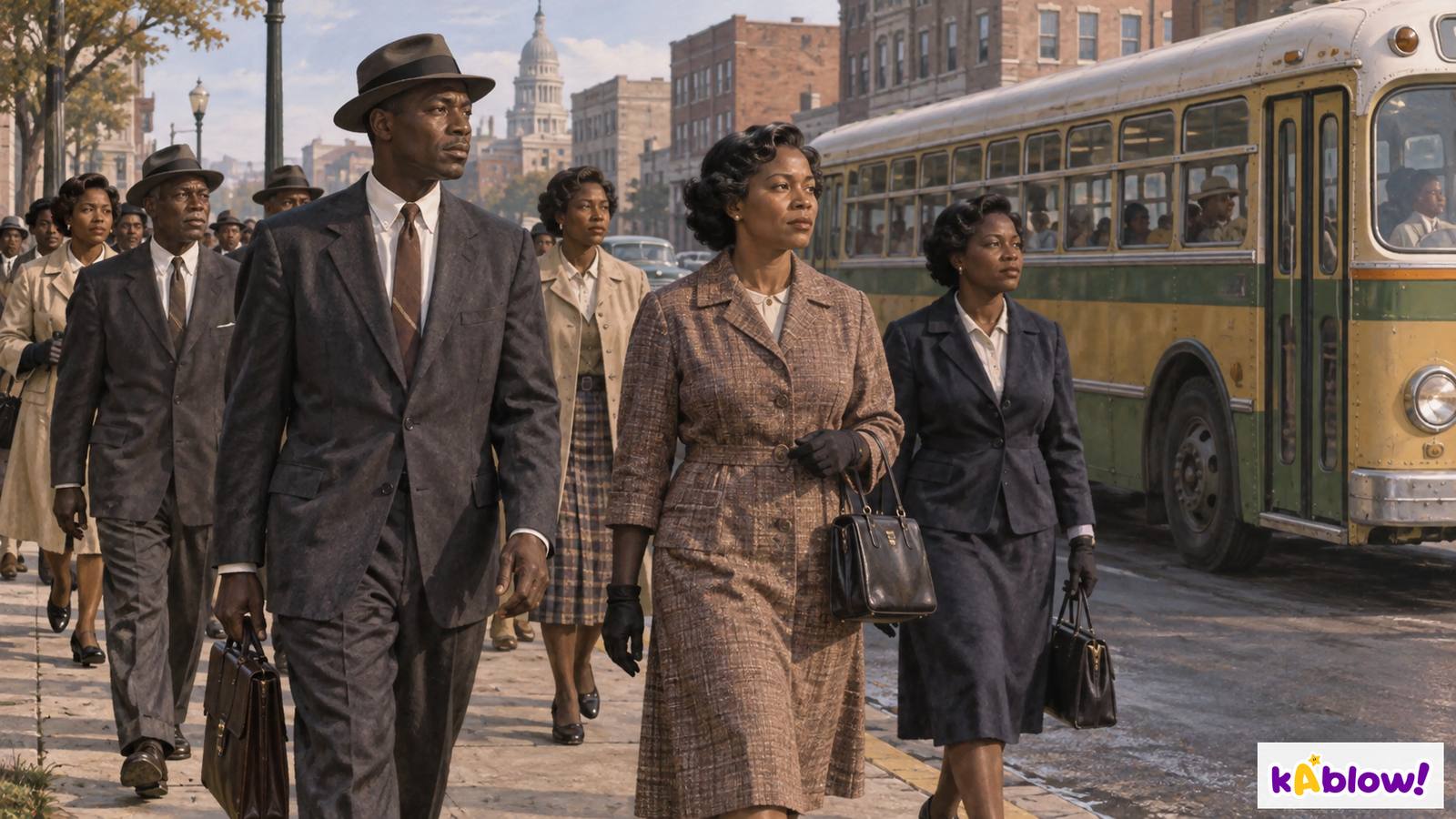
A boycott depends on sustained participation
Laws
- The 1964 Civil Rights Act addressed several areas through separate titles, including specified public accommodations and covered employment. It was neither the first civil-rights statute nor an instant end to all discrimination.
- Bloody Sunday was the attack on marchers leaving Selma on 7 March 1965; King was not leading that first crossing. Later marches and longer voting-rights organising contributed to pressure for legislation. The 1965 Voting Rights Act combined general rules with targeted federal oversight and test suspension in covered jurisdictions. Nationwide suspension of literacy tests followed in 1970. These are historical provisions, not a statement that every rule remained unchanged thereafter.
- The 1968 Fair Housing Act initially addressed race, colour, religion and national origin within its coverage and exemptions. Later additions should not be projected backwards into 1968. Enforcement limits and persistent residential inequality show why legal prohibition and equal experience are different.
Different laws addressed different barriers
Varied strategies and Black Power
- Malcolm X was a prominent Nation of Islam spokesman before leaving in 1964. He defended self-defence, challenged reliance on nonviolent tactics and developed wider international and civil-rights relationships. His ideas changed, so avoid a fixed contrast of King as peaceful and Malcolm as advocating every form of violence. He was assassinated in February 1965.
- Black Power became prominent in the mid-1960s, with Stokely Carmichael among its advocates. It emphasised pride, control and self-determination, but included diverse groups and strategies. It was not one political party or a belief shared identically by every Black activist.
- Newton and Seale founded the Black Panther Party in Oakland in 1966. Armed self-defence and challenges to police brutality formed part of its history alongside political demands and food, health and educational programmes. Women were central in many chapters. Party activity also faced surveillance, repression and violent conflict.
- The 1965 Watts uprising followed a traffic-stop confrontation amid wider tensions over policing and inequality. It should not be treated as a planned nonviolent campaign or as proof that every resident or activist held one view.
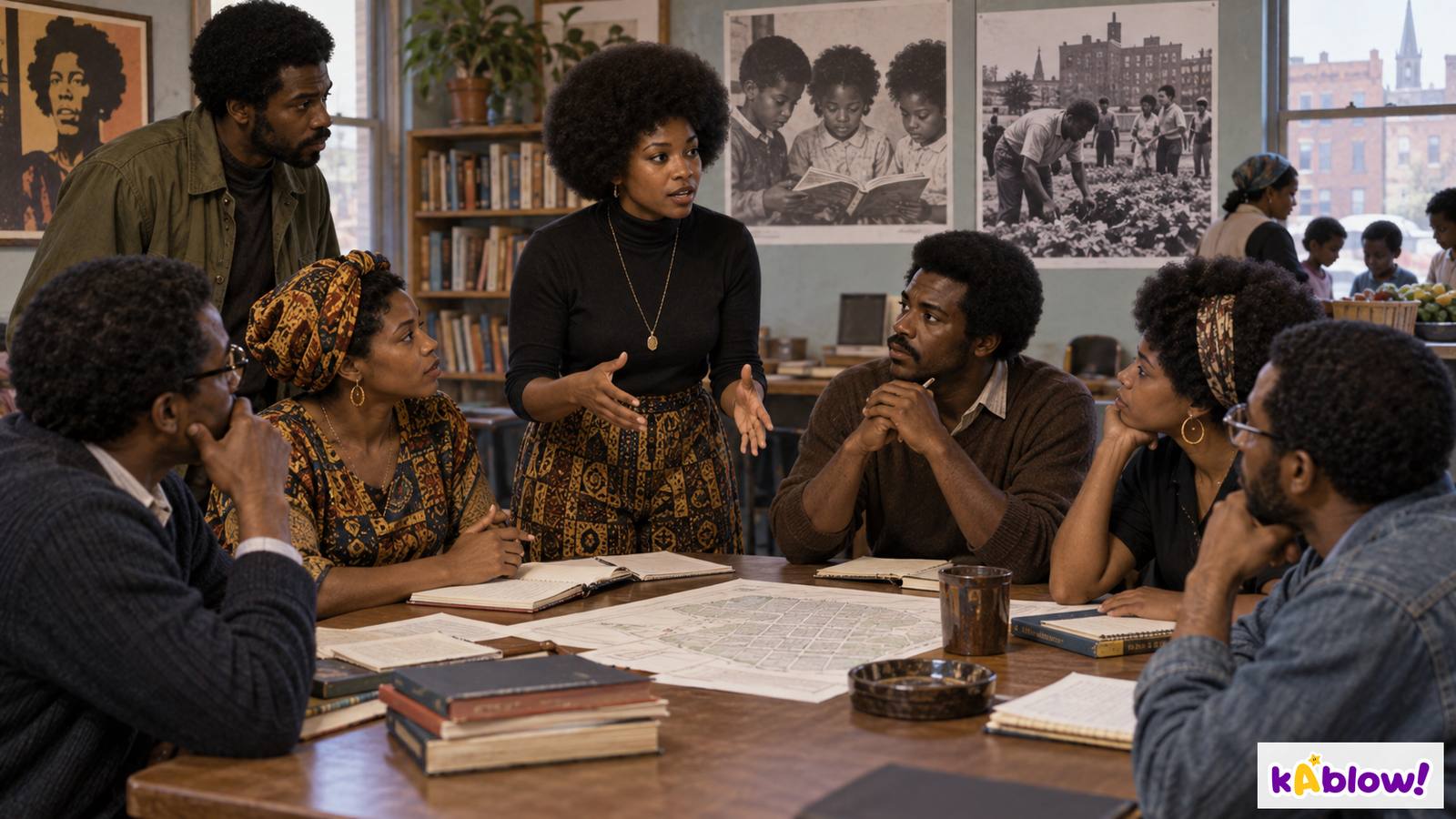
Community organising is part of the picture
Change and limits by 1973
- King was assassinated in April 1968, prompting mourning and unrest in many cities. His later work linked racial justice with labour and poverty; the movement continued after his death through diverse organisations and local campaigns.
- Major decisions and statutes changed legal and political opportunities, but discrimination, unequal schooling, poverty, housing exclusion and policing remained contested. Assess concrete effects and enforcement rather than claiming either that nothing changed or that every barrier disappeared.
- This lesson is an overview of selected developments across the period, not a complete course for every board. The general opportunity-and-inequality lesson provides further context on employment, prosperity and women’s campaigns.
Assess effects and limits together
Slides
Sign up free to view the lesson slides
Step through every slide for this topic — plus flashcards and revision notes — with a free account.
Practice questions
Free preview — 8 of 37 questions. Sign up to see them all.
1.What were Jim Crow laws?
Easy- Alaws enforcing segregation in the South
- Blaws ending segregation
- Ctaxes
- Dgun laws
2.What did the Montgomery Bus Boycott protest?
Easy- Ataxes
- Bthe draft
- CProhibition
- Dsegregated buses
3.Who was Rosa Parks?
Easy- Aa senator
- Ba president
- Can experienced activist whose December 1955 arrest became a rallying point
- Da judge
4.How long did the Montgomery Bus Boycott last?
Easy- A10 years
- B381 days
- C3 days
- D3 weeks
5.What was the SCLC?
Easy- ASouthern Christian Leadership Conference
- Ba union
- Ca gang
- Da court
6.What were sit-ins?
Easy- Aboycotts
- Bmarches
- Cspeeches
- Dprotests in segregated places such as lunch counters
7.What were the Freedom Rides?
Easy- Atrain trips
- Bswimming
- Cinterracial journeys challenging segregated interstate transport facilities
- Dplane flights
8.What did images of Birmingham’s 1963 campaign show?
Easy- Aa march ended peacefully
- Bpolice used dogs and fire hoses on peaceful protesters
- Ca treaty was signed
- Da school opened
Unlock all 37 questions & more
Create a free account to see every question, the slides, flashcards and revision notes for this topic.
Past papers
Past-paper practice for this topic is coming soon.
Coming soon