Conservation Of Biodiversity
Learn it by playing
Answer these questions to earn energy, then fish and explore. No account needed.
Lesson notes
What is Biodiversity?
- Biodiversity is the variety of life that exists in a specified area, either globally or in a smaller region.
- Biodiversity is important for the resilience of ecosystems; the more biodiverse an ecosystem, the more stable and resistant to change it is.
- Biodiversity can be studied at three levels: ecosystem diversity, species diversity, and genetic diversity.
- Ecosystem diversity is the range of different ecosystems or habitats within a particular area; a coral reef with many microhabitats has high ecosystem diversity, while a large sandy desert has low ecosystem diversity.
- Species diversity is measured by species richness (the number of species in an ecosystem) and species evenness (the number of individuals of each species).
- For an ecosystem to have high species diversity, it must have both high species richness and high species evenness.
- Genetic diversity is the number of different alleles of genes present in a species or local population; it helps populations adapt to and survive environmental changes.
Marine diversity over 600 million years
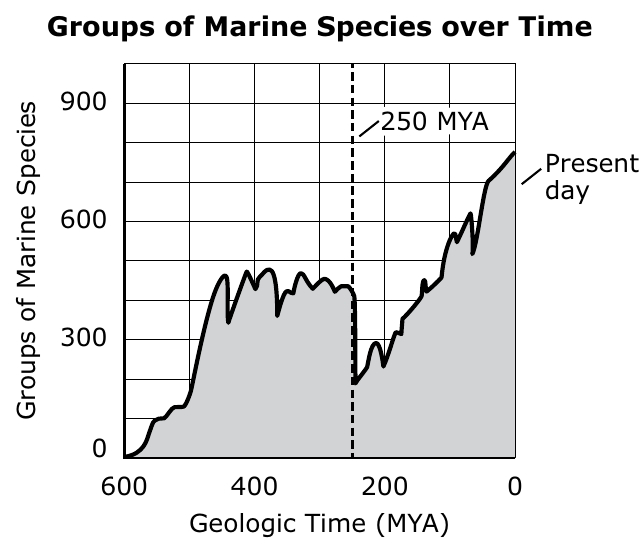
Biodiversity Change Over Time
- Recent estimates suggest there could be around 8.7 million species on Earth, but only about 1.2 million have been recorded and classified.
- The fossil record shows that many species that existed in the past are no longer present due to extinction.
- There are more species alive today than have been alive in the past.
- Speciation leads to an increase in the number of species; when speciation occurs at a higher rate than extinction, global biodiversity increases.
- Despite recent extinctions, past periods of speciation mean that global biodiversity levels are still higher than ever before.
- Classification is an example of pattern recognition, but the same observations can be classified in different ways.
- The accuracy of species estimates depends on correct classification; if species are incorrectly classified together, estimates are too small, and if incorrectly separated, estimates are too large.
- Taxonomists can be 'lumpers' (focus on similarities, classify species together) or 'splitters' (focus on differences, classify species separately).
Anthropogenic Extinction
- Anthropogenic extinction is extinction caused by human activities.
- Scientists believe we are currently experiencing a mass extinction event, and human activities play a large role; this could be the sixth mass extinction.
- North Island giant moa (×Dinornis novaezealandiae×) was a large, flightless, herbivorous bird that lived in New Zealand until 1300; humans arrived between 1200–1300 and hunted it to extinction.
- Caribbean monk seals (×Neomonachus tropicalis×) lived around the Gulf of Mexico and the Caribbean and were declared extinct in 2008; their docile nature and habit of lying on rocks made them easy for European colonists to hunt for oil and meat.
- A third case study of an extinct species due to human activities should be chosen from a local or familiar region; examples include the baiji, passenger pigeon, paradise parrot, golden toad, and St Helena darter.
- You need to be able to discuss the causes of anthropogenic extinction in the context of three case studies: North Island giant moas, Caribbean monk seals, and a third species of your choice.
Shrinking range of the giraffe
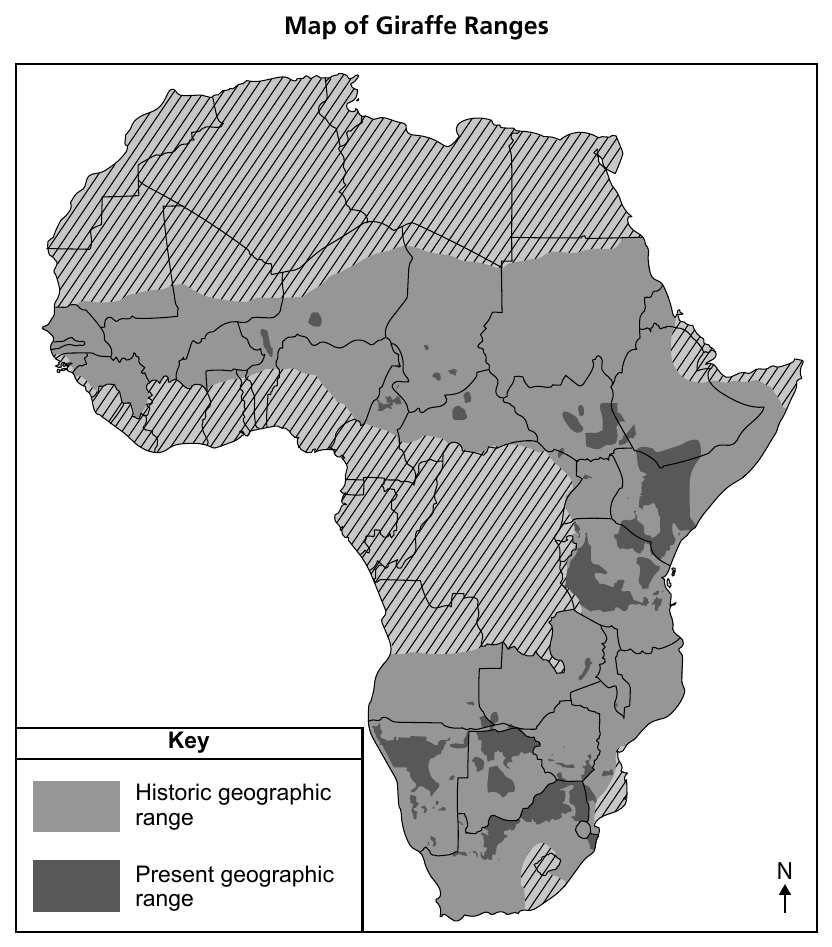
Ecosystem Loss
- An ecosystem includes all living organisms in an area, their interactions with each other, and the non-living environment.
- Human activities are responsible for damaging and destroying many ecosystems, such as through deforestation.
- Mixed dipterocarp forests in Southeast Asia are a crucial part of a complex rainforest ecosystem; some parts of Southeast Asia have lost more than 50% of their forests.
- Forest is often lost due to clear-cutting, where all trees in an area are cut down and removed.
- Clear-cutting provides timber and clears land for agriculture, such as palm oil plantations.
- A second case study of anthropogenic ecosystem loss should be chosen from a local or familiar region; examples include the Great Barrier Reef, Northern Great Plains, and mangrove forests.
- You need to be able to discuss anthropogenic ecosystem loss in the context of two case studies: mixed dipterocarp forests in Southeast Asia and a second case study of your choice.
Evidence for Biodiversity Loss
- Trustworthy evidence of biodiversity loss requires sufficient data from reliable sources, including many surveys in a wide range of habitats and repeat survey data over time.
- Both species richness and species evenness need to be assessed to understand biodiversity changes.
- Citizen scientists are members of the public who help gather data, increasing the volume of data but with a trade-off between quality and quantity.
- Data must be expertly analysed, often by organisations working across multiple governments, such as IPBES and IUCN.
- IPBES (Intergovernmental Science-Policy Platform on Biodiversity and Ecosystem Services) gathers information, recommends policies, and communicates findings; its 2019 report summarised research and policy recommendations.
- IUCN (International Union for the Conservation of Nature) is a network that gathers knowledge and proposes environmental policies.
- The IUCN Red List lists the world's most threatened species; it has assessed more than 150,000 species and listed more than 42,000 as threatened.
- IUCN categories include: LC (least concern), NT (near threatened), VU (vulnerable), EN (endangered), CR (critically endangered), EW (extinct in the wild), E (extinct), DD (data deficient), and NE (not evaluated).
Causes of Biodiversity Loss
- The growth of the global human population is likely the main cause of the biodiversity crisis; there are currently more than 8 billion people on Earth.
- The human population is projected to continue increasing until 2100 because birth rates are higher than death rates.
- Overexploitation of resources includes overfishing and hunting animals for ivory, oil, or fur.
- Urbanisation causes direct habitat loss and fragments habitats into smaller pieces, e.g., by roads.
- Deforestation and habitat loss occur when land is cleared for agriculture, timber, mining, or quarries; agriculture often involves monocultures with low biodiversity and loss of soil micro-organisms.
- Pollution includes microplastics in remote environments and fertilisers or organic waste washed into water bodies.
- Biodiversity loss has led to an increase in pest species that damage crops, such as the cotton bollworm; higher biodiversity increases pest predators.
- Invasive species introduced by humans can damage habitats; examples include grey squirrels and signal crayfish in the UK, cane toads in Australia, and rats in the Galapagos Islands.
- Disease can wipe out large numbers of species; the chytrid fungus is thought to have wiped out 90 species of amphibian so far.
In Situ Conservation
- In situ conservation protects species in their natural habitat and includes protected areas, rewilding, and reclamation.
- Protected areas are defined geographical spaces, such as national parks or nature reserves, managed and protected for conservation.
- National parks are government-controlled areas where wildlife and environment are protected; nature reserves are smaller and can be on private or public land.
- Restrictions inside protected areas may include strictly controlled human access, tightly regulated industrial activities, and limited or prohibited hunting.
- Rewilding is the restoration of ecosystems to a point where they can sustain themselves, resulting in biodiverse habitats.
- Active rewilding involves human intervention, such as removing human features like roads and reintroducing locally extinct species.
- Passive rewilding means leaving an area alone to allow ecological processes to gradually restore themselves, e.g., stopping land management to allow natural succession.
- Passive rewilding may not work for all habitats; grassland habitats often require grazing to prevent tree species from dominating.
- Reclamation is the reclaiming and restoration of areas damaged by human activities, such as abandoned quarries or deforested areas, aiming to restore previously existing ecosystems.
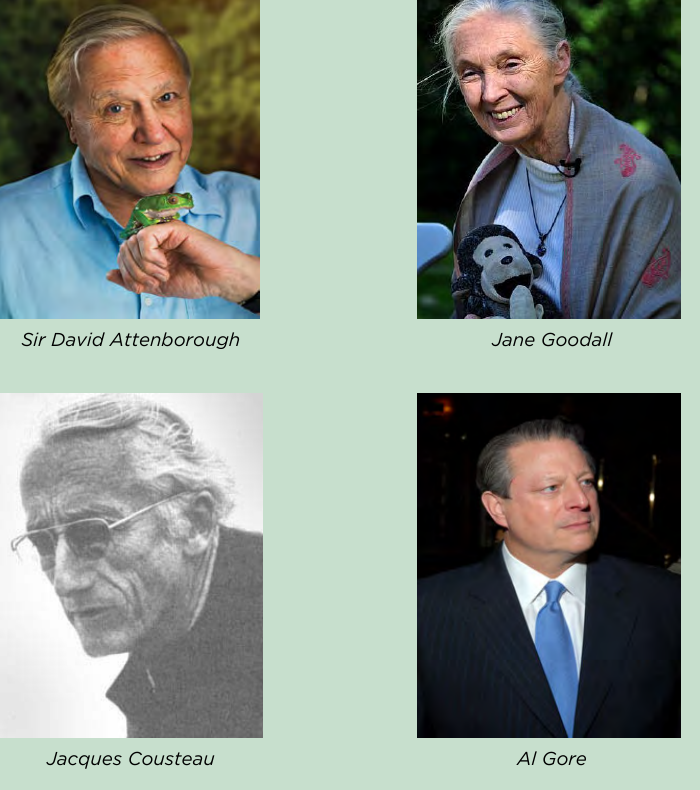
Raising awareness of biodiversity
Ex Situ Conservation
- Ex situ conservation protects species outside their natural habitat and includes zoos, botanic gardens, seed banks, and tissue banks.
- Zoos use captive breeding programmes to increase species numbers; artificial insemination allows gene flow between individuals in different zoos and prevents problems from low genetic diversity.
- Captive breeding can lead to the release of individuals back into the wild, and zoos are invaluable for scientific research on genetics, behaviours, and habitat requirements.
- Botanic gardens are the plant equivalent of zoos; they use cuttings and seeds from the wild to establish captive populations, and may use tissue culturing and cloning.
- Captive plant populations can be used for future reintroduction into habitats where they have become rare; research on reproduction, growth, and habitat requirements is a major role.
- Seed banks conserve plant diversity by drying and storing seeds in a temperature-controlled environment; cool, dry conditions increase seed viability.
- Seeds are periodically grown into plants and fresh seeds are collected; seeds of the same species are usually collected from different sites to maintain genetic diversity.
- The Svalbard Global Seed Vault in Norway contains seeds from almost 1 million plant species and is located in the Arctic Circle with ideal conditions.
- Tissue banks (frozen zoos) store genetic material from animals at very low temperatures; properly frozen samples can last indefinitely, and samples from different individuals maintain genetic diversity.
- Tissue banks store germplasm (reproductive tissue such as sperm, eggs, embryos) for captive breeding and potentially IVF with a surrogate, and somatic tissue (body cells) containing the full genome for DNA research and potential cloning.
Prioritising Species for Conservation
- The EDGE programme (Evolutionarily Distinct and Globally Endangered), working with the Zoological Society of London (ZSL), highlights the needs of certain species.
- A species is prioritised by EDGE if it is both evolutionarily distinct and globally endangered.
- Evolutionarily distinct species have few close evolutionary relatives, are unusual in appearance, behaviour, and DNA, and represent a part of Earth's evolutionary tree not represented elsewhere.
- Globally endangered means the species is threatened globally, not just locally, as indicated by the IUCN Red List.
- Examples of priority EDGE species include the largetooth sawfish, Chinese giant salamander, and purple frog.
- Deciding which species to prioritise involves complex ethical, environmental, political, social, cultural, and economic issues.
- Some species may not be highly threatened globally but are important for maintaining ecosystems that support other threatened species; some may be culturally important or in difficult political situations like warzones.
- EDGE does not make conservation decisions but passes information to stakeholders to allow a range of people to be involved in the debate.
Slides
Sign up free to view the lesson slides
Step through every slide for this topic — plus flashcards and revision notes — with a free account.
Practice questions
Free preview — 8 of 62 questions. Sign up to see them all.
1.Which of the following is a correct explanation for biodiversity change?
Easy- ASpecies extinctions occur due to anthropogenic extinction.
- BScientists have changed the way species are classified.
- CClassification can be subjective.
- DThere are more species alive today than have been alive in the past.
2.Which of the following describe(s) anthropogenic extinction? I. North Island giant moas were hunted to extinction between 1200–1300. II. An asteroid strike resulted in the extinction of most of the dinosaurs around 65 million years ago. III. Caribbean monk seals were hunted to extinction to provide oil and food.
Medium- AI and II only
- BI and III only
- CI, II and III
- DIII only
3.Which of the following is an important factor in mixed dipterocarp ecosystem loss in Southeast Asia?
Medium- AIntroduction of non-native species.
- BEstablishment of nature reserves.
- CClear-cutting of trees to provide agricultural land.
- DChanges in atmospheric oxygen levels.
4.Which term describes the variety of life that exists in a specified area?
Easy- ABiodiversity
- BSpecies richness
- CGenetic diversity
- DEcosystem diversity
5.An ecosystem contains 1000 species, but 500 of those species are represented by only a few individuals. Which statement best describes this ecosystem?
Easy- AHigh species richness and high species evenness
- BHigh species richness but low species evenness
- CLow species richness but high species evenness
- DLow species richness and low species evenness
6.Which of the following best describes genetic diversity?
Easy- AThe number of different species in an ecosystem
- BThe range of different habitats in an area
- CThe number of different alleles of genes present in a species or population
- DThe number of individuals of each species in an ecosystem
7.Which statement about the number of species on Earth is correct?
Medium- AAround 8.7 million species have been recorded and classified.
- BAround 1.2 million species have been recorded and classified, and estimates suggest around 8.7 million exist.
- CAround 15 million species have been recorded, and estimates suggest around 1.3 million exist.
- DAround 1.3 million species have been recorded, and estimates suggest around 8.7 million exist.
8.If taxonomists incorrectly classify two separate species together as one species, what effect will this have on estimates of the total number of species on Earth?
Medium- AEstimates will be too small
- BEstimates will be too large
- CEstimates will be unaffected
- DEstimates will become more accurate
Unlock all 62 questions & more
Create a free account to see every question, the slides, flashcards and revision notes for this topic.