Automated Systems
Learn it by playing
Answer these questions to earn energy, then fish and explore. No account needed.
Lesson notes
Definition and Components
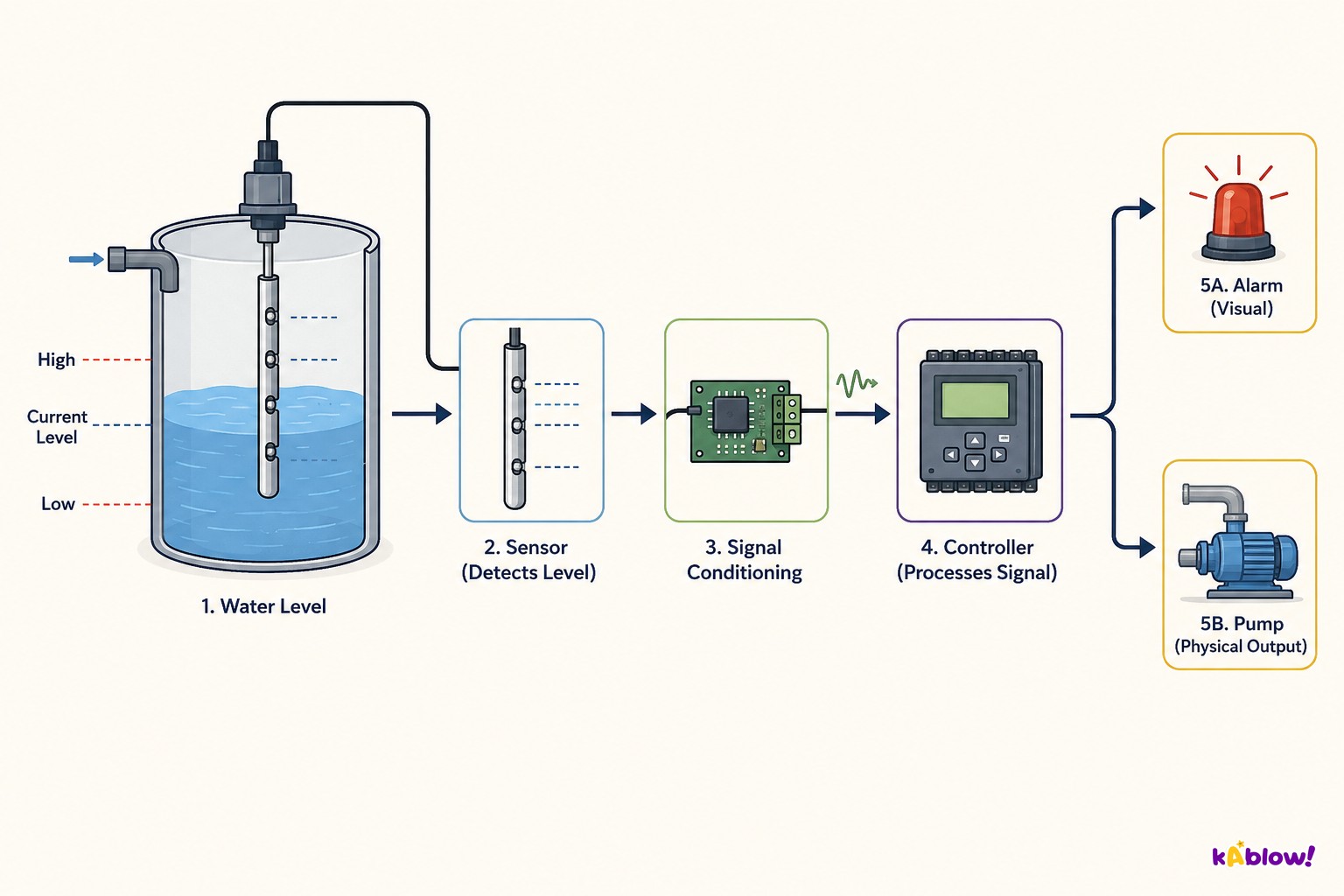
- An automated system is a computer system that collects information and can react and perform tasks based on the data.
- Three core components: sensors, microprocessor, and actuators.
- A sensor collects information and provides it as input to the microprocessor.
- The microprocessor processes the information and makes decisions based on pre-programmed rules.
- An actuator makes physical changes (e.g., opening a valve, activating an alarm) based on instructions from the microprocessor.
Water-level monitoring and control
Advantages of Automated Systems
- Cost – long-term cost saving due to reduced labour and increased efficiency.
- Safer – enables timely interventions and keeps humans away from hazardous environments.
- Efficient – optimises use of materials and resources.
- Consistent – results are repeatable and reliable.
Disadvantages of Automated Systems
- Cost – short-term expensive to set up and maintain.
- Testing – significant testing must be done before deployment.
- Security – open to cyber attacks.
- Flexibility – will only react to programmed scenarios; cannot handle unexpected situations.
- Unethical – can result in major job losses.
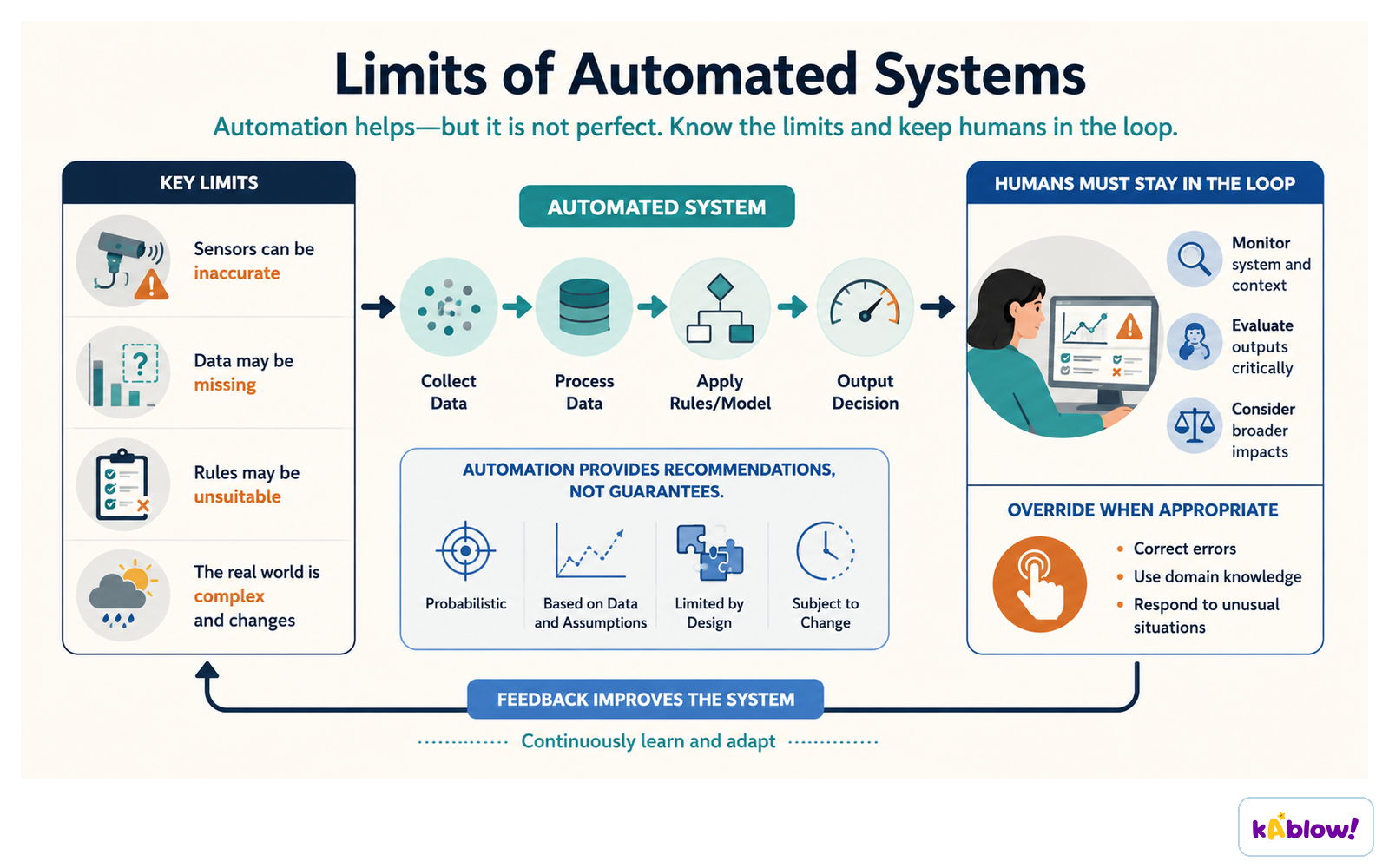
Automation gives recommendations, not guarantees: sensors can be inaccurate and rules can be unsuitable, so people stay in the loop.
Applications in Different Scenarios
- Industry – increased production and improved quality control, but high investment costs and job losses.
- Transport – fewer accidents and traffic congestion, but drivers lose jobs and technology reliability is a concern.
- Agriculture – less manual labour, increased crop yield and resource management, but high start-up costs.
- Weather – accurate forecasting and improved early warning systems, but dependence on accurate sensor data.
- Gaming – personalised experience and AI-enhanced opponents, but reduced creativity and repetitive gameplay.
- Lighting – increased energy efficiency and better security with motion-activated systems, but lack of human control.
- Science – faster and more precise experiments with reduced human error, but high development costs and potential algorithm bias.
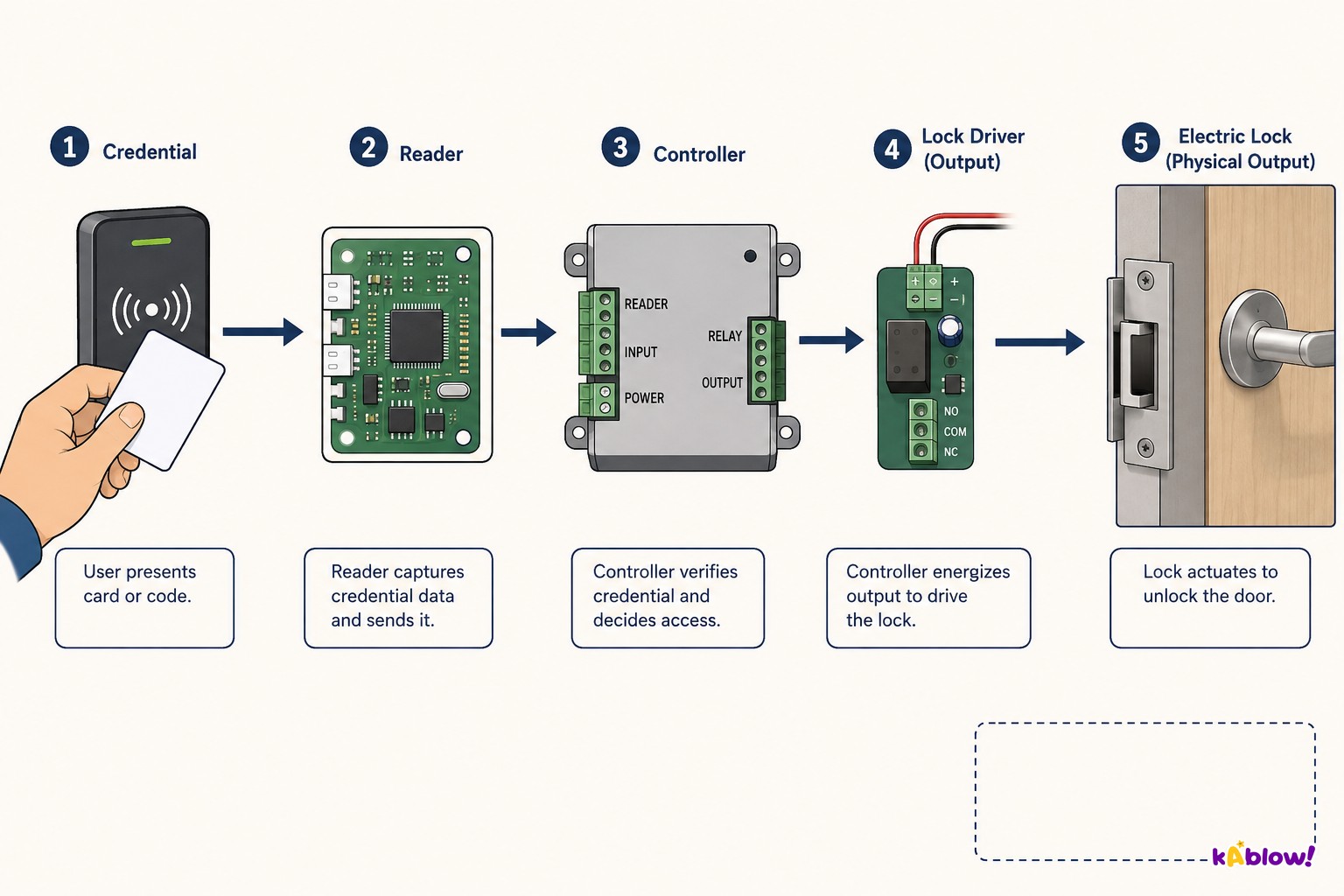
Automated door lock
Worked Example: Theme Park Water Spray Game
- A motion sensor collects data when a player runs past.
- Data is converted to digital using an ADC (analogue-to-digital converter).
- The sensor sends data to the microprocessor.
- The microprocessor compares the data to stored values.
- If the value is outside a preset range, a signal is sent to the actuator to spray water.
- If the value is within range, no action is taken.
- The process runs in a continuous loop.
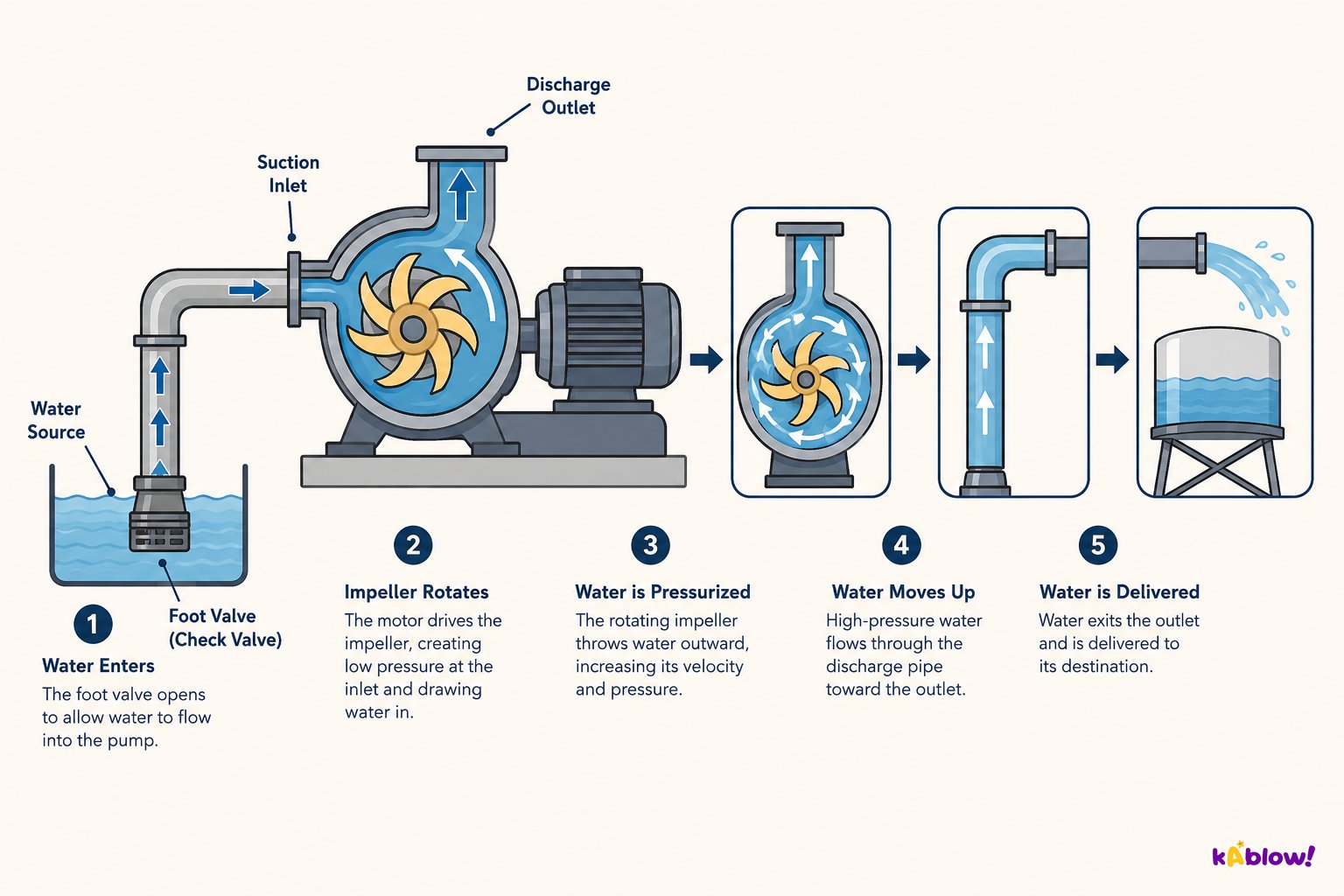
Water-pump actuator
Slides
Sign up free to view the lesson slides
Step through every slide for this topic — plus flashcards and revision notes — with a free account.
Practice questions
Free preview — 8 of 55 questions. Sign up to see them all.
1.What are the three main components of an automated system?
Easy- ASensors, microprocessors, actuators
- BSensors, processors, motors
- CInput, output, storage
- DHardware, software, firmware
2.Which component in an automated system collects information from the environment?
Easy- ASensor
- BMicroprocessor
- CActuator
- DMemory
3.What is the role of the actuator in an automated system?
Easy- ATo make physical changes based on instructions from the microprocessor
- BTo collect data from the environment
- CTo process data and make decisions
- DTo store pre-programmed rules
4.Which of the following is an advantage of using automated systems in industry?
Easy- AIncreased production
- BHigh investment costs
- CJob losses
- DReduced flexibility
5.Which of the following is a disadvantage of automated systems in agriculture?
Easy- AHigh start-up costs for equipment and sensors
- BLess manual labour
- CIncreased crop yield
- DImproved resource management
6.In the theme park game described, what happens when the sensor data is outside the stored range?
Medium- AWater is sprayed
- BNo action is taken
- CThe game ends
- DThe microprocessor resets
7.Which of the following is an advantage of automated systems in transport?
Easy- ALess accidents and traffic congestion
- BTransportation drivers lose jobs
- CHigh investment costs
- DTechnology reliability issues
8.What is a disadvantage of automated systems in science?
Easy- APotential for algorithm bias
- BFaster and more precise results
- CReduced risk of human error
- DHigh cost development and maintenance
Unlock all 55 questions & more
Create a free account to see every question, the slides, flashcards and revision notes for this topic.