Development Life Cycle
Learn it by playing
Answer these questions to earn energy, then fish and explore. No account needed.
Lesson notes
Program Development Life Cycle
- The program development life cycle is a structured approach to creating software.
- It consists of stages: Analysis, Design, Coding, Testing, and Maintenance.
- Each stage produces outputs that feed into the next stage.
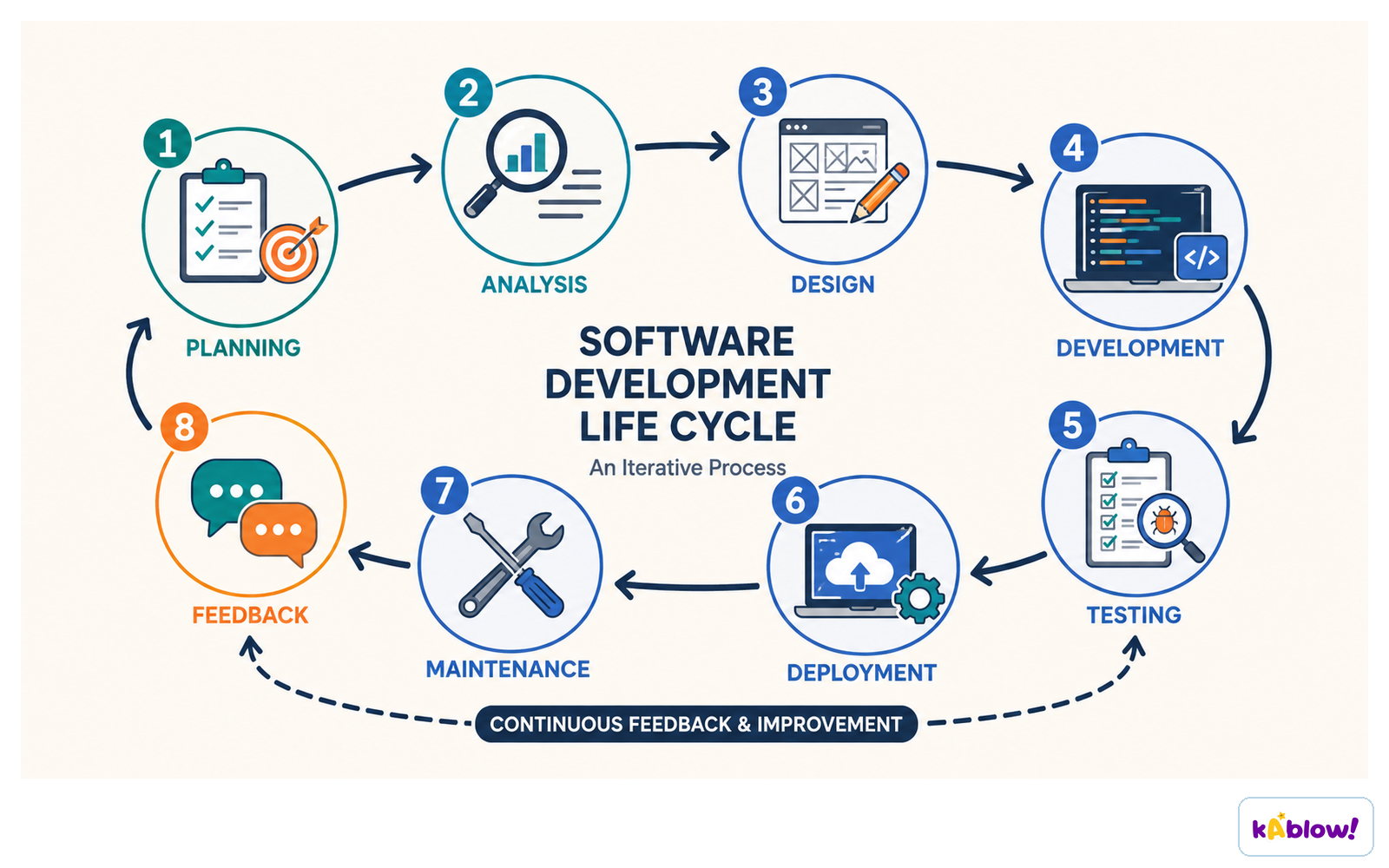
The software development life cycle runs from planning and analysis through design, development, testing and deployment, then round again on feedback.
Analysis
- The analysis stage aims to precisely understand the problem the program must solve.
- Abstraction is used to remove unimportant details and focus on core functionality and requirements.
- A requirements document is created, defining each requirement with a description and success criteria.
- Example of abstraction: London Underground map – shows connections, not geographical accuracy.
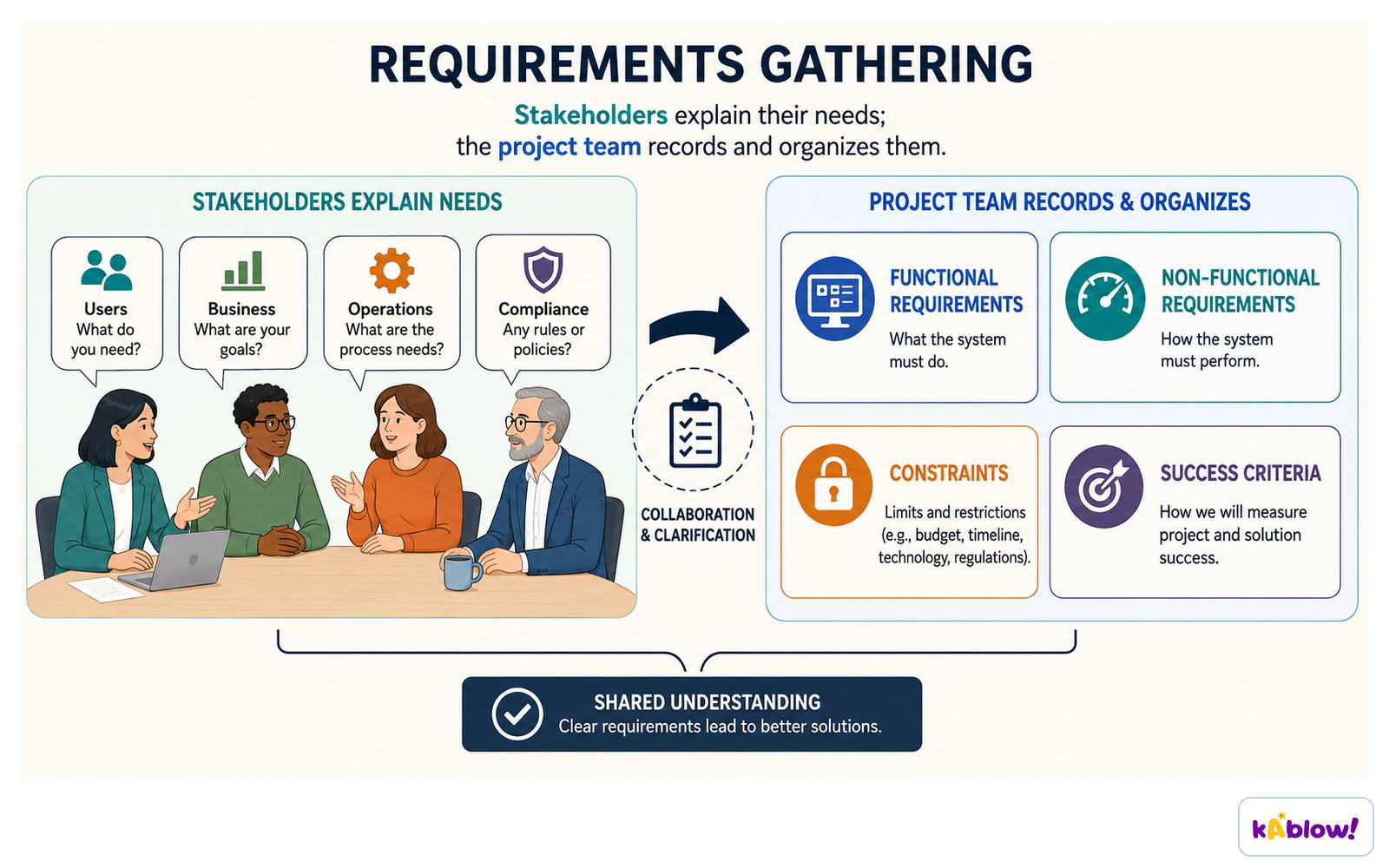
In requirements gathering, stakeholders explain what they need and the project team records functional and non-functional requirements, constraints and success criteria.
Design
- The design stage produces a blueprint for the solution.
- Design can be presented using structure diagrams, flowcharts, or pseudocode.
- The design must match the requirements from the analysis stage.
Coding
- Developers write code in a suitable programming language, creating modules that work together.
- Iterative testing is performed: each module is tested and debugged as it is built.
- Modules are retested when new modules are added to ensure correct interaction.
Testing
- The complete program is run many times with varying sets of test data.
- Testing ensures the program works as intended and rejects invalid input.
- Example test data: alphanumeric sequences for password validation.
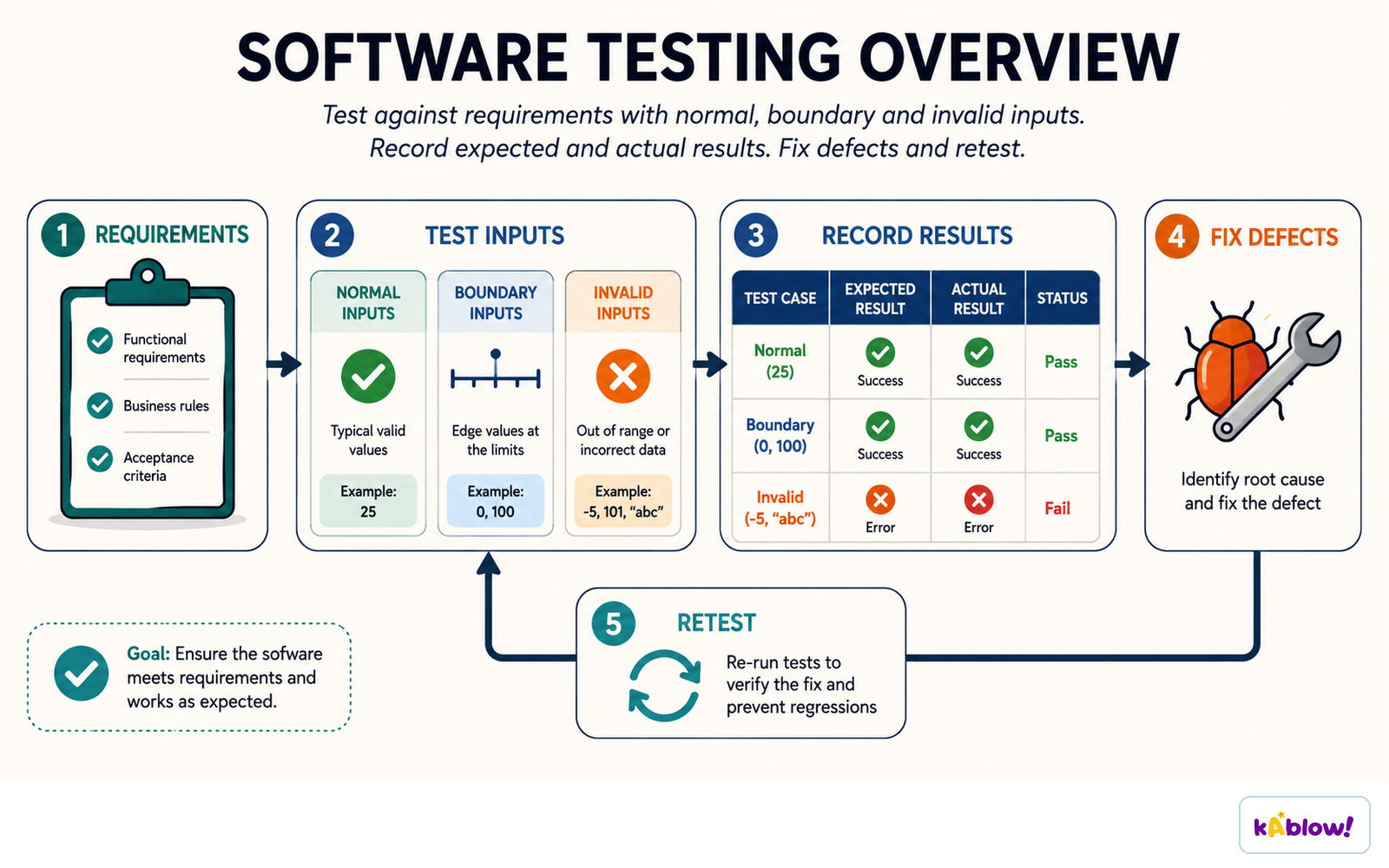
Testing runs normal, boundary and invalid inputs, records expected against actual results, then fixes and retests.
Maintenance
- After delivery, the program may need updates to fix bugs or add features.
- Maintenance ensures the program continues to meet user needs.
Slides
Sign up free to view the lesson slides
Step through every slide for this topic — plus flashcards and revision notes — with a free account.
Practice questions
Free preview — 8 of 51 questions. Sign up to see them all.
1.What is the first stage of the program development life cycle?
Easy- AAnalysis
- BDesign
- CCoding
- DTesting
2.Which stage of the program development life cycle involves producing a blueprint for the solution?
Easy- AAnalysis
- BDesign
- CCoding
- DTesting
3.What is the purpose of the analysis stage?
Easy- ATo write the program code
- BTo precisely understand the problem
- CTo test the final program
- DTo design the user interface
4.Which of the following is an example of abstraction?
Easy- AWriting code in a high-level language
- BRemoving unimportant details from a problem
- CTesting each module individually
- DCreating a requirements document
5.What is the purpose of a requirements document?
Easy- ATo list the program code
- BTo define the problem and break it down into clear parts
- CTo test the program
- DTo design the user interface
6.During which stage is iterative testing performed?
Easy- AAnalysis
- BDesign
- CCoding
- DFinal testing
7.What does iterative testing involve?
Easy- ATesting only the final program
- BTesting each module as it is developed and retesting when changes are made
- CTesting all modules at once after coding is complete
- DTesting only the user interface
8.Which type of test data would be used to test password validation?
Medium- AOnly numeric data
- BOnly alphabetic data
- CAlphanumeric sequences
- DOnly special characters
Unlock all 51 questions & more
Create a free account to see every question, the slides, flashcards and revision notes for this topic.