Drugs
Learn it by playing
Answer these questions to earn energy, then fish and explore. No account needed.
For educators: ready-to-use lesson slides, revision notes for Drugs (KS3 Science, Biology) — use them in your lesson, or run the topic as an interactive class activity your learners play as a live game.
Lesson notes
What are drugs?
- Drugs are substances that can change how the body and mind work.
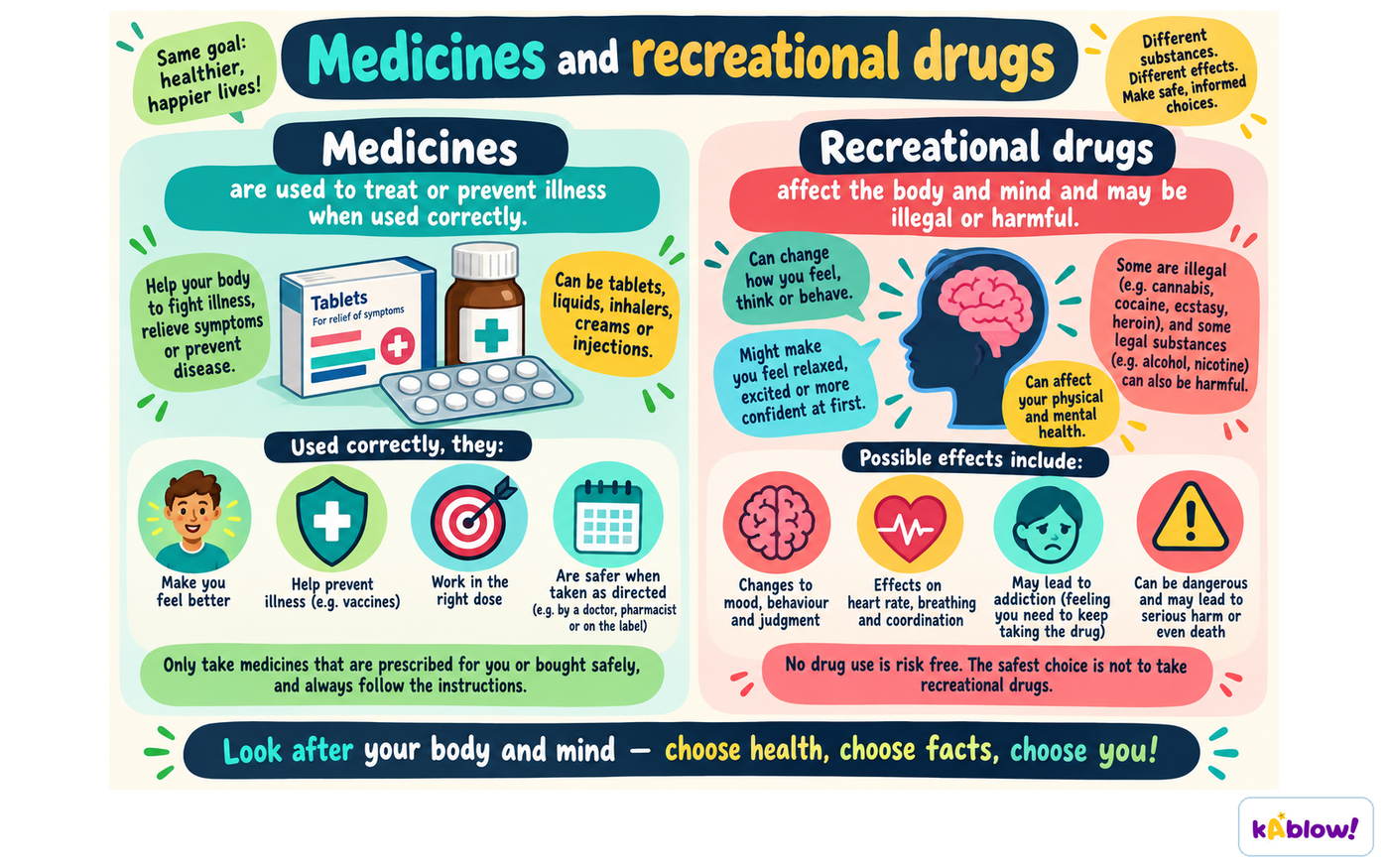
- Some drugs are used for medical reasons (e.g., painkillers), others for recreation.
- Recreational drugs can have serious effects on health and behaviour.
Medicines are used to treat or prevent illness. Recreational drugs affect the body and mind and can cause harm and addiction.
Types of drugs and their effects
- Painkillers (e.g., paracetamol, aspirin, ibuprofen) block pain signals from reaching the brain; they do not treat the cause of pain.
- Depressants (e.g., alcohol, heroin) slow down brain activity, making you feel relaxed or sleepy, but impair coordination and slow reaction times.
- Stimulants (e.g., caffeine, nicotine, cocaine) increase brain activity, making you feel more awake and alert; they also increase heart rate and blood pressure.
- Hallucinogens (e.g., LSD, magic mushrooms) change your perception of reality, causing you to see, hear, or feel things that are not there.
Alcohol – a legal depressant
- Alcohol is a legal drug classified as a depressant; it enters the bloodstream and slows brain functions.
- Effects include slurred speech, blurred vision, impaired judgment, and reduced coordination and reaction times.
- Long-term heavy drinking can cause liver disease (cirrhosis), heart disease, increased cancer risk, brain damage, and mental health issues.
- Alcohol can lead to aggressive or risky behaviour and addiction.
Addiction and withdrawal
- Addiction is when the body or mind becomes dependent on a substance, leading to a strong need to keep using it despite harm.
- When an addicted person stops using the drug, they may experience withdrawal symptoms.
- Withdrawal symptoms include anxiety, shaking, and nausea.
Illegal drugs
- Some drugs are illegal because they are highly addictive and cause severe harm to mental and physical health.
- Examples of illegal drugs: heroin and cocaine.
Slides
Sign up free to view the lesson slides
Step through every slide for this topic — plus flashcards and revision notes — with a free account.
Practice questions
Free preview — 8 of 54 questions. Sign up to see them all.
1.Which type of drug slows down brain activity and can make you feel relaxed or sleepy?
Easy- ADepressants
- BStimulants
- CPainkillers
- DHallucinogens
2.Which of the following is an example of a painkiller?
Easy- AParacetamol
- BCaffeine
- CLSD
- DAlcohol
3.Which of the following drugs is illegal?
Easy- AHeroin
- BAlcohol
- CParacetamol
- DCaffeine
4.Why is it dangerous to drive after drinking alcohol?
Easy- AAlcohol slows reaction times and impairs coordination
- BAlcohol increases alertness and concentration
- CAlcohol improves vision and hearing
- DAlcohol has no effect on driving ability
5.What is meant by addiction?
Easy- AA strong need to keep using a drug even when it is harmful
- BA temporary desire to try a new substance
- CA medical treatment using drugs
- DA feeling of relaxation after taking a drug
6.Which of the following is a withdrawal symptom?
Easy- AAnxiety
- BIncreased energy
- CImproved concentration
- DEuphoria
7.Why are heroin and cocaine illegal?
Easy- AThey are highly addictive and cause severe harm to health
- BThey are used for medical purposes
- CThey are legal in some countries
- DThey are depressants
8.How do painkillers work?
Medium- AThey block pain signals from reaching the brain
- BThey increase brain activity to ignore pain
- CThey treat the cause of the pain
- DThey slow down the nervous system
Unlock all 54 questions, flashcards & more
Create a free account to see every question, the slides, flashcards and revision notes for this topic.
Past papers
Past-paper practice for this topic is coming soon.
Coming soon