Nutrition
Learn it by playing
Answer these questions to earn energy, then fish and explore. No account needed.
Lesson notes
Balanced Diet
- A balanced diet involves consuming appropriate amounts of each food group.
- It is important to keep us healthy and prevent deficiency diseases.
Food Groups
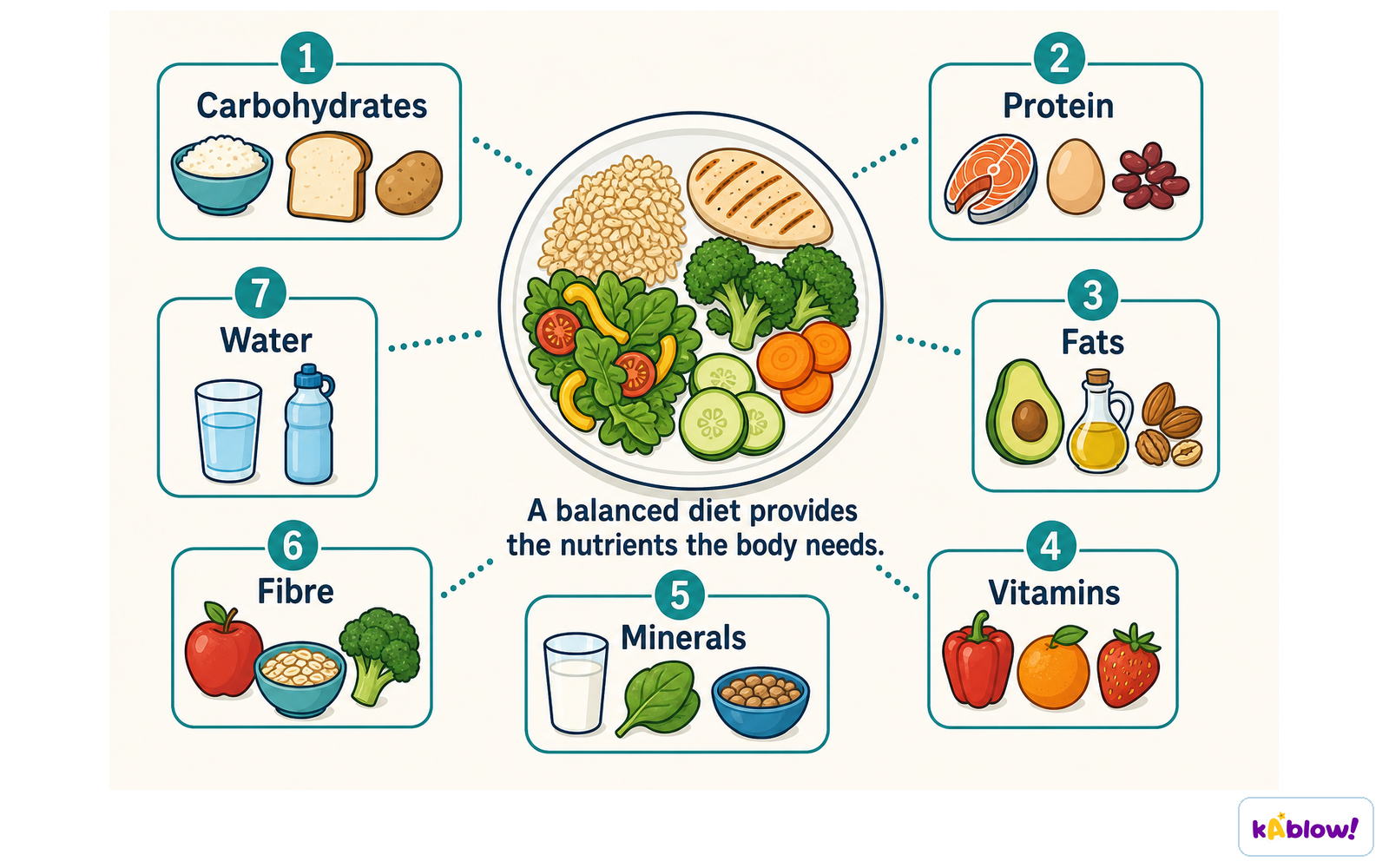
- Carbohydrates (e.g., bread, pasta, potatoes, rice) are broken into glucose for respiration.
- Lipids (fats) (e.g., oil, cheese, butter, some meats) provide long-term energy storage.
- Proteins (e.g., meat, fish, eggs, cheese, milk, nuts) are needed for growth and repair of tissues.
- Vitamins (e.g., from fruit and vegetables) are needed for many aspects of health.
- Minerals (e.g., from a wide variety of foods) are needed for many aspects of health.
- Fibre (e.g., cereals, fruit, vegetables) helps food move through the intestines.
- Water (e.g., any drink, fruit, vegetables) keeps us hydrated.
A balanced diet supplies carbohydrates, proteins, fats, vitamins, minerals, fibre and water from a variety of foods.
Deficiency Diseases
- Lack of a food group can lead to a deficiency disease.
- Anaemia – lack of iron (mineral); causes pale skin, tiredness, shortness of breath.
- Rickets – lack of vitamin D; causes fragile, painful bones and bone growth problems.
- Scurvy – lack of vitamin C; causes tiredness, swollen gums, tooth loss.
- Kwashiorkor – lack of protein; causes stunted growth and inability to repair tissues.
Examples of Foods
- Carbohydrates: bread, pasta, potatoes, rice.
- Lipids: oil, cheese, butter, some meats.
- Proteins: meat, fish, eggs, cheese, milk, nuts.
- Vitamins and minerals: fruit and vegetables.
- Fibre: cereals, fruit and vegetables.
- Water: any drink, fruit and vegetables.
Slides
Sign up free to view the lesson slides
Step through every slide for this topic — plus flashcards and revision notes — with a free account.
Practice questions
Free preview — 8 of 64 questions. Sign up to see them all.
1.Which of the following is the main reason a balanced diet is important?
Easy- ATo keep us healthy
- BTo provide energy only
- CTo help us grow taller
- DTo prevent all diseases
2.How many food groups are mentioned in the table of a balanced diet?
Easy- A5
- B6
- C7
- D8
3.Why is fibre needed in the diet?
Easy- ATo help food move through the intestines
- BTo provide long-term energy storage
- CFor growth and repair of tissues
- DTo keep us hydrated
4.Which food group is broken down into simple sugars like glucose for respiration?
Easy- AProteins
- BLipids
- CCarbohydrates
- DVitamins
5.What is the primary use of lipids (fats) in the body?
Easy- AImmediate energy source
- BLong-term energy storage
- CGrowth and repair of tissues
- DHelping food move through intestines
6.Which of the following foods is a good source of protein?
Easy- ABread
- BButter
- CMeat
- DRice
7.Which of the following foods is a good source of lipids?
Easy- APasta
- BOil
- CBread
- DPotatoes
8.Which of the following statements is true?
Medium- ACarbohydrates are needed for growth and repair of tissues.
- BPasta is an example of a food that contains a lot of carbohydrates.
- CCheese is an example of a food that contains a lot of fibre.
- DProteins are used for long-term energy storage.
Unlock all 64 questions, flashcards & more
Create a free account to see every question, the slides, flashcards and revision notes for this topic.