Energy resources
Learn it by playing
Answer these questions to earn energy, then fish and explore. No account needed.
Lesson notes
Energy Resources Overview
- Electricity is generated using non-renewable or renewable resources.
- Non-renewable resources cannot be replaced once used; they will eventually run out.
- Renewable resources will not run out and are more sustainable.
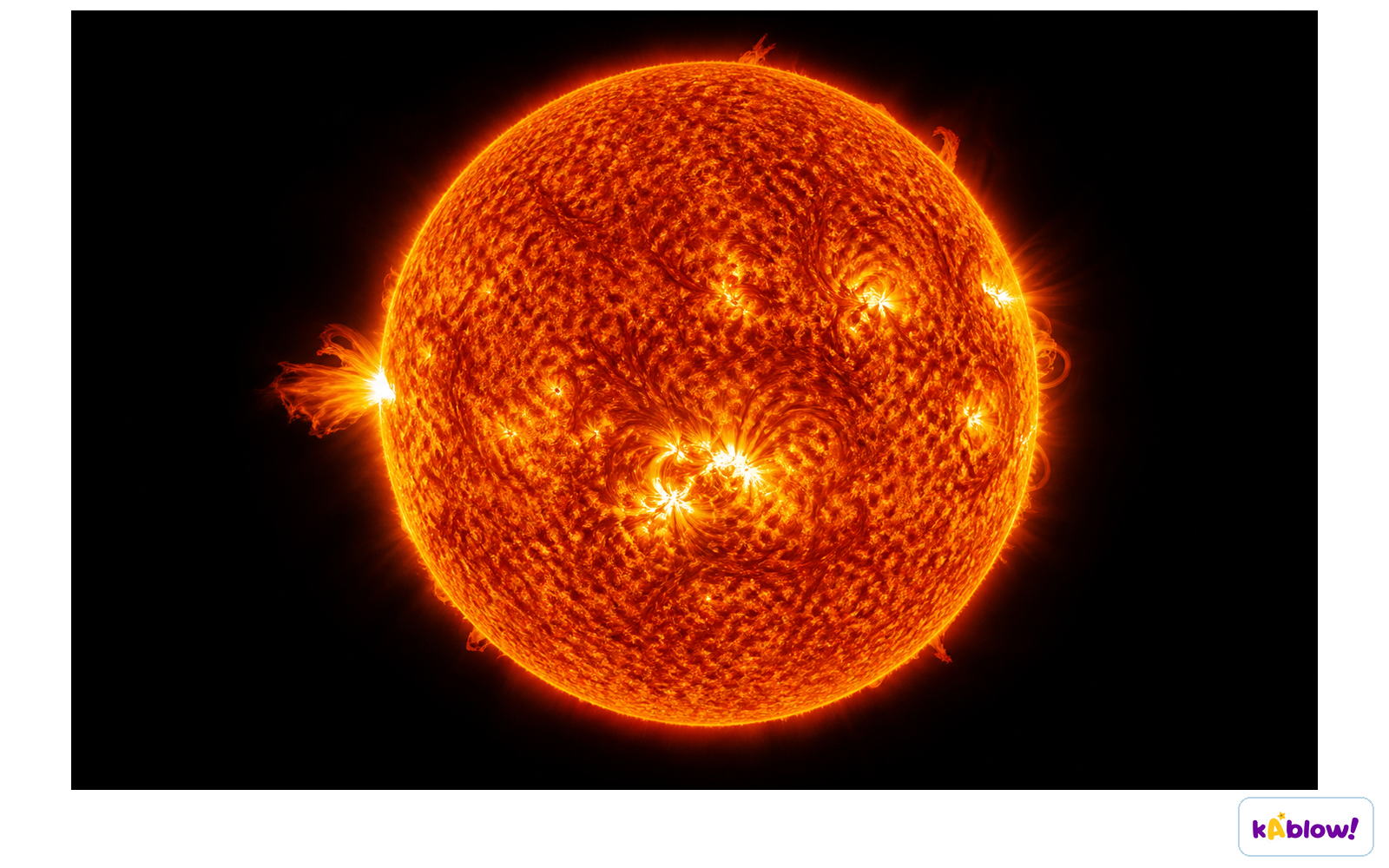
Energy from the Sun is the ultimate source of most of Earth's energy resources
Non-Renewable Resources
- The three fossil fuels are oil, coal, and gas.
- Nuclear power is also non-renewable.
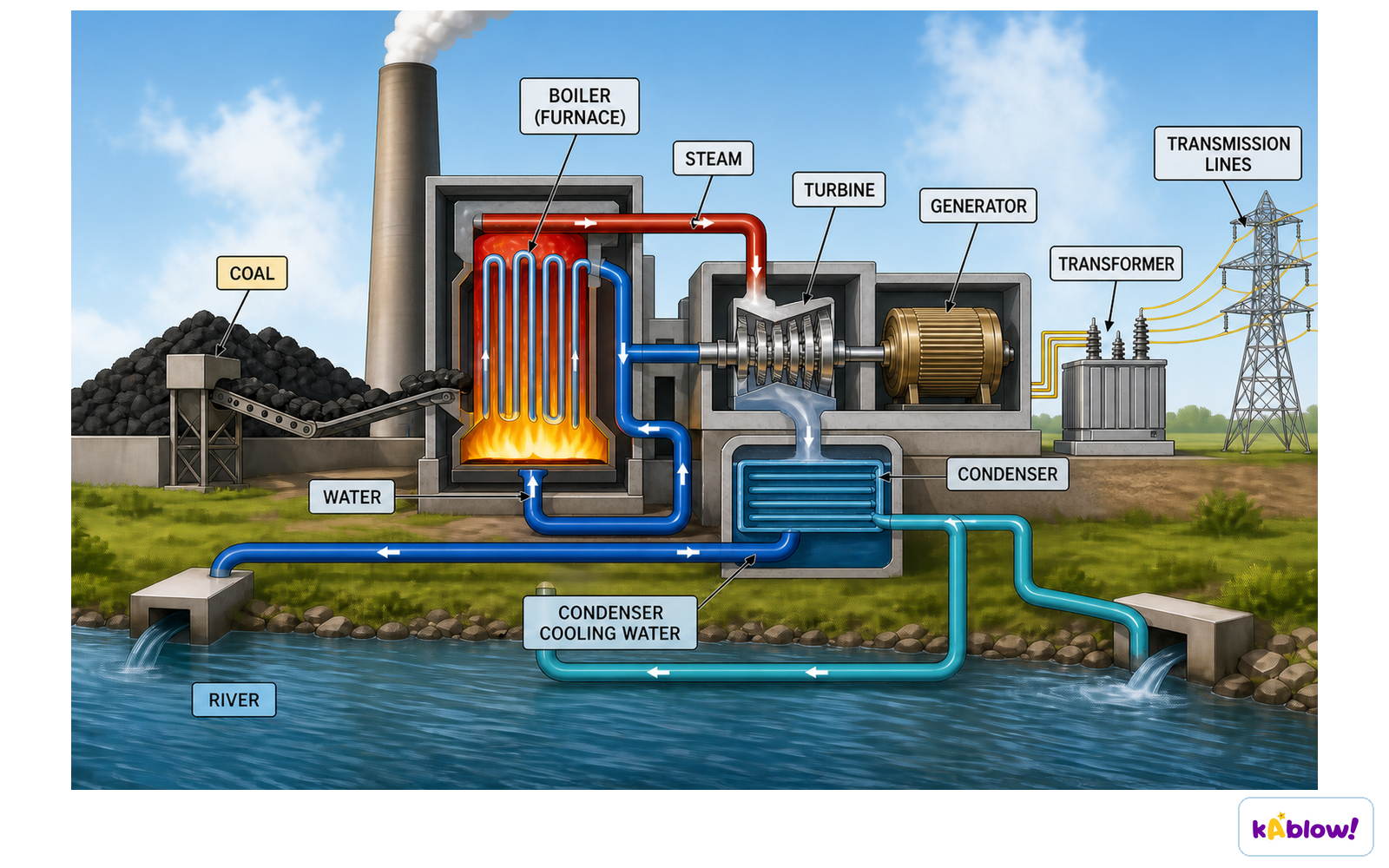
- Fossil fuels are used in power plants, transport (petrol/diesel), and heating (gas, coal).
- Advantage: they provide a reliable output.
- Disadvantage: burning fossil fuels releases CO₂ (a greenhouse gas) causing global warming.
- Burning coal and oil also produces sulphur dioxide, leading to acid rain.
- Nuclear power has no CO₂ or SO₂ emissions but produces radioactive waste, which is hard to dispose of safely.
Coal is burned in the boiler to heat water into steam, which turns the turbine, which turns the generator to produce electricity
Renewable Resources
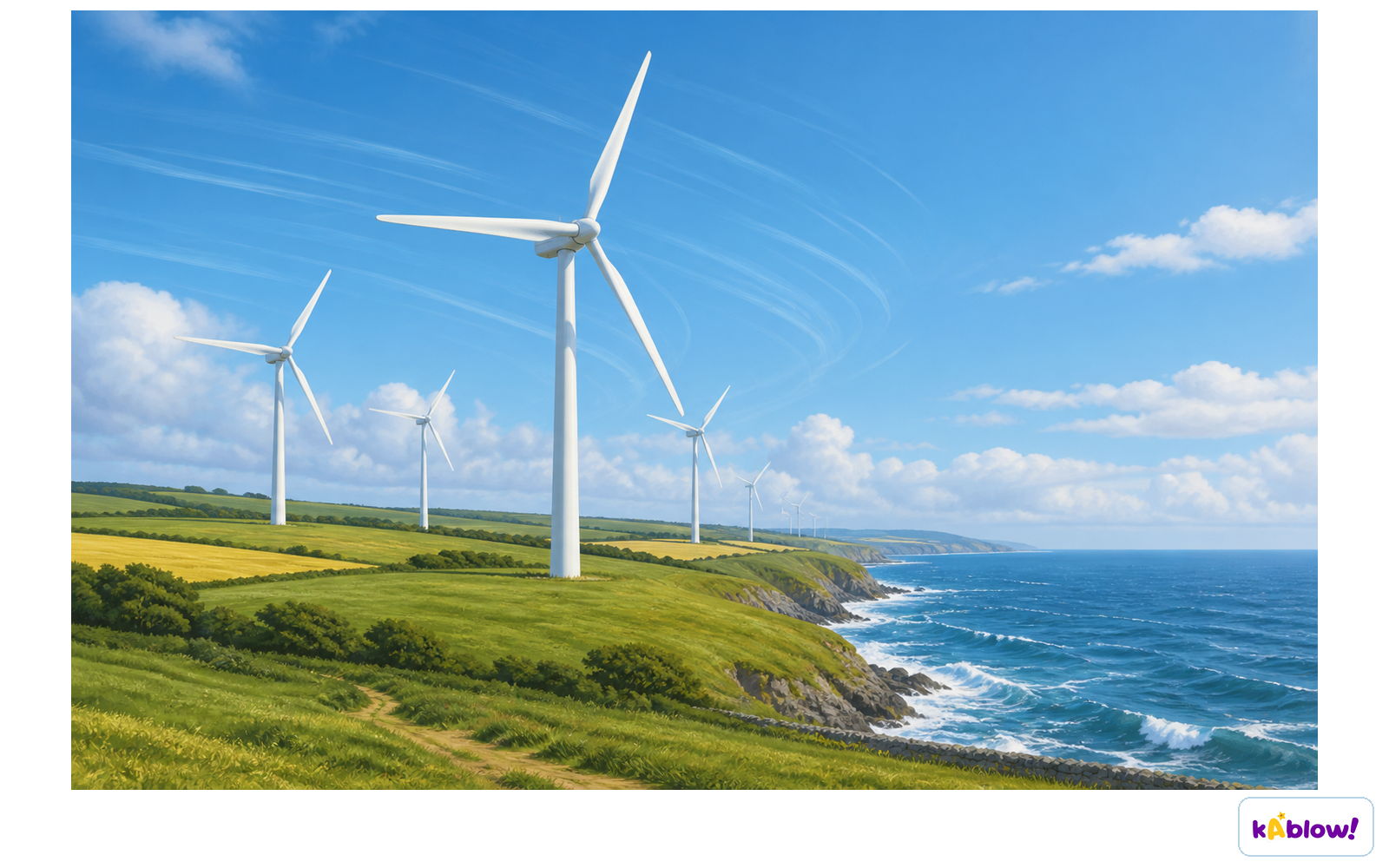
- Wind power: no CO₂ emissions, cheap to run, but unreliable (not always windy), noisy, and spoils the view.
- Hydro-electric power: requires flooding a valley with a dam, causing habitat loss.
- Solar power: only works in direct sunlight, so no electricity at night.
Wind turbines use the kinetic energy of moving air to generate electricity
Advantages of Renewables
- Renewables produce no CO₂ emissions, so they do not contribute to global warming.
- Once built, they have no fuel costs and are cheap to run.
- They help reduce reliance on fossil fuels, which can be subject to price rises and shortages (e.g., 2022 energy crisis).
Key Comparisons
- Non-renewables: reliable but polluting (fossil fuels) or produce radioactive waste (nuclear).
- Renewables: clean but often unreliable (wind, solar) or cause habitat loss (hydro).
Particle arrangement in solids, liquids, and gases (not directly related but useful for understanding energy transfer).
Slides
Sign up free to view the lesson slides
Step through every slide for this topic — plus flashcards and revision notes — with a free account.
Practice questions
Free preview — 8 of 57 questions. Sign up to see them all.
1.What is a non-renewable resource?
Easy- AA resource that can be replaced quickly after use
- BA resource that cannot be replaced once it has been used
- CA resource that is always available
- DA resource that does not produce pollution
2.Which of the following are the three fossil fuels?
Easy- AOil, coal, and gas
- BOil, wood, and gas
- CCoal, nuclear, and gas
- DOil, coal, and uranium
3.What is a renewable resource?
Easy- AA resource that cannot be replaced
- BA resource that will not run out
- CA resource that produces carbon dioxide
- DA resource that is only used for transport
4.Which of the following is a renewable energy resource?
Easy- ACoal
- BNatural gas
- CWind
- DNuclear fuel
5.Which is a disadvantage of burning fossil fuels?
Easy- AThey produce reliable output
- BThey increase carbon dioxide in the atmosphere
- CThey are cheap to run
- DThey produce no waste
6.Other than in power plants, fossil fuels can be used for:
Easy- AOnly heating
- BOnly transport
- CBoth transport and heating
- DNeither transport nor heating
7.What is a general advantage of using renewable energy resources?
Easy- AThey produce reliable output all the time
- BThey do not produce carbon dioxide emissions
- CThey are always cheap to build
- DThey do not require any fuel
8.In a hydroelectric power station, water is stored behind a dam. What energy store does the water have initially, and what store is it transferred to as it falls?
Medium- AKinetic to gravitational potential
- BGravitational potential to kinetic
- CChemical to kinetic
- DThermal to gravitational potential
Unlock all 57 questions, flashcards & more
Create a free account to see every question, the slides, flashcards and revision notes for this topic.