Reducing unwanted energy transfers
Learn it by playing
Answer these questions to earn energy, then fish and explore. No account needed.
Lesson notes
Reducing thermal energy loss in homes
- 35% of heat is lost through walls; reduced by cavity wall insulation (filling the gap between two walls with insulator).
- 25% is lost through the roof/attic; reduced by loft insulation.
- 25% is lost through windows and doors; reduced by double glazing, curtains, and draught excluders.
- 15% is lost through the floor; reduced by improving floor insulation.
- Reducing heat loss lowers electricity and fuel bills.
Cavity wall insulation
- A cavity wall has two separate walls with a gap between them.
- The gap is filled with an insulator (e.g., foam) to reduce heat transfer.
- Insulators like foam contain trapped air bubbles, which are poor conductors.
Double glazing
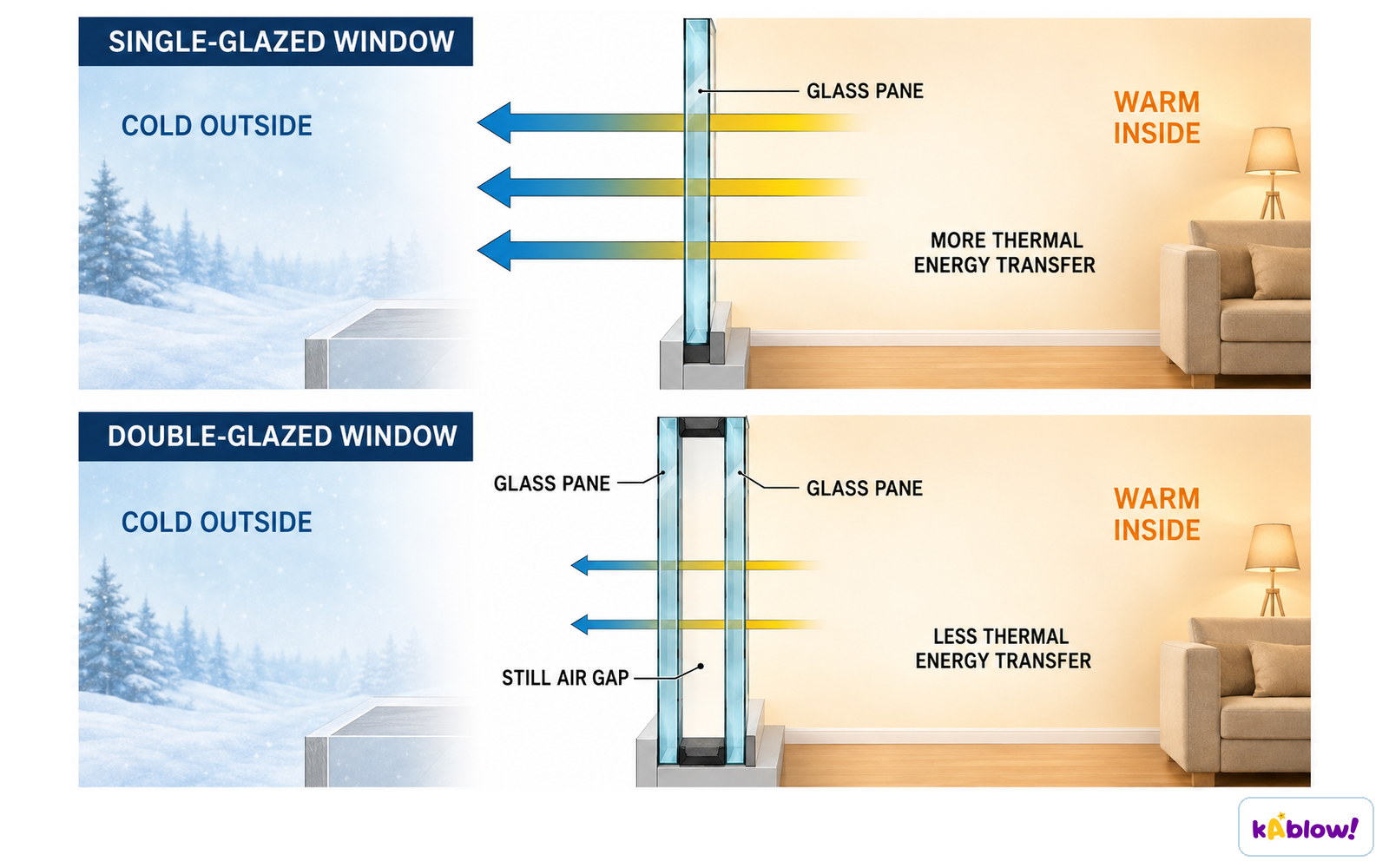
- Double glazing uses two panes of glass separated by a gas (e.g., air or argon).
- The gas layer is a poor conductor, reducing heat loss through windows.
- It also limits convection because the gas is trapped.
Double-glazed windows use a layer of air as an insulator to slow the transfer of thermal energy out of the house
Other ways to reduce heat loss through windows and doors
- Closing curtains adds an extra insulating layer.
- Draught excluders block cold air entering under doors.
Vacuum flasks
- Silvered surfaces reflect infrared radiation back into the liquid (for hot liquids) or away from the liquid (for cold liquids).
- A vacuum has no particles, so it prevents conduction and convection.
- The plastic lid is an insulator, limiting conduction and preventing evaporation.
Reducing radiation with silver surfaces
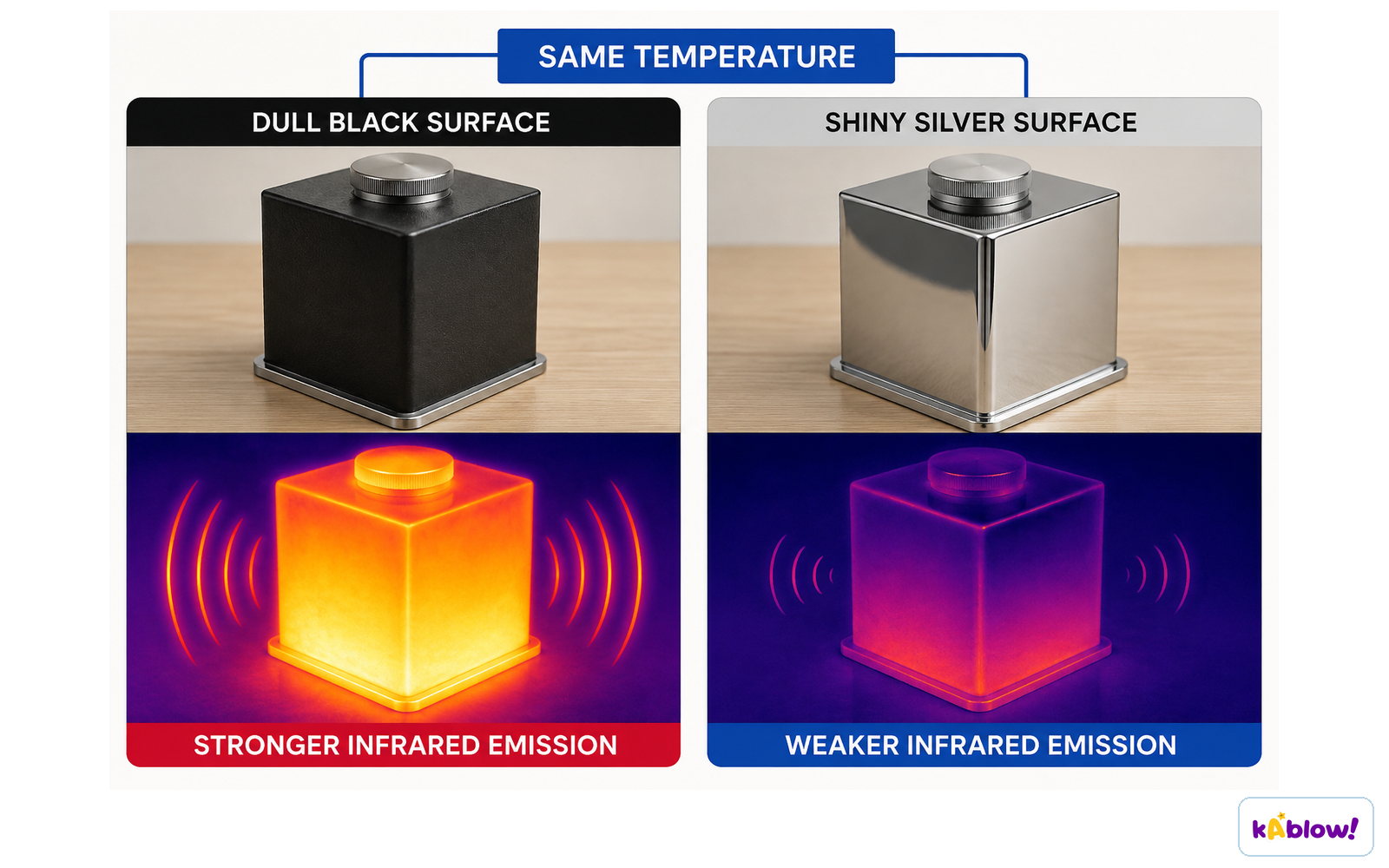
- Silvered or shiny surfaces reflect infrared radiation.
- Takeaway containers are often silvered aluminium to limit heat loss by radiation.
- A silver bottle keeps a cold liquid cooler for longer than a black one because it reflects radiation away.
An infrared camera shows a dull black surface glowing brighter than a shiny surface, because it emits more thermal radiation
Properties of insulators
- Plastic is a good insulator (poor conductor).
- Trapped air is a good insulator because air is a poor conductor.
- A vacuum has no particles, so it cannot transfer heat by conduction or convection.
Particle arrangement in solids, liquids, and gases. A vacuum has no particles, preventing conduction and convection.
Infrared radiation is reflected by silvered surfaces, reducing heat loss.
Slides
Sign up free to view the lesson slides
Step through every slide for this topic — plus flashcards and revision notes — with a free account.
Practice questions
Free preview — 8 of 57 questions. Sign up to see them all.
1.What percentage of thermal energy loss in a typical home occurs through the walls?
Easy- A35%
- B25%
- C15%
- D45%
2.Which method is used to reduce thermal energy loss through the roof of a house?
Easy- ALoft insulation
- BCavity wall insulation
- CDouble glazing
- DDraught excluder
3.Why is it important to reduce thermal energy losses from a home?
Easy- ATo reduce electricity and fuel bills
- BTo increase the temperature inside
- CTo prevent condensation
- DTo improve air quality
4.Double glazing limits thermal energy loss through windows because the gas between the panes reduces which type of heat transfer?
Medium- AConduction and convection
- BRadiation only
- CConvection only
- DConduction only
5.Which of the following is a way to reduce thermal energy loss through windows, other than double glazing?
Easy- AClosing curtains
- BCavity wall insulation
- CLoft insulation
- DFloor insulation
6.Silvered aluminium takeaway containers reduce thermal energy loss because the shiny surface reflects which type of radiation?
Easy- AInfrared radiation
- BUltraviolet radiation
- CVisible light
- DMicrowaves
7.Two identical metal bottles contain cold liquid. One is black and the other is silver. Which bottle keeps the liquid cooler for longer?
Medium- AThe silver bottle
- BThe black bottle
- CBoth keep the same temperature
- DIt depends on the liquid
8.Which of the following statements about a vacuum is true?
Easy- AThere are no particles in a vacuum.
- BA vacuum contains air particles.
- CA vacuum conducts heat well.
- DA vacuum allows convection.
Unlock all 57 questions, flashcards & more
Create a free account to see every question, the slides, flashcards and revision notes for this topic.