Circulatory Systems Heart And Blood Vessels
Aprenda jogando
Responda a estas perguntas para ganhar energia, depois pesque e explore. Sem precisar de conta.
Notas de aula
Circulatory System Overview
- The circulatory system consists of blood vessels, a pump (heart), and valves to ensure one-way blood flow.
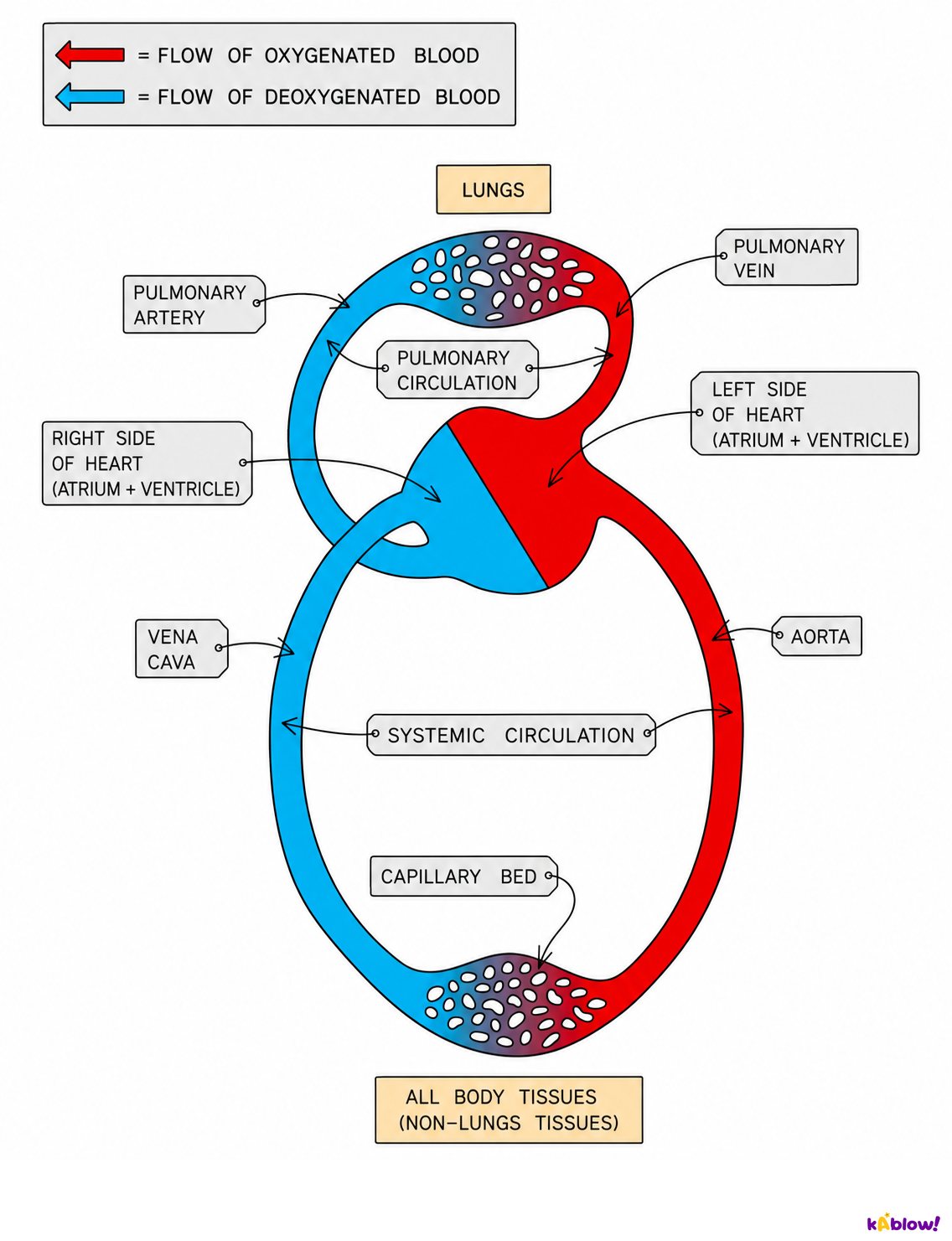
- Fish have a two-chambered heart and a single circulation (blood passes through the heart once per circuit).
- Mammals have a four-chambered heart and a double circulation (blood passes through the heart twice per circuit).
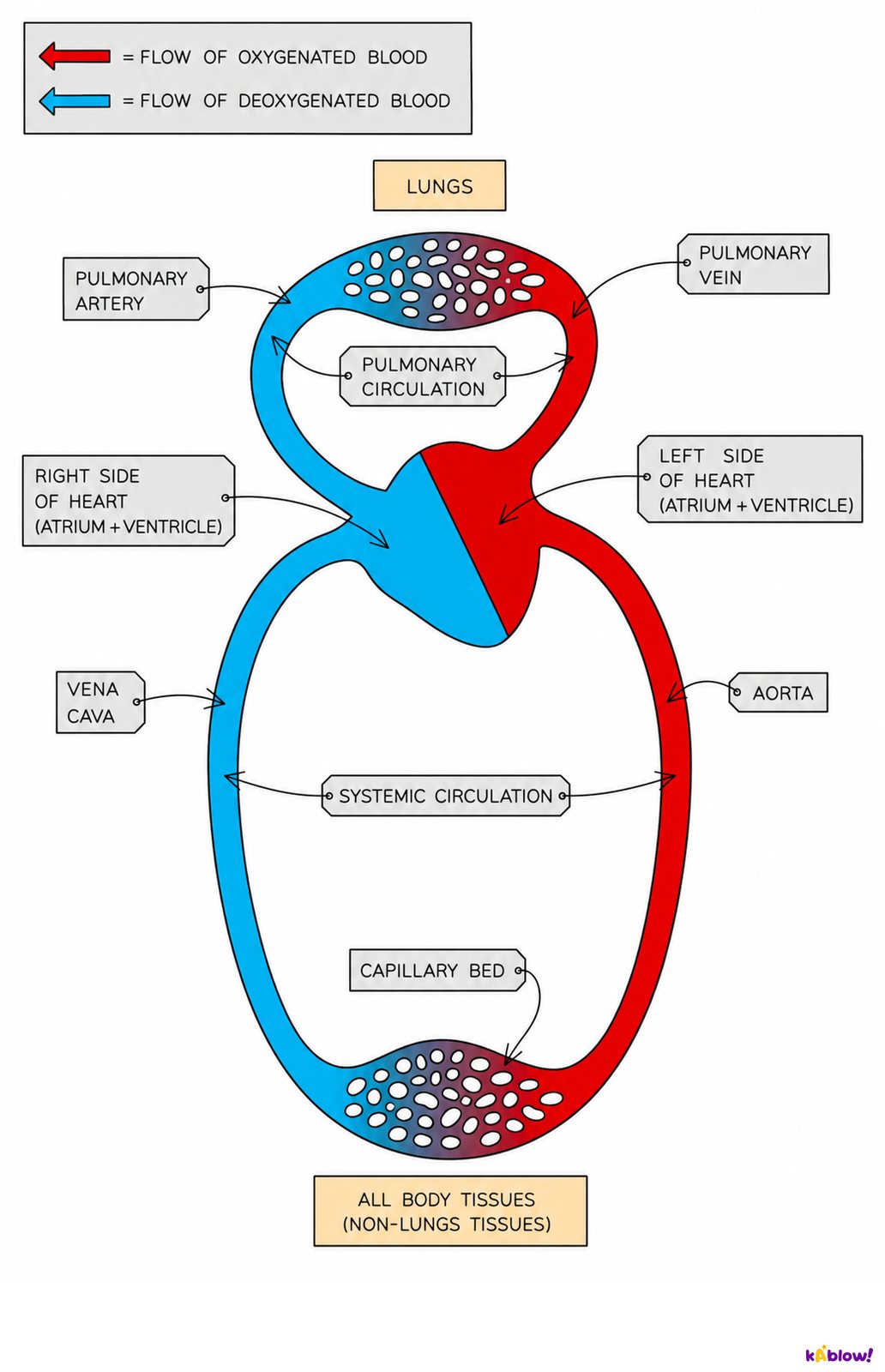
- The right side of the heart pumps deoxygenated blood to the lungs (pulmonary circulation).
- The left side pumps oxygenated blood to the body (systemic circulation).
- Double circulation allows blood pressure to be raised after the lungs, supplying cells with oxygen and glucose faster.
The double circulatory system
The Mammalian Heart
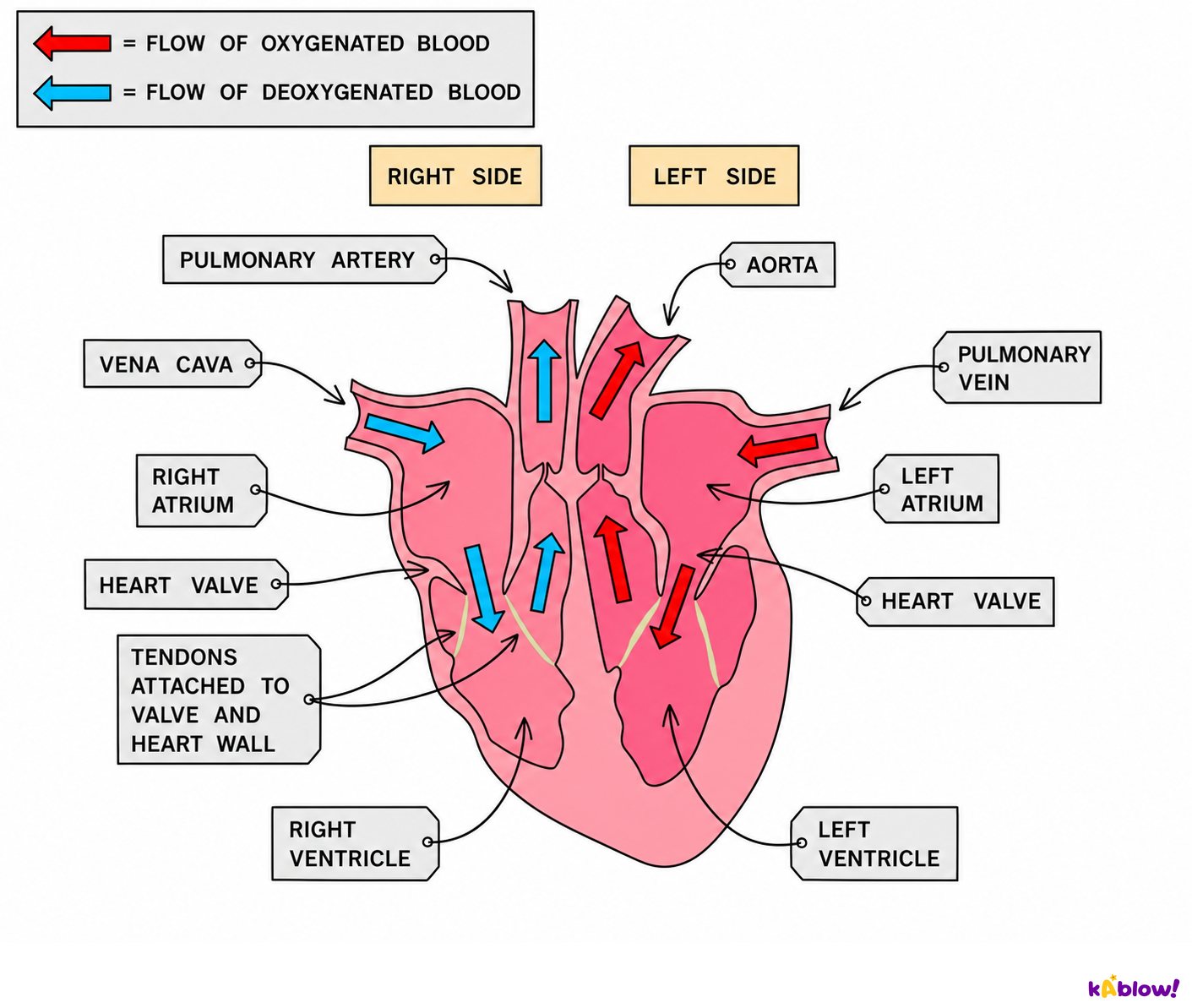
- The heart is located in the chest; diagram left corresponds to the body's right side.
- The septum separates the right and left sides of the heart.
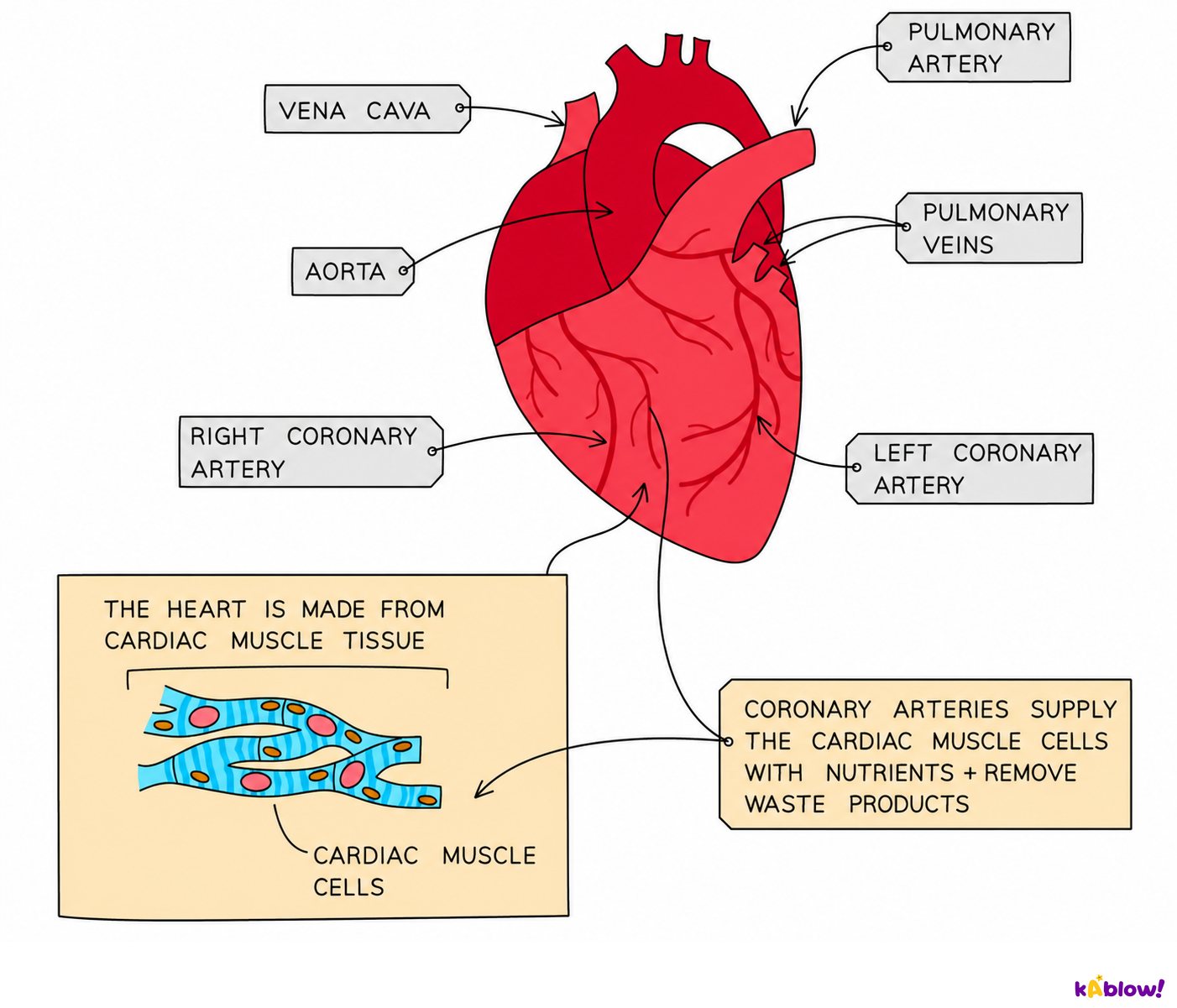
- The heart is made of cardiac muscle supplied with blood by the coronary arteries.
- Atria receive blood; ventricles pump blood out.
- Valves (tricuspid, bicuspid, semilunar) prevent backflow of blood.
- Arteries carry blood away from the heart; veins carry blood towards the heart.
Structure of the mammalian heart
Heart Function (Extended)
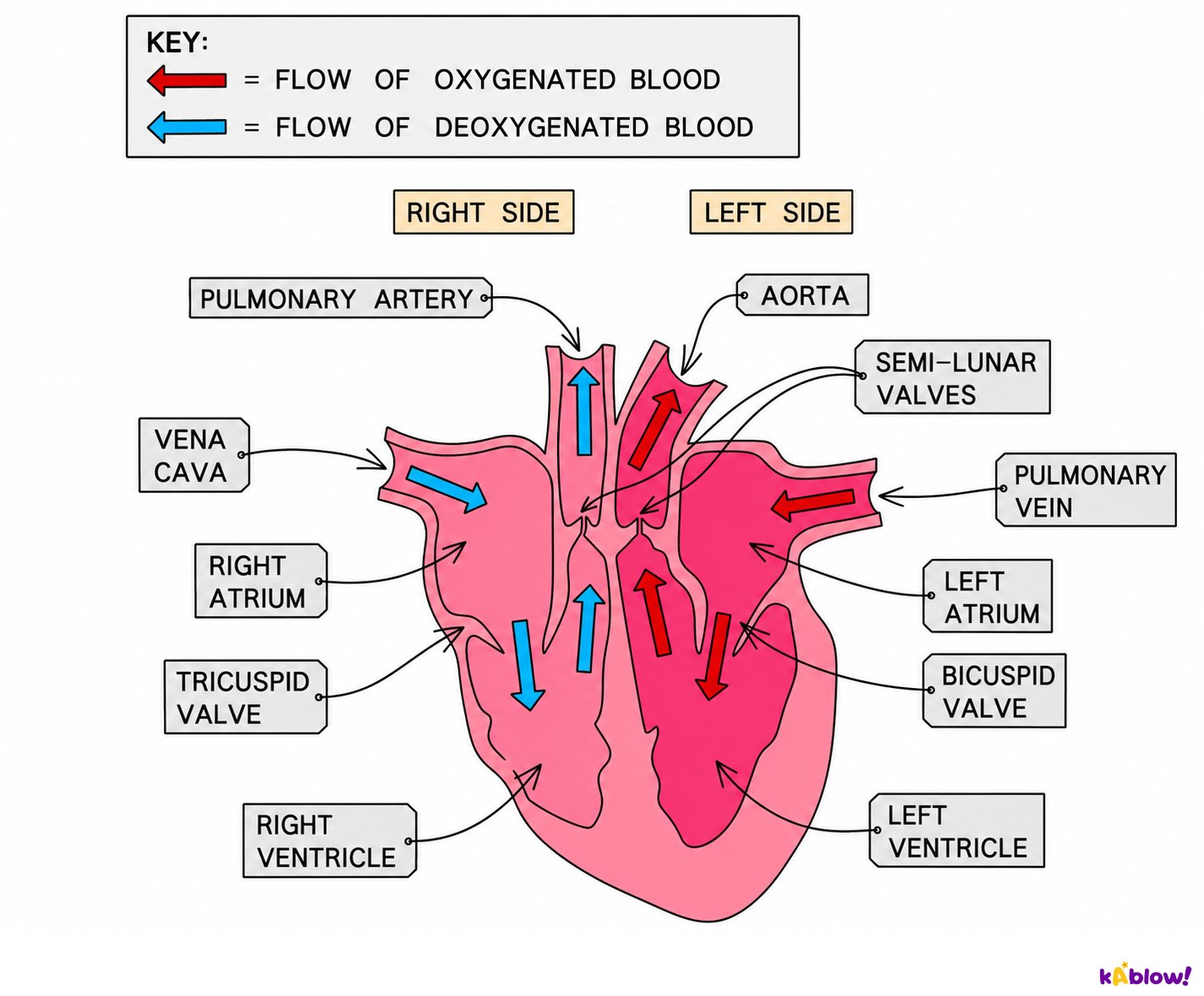
- Deoxygenated blood enters the right atrium via the vena cava.
- Blood flows through the tricuspid valve into the right ventricle.
- The right ventricle pumps blood through the semilunar valve into the pulmonary artery (to lungs).
- Oxygenated blood returns to the left atrium via the pulmonary vein.
- Blood passes through the bicuspid valve into the left ventricle.
- The left ventricle (thicker wall) pumps blood through the aorta to the body.
The heart's valves and chambers
Monitoring Heart Activity
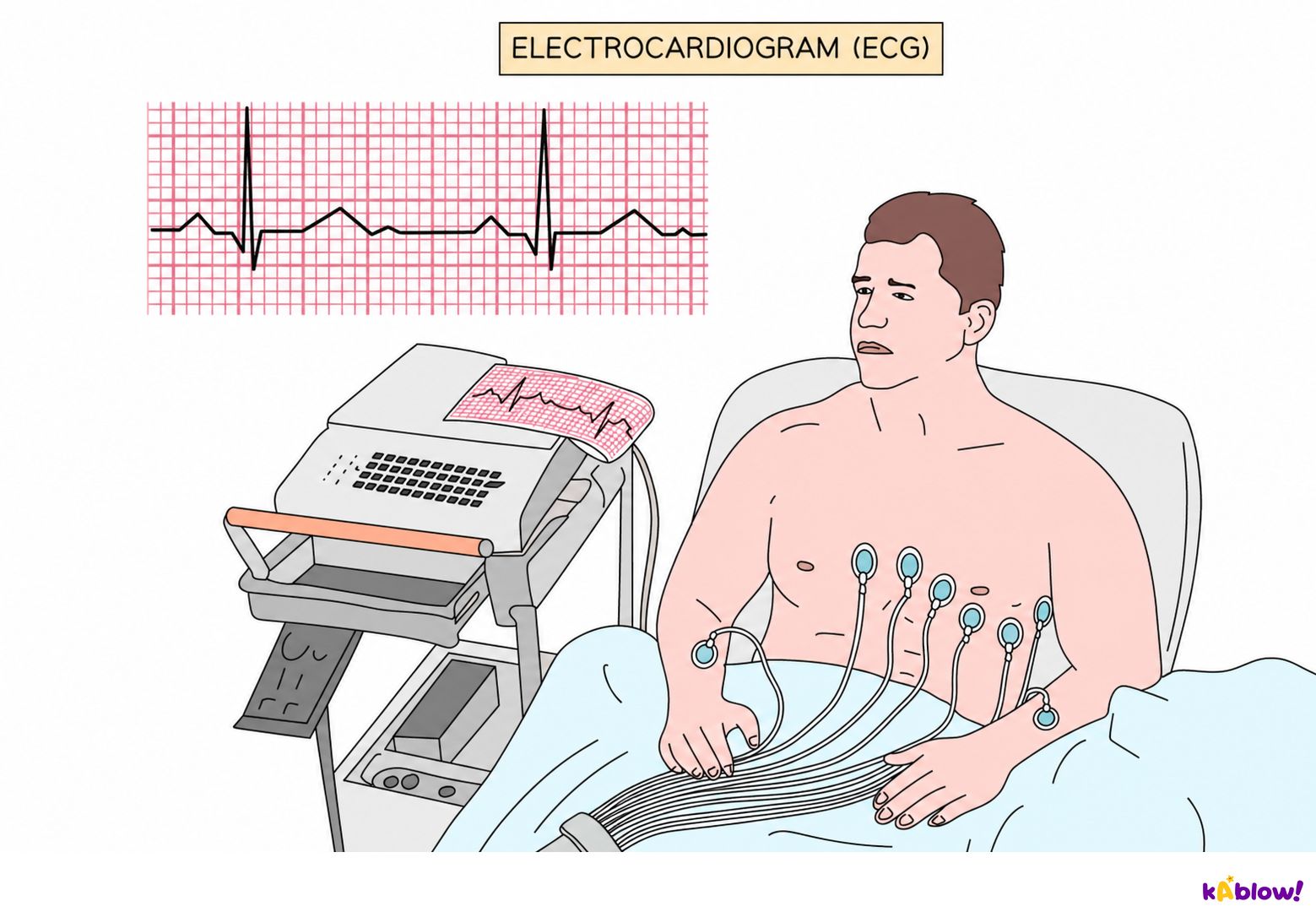
- Heart activity can be monitored using an ECG, measuring pulse rate, or listening with a stethoscope.
- Heart rate is measured in beats per minute (bpm).
- During exercise, heart rate increases to deliver more oxygen and remove waste.
- After exercise, heart rate remains elevated to repay oxygen debt and break down lactic acid.
Monitoring heart rate with an ECG
Coronary Heart Disease
- Coronary arteries supply the heart muscle with blood.
- Fatty deposits (plaques) can partially or completely block coronary arteries.
- Partial blockage causes angina (chest pain); complete blockage leads to a heart attack.
- Risk factors include smoking, high cholesterol, high blood pressure, obesity, and lack of exercise.
- Reducing risks: quit smoking, eat less animal fat, exercise regularly.
The coronary arteries
Blood Vessels: Arteries, Veins, Capillaries
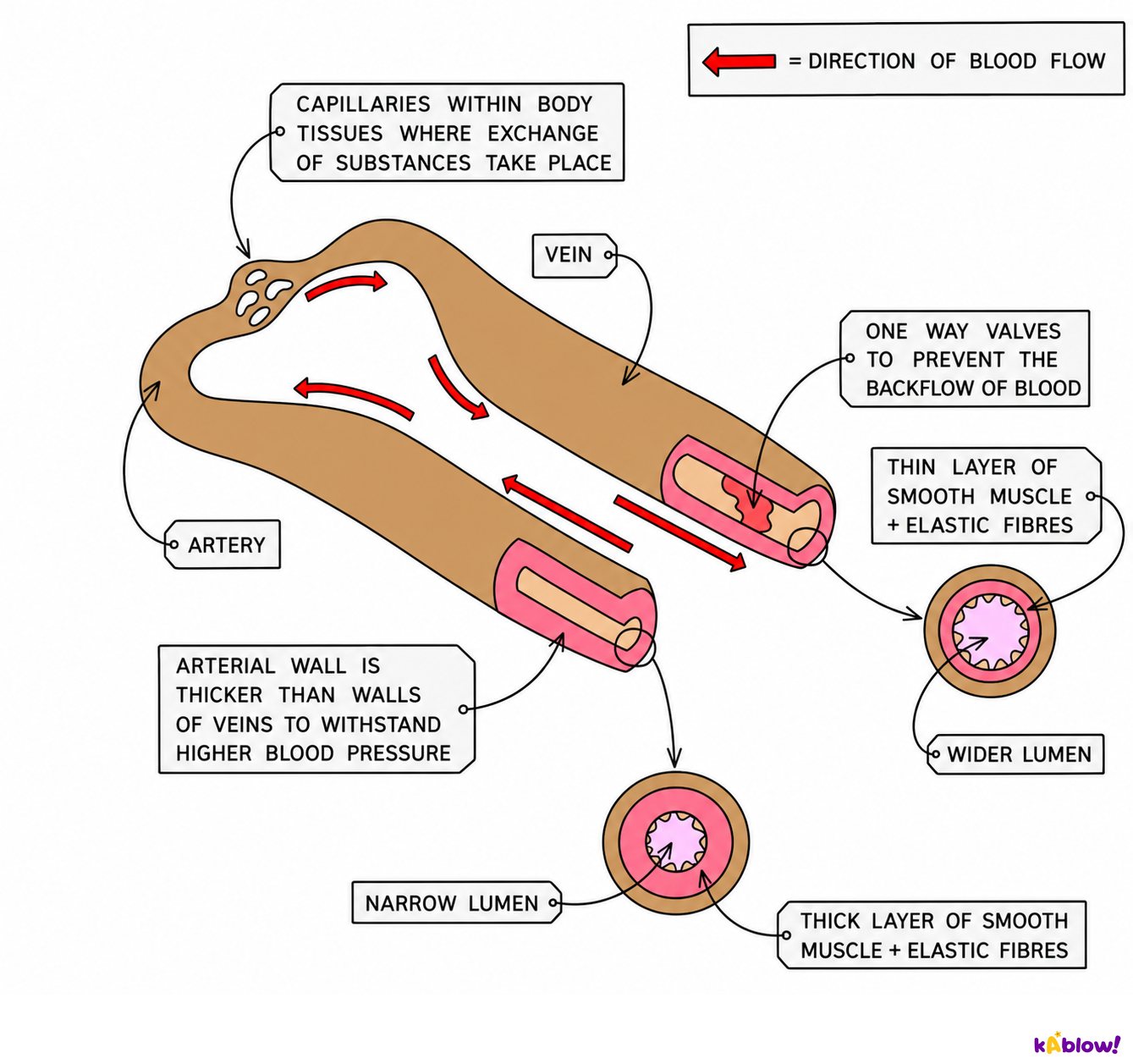
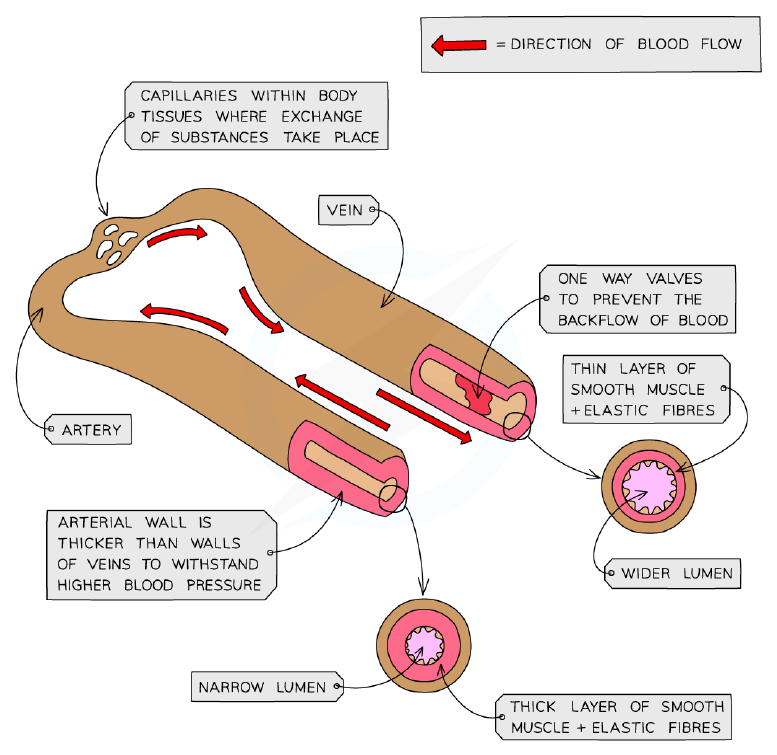
- Arteries carry blood away from the heart at high pressure; have thick muscular walls, elastic fibres, and a narrow lumen.
- Veins carry blood towards the heart at low pressure; have thin walls, a large lumen, and valves to prevent backflow.
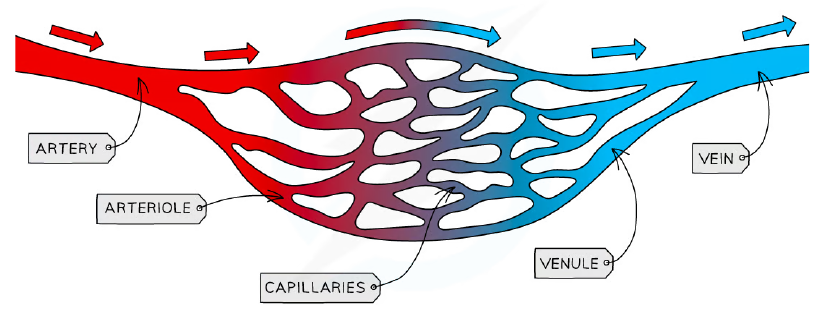
- Capillaries have walls one cell thick and are 'leaky' to allow diffusion of substances.
- Arteries divide into arterioles; veins receive blood from venules.
Comparing arteries and veins
Main Blood Vessels (Extended)
- Pulmonary artery carries deoxygenated blood from heart to lungs.
- Aorta carries oxygenated blood from heart to body.
- Pulmonary vein carries oxygenated blood from lungs to heart.
- Vena cava carries deoxygenated blood from body to heart.
The main blood vessels of the body
Components of Blood
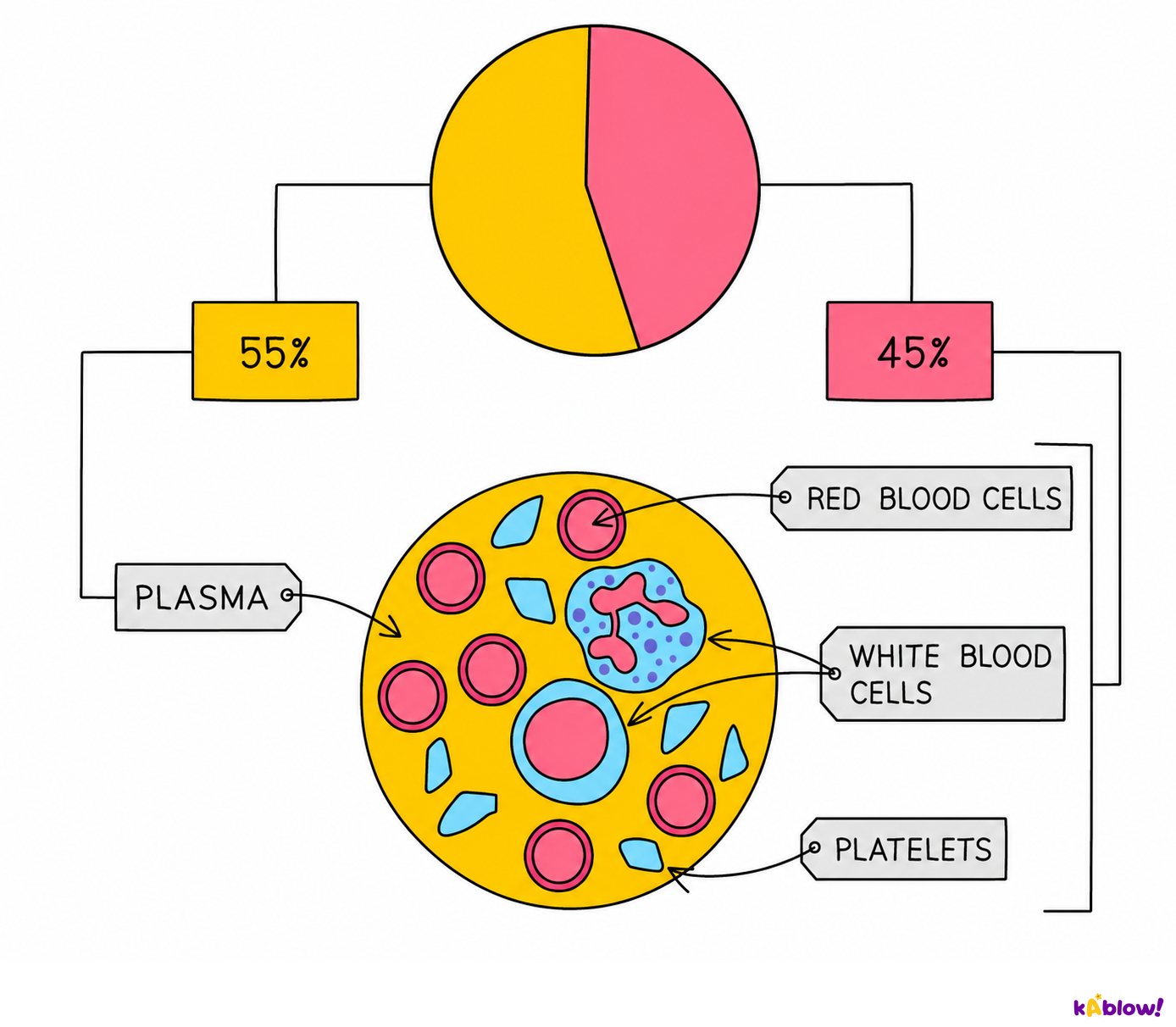
- Plasma transports carbon dioxide, nutrients, urea, hormones, and heat.
- Red blood cells (no nucleus) contain haemoglobin to transport oxygen as oxyhaemoglobin.
- White blood cells defend against infection: phagocytes engulf pathogens; lymphocytes produce antibodies.
- Platelets are cell fragments involved in blood clotting and scab formation.
Composition of human blood
Slides
Sign up free to view the lesson slides
Step through every slide for this topic — plus flashcards and revision notes — with a free account.
Questões de prática
Prévia grátis — 8 de 53 perguntas. Cadastre-se para ver todas.
1.Which blood vessel carries blood away from the heart?
Easy- AArtery
- BVein
- CCapillary
- DVenule
2.The pulmonary artery carries oxygenated blood.
EasyTrue or false?
3.Name the structure that separates the right and left sides of the heart.
Easy4.Which of the following is a risk factor for coronary heart disease?
Easy- ARegular exercise
- BLow-fat diet
- CSmoking
- DLow blood pressure
5.Complete the sentence about blood flow through the heart.
EasyDeoxygenated blood enters the right atrium via the ____.
6.Arrange the following structures in the order that blood flows through them after leaving the left ventricle: aorta, left atrium, left ventricle, pulmonary vein.
Medium- left ventricle
- aorta
- pulmonary vein
- left atrium
7.Why does the left ventricle have a thicker muscular wall than the right ventricle?
Medium- AIt pumps blood to the lungs.
- BIt pumps blood to the whole body.
- CIt receives blood from the body.
- DIt has to overcome gravity.
8.Match each blood vessel with its correct description.
Medium- Artery
- Vein
- Capillary
- Thick muscular walls
- Contains valves
- One cell thick walls
Unlock all 53 questions & more
Crie uma conta grátis para ver todas as perguntas, os slides, flashcards e resumos de revisão deste tópico.