Atomic Structure And The Periodic Table
Aprenda jogando
Responda a estas perguntas para ganhar energia, depois pesque e explore. Sem precisar de conta.
Notas de aula
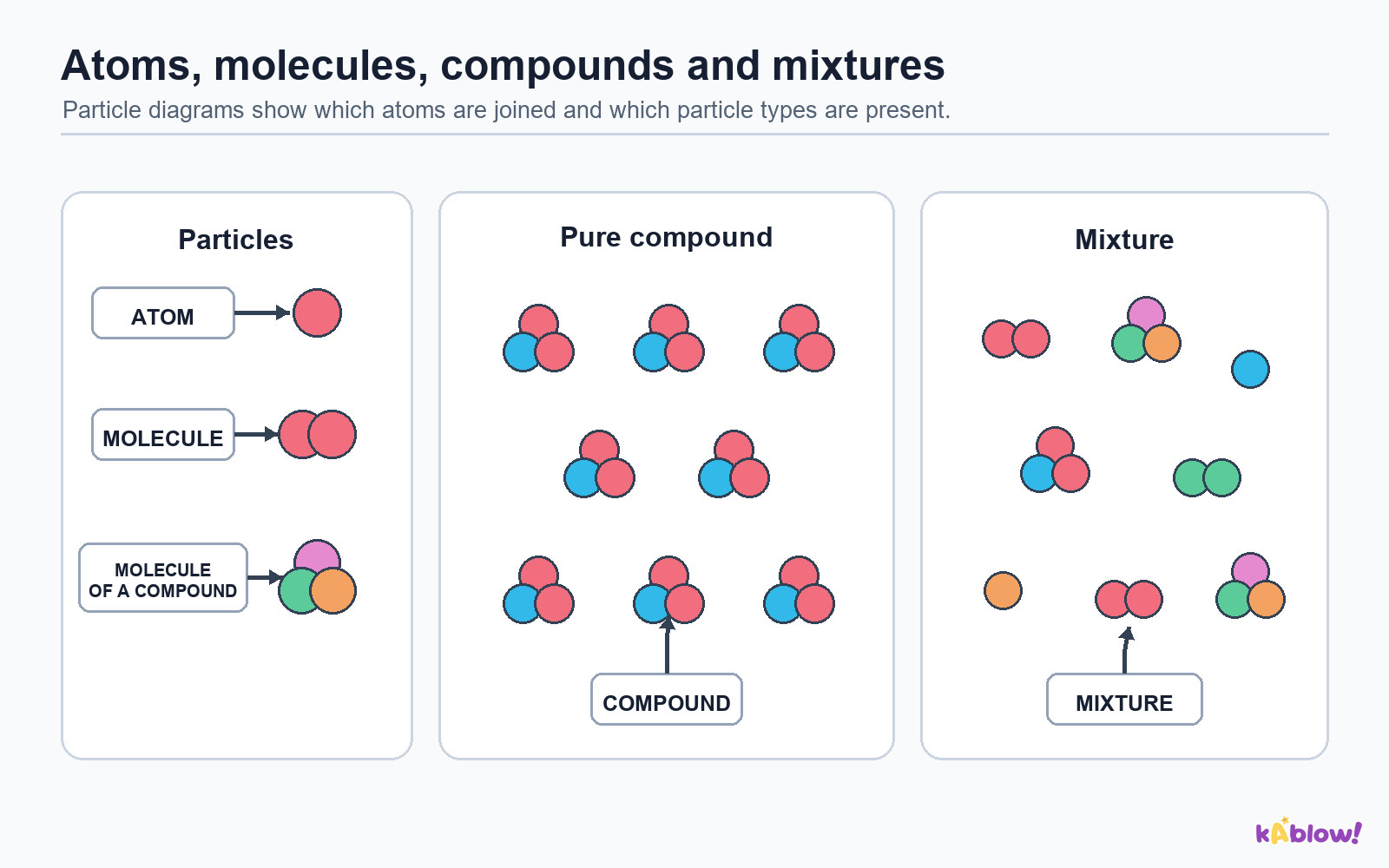
Elements, Compounds & Mixtures
- An element is a substance made of atoms with the same number of protons; it cannot be split chemically.
- A compound is a pure substance of two or more elements chemically combined; it cannot be separated by physical means.
- A mixture is a combination of substances not chemically combined; it can be separated by physical methods like filtration or evaporation.
- Examples: element – oxygen; compound – carbon dioxide (CO₂); mixture – sand and water.
Particle diagram showing elements, compounds and mixtures
Atomic Structure
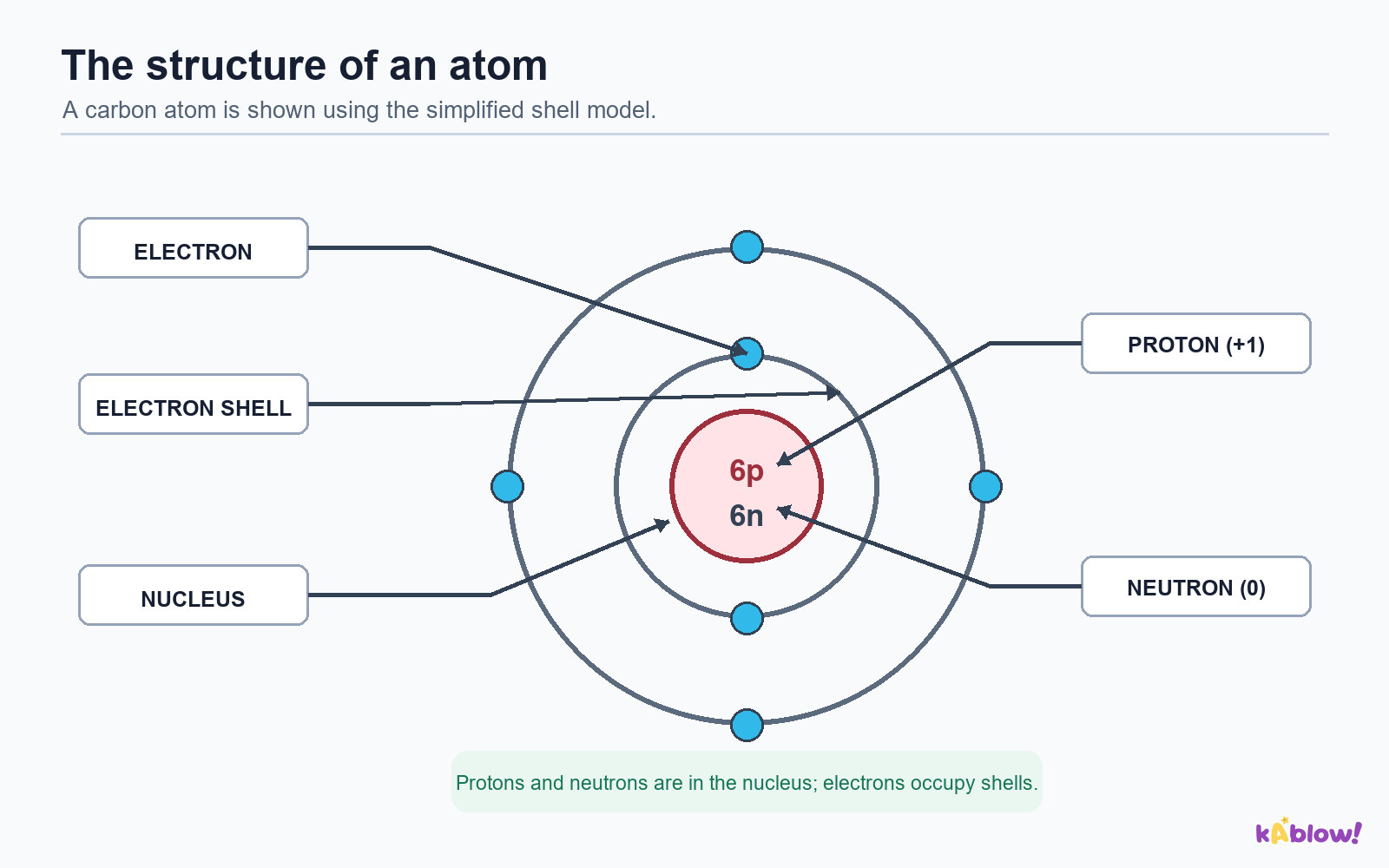
- Atoms consist of a nucleus (protons + neutrons) surrounded by electrons in shells.
- Protons have relative mass 1 and charge +1; neutrons have mass 1 and charge 0; electrons have negligible mass and charge –1.
- The atomic number (Z) is the number of protons; it defines the element.
- The mass number (A) is the total number of protons + neutrons.
- Number of neutrons = mass number – atomic number.
- In a neutral atom, number of electrons = number of protons.
The structure of an atom
Electronic Configuration
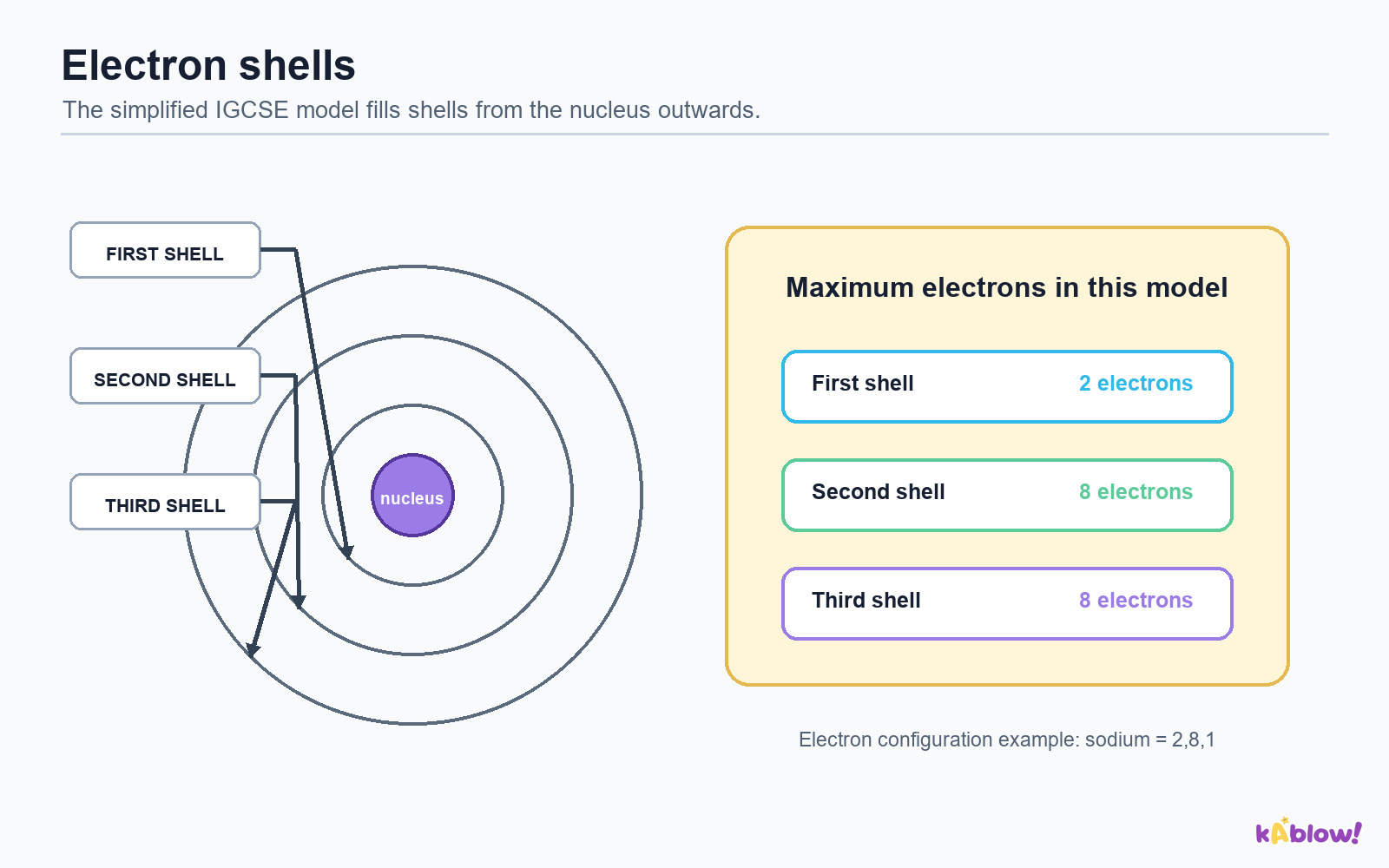
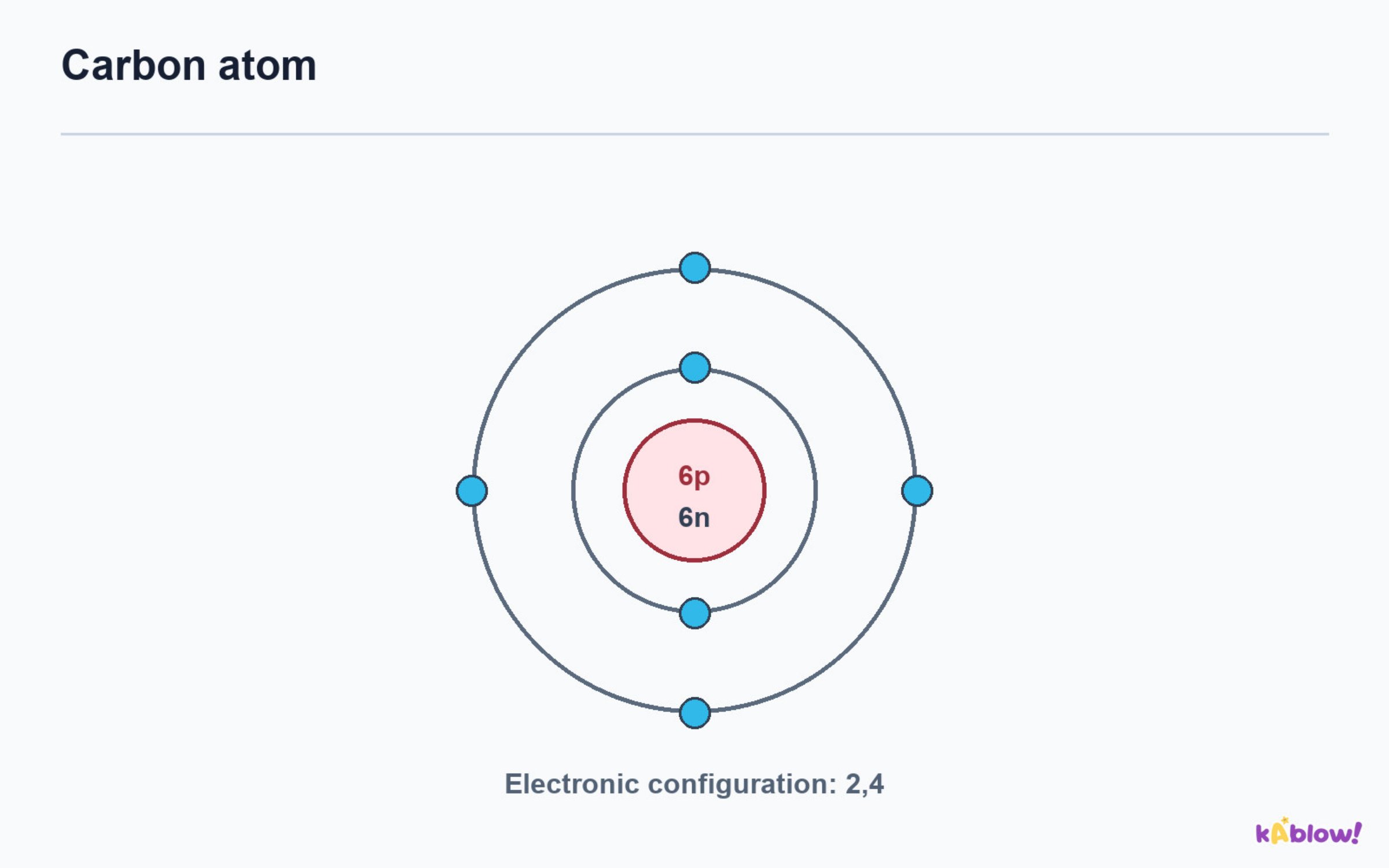
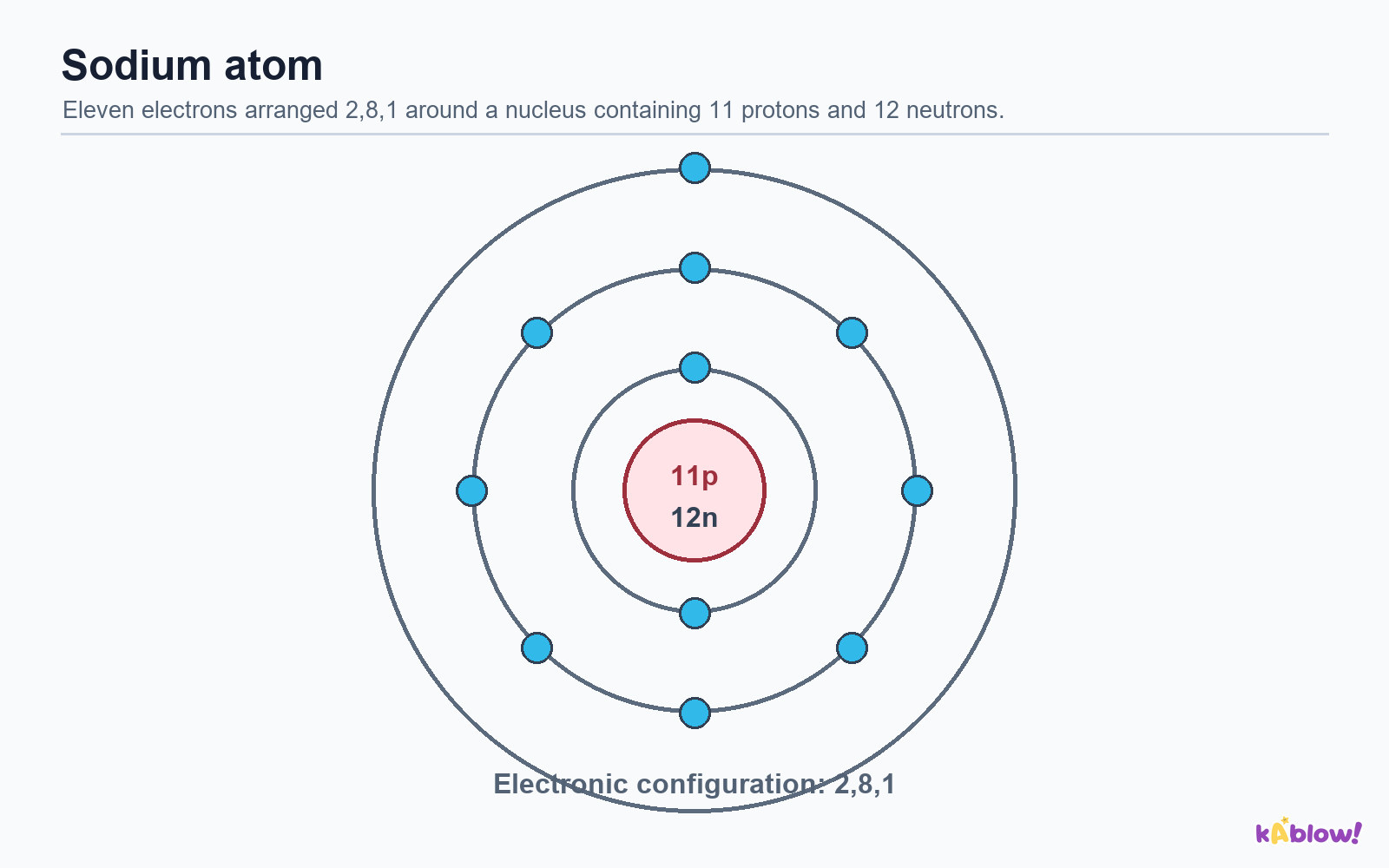
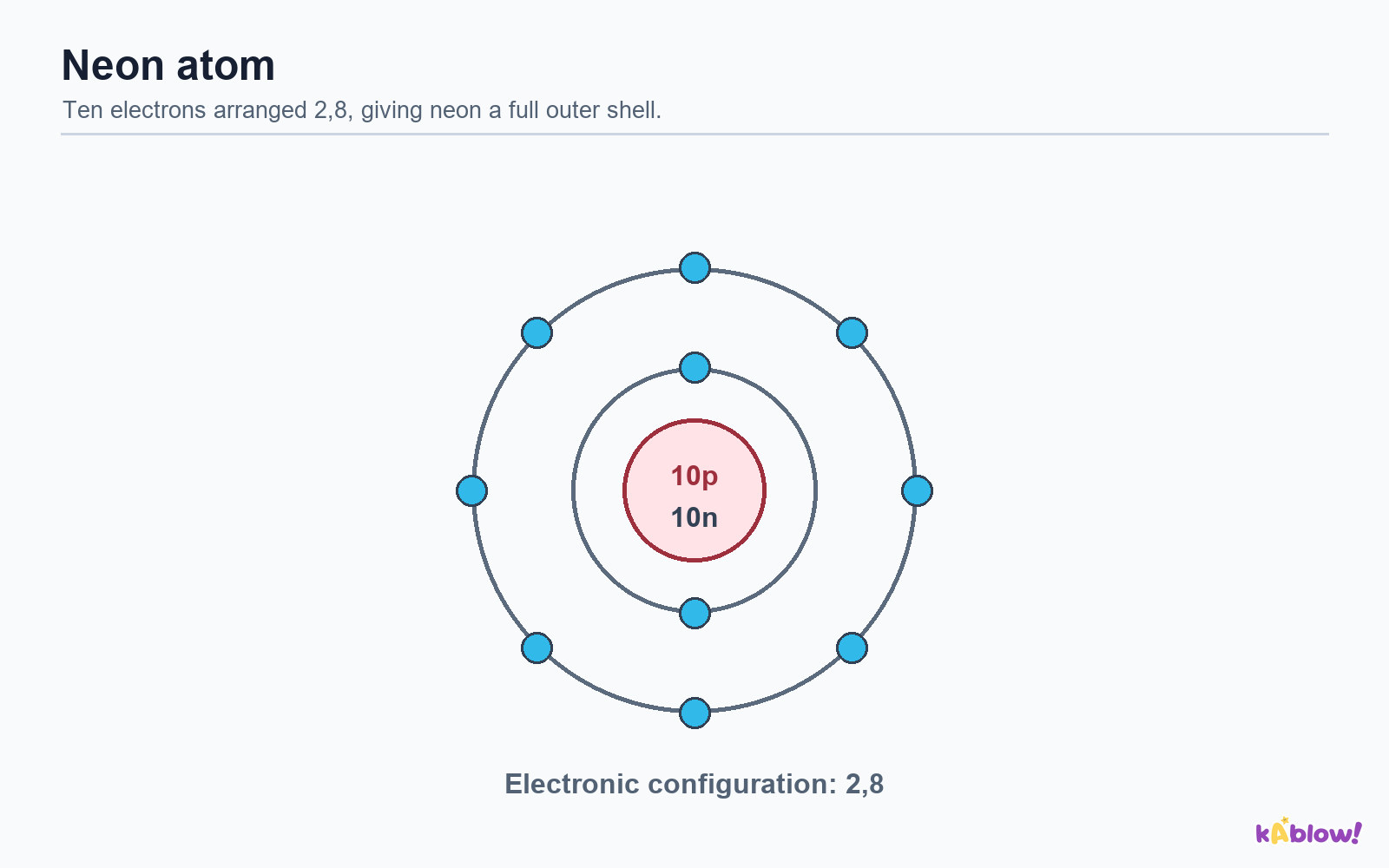
- Electrons fill shells in order: first shell holds 2, second holds 8, third holds 8 (simplified model).
- The electronic configuration is written as numbers separated by commas, e.g., carbon is 2,4.
- The number of occupied shells equals the period number; the number of outer electrons equals the group number (for Groups I–VII).
- Elements in the same group have the same number of outer-shell electrons.
- Noble gases have full outer shells and are unreactive.
A simplified model showing the electron shells
Isotopes
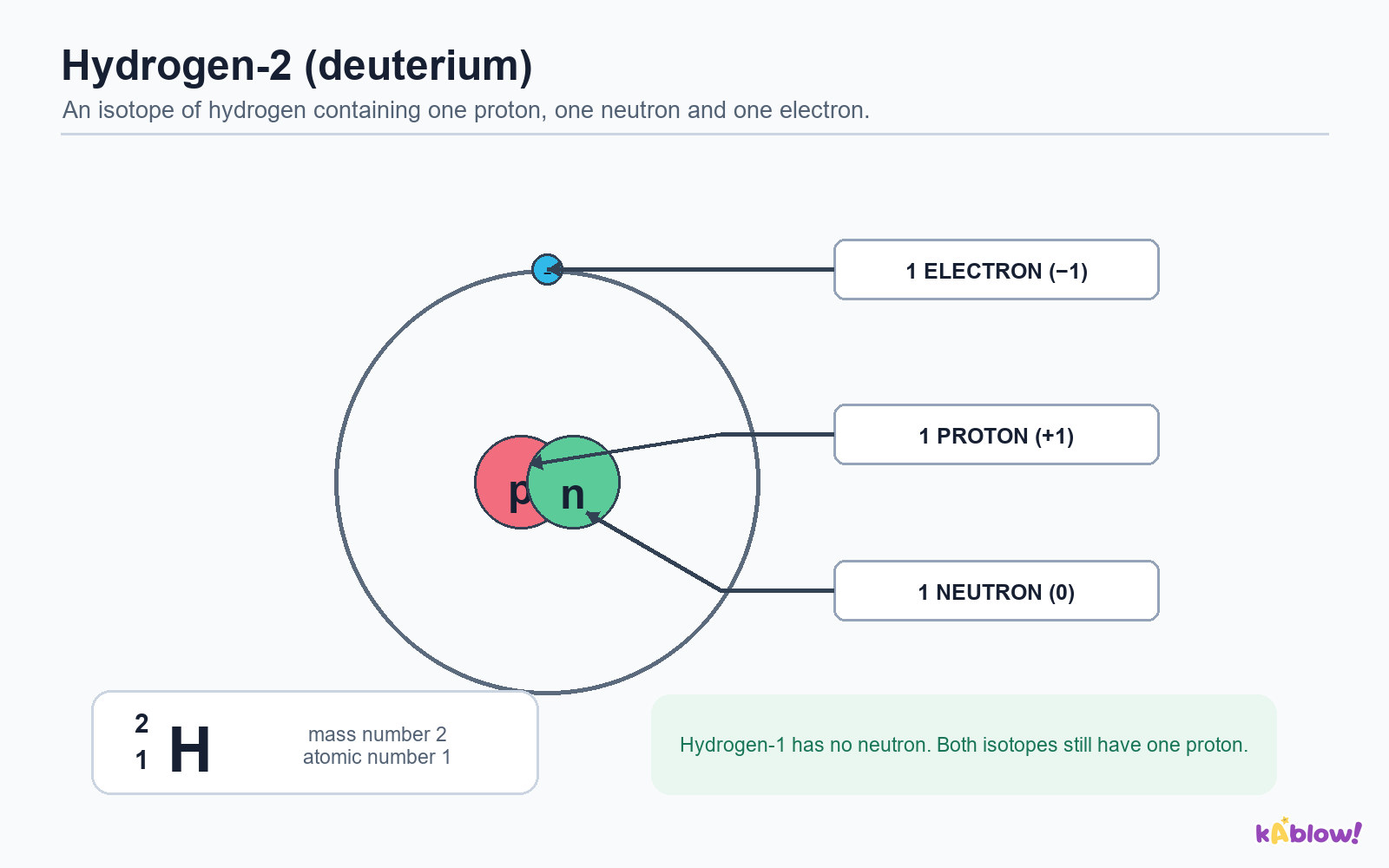
- Isotopes are atoms of the same element with the same number of protons but different numbers of neutrons.
- They have the same chemical properties because they have the same electron arrangement.
- Physical properties (e.g., density, melting point) may differ due to different masses.
- Example: carbon-12 (⁶ protons, ⁶ neutrons) and carbon-14 (⁶ protons, ⁸ neutrons).
The structure of a hydrogen-2 (deuterium) atom
Slides
Sign up free to view the lesson slides
Step through every slide for this topic — plus flashcards and revision notes — with a free account.
Questões de prática
Prévia grátis — 8 de 53 perguntas. Cadastre-se para ver todas.
1.Which of the following is a pure substance made up of two or more elements chemically combined?
Easy- AElement
- BCompound
- CMixture
- DSolution
2.What is the relative mass of a proton?
Easy- A0
- B1
- C1/1840
- D2
3.The atomic number is the number of protons in the nucleus of an atom.
EasyTrue or false?
4.What is the electronic configuration of a neutral magnesium atom?
Easy5.An atom of element X has atomic number 29 and mass number 63. How many neutrons does it have?
Medium- A31
- B37
- C40
- D34
6.Complete the sentence:
EasyIsotopes are atoms of the same element that have the same number of protons but a different number of ____.
7.Match each subatomic particle to its charge.
Easy- Proton
- Neutron
- Electron
- 1+
- 0
8.Arrange the following elements in order of increasing atomic number: chlorine, sodium, carbon, calcium.
Easy- Carbon
- Sodium
- Chlorine
- Calcium
Unlock all 53 questions, flashcards & more
Crie uma conta grátis para ver todas as perguntas, os slides, flashcards e resumos de revisão deste tópico.