Electrical Quantities
Aprenda jogando
Responda a estas perguntas para ganhar energia, depois pesque e explore. Sem precisar de conta.
Notas de aula
Electric Charge
- There are two types of electric charge: positive and negative.
- Like charges repel, opposite charges attract.
- Charge is measured in coulombs (C) (Extended Tier).
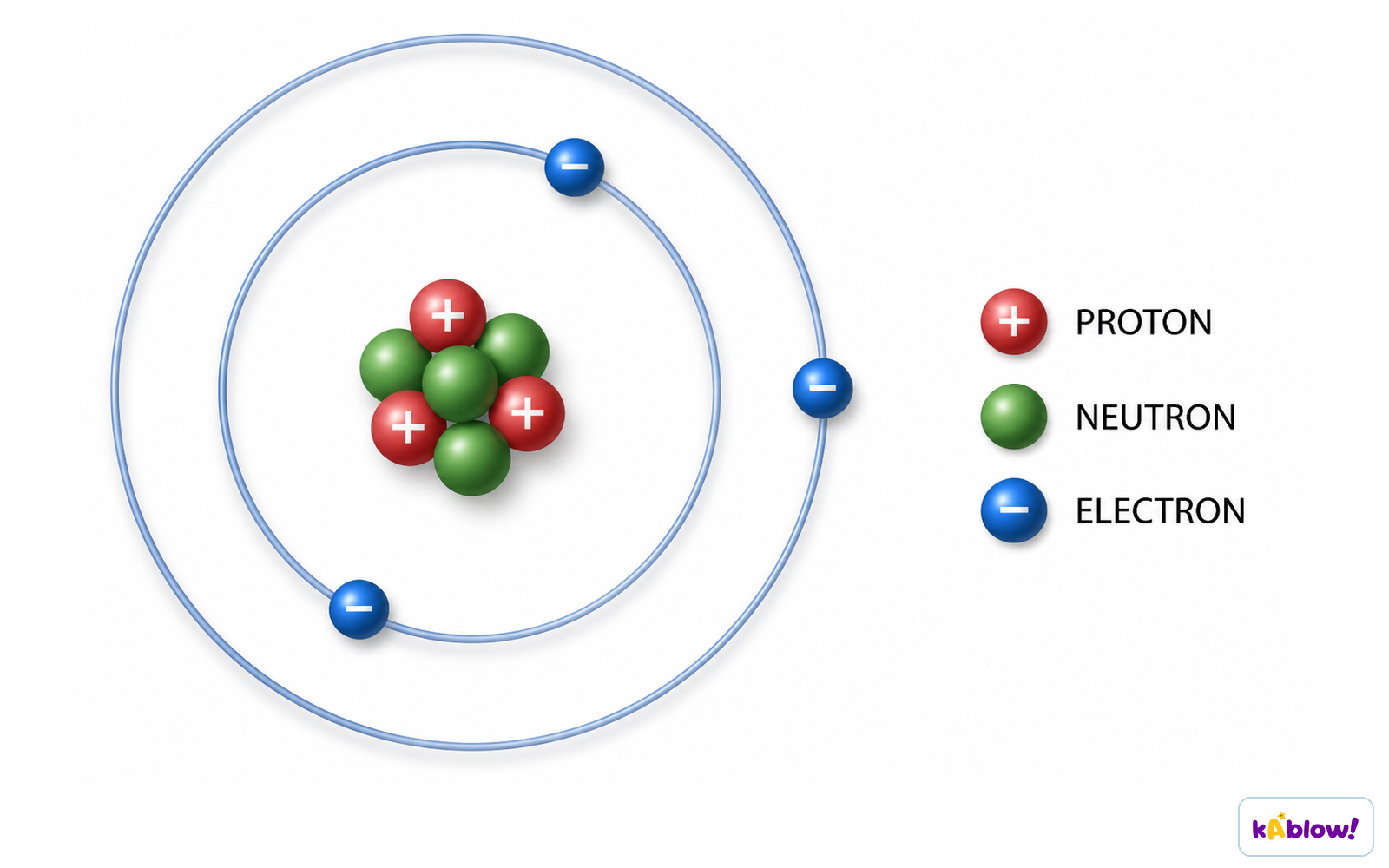
Structure of an atom
Charging by Friction
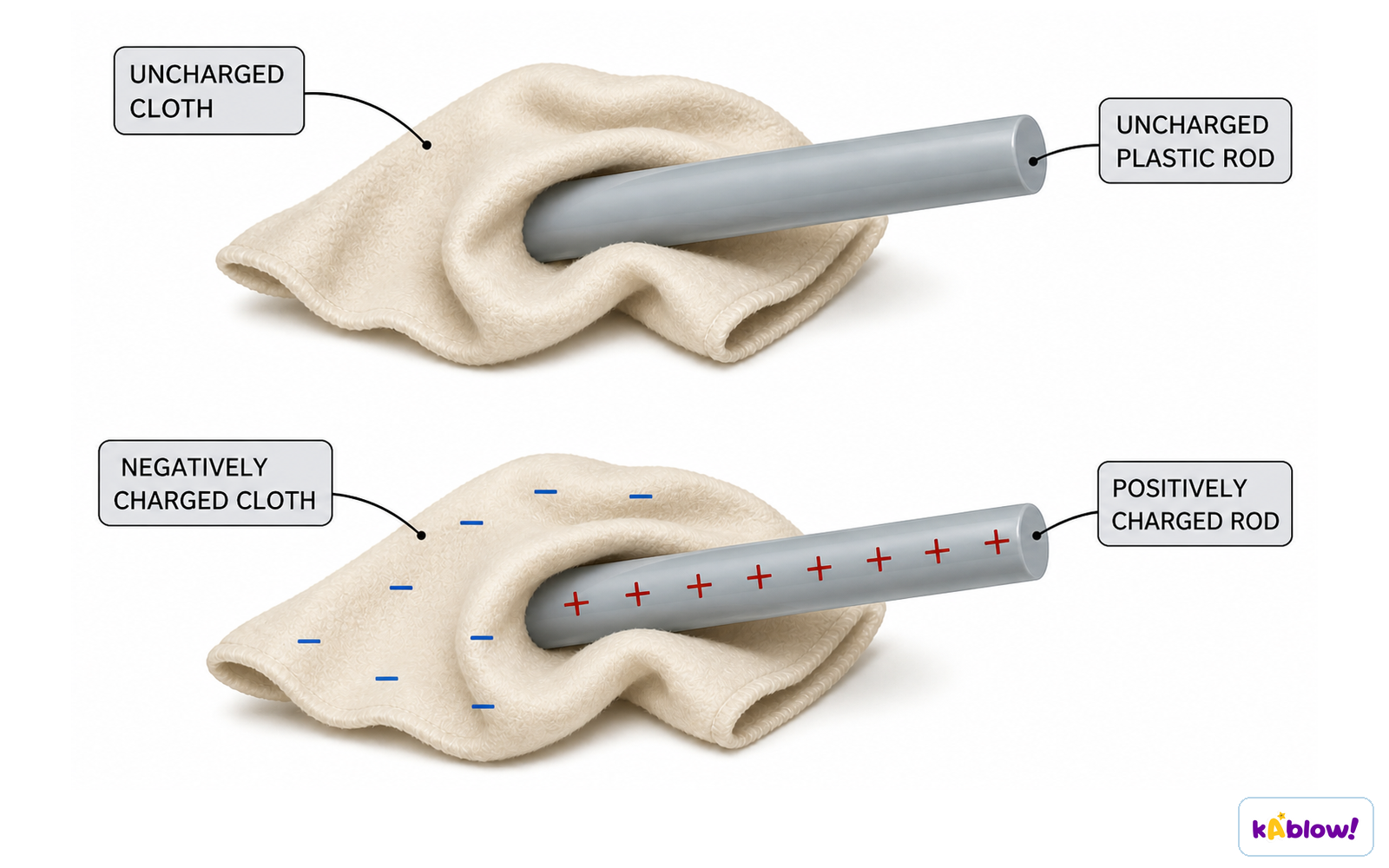
- Rubbing two insulators together transfers electrons from one to the other.
- The material that gains electrons becomes negatively charged; the one that loses electrons becomes positively charged.
- A charged object can attract uncharged objects (e.g., comb picking up paper).
Transfer of electrons between charged insulators
Electric Fields (Extended Tier)
- An electric field is a region where a charge experiences a force.
- Field direction is the direction of force on a positive test charge.
- Field lines point from positive to negative charges.
Electric field around a positive point charge
Electrical Conductors & Insulators
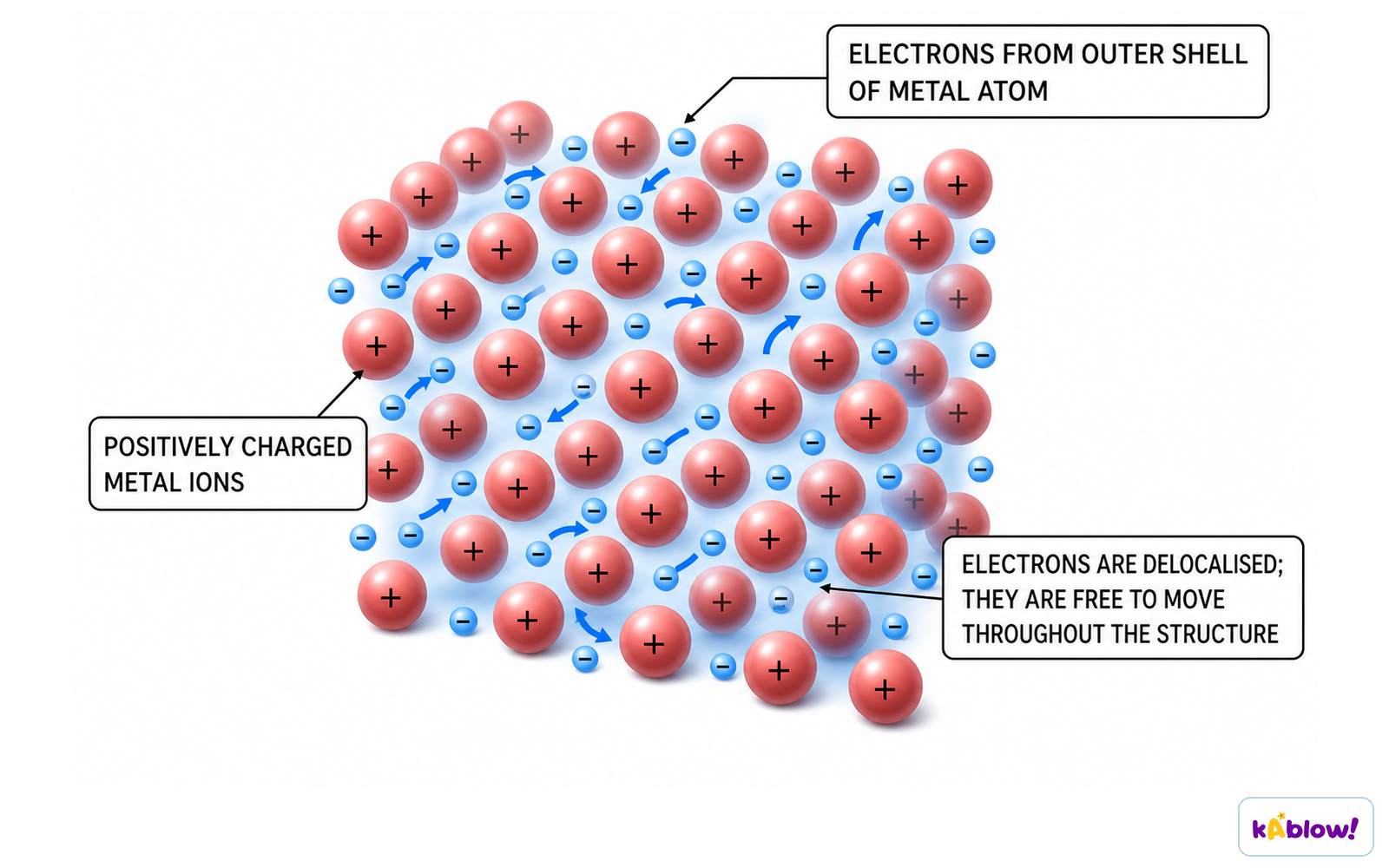
- Conductors (e.g., metals) have free electrons that can move, allowing charge to flow.
- Insulators (e.g., plastic, rubber) have no free charges and do not conduct easily.
- Metals conduct well because of their delocalised electrons.
Metallic lattice structure
Current
- Electric current is the rate of flow of charge: I = \frac{Q}{t} .
- Current is measured in amperes (A) using an ammeter connected in series.
- Conventional current flows from positive to negative; electron flow is opposite.
- Direct current (d.c.) flows in one direction; alternating current (a.c.) changes direction periodically.
A simple series circuit
Voltage (Potential Difference)
- Voltage (or potential difference) is the energy transferred per unit charge.
- Measured in volts (V) using a voltmeter connected in parallel.
- In a series circuit, the total voltage is shared among components.
- Electromotive force (e.m.f.) is the voltage supplied by a source (Extended Tier).
Potential difference shared in a series circuit
Resistance
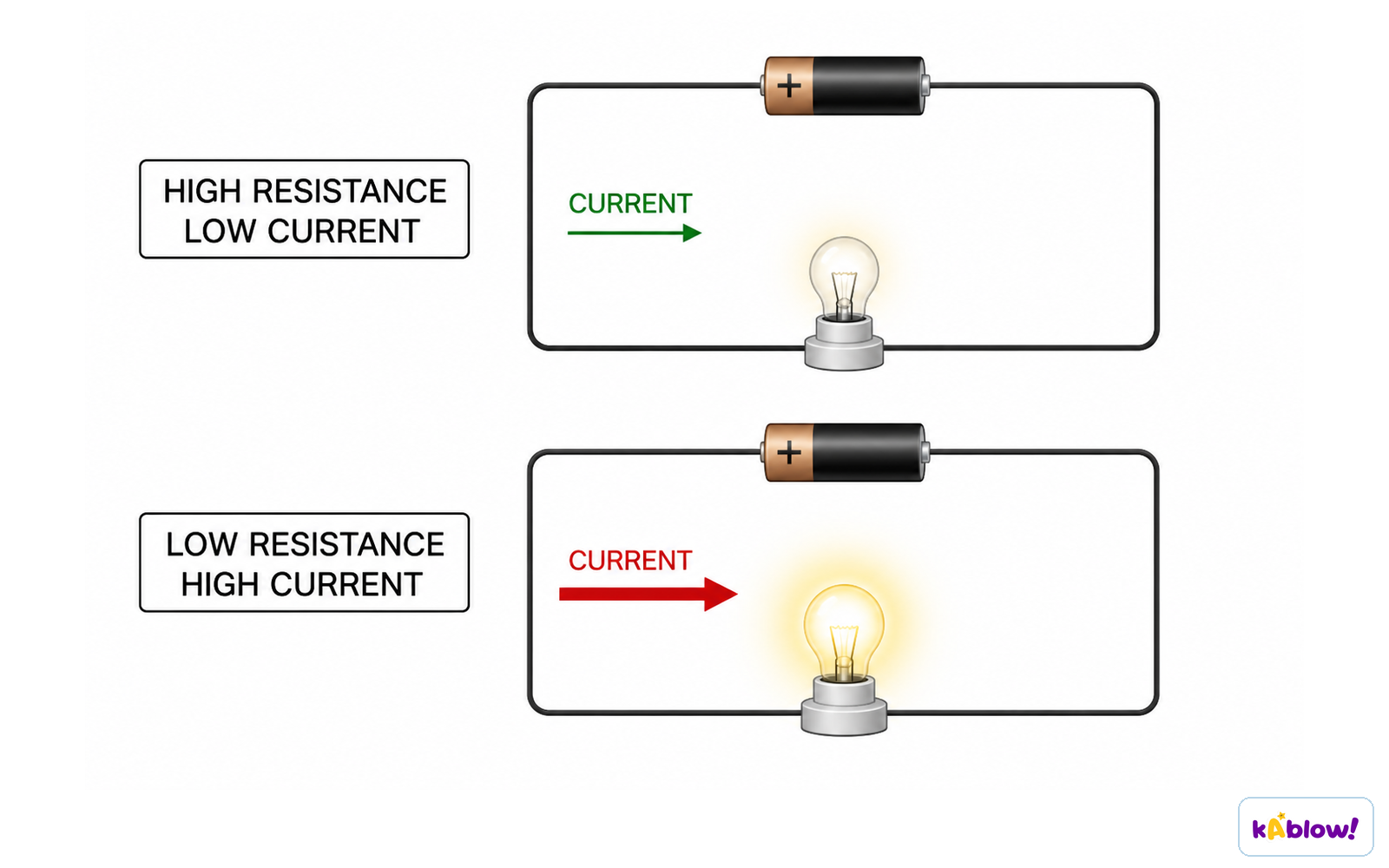
- Resistance opposes current: R = \frac{V}{I} , measured in ohms (Ω).
- Resistance is directly proportional to length and inversely proportional to cross-sectional area.
- Ohmic conductors have constant resistance (linear I–V graph); non-ohmic have variable resistance.
- Increasing temperature increases resistance due to more frequent collisions with metal ions.
The effect of resistance on current
Electrical Energy & Power
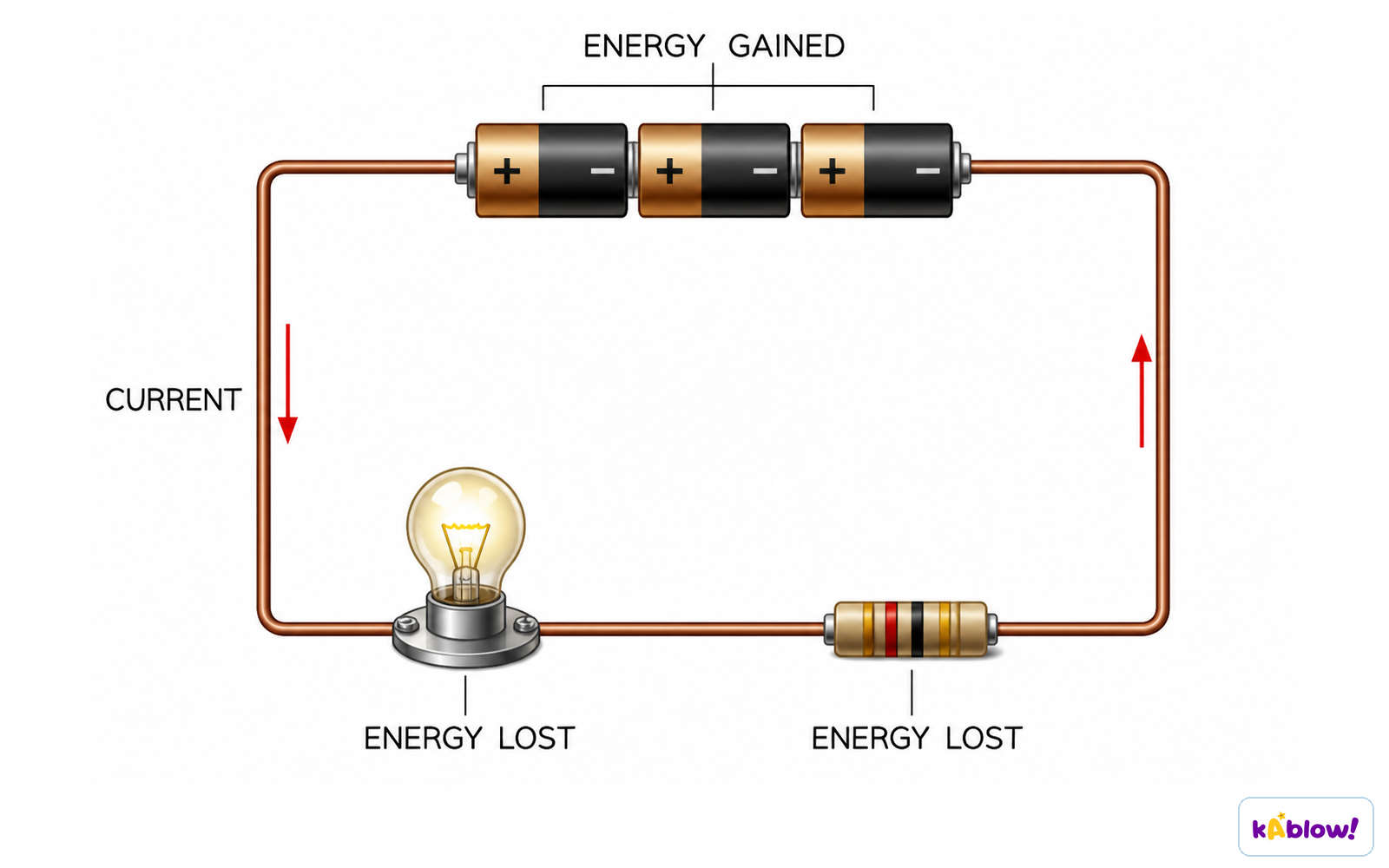
- Electrical energy transferred: E = VIt , measured in joules (J).
- Power is the rate of energy transfer: P = IV = \frac{E}{t} , measured in watts (W).
- Domestic energy is often measured in kilowatt-hours (kW h): 1 kW h = 3.6 × 10⁶ J.
- Cost of electricity = energy (kW h) × cost per unit.
Energy transfer in an electrical circuit
Slides
Sign up free to view the lesson slides
Step through every slide for this topic — plus flashcards and revision notes — with a free account.
Questões de prática
Prévia grátis — 8 de 56 perguntas. Cadastre-se para ver todas.
1.Which two particles in an atom have equal and opposite charges?
Easy- Aproton and neutron
- Bproton and electron
- Cneutron and electron
- Dproton and proton
2.Like charges attract each other.
EasyTrue or false?
3.State the name of the instrument used to measure electric current.
Easy4.Complete the sentence about conventional current.
EasyConventional current flows from the ____ terminal to the ____ terminal of a cell.
5.A charge of 4 C passes a point in 0.5 s. What is the current in amperes?
Medium- A7
- B9
- C10
- D8
6.Match each type of current to its description.
Medium- Direct current (d.c.)
- Alternating current (a.c.)
- Continuously changes direction
- Steady current in one direction
7.A 12 Ω resistor has a current of 0.3 A flowing through it. What is the potential difference across the resistor?
Medium- A3.6 V
- B12.3 V
- C0.025 V
- D40 V
8.Arrange the following steps in the correct order to investigate how the length of a wire affects resistance:
Medium- Record potential difference and current
- Set up circuit with clips 10 cm apart
- Move clips further apart in 10 cm intervals
- Repeat until clips are 1 m apart
Unlock all 56 questions & more
Crie uma conta grátis para ver todas as perguntas, os slides, flashcards e resumos de revisão deste tópico.