Mass Weight And Density
Aprenda jogando
Responda a estas perguntas para ganhar energia, depois pesque e explore. Sem precisar de conta.
Notas de aula
Mass & Weight
- Mass is the quantity of matter in an object; it resists changes in motion (inertia).
- Mass is a scalar quantity measured in kilograms (kg).
- Weight is the gravitational force on an object; it is a vector measured in newtons (N).
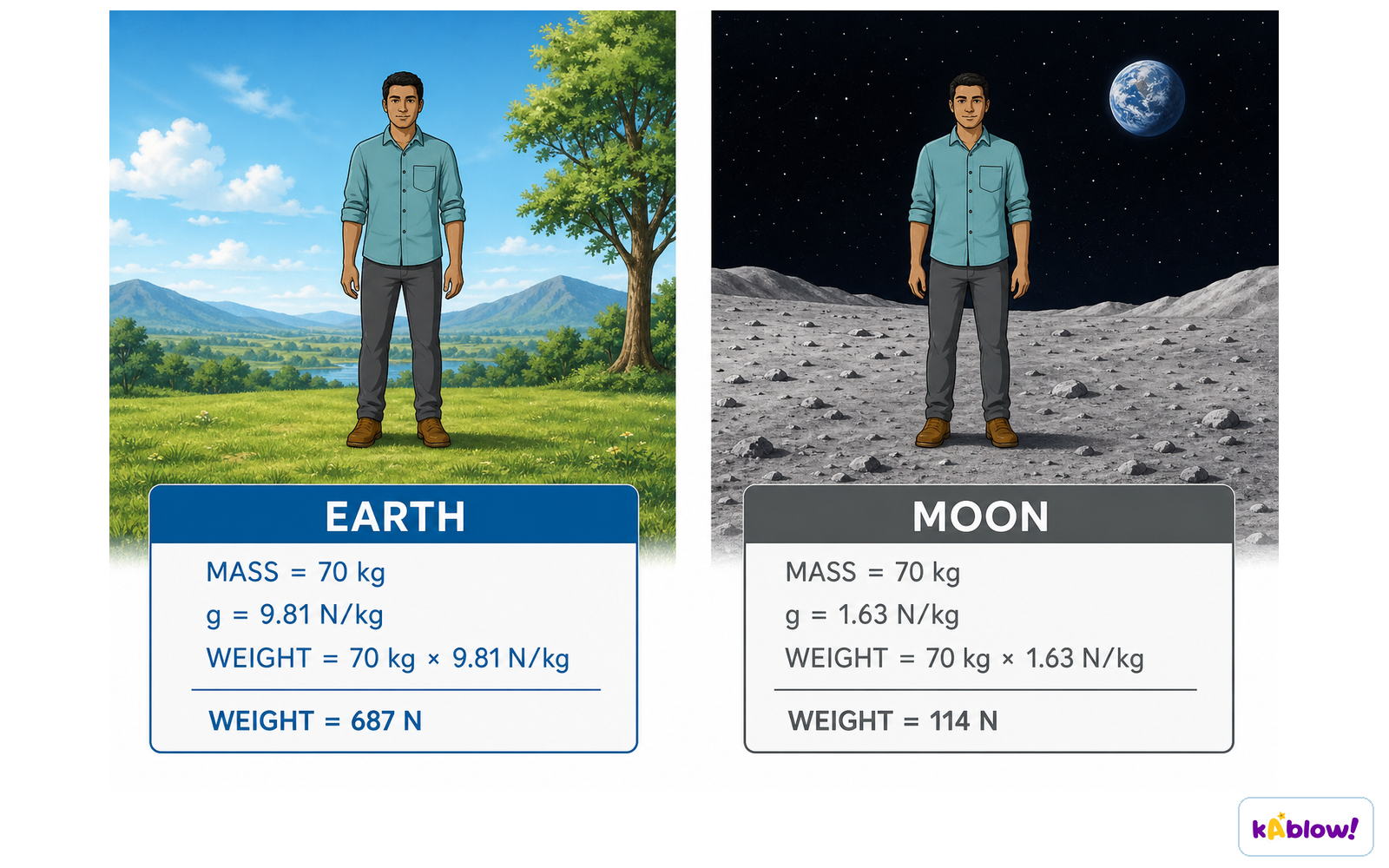
- Weight depends on the gravitational field strength (g): W = m × g.
- On Earth, g ≈ 9.8 N/kg; on the Moon, g ≈ 1.6 N/kg – weight changes but mass stays the same.
Mass and Weight on Earth and the Moon
Gravitational Field Strength
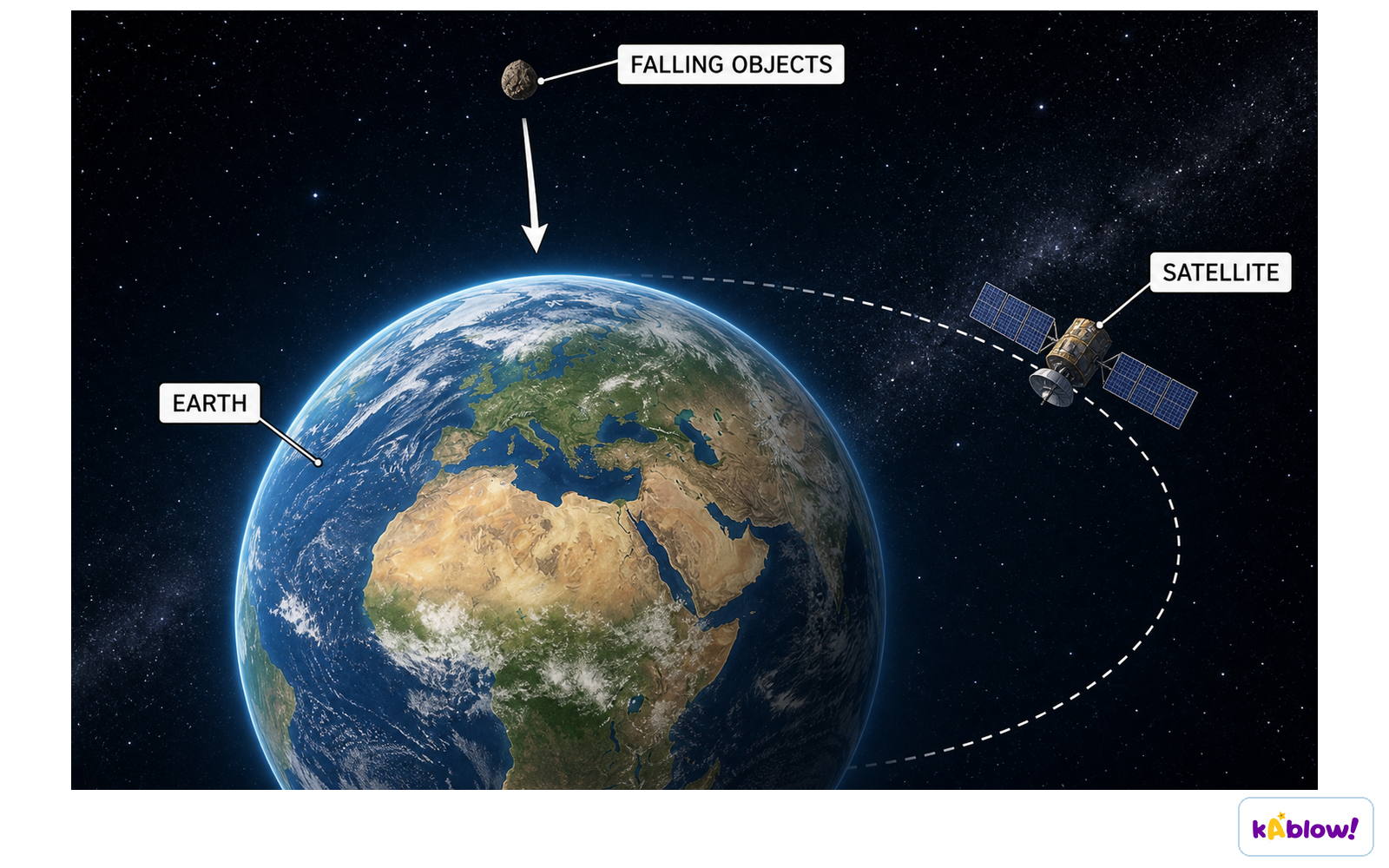
- Gravitational field strength (g) is the force per unit mass: g = W / m.
- It is measured in N/kg and is equivalent to the acceleration of free fall (9.8 m/s² on Earth).
- The weight of an object is given by W = m × g.
Gravitational Field Strength
Density
- Density (ρ) is the mass per unit volume: ρ = m / V.
- Units: kg/m³ or g/cm³ (1 g/cm³ = 1000 kg/m³).
- Low-density materials (e.g., gases) have particles spread out; high-density materials (e.g., solids) have particles closely packed.
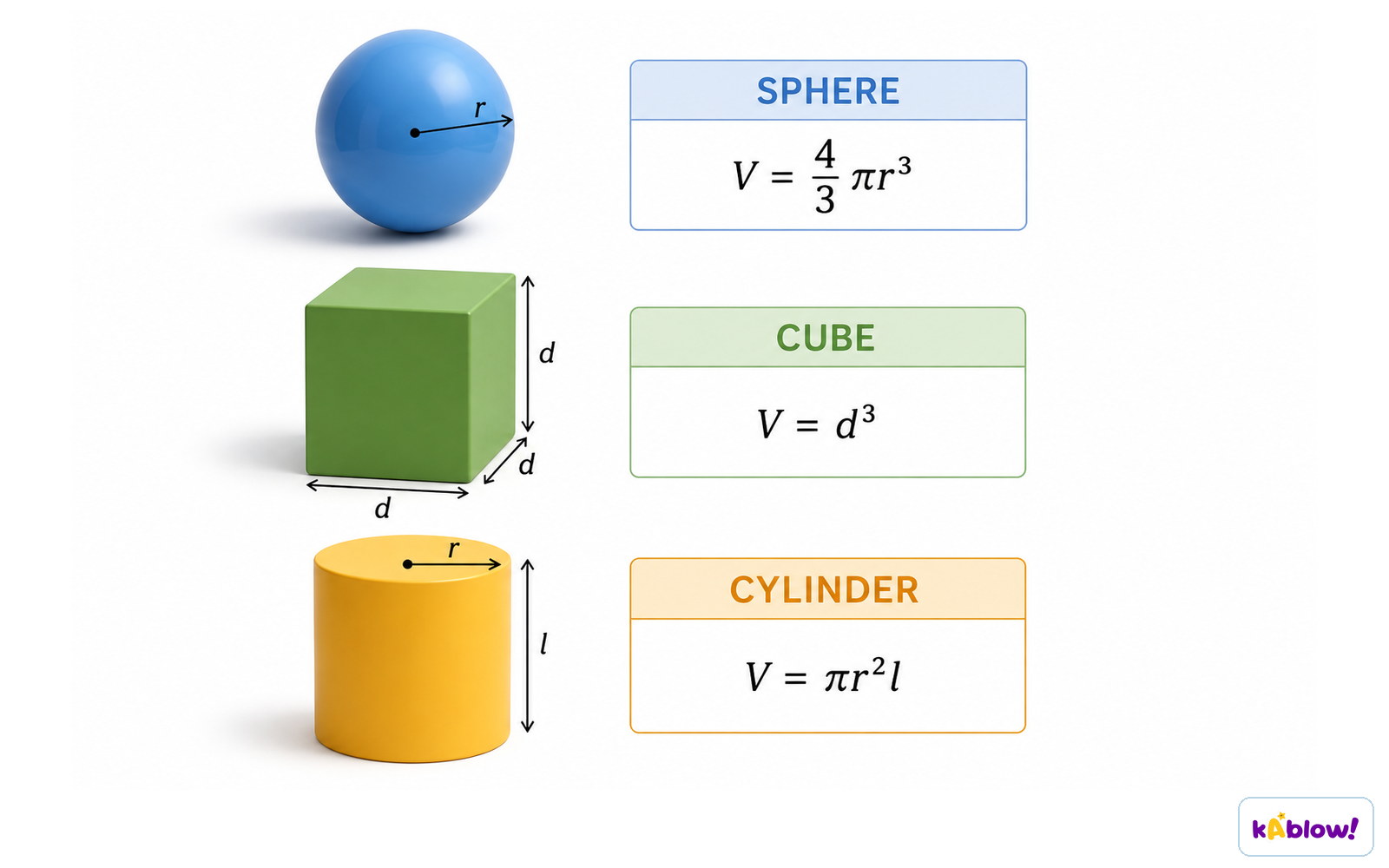
- Volume of regular solids: cube = l³, cuboid = l × w × h, cylinder = πr²h, sphere = (4/3)πr³.
Volume Formulas for Common Shapes
Measuring Density of Regular Solids
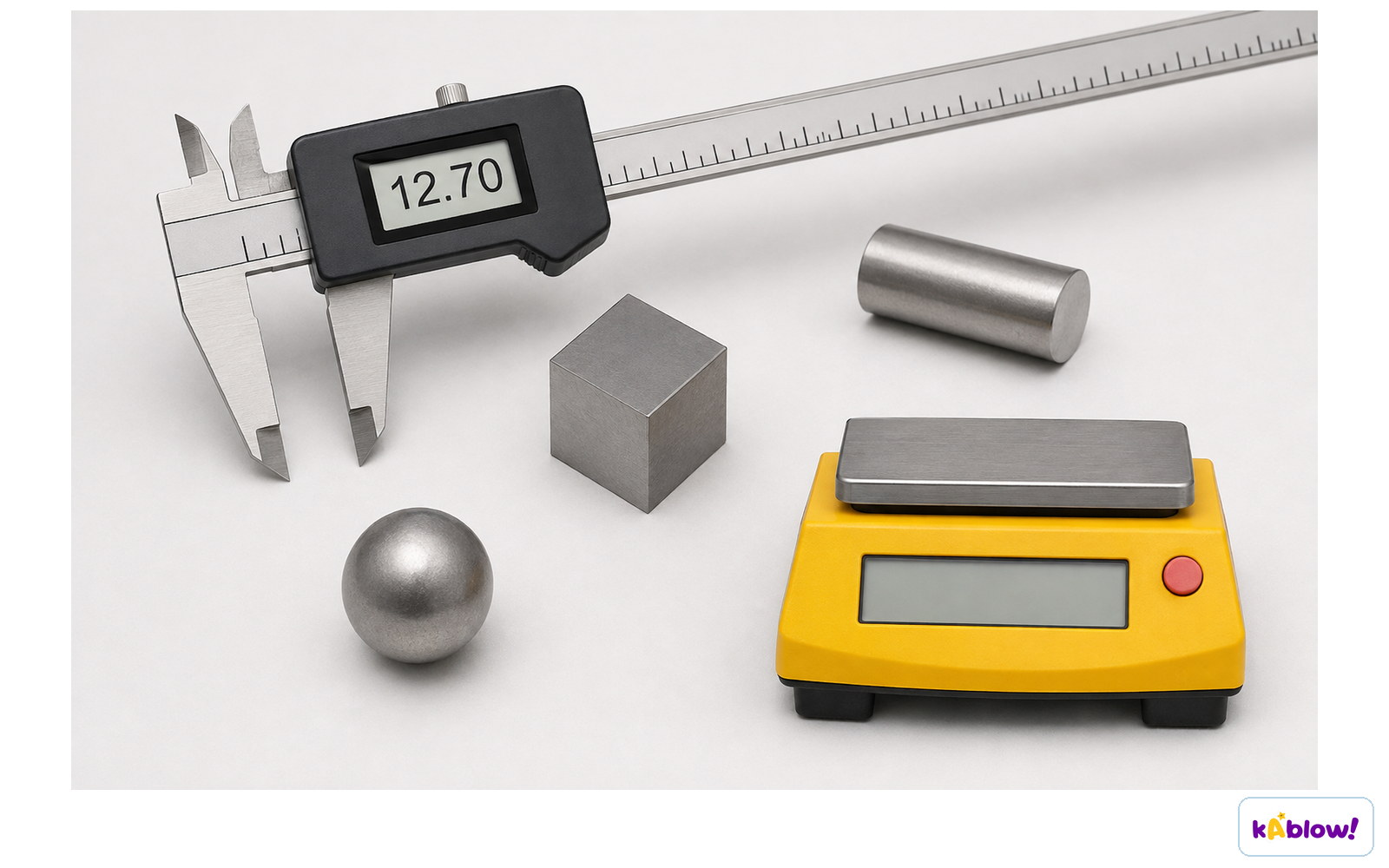
- Measure mass using a digital balance.
- Measure dimensions with a ruler, Vernier calipers, or micrometer.
- Calculate volume from dimensions, then density = mass / volume.
- Repeat measurements and take averages to reduce random error.
Equipment for Measuring Regular Solids
Measuring Density of Irregular Solids
- Measure mass using a digital balance.
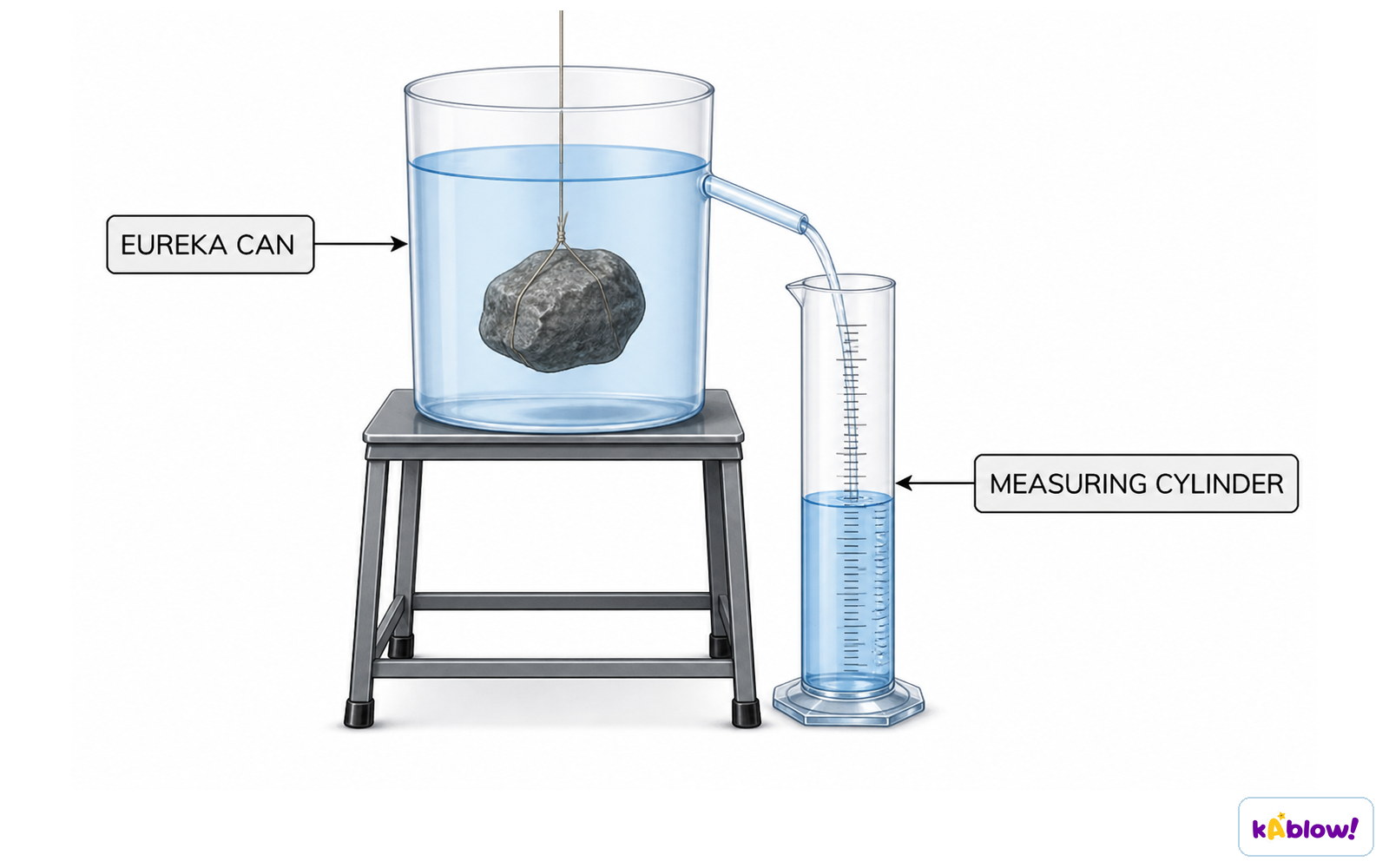
- Use a displacement can (Eureka can) filled with water just below the spout.
- Submerge the object; collect displaced water in a measuring cylinder.
- Volume of displaced water = volume of object; then calculate density.
Eureka Can Setup
Measuring Density of Liquids
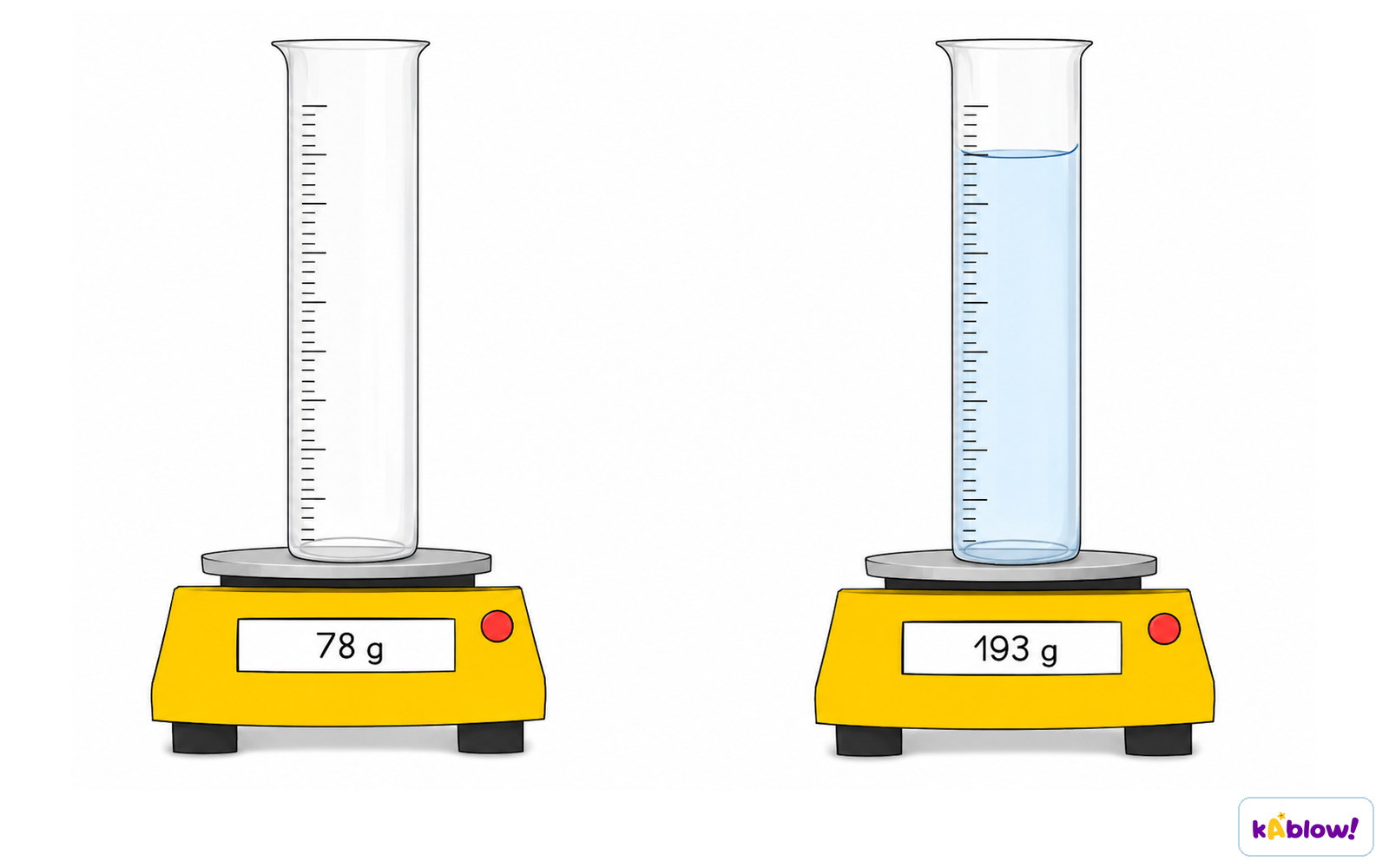
- Measure mass of empty measuring cylinder, then add known volume of liquid.
- Mass of liquid = (mass of cylinder + liquid) – mass of empty cylinder.
- Density = mass of liquid / volume of liquid.
- Zero the balance before each measurement to avoid systematic error.
Measuring the Density of a Liquid
Floating & Sinking
- An object floats if its density is less than the fluid's density; sinks if greater.
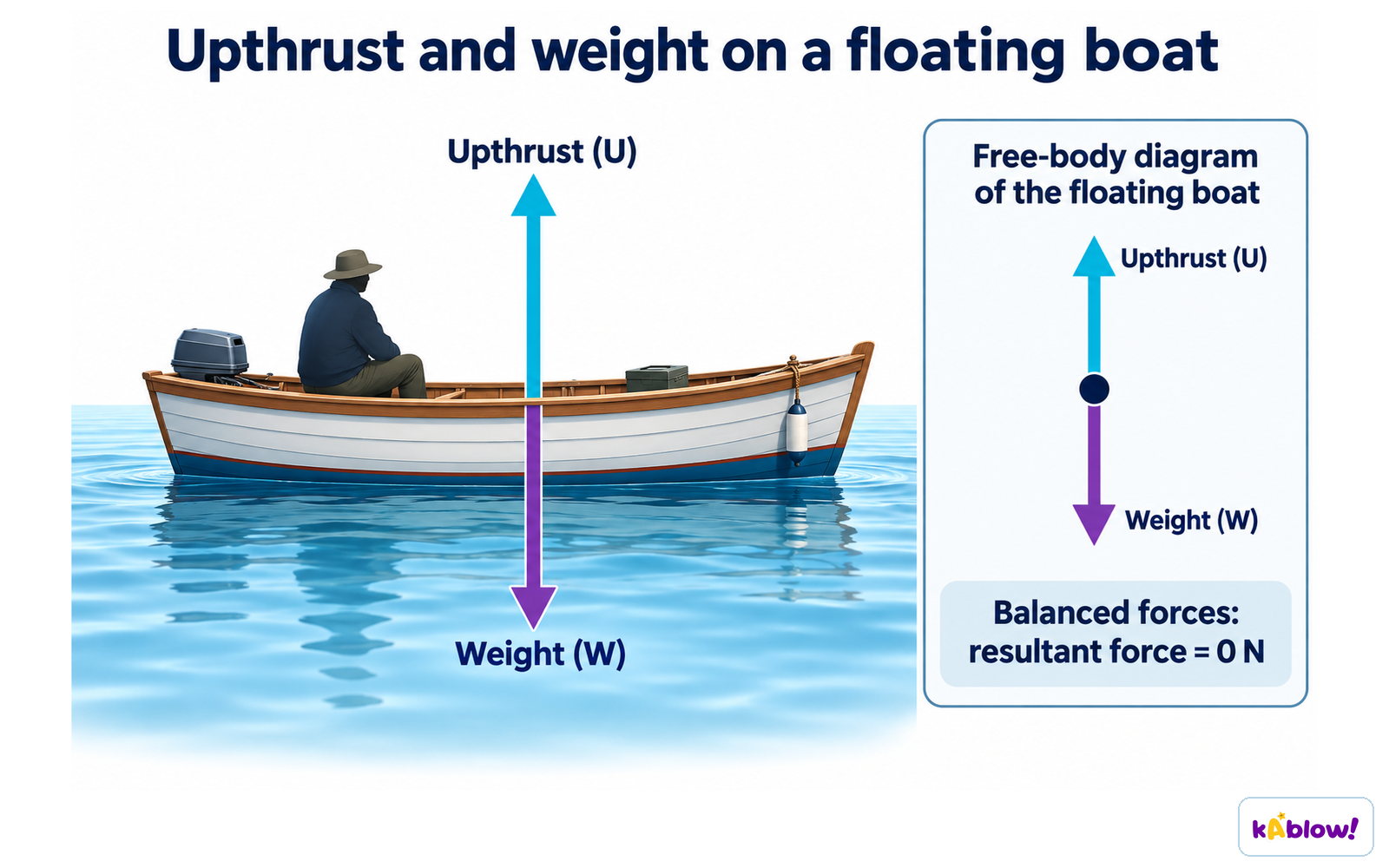
- Upthrust is an upward force on a submerged object, opposite to weight.
- Floating occurs when upthrust = weight; sinking when upthrust < weight.
- Upthrust depends on fluid density and volume of fluid displaced.
Upthrust and Weight on a Boat
Slides
Sign up free to view the lesson slides
Step through every slide for this topic — plus flashcards and revision notes — with a free account.
Questões de prática
Prévia grátis — 8 de 61 perguntas. Cadastre-se para ver todas.
1.Which of the following is a measure of the quantity of matter in an object?
Easy- AWeight
- BMass
- CDensity
- DVolume
2.What is the unit of weight?
Easy- Akilogram
- Bnewton
- Ckg/m³
- Dm/s²
3.Mass is a vector quantity.
EasyTrue or false?
4.State the equation that links weight, mass and gravitational field strength.
Easy5.An object has a mass of 4.5 kg. What is its mass in grams?
Easy- A4950
- B5400
- C4050
- D4500
6.A paving slab has a mass of 73 kg and dimensions 0.04 m × 0.5 m × 0.85 m. Calculate its density in kg/m³ (round to two significant figures).
Hard- A4730
- B4300
- C5160
- D3870
7.Which of the following correctly describes the relationship between density and floating?
Easy- AAn object floats if its density is greater than the density of the fluid.
- BAn object floats if its density is less than the density of the fluid.
- CAn object floats if its density equals the density of the fluid.
- DAn object always floats regardless of density.
8.Name the force that pushes upwards on an object submerged in a fluid.
Easy
Unlock all 61 questions & more
Crie uma conta grátis para ver todas as perguntas, os slides, flashcards e resumos de revisão deste tópico.