Energy Sources
Aprenda jogando
Responda a estas perguntas para ganhar energia, depois pesque e explore. Sem precisar de conta.
Notas de aula
Energy from the Sun
- The Sun transfers energy to Earth by electromagnetic radiation (mostly visible light and infrared).
- Most energy resources on Earth come indirectly from the Sun: wind, waves, rain (hydroelectric), and plant growth (biofuels and fossil fuels).
- Resources not from the Sun: geothermal (Earth's core heat), nuclear (elements in Earth's crust), tidal (mainly Moon's gravity).
- Solar cells (photovoltaic) convert sunlight directly into electricity using semiconducting materials.
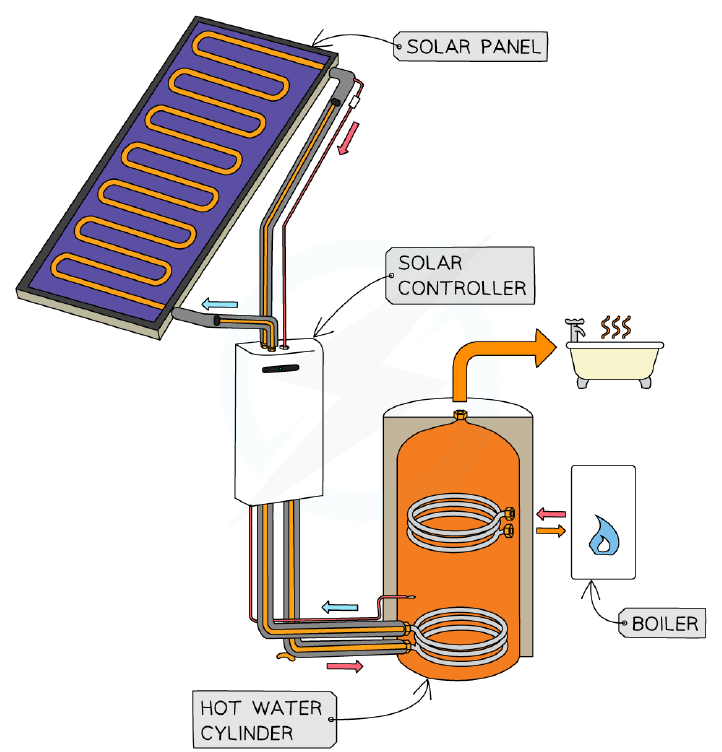
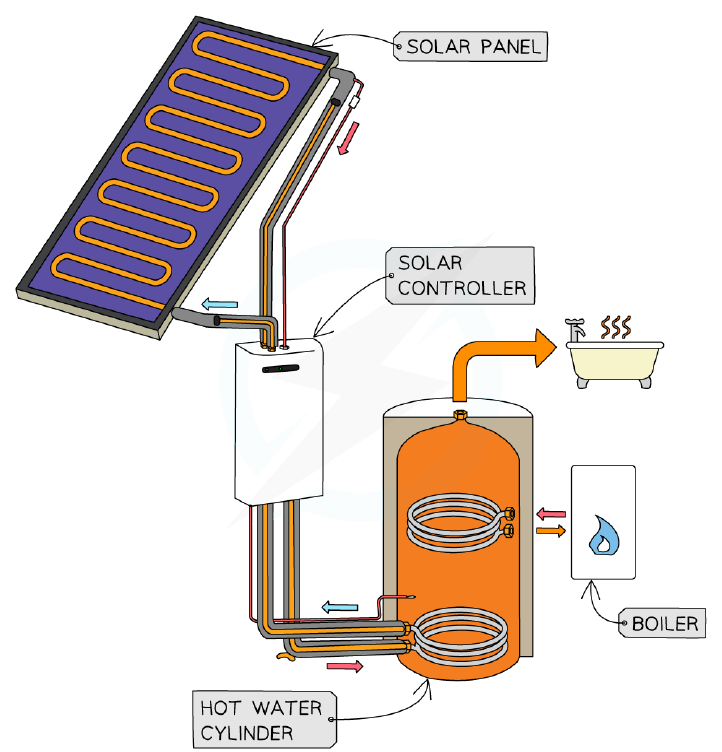
- Solar panels use sunlight to heat water for domestic use; solar furnaces focus sunlight to boil water for steam turbines.
- Advantages of solar: renewable, no pollution, reliable in sunny regions, can be used in remote areas, low running costs.
- Disadvantages: low energy density (large area needed), intermittent, expensive to install, low efficiency (20–40%).
Solar panels use energy from sunlight to heat water
Wind Energy
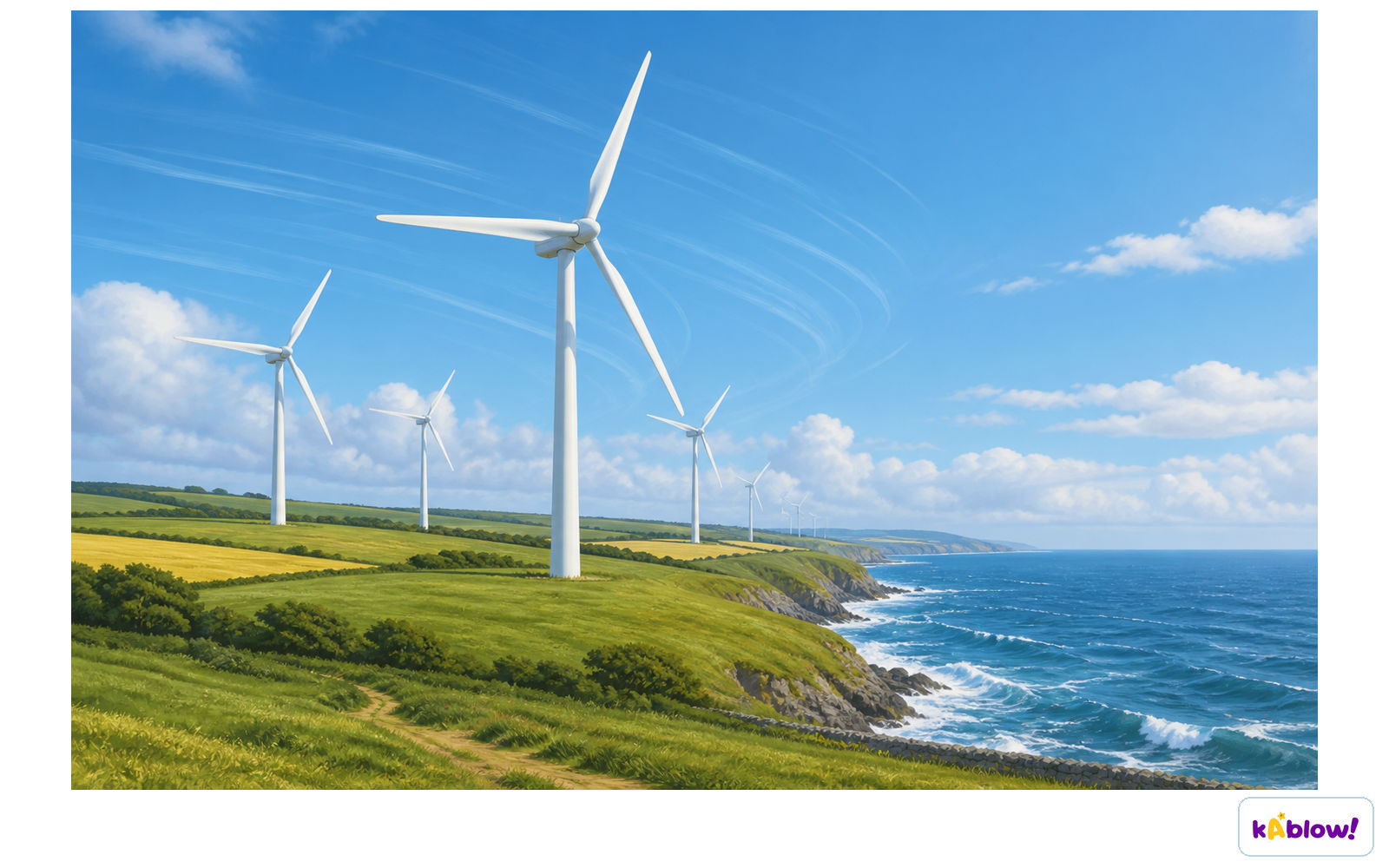
- Wind turns turbines → generator → electricity; energy transfers: kinetic (wind) → kinetic (turbine) → kinetic (generator) → electrical.
- Advantages: renewable, no pollution, relatively cheap, high efficiency (~50%), land can still be used for farming.
- Disadvantages: unreliable (wind not constant), visual pollution, each turbine produces little power, needs high-voltage lines.
Wind turbines use energy from the wind to generate electricity
Energy from Fuels: Fossil Fuels
- Fossil fuels: coal, natural gas (methane), crude oil (refined into petrol, diesel). Formed from remains of plants/animals; chemical energy originally from sunlight via photosynthesis.
- Advantages: reliable, responsive (can be turned on/off), well-established infrastructure, safe to store.
- Disadvantages: non-renewable (millions of years to form, predicted to run out in ~200 years), burning releases CO₂ (greenhouse gas) and SO₂ (acid rain), extraction damages environment, expensive to build/decommission.
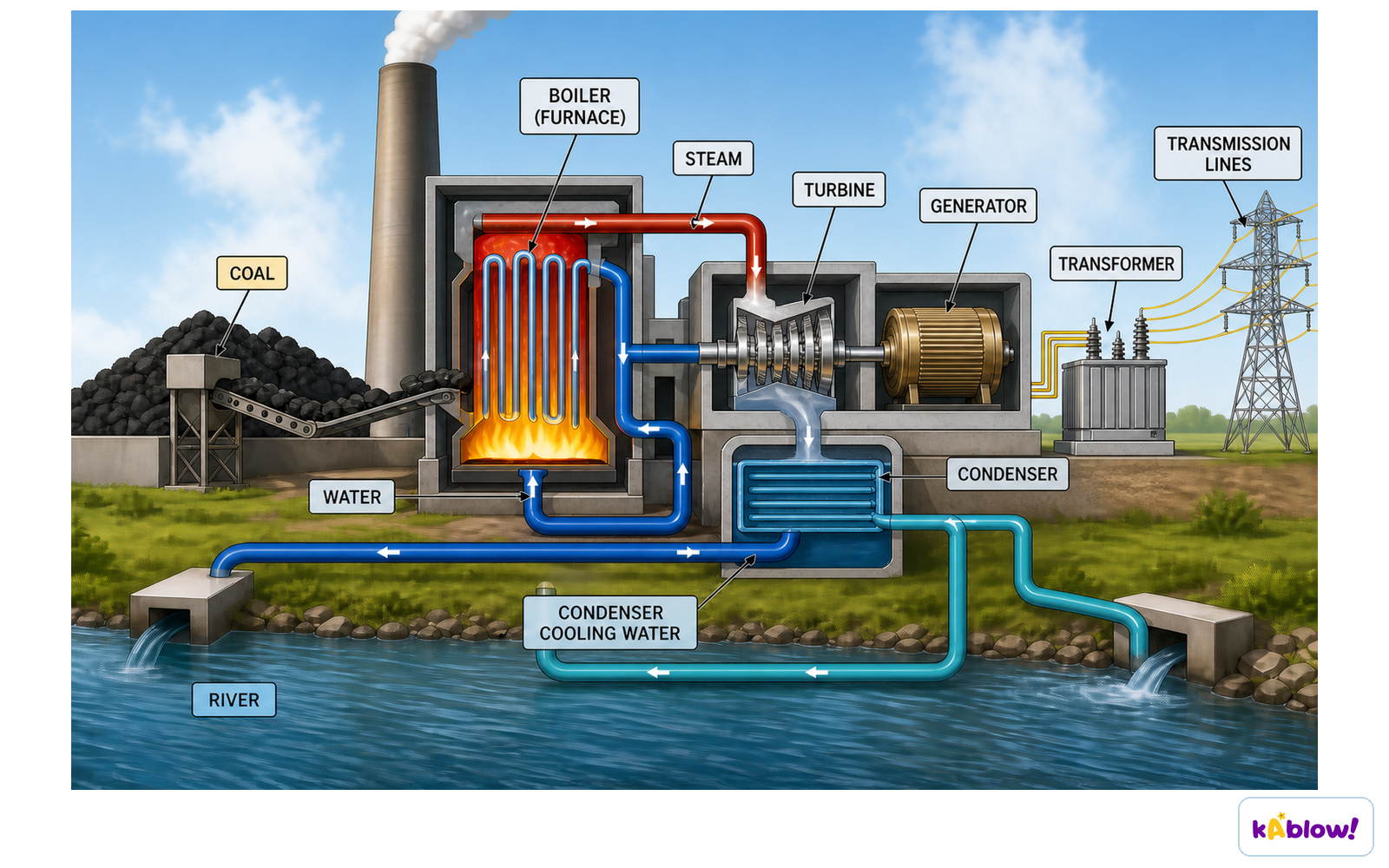
- Uses: transport, electricity generation (burned to heat water → steam → turbine → generator), heating.
Electricity generation in a coal-fired power station
Energy from Fuels: Biofuels
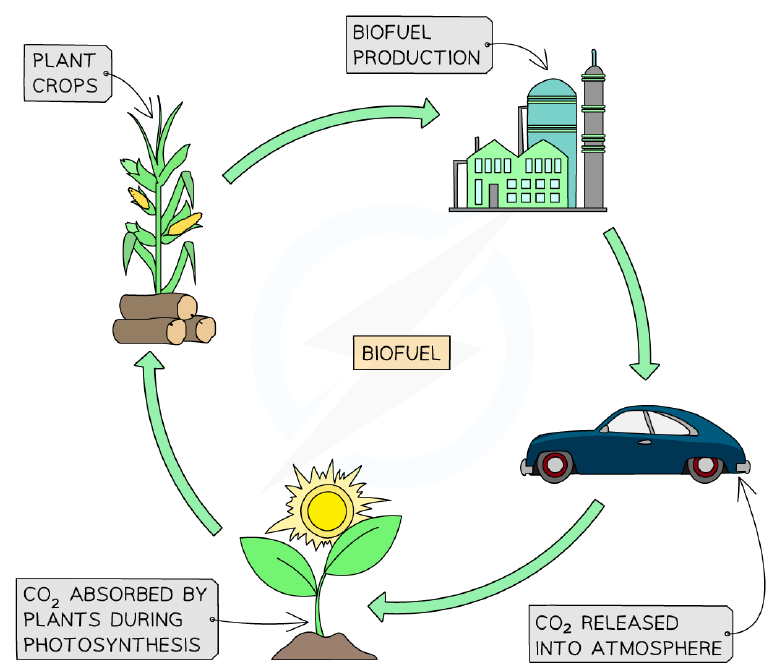
- Biofuels (ethanol, methane) made from plant matter; energy from sunlight stored chemically.
- Advantages: renewable, considered carbon neutral (plants absorb CO₂ during growth), no SO₂ produced.
- Disadvantages: requires land and resources for crops, only half the energy density of fossil fuels, controversial carbon neutrality (land could have been used for food).
Cycle of biofuel production and use
Energy from Fuels: Nuclear Fuel
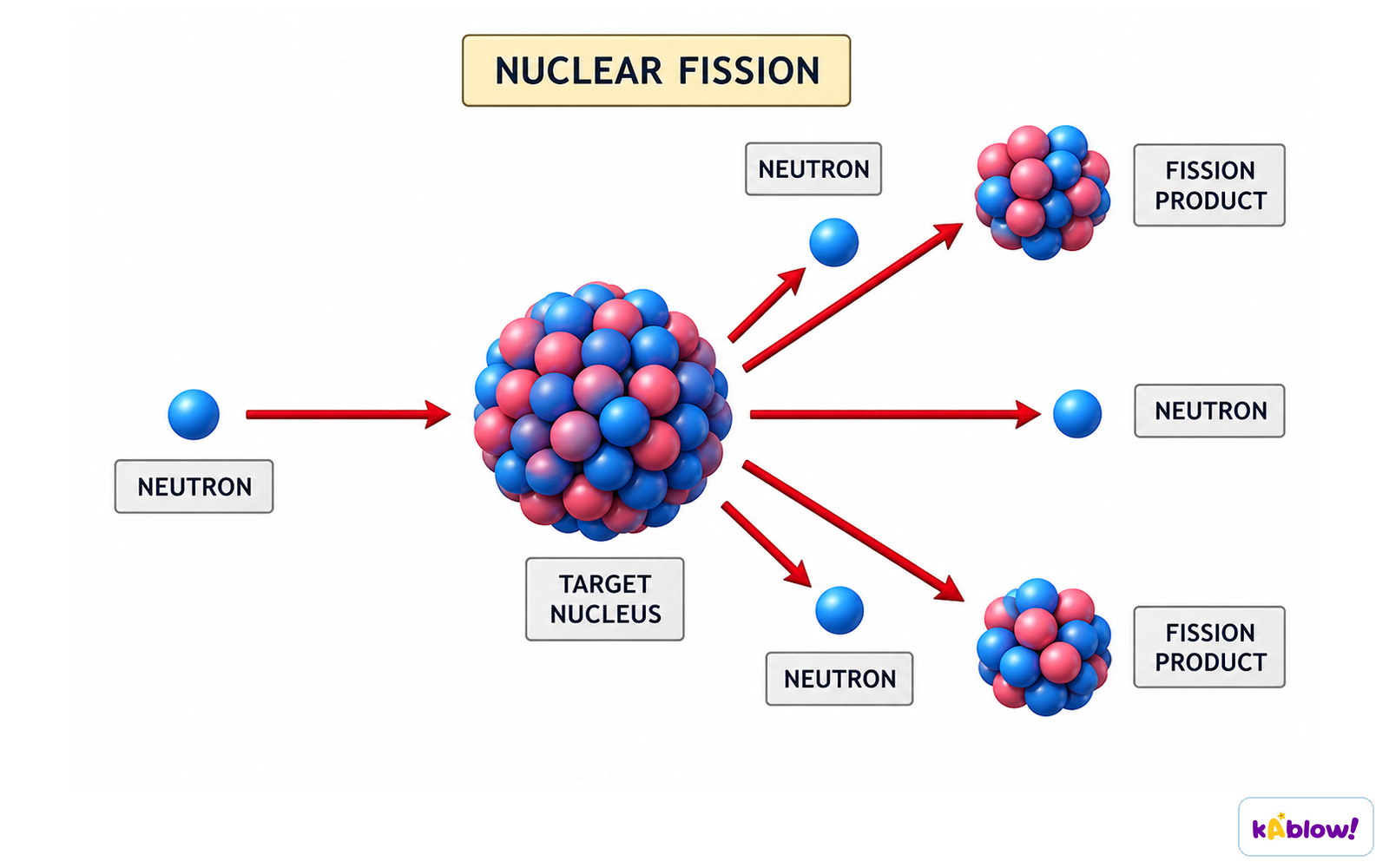
- Nuclear fission splits large nuclei (e.g., uranium) into smaller ones, releasing energy; used to heat water → steam → turbine → generator.
- Advantages: no atmospheric pollution, reliable, responsive, massive power output (twice that of fossil fuel plant), high energy density.
- Disadvantages: non-renewable (finite uranium), produces radioactive waste (stored for thousands of years), expensive to build and decommission, risk of accidents.
Nuclear fission
Energy from Water
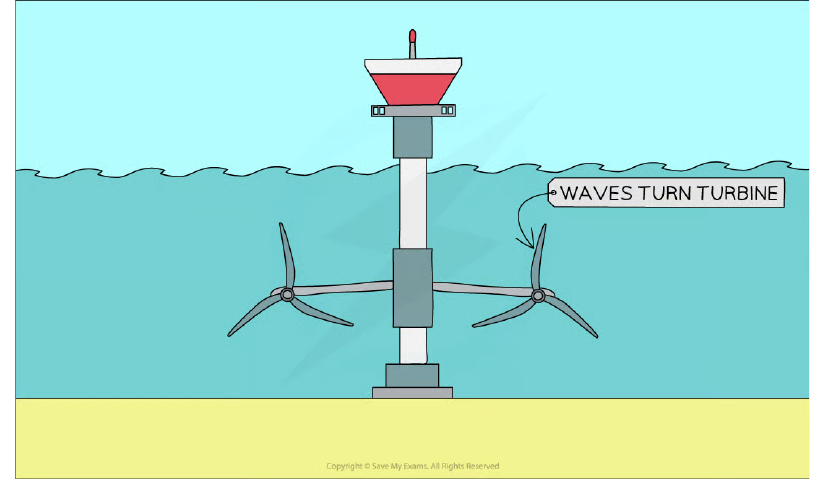
- Wave power: underwater turbines turned by wave motion; tidal power: tidal barrages store water at height, released through turbines.
- Advantages: renewable, no pollution, no fuel costs, tidal is reliable and predictable, high efficiency (~80%), responsive.
- Disadvantages: few suitable locations (estuaries), interferes with shipping and habitats, technology not yet large-scale, wave power unreliable.
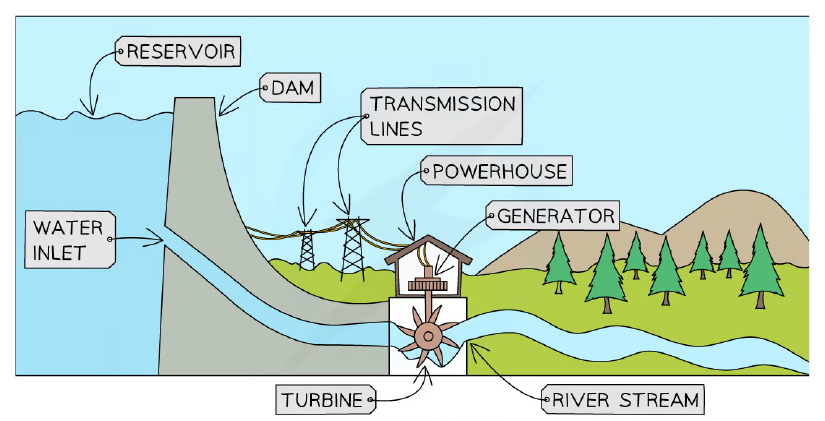
- Hydroelectric dams: water stored in reservoir has gravitational potential energy; flowing water turns turbines.
- Advantages: reliable, responsive, cheap to run, large electricity output, renewable.
- Disadvantages: flooding valleys destroys habitats and settlements, expensive to build, drought can affect supply.
Turbines using wave power
Geothermal Energy
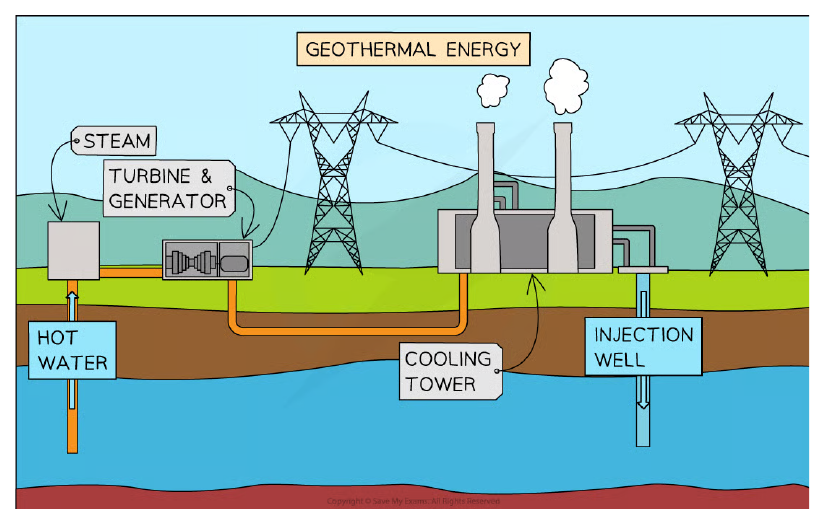
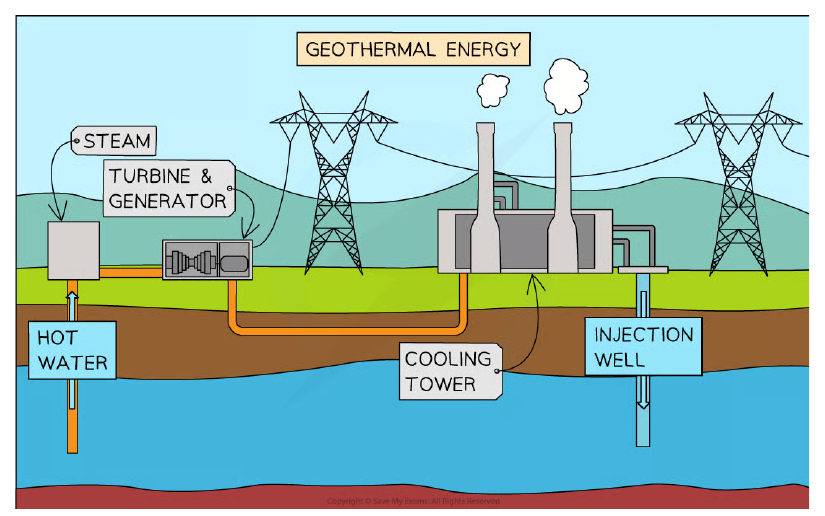
- Heat from Earth's core heats rocks; water injected into shafts is heated and returned as steam/hot water to generate electricity or heat homes.
- Advantages: renewable, reliable (rocks hot for thousands of years).
- Disadvantages: few suitable locations (tectonic activity), can release methane (greenhouse gas), expensive to build, small scale, low efficiency (~12%).
Geothermal power station
Nuclear Fusion (Extended Tier Only)
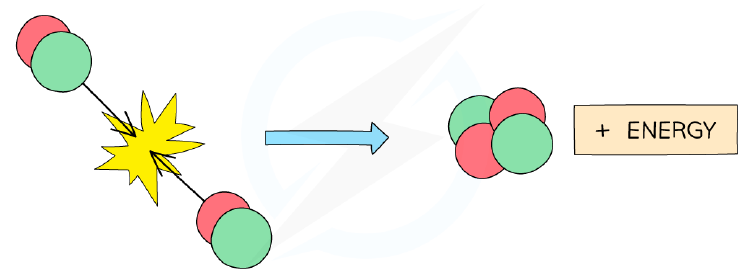
- Nuclear fusion fuses hydrogen nuclei into helium, releasing massive energy (powers the Sun).
- Requires extremely high temperatures and pressures; currently research aims to sustain fusion at lower temperatures.
- Potential: virtually limitless, carbon-free electricity; but currently reactions require nearly as much energy as they release.
Nuclear fusion
Slides
Sign up free to view the lesson slides
Step through every slide for this topic — plus flashcards and revision notes — with a free account.
Questões de prática
Prévia grátis — 8 de 57 perguntas. Cadastre-se para ver todas.
1.Which energy resource does not use the Sun as the source of its energy?
Easy- AHydroelectric
- BWind
- CNuclear
- DCoal
2.Which energy resource involves splitting heavy nuclei?
Easy- ANuclear fission
- BGeothermal
- CBiomass
- DNuclear fusion
3.Which energy resource does not release greenhouse gases?
Easy- AOil
- BHydro-electric power
- CBiofuel
- DCoal
4.Which disadvantage does not apply to geothermal energy?
Medium- AExpensive to build
- BFew suitable locations
- CCan result in the release of greenhouse gases
- DNot reliable
5.Which energy source relies on radiation from the Sun?
Easy- AFossil fuels
- BNuclear fission
- CTidal power
- DGeothermal energy
6.Which source of energy is renewable?
Easy- Acoal
- Bnatural gas
- Coil
- Dwind
7.Which energy resource does not originate from the Sun's radiation?
Easy- Atidal power
- Bwind power
- Cwave power
- Dhydroelectric power
8.Listed below are some energy resources. W wind powering a turbine X water falling through a hydroelectric turbine Y alcohol made from crops which have been grown for burning in a biomass generator Z uranium for nuclear fission reactors Which of the resources are renewable?
Medium- AW, X and Z
- BW and X
- CW, X and Y
- DW, X, Y and Z
Unlock all 57 questions & more
Crie uma conta grátis para ver todas as perguntas, os slides, flashcards e resumos de revisão deste tópico.