Aerobic and anaerobic respiration
Aprenda jogando
Responda a estas perguntas para ganhar energia, depois pesque e explore. Sem precisar de conta.
Notas de aula
Aerobic Respiration
- Requires oxygen to release energy from glucose.
- Occurs in the mitochondria of cells.
- Word equation: glucose + oxygen → carbon dioxide + water + energy.
- Produces a large amount of energy efficiently.
- Used during endurance activities like marathon running or long-distance swimming.
Anaerobic Respiration in Humans
- Does not require oxygen; occurs when oxygen levels are low.
- Takes place in the cytoplasm of cells.
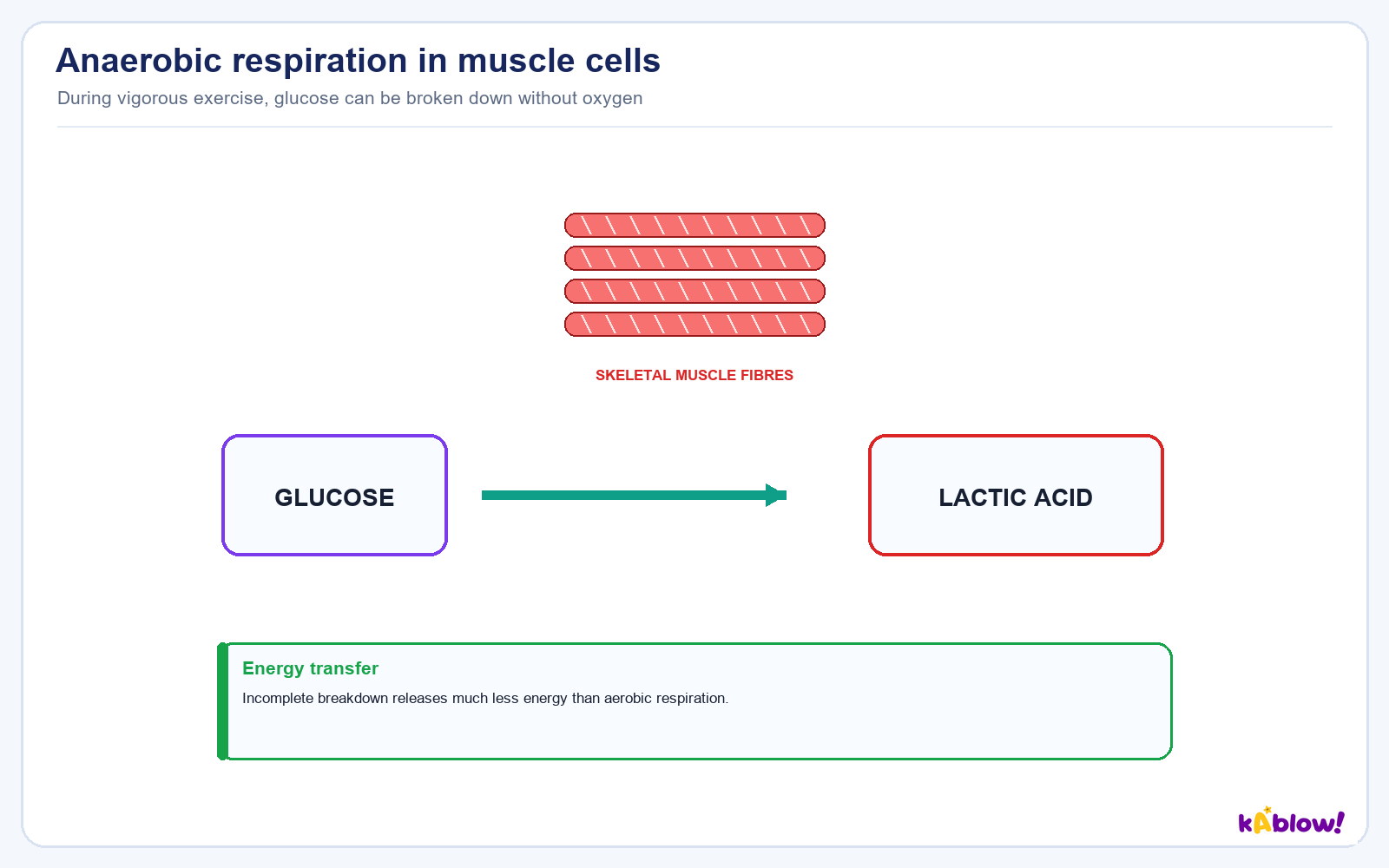
- Word equation: glucose → lactic acid + energy.
- Releases less energy than aerobic respiration.
- Used during intense exercise (e.g., sprinting, weightlifting) when oxygen supply to muscles is limited.
- Build-up of lactic acid causes muscle fatigue and soreness.
Anaerobic respiration in muscles during vigorous exercise: glucose -> lactic acid.
Oxygen Debt
- After intense exercise, the body must repay the oxygen debt.
- Additional oxygen is needed to break down lactic acid and restore muscles.
- During recovery, increased breathing and heart rate supply this oxygen.
Anaerobic Respiration in Yeast (Fermentation)
- Yeast is a unicellular fungus that can perform fermentation.
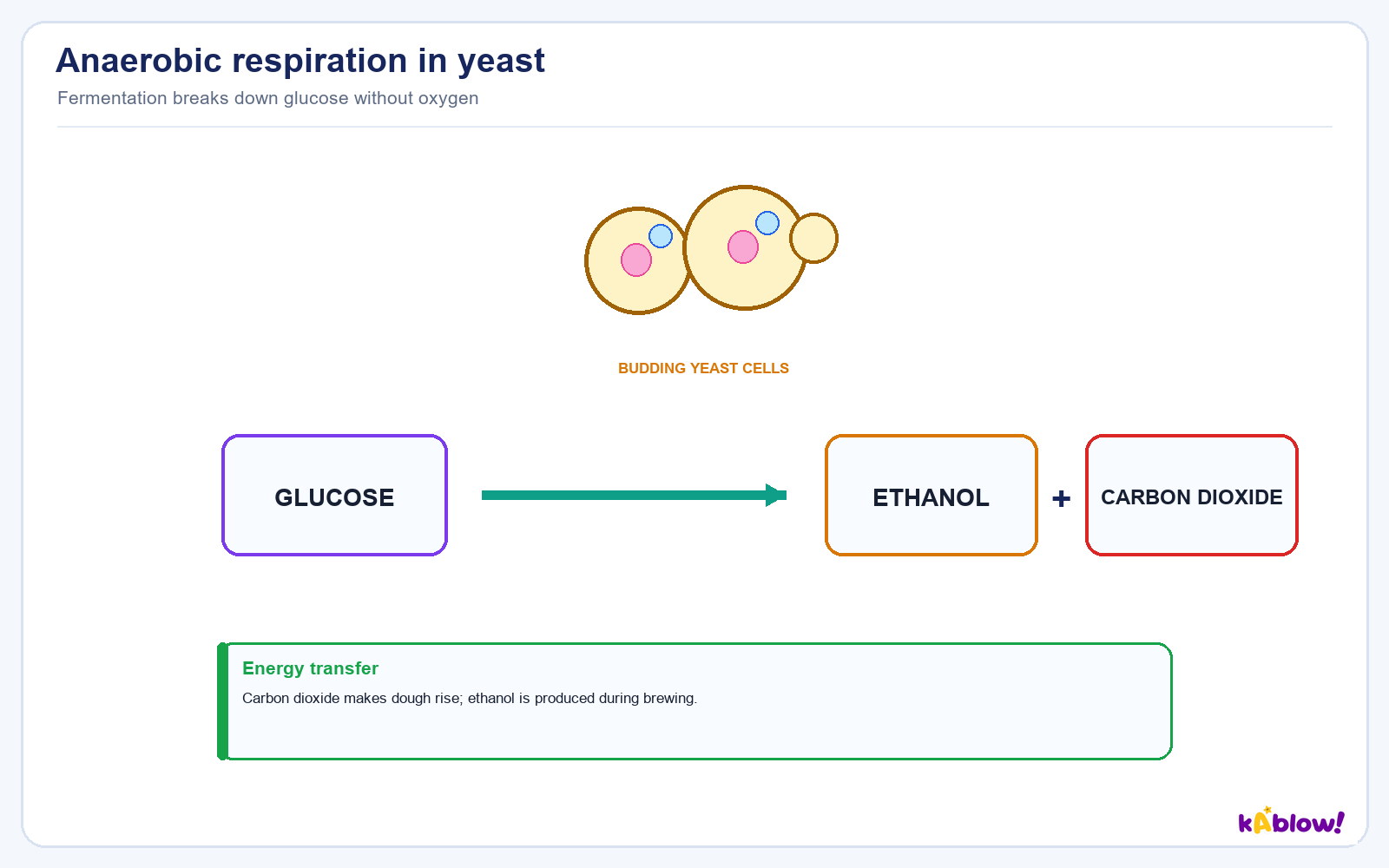
- Word equation: glucose → ethanol + carbon dioxide + energy.
- Used in bread making (carbon dioxide makes dough rise) and brewing (ethanol is alcohol in beer/wine).
Anaerobic respiration in yeast: glucose -> alcohol + carbon dioxide.
Comparison of Aerobic and Anaerobic Respiration
- Aerobic requires oxygen; anaerobic does not.
- Aerobic occurs in mitochondria; anaerobic occurs in cytoplasm.
- Aerobic produces much more energy than anaerobic.
- Aerobic products: carbon dioxide and water; anaerobic products: lactic acid (humans) or ethanol and carbon dioxide (yeast).
Diagram
Diagram
Slides
Sign up free to view the lesson slides
Step through every slide for this topic — plus flashcards and revision notes — with a free account.
Questões de prática
Prévia grátis — 8 de 60 perguntas. Cadastre-se para ver todas.
1.Which of the following is the correct word equation for aerobic respiration?
Easy- Aglucose + oxygen → carbon dioxide + water + energy
- Bglucose → lactic acid + energy
- Cglucose → ethanol + carbon dioxide + energy
- Dglucose + water → carbon dioxide + oxygen + energy
2.In which organelle does aerobic respiration occur?
Easy- ANucleus
- BMitochondrion
- CCytoplasm
- DRibosome
3.What is the product of anaerobic respiration in humans that causes muscle fatigue?
Easy- ACarbon dioxide
- BEthanol
- CLactic acid
- DWater
4.Which of the following is true about anaerobic respiration in yeast?
Easy- AIt produces lactic acid and energy.
- BIt requires oxygen to occur.
- CIt produces ethanol and carbon dioxide.
- DIt occurs in the mitochondria.
5.During intense exercise, muscles use anaerobic respiration. What is the main reason for this?
Medium- ATo produce more energy than aerobic respiration
- BBecause oxygen supply to muscles is limited
- CTo produce carbon dioxide for breathing
- DBecause glucose is not available
6.After a sprint, an athlete breathes heavily to repay an 'oxygen debt'. What is the purpose of this extra oxygen?
Medium- ATo convert lactic acid back to glucose
- BTo break down lactic acid and restore muscles
- CTo produce more lactic acid for energy
- DTo increase the rate of anaerobic respiration
7.Which of the following statements is true?
Medium- AAerobic respiration occurs without oxygen.
- BAnaerobic respiration produces more energy than aerobic respiration.
- CLactic acid can cause muscle fatigue and soreness.
- DOnly animal cells carry out aerobic respiration.
8.Where in the cell does anaerobic respiration occur?
Easy- AMitochondria
- BNucleus
- CCytoplasm
- DCell membrane
Unlock all 60 questions, flashcards & more
Crie uma conta grátis para ver todas as perguntas, os slides, flashcards e resumos de revisão deste tópico.