The senses and information processing
Aprenda jogando
Responda a estas perguntas para ganhar energia, depois pesque e explore. Sem precisar de conta.
Notas de aula
Purpose of the Nervous System
- The nervous system is a complex network that transmits nerve impulses between different parts of the body.
- Nerves receive stimuli from inside the body or the environment (e.g., ears, eyes, skin, tongue).
- Stimuli are turned into impulses sent to the brain and spinal cord.
- Stimulus is singular; stimuli is plural.
Components of the Nervous System
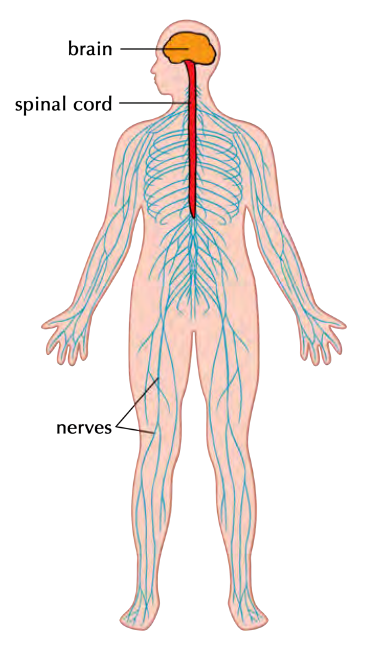
- Nerves are long fibres that transmit messages between the brain/spinal cord and the rest of the body.
- Each nerve is a bundle of nerve cells called neurons.
- The brain is inside the skull and is part of the central nervous system; different areas have different functions and communicate.
- The spinal cord runs from the brain through the spine, protected by the vertebral column, and is also part of the central nervous system.
- The peripheral nervous system connects the central nervous system to muscles and organs.
- Sensory organs (ears, nose, eyes, skin, tongue) collect information and send it via sensory nerves to the central nervous system.
The nervous system: brain, spinal cord and nerves
Main Processes: Sending and Receiving Impulses
- Nerve cells in the brain send and receive multiple messages as electrical impulses.
- The central nervous system interprets signals, enabling us to sense the world.
- Nerve impulses travel at up to 274 km per hour.
- The brain uses about 20% of the body's energy despite being less than 2% of body weight.
Sensory Processes: Hearing and Seeing
- Hearing: Sound waves are transformed into electrical signals in the ear, traveling along the auditory nerve to the brain.
- Seeing: Light enters the eye, stimulates specialized cells, and signals travel via the optic nerve to the brain for interpretation.
Sensory Processes: Feeling, Tasting, Smelling
- Feeling: Skin has millions of receptors that respond to pressure, pain, temperature, and movement.
- Tasting: Taste buds on tongue and mouth distinguish sweet, sour, bitter, salty; work closely with nose receptors.
- Smelling: Nerve cells in the nose respond to air molecules; brain recognizes about 10,000 different smells.
Regulating Body Functions
- The nervous system maintains balance (homeostasis) in the body.
- It regulates body temperature to keep it around 37°C.
- If too hot, the brain triggers sweating to cool down; if too cold, shivering generates heat.
Health Issues: Trauma and Stroke
- Damage to the brain or spinal cord can be devastating; e.g., neck injuries can cause paralysis.
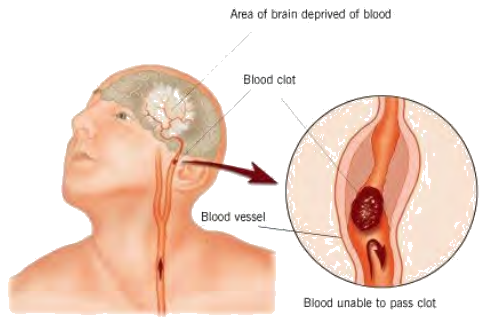
- A stroke occurs when blood flow to the brain is stopped, causing brain cells to die within minutes.
- Stroke can lead to loss of brain function.
How a stroke happens
Health Issues: Degenerative Disorders
- Degenerative disorders cause gradual loss of function over time.
- Examples include Alzheimer's Disease, Parkinson's Disease, and Multiple Sclerosis.
Slides
Sign up free to view the lesson slides
Step through every slide for this topic — plus flashcards and revision notes — with a free account.
Questões de prática
Prévia grátis — 8 de 56 perguntas. Cadastre-se para ver todas.
1.What is the plural form of the word 'stimulus'?
Easy- Astimuli
- Bstimuluses
- Cstimulum
- Dstimula
2.Which of the following is NOT a sensory organ?
Easy- Aears
- Bnose
- Ceyes
- Dskin
- Etongue
- Fheart
3.What is the main function of the nervous system?
Easy- ATo transmit nerve impulses between different parts of the body
- BTo pump blood around the body
- CTo digest food
- DTo produce hormones
4.Which part of the nervous system is made up of the brain and spinal cord?
Easy- ACentral nervous system
- BPeripheral nervous system
- CSensory organs
- DNerve tissue
5.Which nerve carries signals from the eye to the brain?
Easy- AOptic nerve
- BAuditory nerve
- COlfactory nerve
- DSpinal nerve
6.What is the role of receptors in the skin?
Easy- ATo respond to pressure, pain, temperature, and movement
- BTo produce sweat
- CTo detect light
- DTo transmit sound waves
7.Which of the following is a degenerative disorder of the nervous system?
Medium- AStroke
- BAlzheimer's Disease
- CBladder infection
- DBroken neck
8.What happens when blood flow to the brain is stopped?
Medium- ABrain cells begin to die, possibly leading to a stroke
- BThe brain grows larger
- CThe body temperature increases
- DThe person becomes more sensitive to light
Unlock all 56 questions, flashcards & more
Crie uma conta grátis para ver todas as perguntas, os slides, flashcards e resumos de revisão deste tópico.