Natural selection and adaptation
விளையாடிக் கற்றுக்கொள்ளுங்கள்
ஆற்றல் சம்பாதிக்க இந்த கேள்விகளுக்குப் பதிலளியுங்கள், பின்னர் மீன் பிடித்து ஆராயுங்கள். கணக்கு தேவையில்லை.
பாட குறிப்புகள்
Big idea: how populations change over time
- Big idea (key concept): Change. Species are not fixed. Over many generations, the features of a population can change, and new species can arise.
- Related concept: Adaptation. An adaptation is a feature that helps an organism survive and reproduce in its environment. Natural selection explains how adaptations arise.
- Global context: Orientation in space and time. The theory links life across the whole Earth and across millions of years. It came from careful observation in many places.
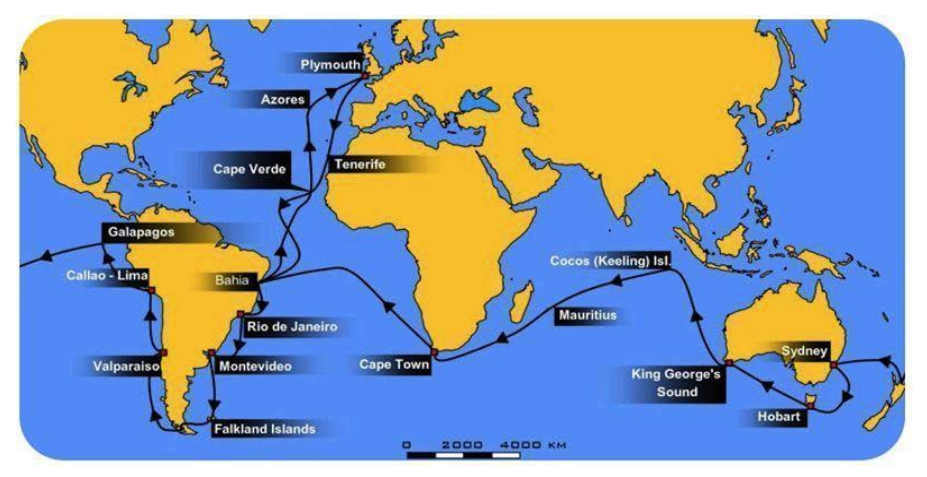
- Charles Darwin sailed round the world on HMS Beagle from 1831 to 1836 and collected plants, animals and fossils. He noticed that related species differed from place to place, for example finches on separate Galapagos islands with different beak shapes.
- Alfred Russel Wallace, working in the Malay Archipelago, reached the same idea independently. In 1858 their ideas were presented together. In 1859 Darwin published On the Origin of Species, which set out the evidence at length.
The voyage of HMS Beagle
Adaptations help organisms survive
- Structural adaptations are features of the body: the thick fur and fat of a polar bear, the thick waxy cuticle and water-storing stem of a cactus, or the sharp claws of a cat.
- Behavioural adaptations are ways of acting: birds migrating to warmer places in winter, or a hedgehog curling into a ball when threatened.
- Physiological adaptations are processes inside the body: a camel's body can tolerate losing a lot of water, and some snakes make venom.
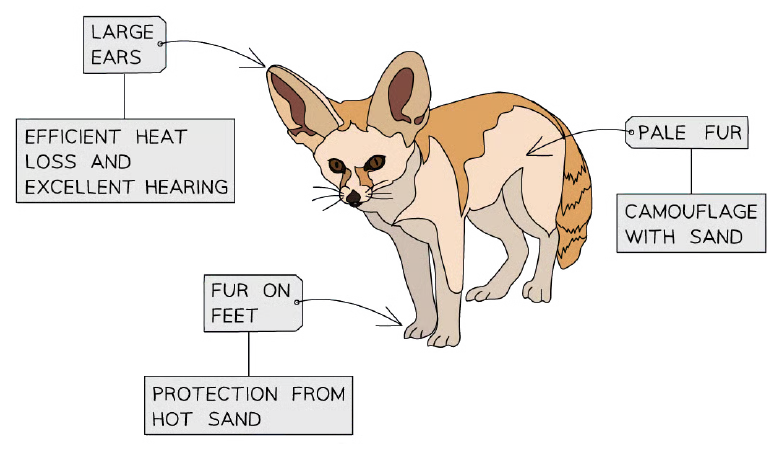
- A fennec fox shows several adaptations at once: large ears lose heat and give excellent hearing, pale fur camouflages it against sand, and furry feet protect it from hot sand.
- Camouflage helps prey avoid being seen and helps predators approach unseen. Adaptations are suited to a particular environment: a fennec fox would struggle in the Arctic.
Adaptations of a fennec fox
Natural selection step by step
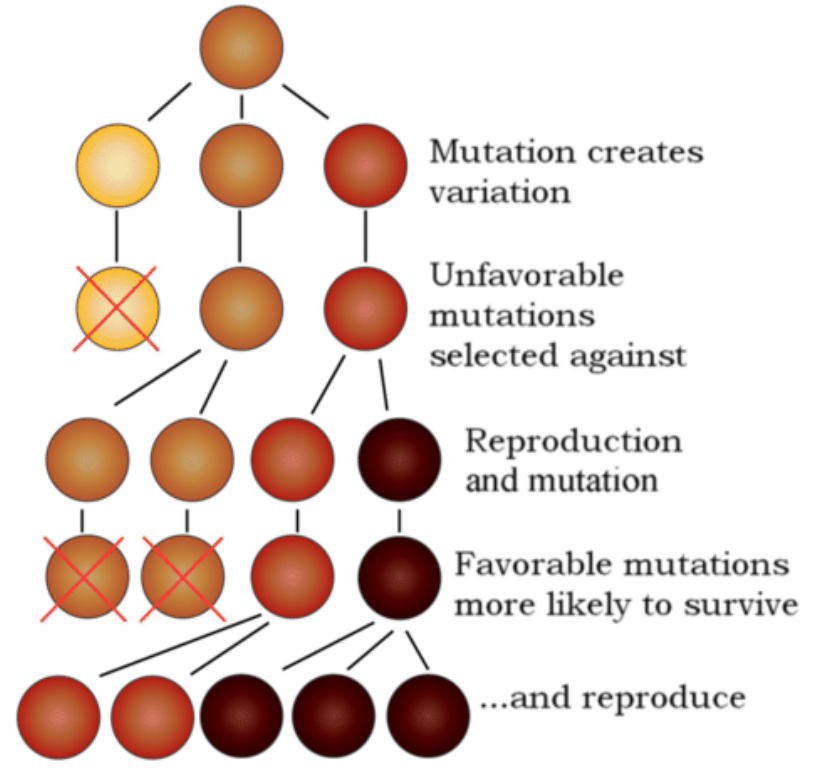
- 1. Variation. Individuals in a population differ, and some of this variation is inherited. New alleles arise by mutation.
- 2. Competition. Most species produce more offspring than can survive. They compete for food, space, mates and light, and some are eaten or die of disease. This is a selection pressure.
- 3. Survival and reproduction. Individuals with features that suit the environment are more likely to survive and reproduce. This is sometimes called survival of the fittest, where fittest means best suited to the environment.
- 4. Inheritance. Survivors pass their alleles to their offspring, so those alleles become more common.
- 5. Change over generations. Repeat this many times and the frequency of the helpful alleles rises. The population becomes better adapted. If the environment changes, different features may be favoured.
- Natural selection acts on variation that already exists. It does not create new alleles, and individuals do not change themselves to survive.
Mutation creates variation and selection favours the better-suited
Worked examples: peppered moths and antibiotic resistance
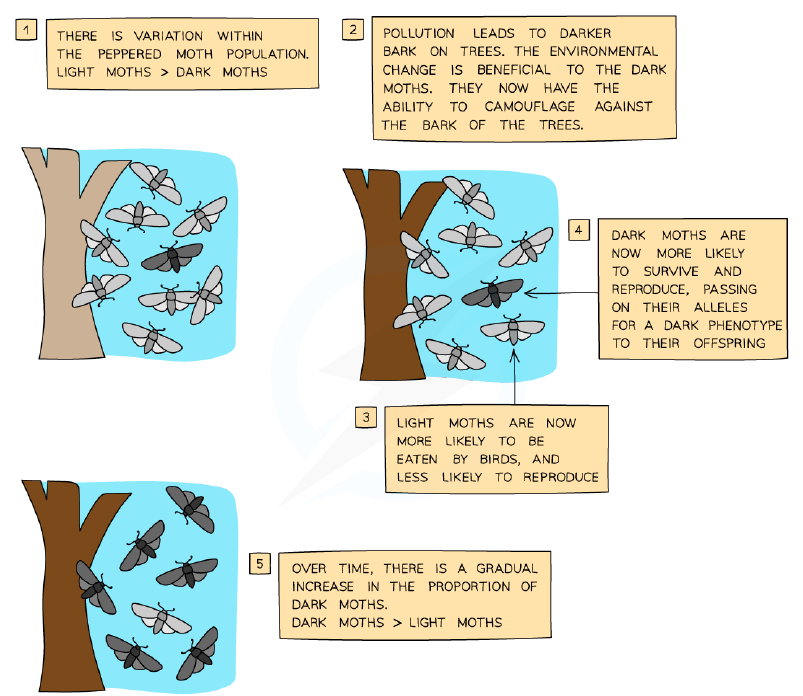
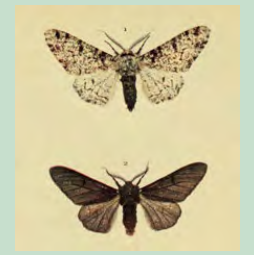
- Peppered moths rest on tree trunks by day. Before the Industrial Revolution most were pale and speckled, which camouflaged them against lichen-covered bark. A rare dark form existed because of a mutation.
- In industrial cities, soot killed the lichens and darkened the bark. Pale moths stood out and were eaten by birds, while dark moths survived, reproduced and passed on their dark allele. By the late 1800s most moths in cities such as Manchester were dark.
- After clean air laws in the 1950s, bark became lighter again and pale moths became more common. Selection followed the environment in both directions.
- Antibiotic resistance is the same process in bacteria. By chance, a few bacteria have an allele that makes them resistant. When an antibiotic is used, susceptible bacteria die, resistant ones survive and divide, and the population becomes mostly resistant.
- Bacteria can divide every 20 minutes or so, so selection can change a bacterial population in days. This is why antibiotics should only be used when needed and courses finished: every use is a selection pressure.
Natural selection in peppered moths
Natural selection compared with selective breeding and Lamarck
- Selective breeding (artificial selection) is when humans choose which organisms breed, for features they want, such as milk yield in cows or the size of a fruit. The process is the same as natural selection: variation, selection, inheritance, many generations.
- In natural selection the environment does the selecting and the features that are favoured help the organism survive. In selective breeding humans do the selecting, and the features may not help survival in the wild.
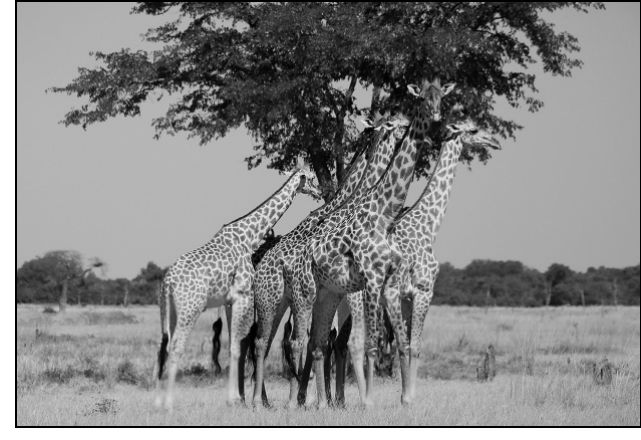
- Before Darwin, Lamarck suggested that features gained during life, such as a giraffe stretching its neck, are passed on. This is wrong. Changes gained during life do not alter the DNA in gametes, so they are not inherited.
- The natural selection explanation is that giraffes already varied in neck length. Longer-necked individuals reached more leaves, survived and left more offspring, so the alleles for longer necks became more common.
- A common mistake is to say organisms change because they need to. Mutations are random. The environment only selects from the variation that happens to exist.
Giraffes feeding on a tree
Think like a scientist: a model of predation
- Question: does the colour of a prey animal affect its chance of being eaten? Model it with 20 pale and 20 dark paper 'moths' scattered on a sheet of dark paper. A student 'bird' picks up as many as possible in 20 seconds.
- The independent variable is the colour of the paper moth. The dependent variable is the number of each colour picked up.
- Control variables: the size and shape of the moths, the background sheet, the time allowed, the starting numbers and the way they are scattered.
- To improve reliability, use several 'birds', repeat the test and calculate a mean for each colour. A model can show that camouflage reduces predation, but it cannot prove what happened in real woodland.
- Inquiry task 1: plan this investigation with a table for the results. Inquiry task 2: a student concludes that the model proves pollution caused dark moths to evolve. Evaluate the conclusion and suggest what other evidence you would want.
Light and dark forms of the peppered moth
ஸ்லைடுகள்
Sign up free to view the lesson slides
Step through every slide for this topic — plus flashcards and revision notes — with a free account.
பயிற்சி கேள்விகள்
இலவச முன்னோட்டம் — 49-இல் 8 கேள்விகள். அனைத்தையும் பார்க்க பதிவு செய்யவும்.
1.Which voyage gave Charles Darwin many of the observations that led to his theory?
Easy- AThe Mayflower
- BHMS Beagle
- CHMS Victory
- DThe Titanic
2.Who reached the idea of natural selection independently of Darwin?
Easy- AGregor Mendel
- BLouis Pasteur
- CJean-Baptiste Lamarck
- DAlfred Russel Wallace
3.What is an adaptation?
Easy- AA feature that helps an organism survive and breed
- BA change an individual makes to itself when it is tired
- CA feature that harms an organism in its habitat
- DAny difference between a parent and its offspring
4.A polar bear has a thick layer of fat and fur. What type of adaptation is this?
Easy- ABehavioural
- BCellular
- CStructural
- DAccidental
5.Birds flying to a warmer country for the winter is an example of which kind of adaptation?
Easy- AStructural
- BPhysiological
- CBehavioural
- DMutational
6.An individual animal changes its own features during its life so that its offspring are better suited to the environment.
EasyTrue or false?
7.Most species produce more offspring than can survive.
EasyTrue or false?
8.Complete the sentence.
EasyNatural selection is sometimes described as survival of the ____.
Unlock all 49 questions, flashcards & more
இந்த தலைப்பிற்கான ஒவ்வொரு கேள்வியையும், ஸ்லைடுகளையும், ஃப்ளாஷ் கார்டுகளையும் மற்றும் திருப்புதல் குறிப்புகளையும் பார்க்க இலவச கணக்கை உருவாக்கவும்.