Acids, alkalis and indicators
விளையாடிக் கற்றுக்கொள்ளுங்கள்
ஆற்றல் சம்பாதிக்க இந்த கேள்விகளுக்குப் பதிலளியுங்கள், பின்னர் மீன் பிடித்து ஆராயுங்கள். கணக்கு தேவையில்லை.
பாட குறிப்புகள்
Big idea: acids and alkalis
- Big idea (key concept): Relationships. Acids and alkalis are opposites, and when they meet they react with each other. Understanding that relationship explains a lot about food, cleaning and your body.
- Related concept: Interaction. When an acid and an alkali are mixed they interact and cancel each other out. This is called neutralisation.
- Global context: Identities and relationships. Your stomach is acidic, your toothpaste is alkaline and the foods you eat are a mix of both. Acidity is part of everyday life for every person.
- Acids have a pH below 7. Lemon juice, vinegar and fizzy drinks are weak acids. Acids taste sour, but you must never taste chemicals in a lab.
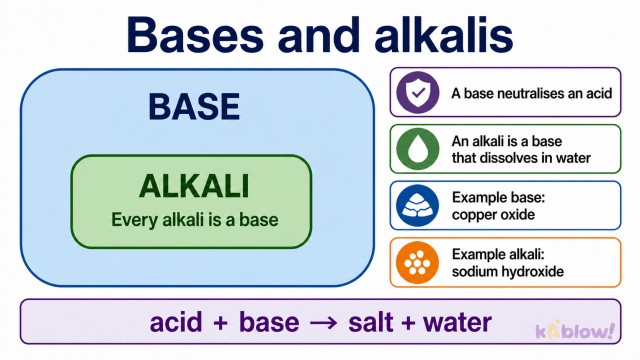
- A base is a substance that can neutralise an acid. An alkali is a base that dissolves in water. Every alkali is a base, but not every base dissolves, so not every base is an alkali.
- Soap, toothpaste and oven cleaner are alkaline. A substance that is neither acid nor alkaline is neutral. Pure water is neutral.
Bases and alkalis
The pH scale and universal indicator
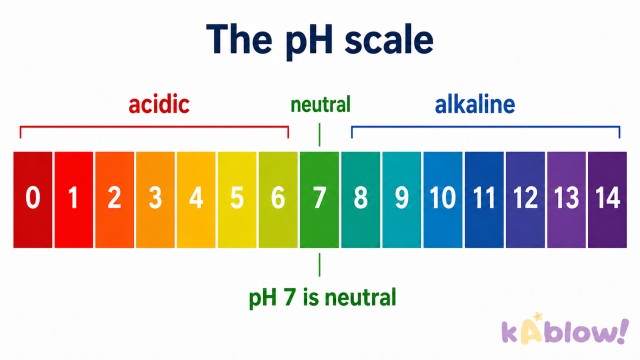
- The pH scale runs from 0 to 14 and tells us how acidic or alkaline a solution is. Below 7 is acidic, 7 is neutral and above 7 is alkaline.
- The lower the pH, the stronger the acid. The higher the pH above 7, the stronger the alkali.
- Universal indicator is a mixture of dyes that gives a different colour at different pH values. Red is strongly acidic, orange and yellow are weakly acidic, green is neutral, blue is alkaline and purple is strongly alkaline.
- Approximate values: stomach acid about pH 1 to 2, lemon juice about 2, vinegar about 3, pure water 7, baking soda solution about 8 to 9, soap about 9 to 10, bleach about 12 to 13.
- A pH probe connected to a meter gives a number directly. It is more precise than judging a colour by eye.
- Adding water to an acid makes it more dilute. Its pH rises towards 7, but it never becomes alkaline just from being diluted.
The pH scale with universal indicator colours
Indicators
- An indicator is a substance that changes colour depending on whether a solution is acidic or alkaline.
- Litmus is a dye. Blue litmus turns red in acid. Red litmus turns blue in alkali. In a neutral solution litmus solution is purple and litmus paper does not change.
- Litmus only tells you acid or alkali. It does not tell you how strong. Universal indicator gives a colour for each pH, so it tells you how acidic or alkaline.
- Many plants contain natural indicators. Red cabbage juice is pink or red in acids, purple in neutral solutions, and blue, green or yellow in alkalis, depending on how strong the alkali is.
- To use an indicator, a teacher or student adds a few drops to a small sample of the solution, or dips a paper strip in it, then compares the colour with a chart.
- An indicator shows the pH of the sample only. It cannot tell you which substance is in the sample.
Neutralisation and salts
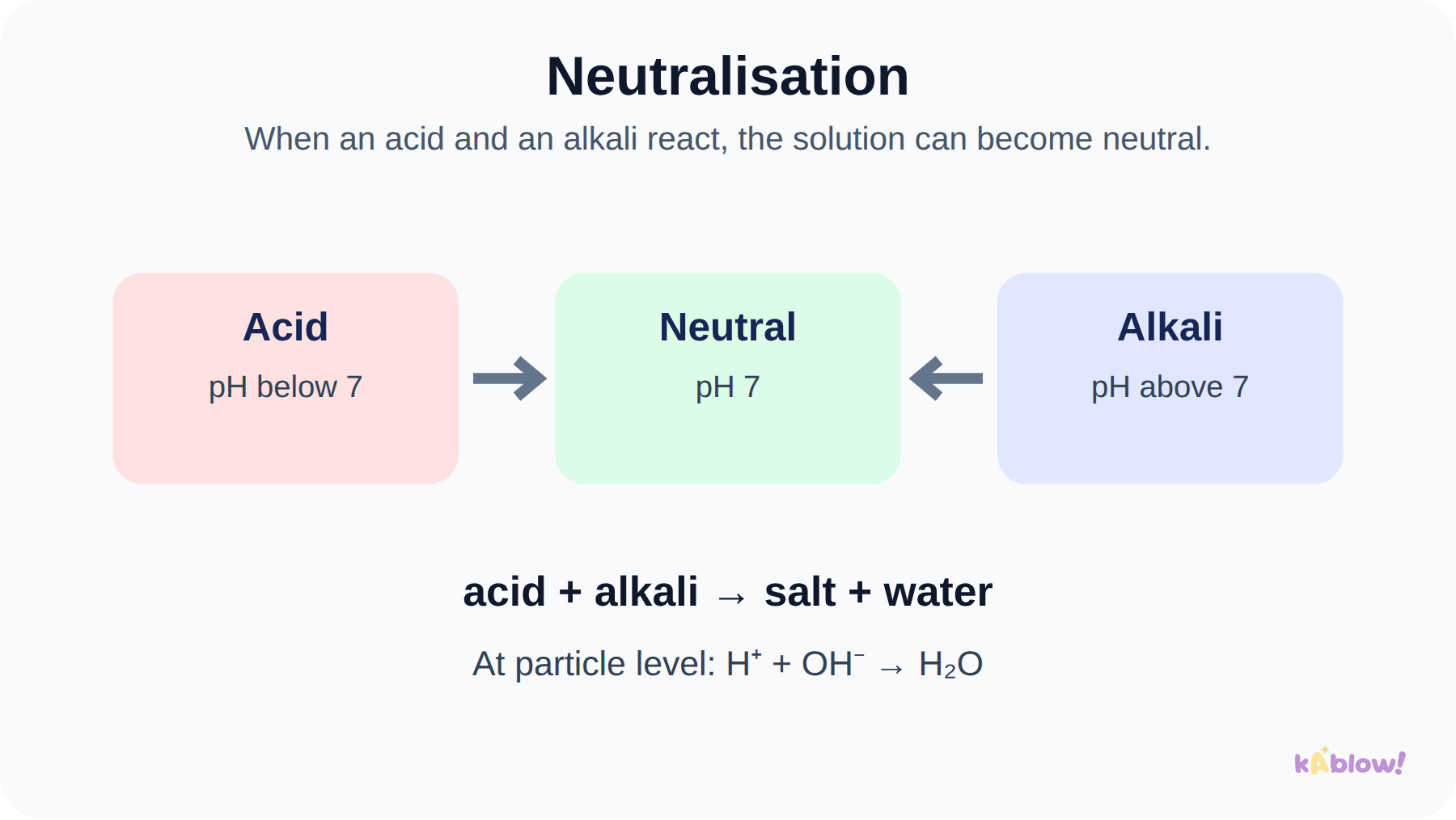
- Neutralisation happens when an acid reacts with an alkali. The pH moves towards 7. The word equation is acid + alkali → salt + water.
- Example: hydrochloric acid + sodium hydroxide → sodium chloride + water. Sodium chloride is common table salt, but 'salt' in chemistry means any compound made like this.
- The name of the salt comes from two parts. The first part comes from the alkali (sodium, potassium, calcium). The second part comes from the acid: hydrochloric acid makes chlorides, sulfuric acid makes sulfates, nitric acid makes nitrates.
- More examples: potassium hydroxide + nitric acid → potassium nitrate + water. Sodium hydroxide + sulfuric acid → sodium sulfate + water.
- A base that does not dissolve also neutralises acids. Copper oxide + sulfuric acid → copper sulfate + water.
- If you keep adding alkali after the acid is used up, the mixture becomes alkaline. Neutralisation stops at pH 7 only when exactly the right amounts are mixed.
Neutralisation: acid and alkali make a neutral solution
Everyday acids and alkalis, and staying safe
- Acids in food: citric acid in lemons and oranges, ethanoic acid in vinegar, and carbonic acid in fizzy drinks. Your stomach makes hydrochloric acid to kill germs and help digest food.
- Alkalis at home: soap, toothpaste (mildly alkaline), and strong cleaners such as oven cleaner and bleach.
- Neutralisation is useful. Indigestion tablets contain bases that neutralise extra stomach acid. Farmers add lime, an alkali, to acidic soil. Toothpaste helps neutralise acids made by bacteria on teeth.
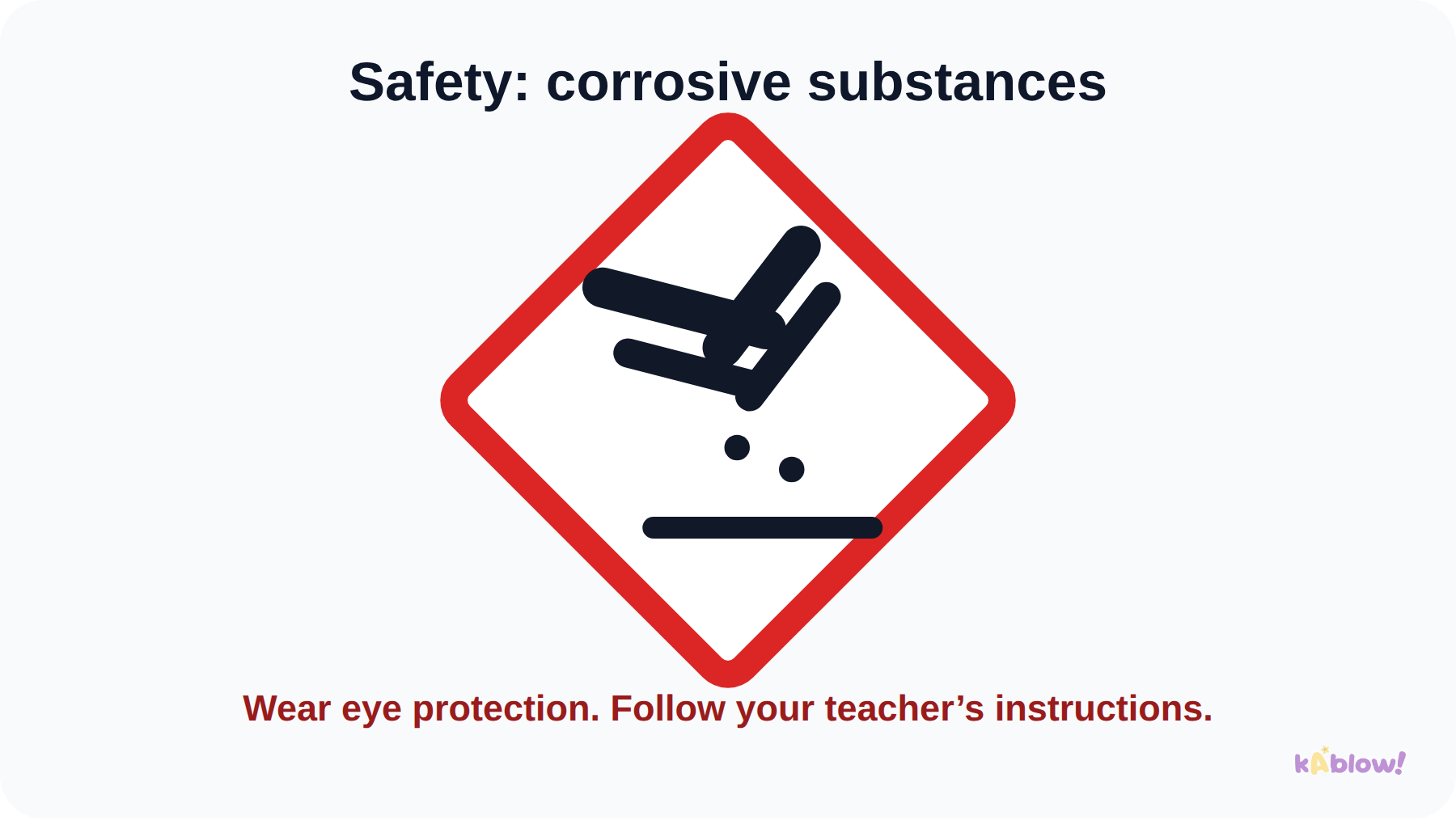
- Strong acids and strong alkalis can be corrosive: they can burn skin and damage eyes. A strong alkali is just as dangerous as a strong acid.
- The corrosive hazard symbol shows a liquid eating into a surface and a hand. An irritant symbol is an exclamation mark. Always look for hazard symbols on bottles.
- In school, teachers run the practical work with dilute solutions and everyone wears eye protection. If anything is spilled, tell the teacher at once and wash skin with plenty of cold water. Never mix cleaning products at home, because some mixtures make poisonous gases.
The corrosive hazard symbol
Think like a scientist: which indicator result can we trust?
- Question: how acidic are four everyday liquids (lemon juice, vinegar, water and soapy water)? A teacher gives out small samples and red cabbage indicator.
- The independent variable is the liquid that is tested. The dependent variable is the colour of the indicator, matched to a colour chart.
- For a fair test use the same volume of liquid and the same volume of indicator from the same batch each time, and use clean containers.
- Judging a colour by eye is subjective. Two students might not agree whether it is 'pink' or 'purple'. Using a colour chart, a pH probe or asking a second person to check makes the results more reliable.
- Repeat each test at least twice. If the results disagree, find out why before drawing a conclusion.
- Inquiry task: a teacher gives you three indigestion remedies. Plan a safe investigation to find which one neutralises the most acid. State what you change, what you measure, three variables you will control and how you will decide whether your results can be trusted.
ஸ்லைடுகள்
Sign up free to view the lesson slides
Step through every slide for this topic — plus flashcards and revision notes — with a free account.
பயிற்சி கேள்விகள்
இலவச முன்னோட்டம் — 51-இல் 8 கேள்விகள். அனைத்தையும் பார்க்க பதிவு செய்யவும்.
1.Which of these is an acid?
Easy- ASoapy water
- BLemon juice
- CToothpaste
- DOven cleaner
2.What is the pH of a neutral solution?
Easy- A7
- B0
- C10
- D14
3.Which of these pH values is acidic?
Easy- ApH 7
- BpH 9
- CpH 12
- DpH 2
4.What colour is universal indicator in a strong acid?
Easy- AGreen
- BPurple
- CRed
- DBlue
5.Universal indicator is added to pure water. What colour does it turn?
Easy- ARed
- BGreen
- CYellow
- DPurple
6.What colour is universal indicator in a strong alkali?
Easy- APurple
- BRed
- COrange
- DGreen
7.Blue litmus paper is dipped in vinegar. What colour does it turn?
Easy- AGreen
- BPurple
- CIt stays blue
- DRed
8.Pure water is neutral.
EasyTrue or false?
Unlock all 51 questions, flashcards & more
இந்த தலைப்பிற்கான ஒவ்வொரு கேள்வியையும், ஸ்லைடுகளையும், ஃப்ளாஷ் கார்டுகளையும் மற்றும் திருப்புதல் குறிப்புகளையும் பார்க்க இலவச கணக்கை உருவாக்கவும்.