The atmosphere and air quality
விளையாடிக் கற்றுக்கொள்ளுங்கள்
ஆற்றல் சம்பாதிக்க இந்த கேள்விகளுக்குப் பதிலளியுங்கள், பின்னர் மீன் பிடித்து ஆராயுங்கள். கணக்கு தேவையில்லை.
பாட குறிப்புகள்
Big idea: the atmosphere is a system
- Big idea (key concept): Systems. The atmosphere is a mixture of gases that interacts with living things, the oceans, the land and human activity.
- Related concept: Consequences. When we change what goes into the air, there are consequences for climate, health and ecosystems.
- Global context: Globalization and sustainability. Air moves across borders, so air quality and climate are shared problems that need people everywhere to act.
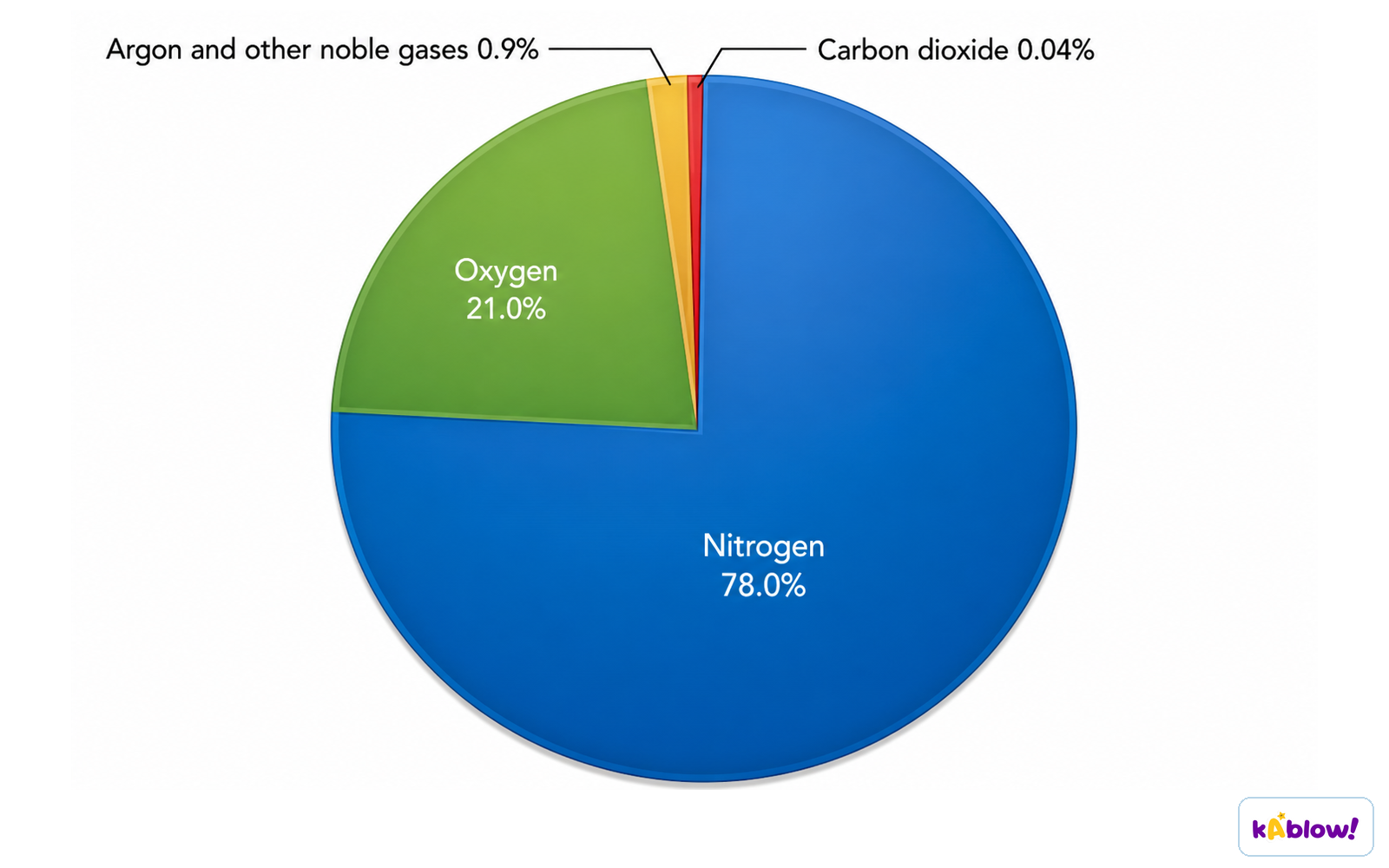
- Air is a mixture of gases, not a single substance. It is about 78% nitrogen and about 21% oxygen, with about 0.9% argon and other noble gases and about 0.04% carbon dioxide. The amount of water vapour changes from place to place.
- Nitrogen is very unreactive. Oxygen is used by living things for respiration and by fuels when they burn. Carbon dioxide is used by plants for photosynthesis.
- Tests: oxygen relights a glowing splint. Carbon dioxide turns limewater milky. Hydrogen burns with a squeaky pop. In a teacher demonstration, a candle burning in a sealed jar goes out once the oxygen is used up, and the water level rises by roughly one fifth.
Pie chart of the gases in dry air
How the atmosphere has changed
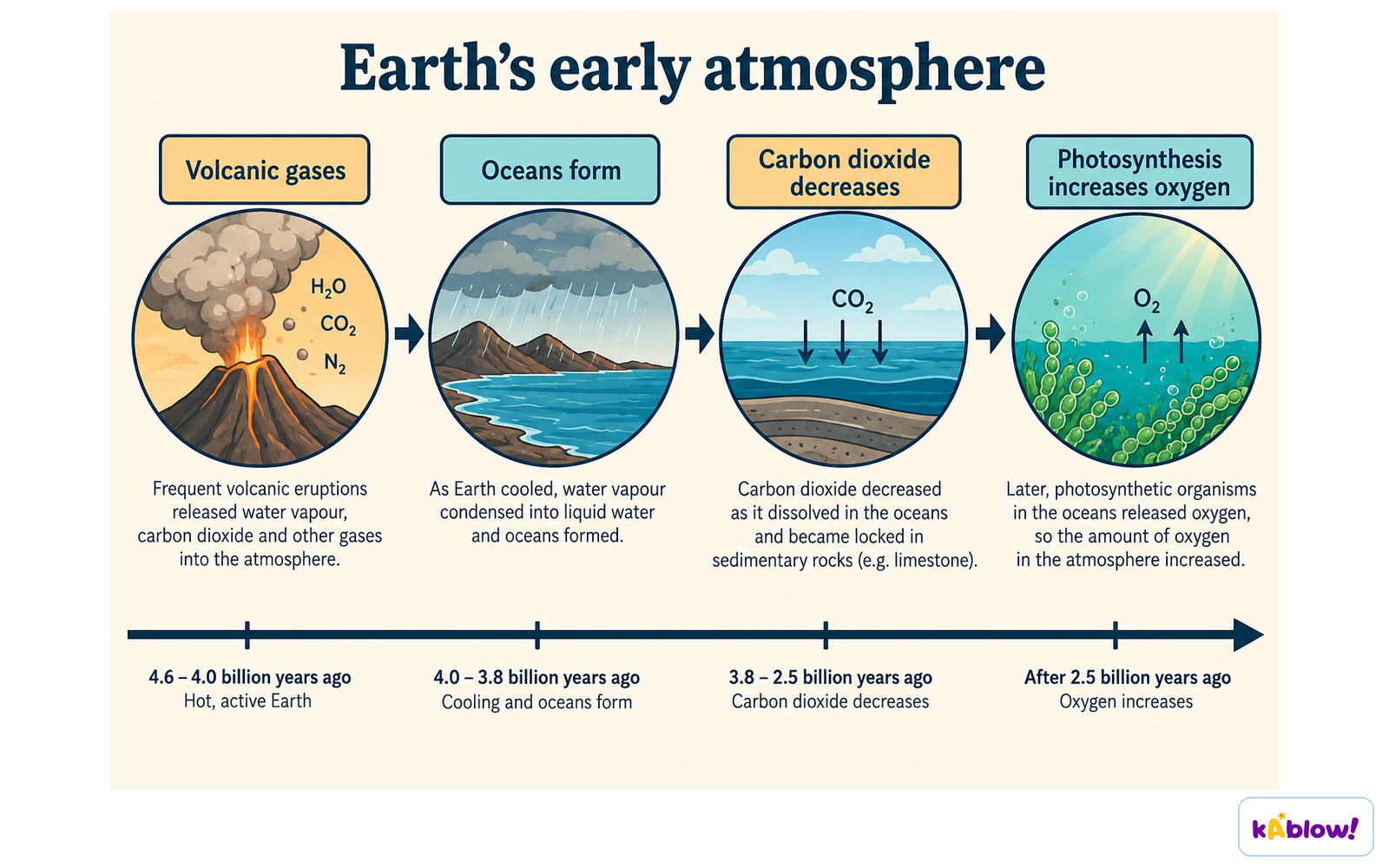
- Earth is about 4.6 billion years old. At first it was hot, and volcanoes released gases such as water vapour, carbon dioxide and nitrogen into the early atmosphere.
- As Earth cooled, the water vapour condensed into liquid water and fell as rain, so the oceans formed.
- Carbon dioxide dissolved in the oceans. Over a very long time, some of it was locked away in sedimentary rocks such as limestone and in fossil fuels.
- Later, algae and plants evolved. They took in carbon dioxide and made oxygen by photosynthesis, so the amount of oxygen in the air slowly rose over billions of years.
- Nitrogen is so unreactive that it was not used up, so it built up to become the most common gas in the air.
- The air we have now has stayed fairly steady for a long time, but human activity is changing the amount of some gases.
Timeline of how Earth's early atmosphere changed
Carbon dioxide and the greenhouse effect
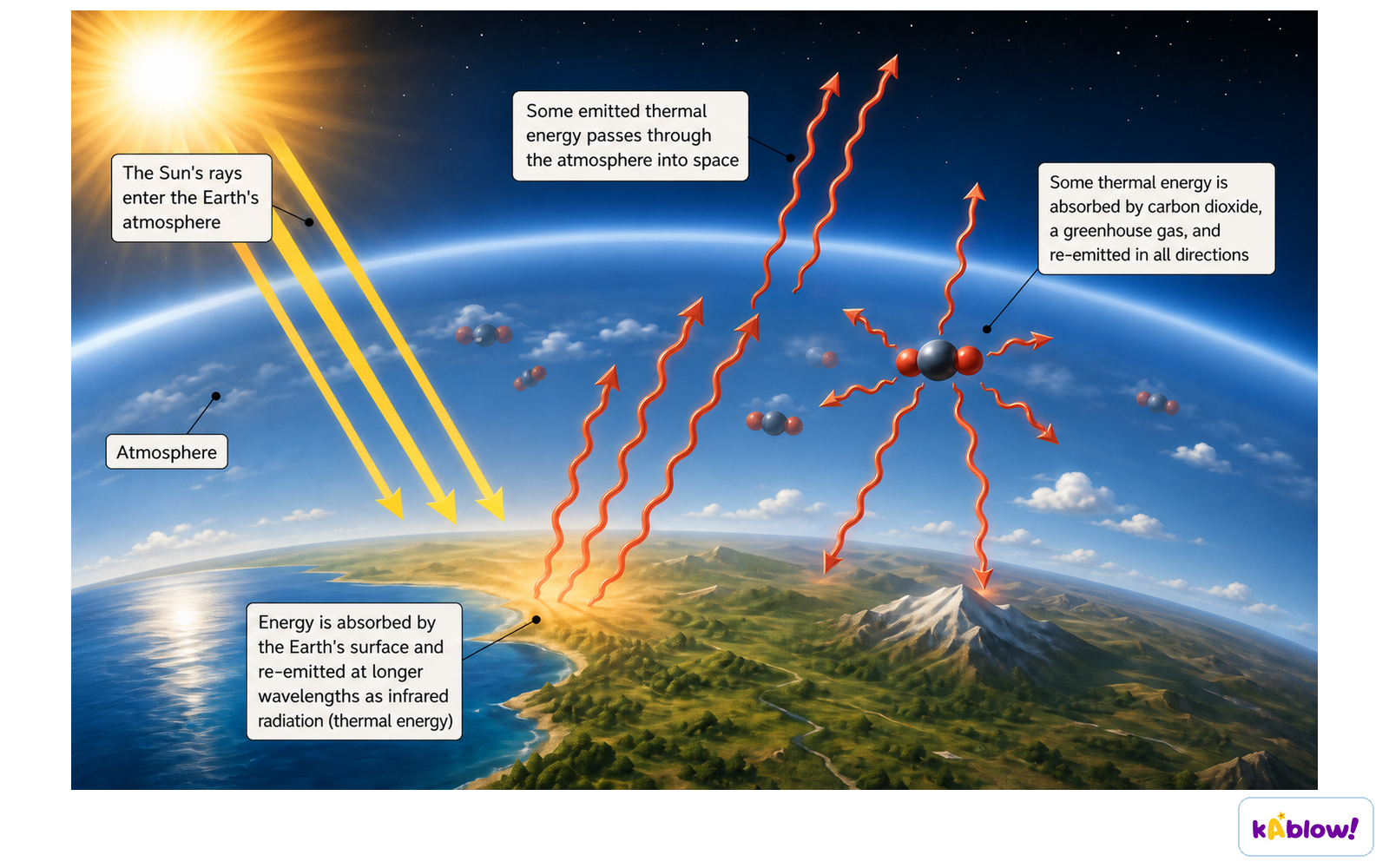
- The greenhouse effect is a natural process. Sunlight warms the surface of the Earth, and the warm surface gives out heat. Greenhouse gases in the air absorb some of that heat and send it out again in all directions, so some heat is kept near the surface.
- Without any greenhouse gases, Earth would be far colder and life as we know it could not survive. The main greenhouse gases are carbon dioxide, methane and water vapour.
- Humans are adding extra greenhouse gases. Burning fossil fuels (coal, oil and gas) releases carbon dioxide that was stored underground for millions of years. Cutting down forests means fewer trees take in carbon dioxide.
- Cattle farming, rice fields and rotting waste in landfill release methane.
- In one commonly quoted set of measurements, the carbon dioxide in the air has risen from about 280 parts per million before industry to about 420 parts per million today. Most scientists link this to rising average temperatures, which is called global warming.
- Possible consequences include melting glaciers, rising sea levels, more floods and droughts, and changes to habitats. Scientists use many sources of evidence to understand cause and effect, because two things rising together does not by itself prove one causes the other.
The greenhouse effect
Air pollutants and acid rain
- A pollutant is a substance in the air that harms people or the environment. Many come from burning fuels.
- Carbon monoxide forms when fuels burn with not enough oxygen (incomplete combustion). It is a poisonous gas with no colour or smell, and it stops the blood carrying oxygen properly.
- Sulfur dioxide forms when fuels that contain sulfur, such as some coal, are burned. Nitrogen oxides form in very hot engines, where nitrogen and oxygen from the air react together.
- Particulates are tiny bits of solid, such as soot, that come from burning, especially from diesel engines. They can get into the lungs and cause breathing problems.
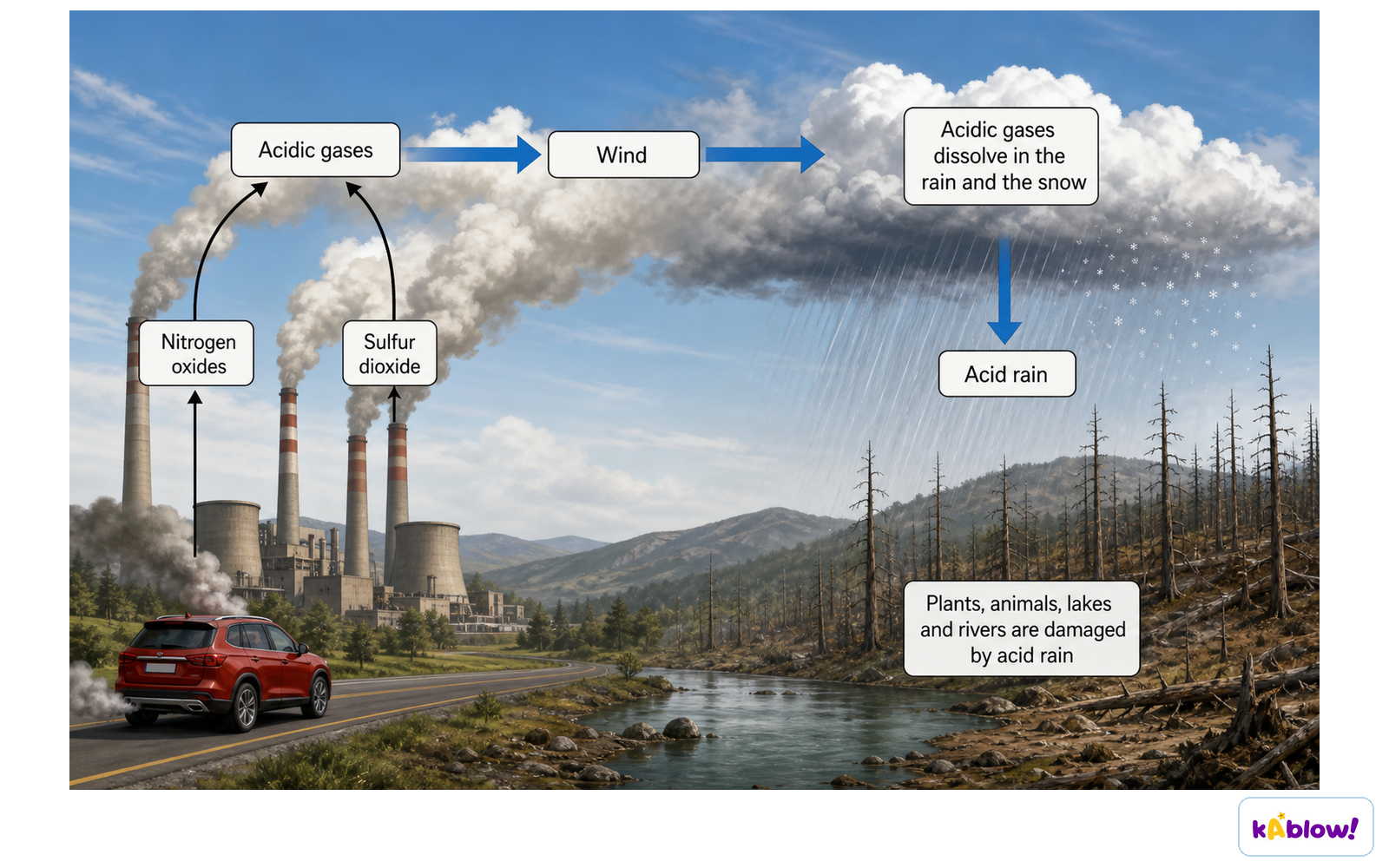
- Sulfur dioxide and nitrogen oxides dissolve in water droplets in clouds and make acid rain. Acid rain can harm trees, make lakes too acidic for fish, and wear away stone buildings and statues made of limestone or marble.
- Many of these gases are carried far by the wind, so one country's pollution can fall as acid rain in another.
How acid rain forms
Reducing pollution and evaluating solutions
- A catalytic converter in a car exhaust changes harmful gases, such as carbon monoxide and nitrogen oxides, into less harmful gases such as carbon dioxide and nitrogen. It does not remove carbon dioxide.
- Power stations can use scrubbers to remove sulfur dioxide from waste gases, or burn fuels with the sulfur taken out first.
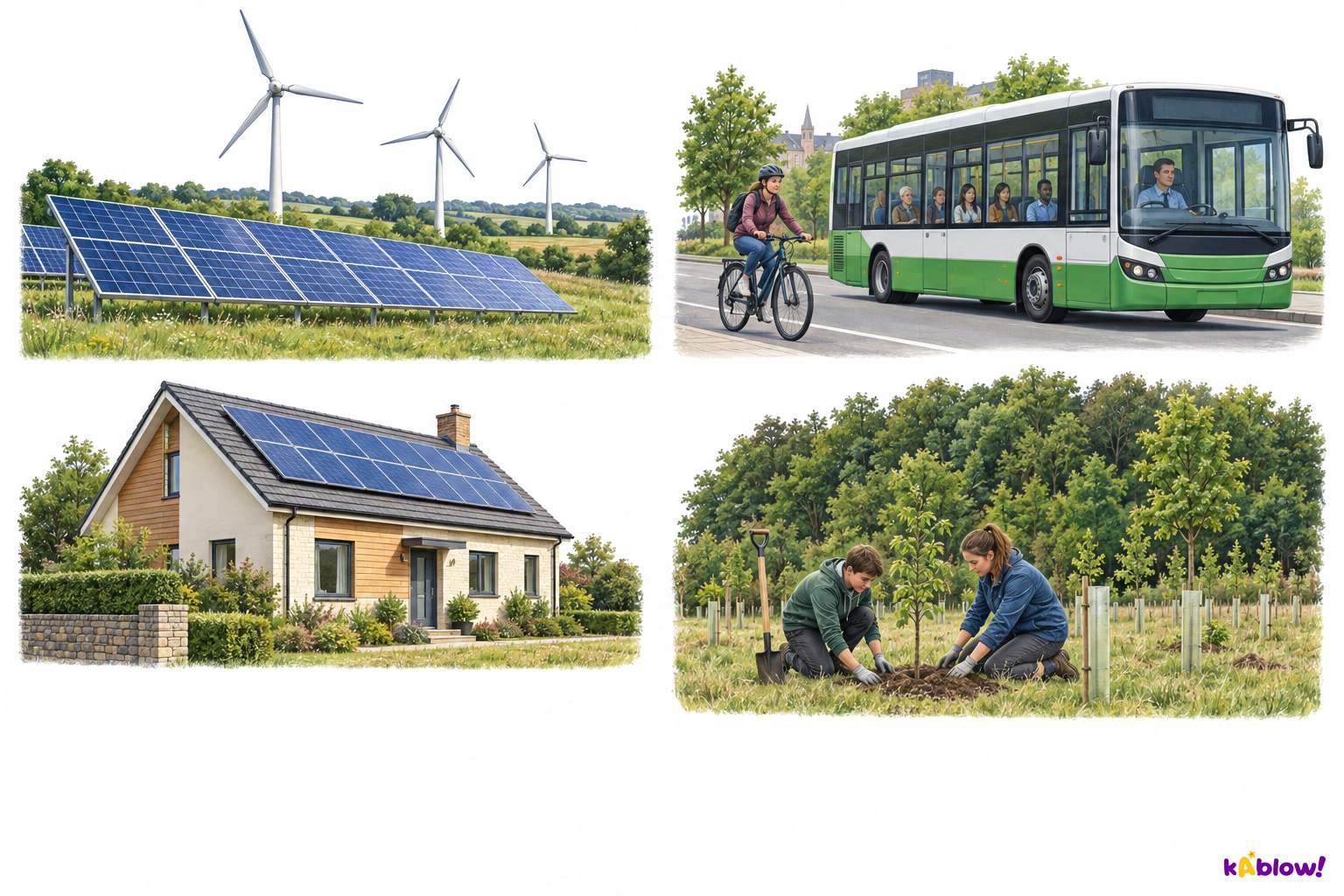
- To cut carbon dioxide, we can use more renewable energy such as wind and solar power, improve home insulation, travel by bus, train, bike or on foot, and plant trees, which take in carbon dioxide as they grow.
- Every solution has benefits and limits. For example, banning the most polluting vehicles from a city centre improves air quality there, but some people may lose a cheap way to travel unless other transport is provided.
- To evaluate a solution, ask: How much does it reduce pollution? What does it cost? Who gains and who loses? Does it create new problems?
Ways to reduce carbon emissions
Think like a scientist: investigating air and acid rain
- Question: does more acidic rain wear away limestone chips faster? In a school investigation, chips of limestone could be placed in vinegar solutions of different strengths. The teacher prepares the solutions and learners wear eye protection.
- The independent variable is the acidity (strength of the solution). The dependent variable is how much the chip changes, for example the loss in mass. The control variables include the starting mass and size of the chip, the volume of liquid, the temperature and the time.
- Repeat each test and use the mean. A result that does not fit the pattern is an anomaly, and you should look for a reason for it.
- In a model like this, vinegar is not real rain. Say how the model is similar to and different from real acid rain, because a model has limits.
- Your task: plan an investigation to find out whether plants in a sealed container with more carbon dioxide grow faster than plants with normal air. Name the three types of variable, say how you will measure growth, and list two ways your method could be improved.
ஸ்லைடுகள்
Sign up free to view the lesson slides
Step through every slide for this topic — plus flashcards and revision notes — with a free account.
பயிற்சி கேள்விகள்
இலவச முன்னோட்டம் — 54-இல் 8 கேள்விகள். அனைத்தையும் பார்க்க பதிவு செய்யவும்.
1.Which gas is the most abundant in air?
Easy- AOxygen
- BCarbon dioxide
- CNitrogen
- DArgon
2.About what percentage of air is oxygen?
Easy- AAbout 21%
- BAbout 78%
- CAbout 50%
- DAbout 0.04%
3.Which gas makes up only about 0.04% of the air?
Easy- ANitrogen
- BOxygen
- CHydrogen
- DCarbon dioxide
4.Which gas in the air do living things use for respiration?
Easy- ANitrogen
- BOxygen
- CArgon
- DMethane
5.Which gas in the air do plants take in for photosynthesis?
Easy- ANitrogen
- BCarbon dioxide
- CArgon
- DOxygen
6.A candle burns under a jar and then goes out after a short time. What is the best explanation?
Medium- AAll of the nitrogen in the jar has been used up
- BThe candle has run out of carbon dioxide
- CThe jar has made the air too cold
- DMost of the oxygen in the jar has been used up
7.In a teacher demonstration, a candle burns in a sealed jar standing in water until it goes out, and the water level rises. Roughly how much of the jar's volume does the water fill?
Medium- ARoughly one fifth
- BRoughly one half
- CRoughly four fifths
- DRoughly one hundredth
8.Which gas turns limewater milky?
Easy- AOxygen
- BNitrogen
- CCarbon dioxide
- DHydrogen
Unlock all 54 questions, flashcards & more
இந்த தலைப்பிற்கான ஒவ்வொரு கேள்வியையும், ஸ்லைடுகளையும், ஃப்ளாஷ் கார்டுகளையும் மற்றும் திருப்புதல் குறிப்புகளையும் பார்க்க இலவச கணக்கை உருவாக்கவும்.