Defence Against Disease
விளையாடிக் கற்றுக்கொள்ளுங்கள்
ஆற்றல் சம்பாதிக்க இந்த கேள்விகளுக்குப் பதிலளியுங்கள், பின்னர் மீன் பிடித்து ஆராயுங்கள். கணக்கு தேவையில்லை.
பாட குறிப்புகள்
Pathogens and Disease
- A pathogen is any microorganism that causes disease in another organism.
- Pathogens include bacteria, fungi, protists and viruses; not all species in these groups are pathogenic, but all viruses are pathogenic.
- Pathogens cause communicable (infectious) diseases, which transfer from a diseased host to a healthy organism.
- Examples of communicable diseases include tuberculosis, athlete's foot, malaria and cholera.
- Non-communicable diseases are non-infectious, such as cancer, cardiovascular disease and malnutrition.
- Careful observation of symptoms, incubation times and transmission mechanisms helps control the spread of disease, with the aim of eradicating it completely.
Barriers to Pathogens: Skin & Mucous Membranes
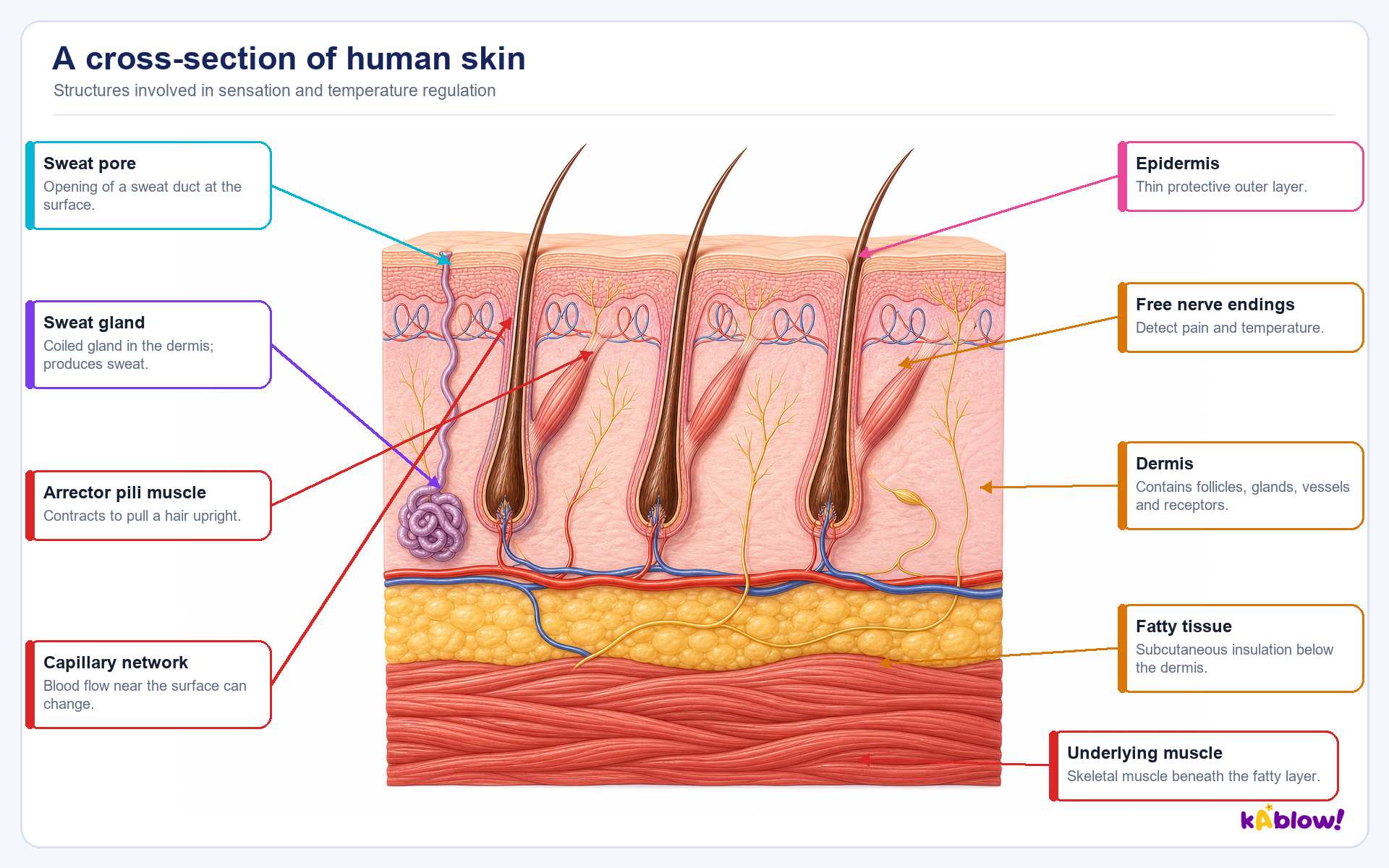
- The skin and mucous membranes form the primary defence against pathogens.
- The skin provides a tough physical barrier that prevents pathogen entry; cuts are sealed by blood clots.
- Sebum from sebaceous glands maintains a low skin pH, which inhibits microorganism growth.
- Mucous membranes line vulnerable areas: airways, reproductive organs and digestive system.
- Goblet cells produce mucus containing glycoproteins that trap microorganisms and particles.
- Cilia sweep mucus upwards to be swallowed, where microorganisms are destroyed by stomach acid.
- Mucus also contains lysozyme enzymes with antibacterial properties.
A cross-section of human skin
Blood Clotting
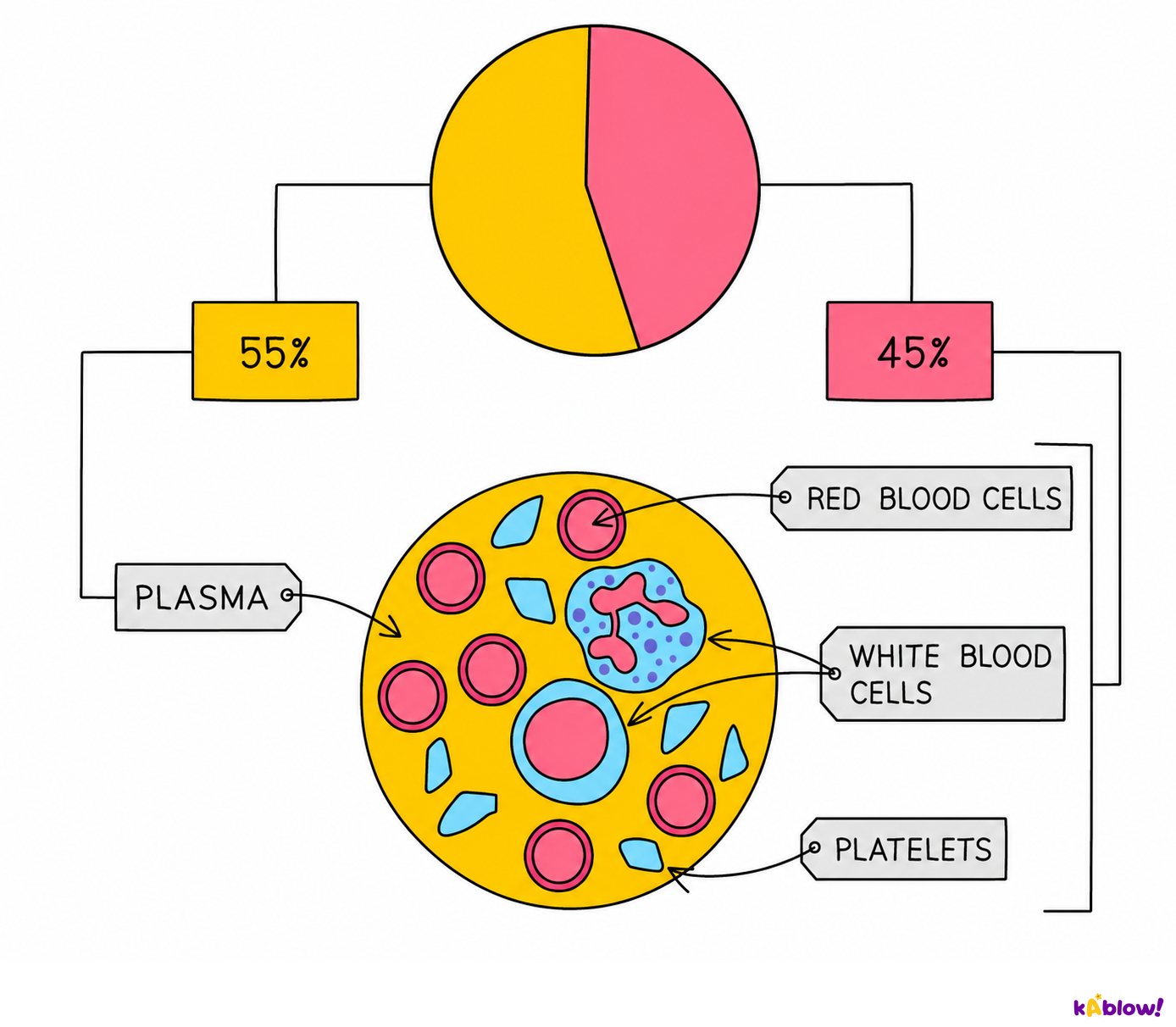
- When the skin is cut, platelets form a temporary plug to stem bleeding.
- Platelets release clotting factors that trigger a chemical cascade.
- Clotting factors stimulate release of the enzyme thrombin.
- Thrombin catalyses conversion of soluble fibrinogen into insoluble fibrin.
- Fibrin forms a mesh that traps more platelets and blood cells, sealing the wound.
- A small initial stimulus is amplified to produce a large amount of fibrin quickly.
- Exposure to air hardens the mesh to form a scab.
Composition of human blood
The Immune System: Innate vs Adaptive
- The innate immune system recognises and responds to any non-self item (e.g. bacteria, fungi, viruses, pollen, dust).
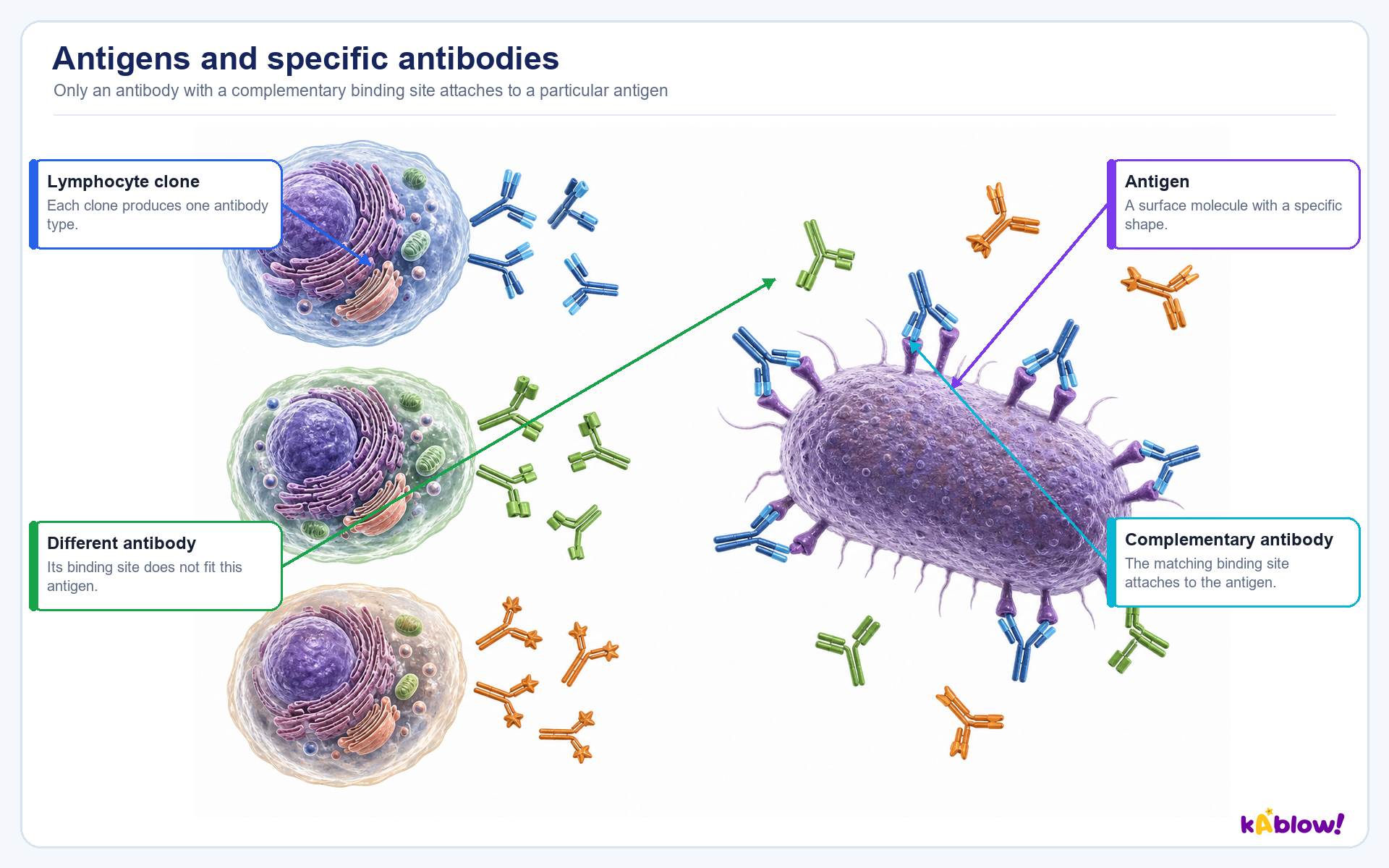
- Non-self items display non-self antigens; an antigen is a molecule that triggers an immune response.
- Innate responses are non-specific and do not change during an individual's lifetime.
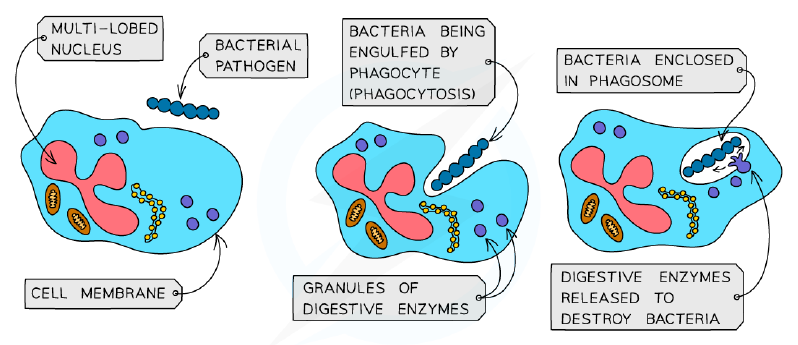
- Phagocytes are part of the innate response; they engulf and digest items with non-self antigens.
- The adaptive immune system responds to specific non-self antigens and leads to antibody production and memory cells.
- On second exposure to the same antigen, the adaptive response is faster and produces more antibodies, destroying the pathogen before symptoms occur.
- Immunological memory builds up over a lifetime; young babies have no adaptive immunity.
- Vaccination uses the adaptive immune system to speed up the response on next exposure.
Lymphocytes and antibodies
White Blood Cells
- Phagocytes are white blood cells produced in bone marrow; they remove dead cells and invasive microorganisms (non-specific).
- Phagocytes move by amoeboid movement to the infection site and attach to pathogens.
- The phagocyte membrane extends around the pathogen, engulfing it by endocytosis.
- Pathogens are digested by enzymes stored in lysosomes.
- Lymphocytes are white blood cells involved in the specific immune response; there are two types: T cells and B cells.
- T cells mature in the thymus and have T cell receptors specific to particular antigens.
- T cells are activated when they bind to their specific antigen on an antigen-presenting cell (e.g. macrophage, infected body cell, or pathogen).
- Activated T cells divide by mitosis to produce genetically identical clones with the same T cell receptor.
- B cells mature in the bone marrow and have antibody receptors on their surface; each B cell binds a different antigen.
- When a B cell binds its specific antigen, it forms an antigen-antibody complex; with signalling proteins from T helper cells, it is activated.
- Activated B cells divide repeatedly by mitosis, producing clones that differentiate into plasma cells (produce antibodies) and memory cells (remain in blood for faster future response).
Phagocytosis
Adaptive Immune Response
- Every organism has unique molecules on the cell surface membrane that act as markers for cell-to-cell recognition.
- The immune system distinguishes self from non-self based on these markers.
- Antigens are molecules that trigger an immune response; they are found on cancer cells, bacterial cell walls, viral envelopes and pollen grains.
- Some glycolipids and glycoproteins on the outer surface of cell membranes act as antigens.
- Allergies are the result of an immune response triggered by antigens on an allergen (e.g. pollen).
- Red blood cells have specific antigens that determine blood group: the ABO marker and the Rhesus (Rh) marker.
- Blood type A has N-acetylgalactosamine modification; type B has galactose; type AB has both; type O has no A or B antigens.
- Incompatible blood transfusion triggers an immune response; antibodies bind to non-self antigens causing agglutination (clumping), which can be fatal.
- T-helper cells bind to antigens presented by phagocytes and become activated; they then bind complementary receptors on specific B-lymphocytes.
- Activated T-helper cells release signalling proteins that activate B cells.
- Clonal expansion: activated B cells divide by mitosis to produce many clones, each producing the same antibody.
- Some clones become plasma cells (antibodies present for weeks/months); others become memory cells (last for years or a lifetime).
- Immunity is initiated when exposure to a specific antigen results in complementary antibodies and memory cells.
- The primary immune response occurs on first exposure; the secondary immune response occurs on second exposure and is faster and larger.
- During the secondary response, memory cells divide quickly into plasma cells and more memory cells; 2000 antibodies can be produced per second.
- Immunological memory explains why catching certain diseases twice is unlikely (e.g. measles); however, viruses like the common cold and influenza constantly develop new strains with different antigens, requiring a new primary response each time.
HIV & AIDS
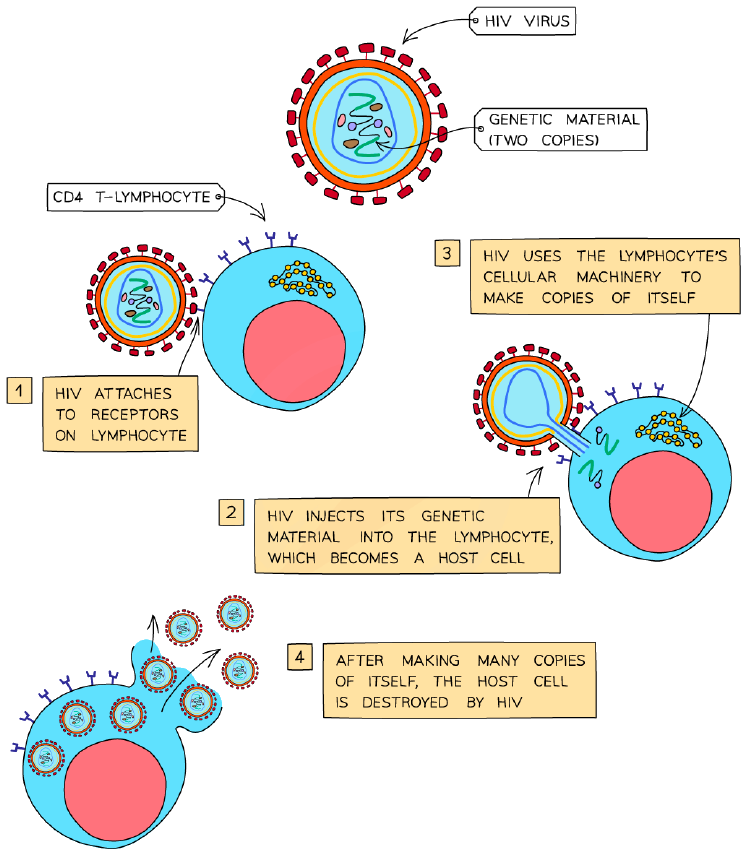
- HIV (Human Immunodeficiency Virus) is a retrovirus that cannot survive outside the human body.
- HIV is spread by direct exchange of body fluids (not by a vector): sexual intercourse, blood donation, sharing needles, mother to child across placenta, during birth, or through breast milk.
- HIV contains RNA and the enzyme reverse transcriptase, which produces DNA in the host cell.
- HIV infects and attacks T-helper cells, which are key for antibody production; this inhibits the body's capacity to produce antibodies.
- In early infection, antibodies are produced against HIV and can be detected in blood tests; the individual is HIV positive.
- As infection progresses, antibody production reduces, making the individual prone to opportunistic pathogens.
- AIDS (acquired immune deficiency syndrome) is when the individual suffers from several diseases/conditions at the same time.
- Progression from HIV to AIDS can be slowed with anti-retroviral drugs; many HIV-positive individuals can live full lives with normal life expectancies.
- HIV and AIDS are not the same: HIV is the virus; AIDS is the syndrome it causes.
How HIV infects a lymphocyte
Antibiotics and Antibiotic Resistance
- Antibiotics are drugs that inhibit the growth of microorganisms; most kill or stop bacteria without harming the infected organism's cells.
- They target processes specific to prokaryotes: transcription, translation, DNA replication, ribosome function, cell wall formation.
- Some antibiotics are derived from living organisms (e.g. penicillin from×Penicillium×fungi); others are made synthetically.
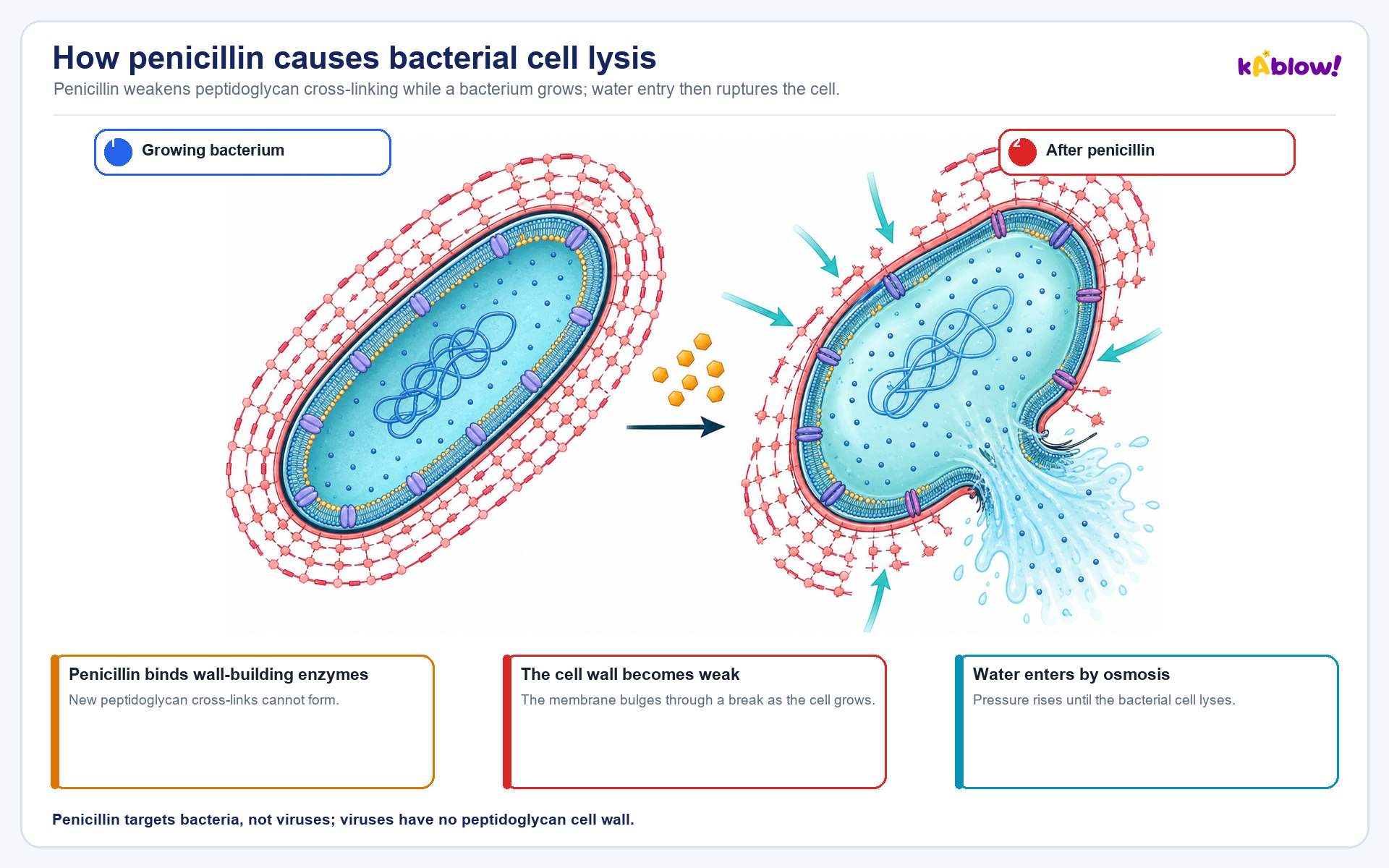
- Penicillin interferes with bacterial cell wall production; it is not effective against all bacteria (e.g. tuberculosis) due to thicker cell walls or enzymes that break down penicillin.
- Antibiotics are ineffective against viruses because viruses are non-living particles with no metabolism or cell structure; they use host cell mechanisms, so targeting them would damage host cells.
- Antivirals target viral enzymes without harming host cells.
- Antibiotic resistance arises from random mutations in bacterial populations; resistant bacteria survive treatment and reproduce with less competition.
- Resistance genes are passed on with greater frequency; over time the whole population becomes resistant — this is evolution by natural selection.
- Some bacteria produce β-lactamase (penicillinase) which breaks down penicillin.
- MRSA (methicillin-resistant×Staphylococcus aureus×) is resistant to multiple antibiotics, making infections very difficult to treat.
- Measures to avoid resistance: avoid antibiotics for non-serious/non-bacterial infections, maintain hospital hygiene, minimise agricultural use, develop new antibiotics.
How penicillin works
Zoonoses
- Some diseases are species-specific; others cross species barriers to infect multiple species.
- Species-specific diseases may be unable to cross the barrier if the species lacks necessary receptors or if body temperature doesn't support disease development.
- Zoonotic diseases cross the species barrier from animal to human.
- Zoonoses are a growing global concern due to close human-animal relationships, making control and eradication difficult.
- Zoonoses may potentially lead to pandemics such as COVID-19.
- Animal products may also be affected by zoonotic disease.
- Some zoonotic diseases initially emerge from animal populations before developing into human-only strains, e.g. HIV.
Vaccines & Immunity
- A vaccine is a source of antigens or DNA/RNA coding for antigens, introduced to induce immunity without causing disease.
- Vaccines cause a specific immune response where antibodies are released by plasma cells.
- Types of vaccine include live attenuated (weakened pathogen) and inactivated (killed components or antigens alone).
- Vaccines are administered by injection (into vein or muscle) or orally.
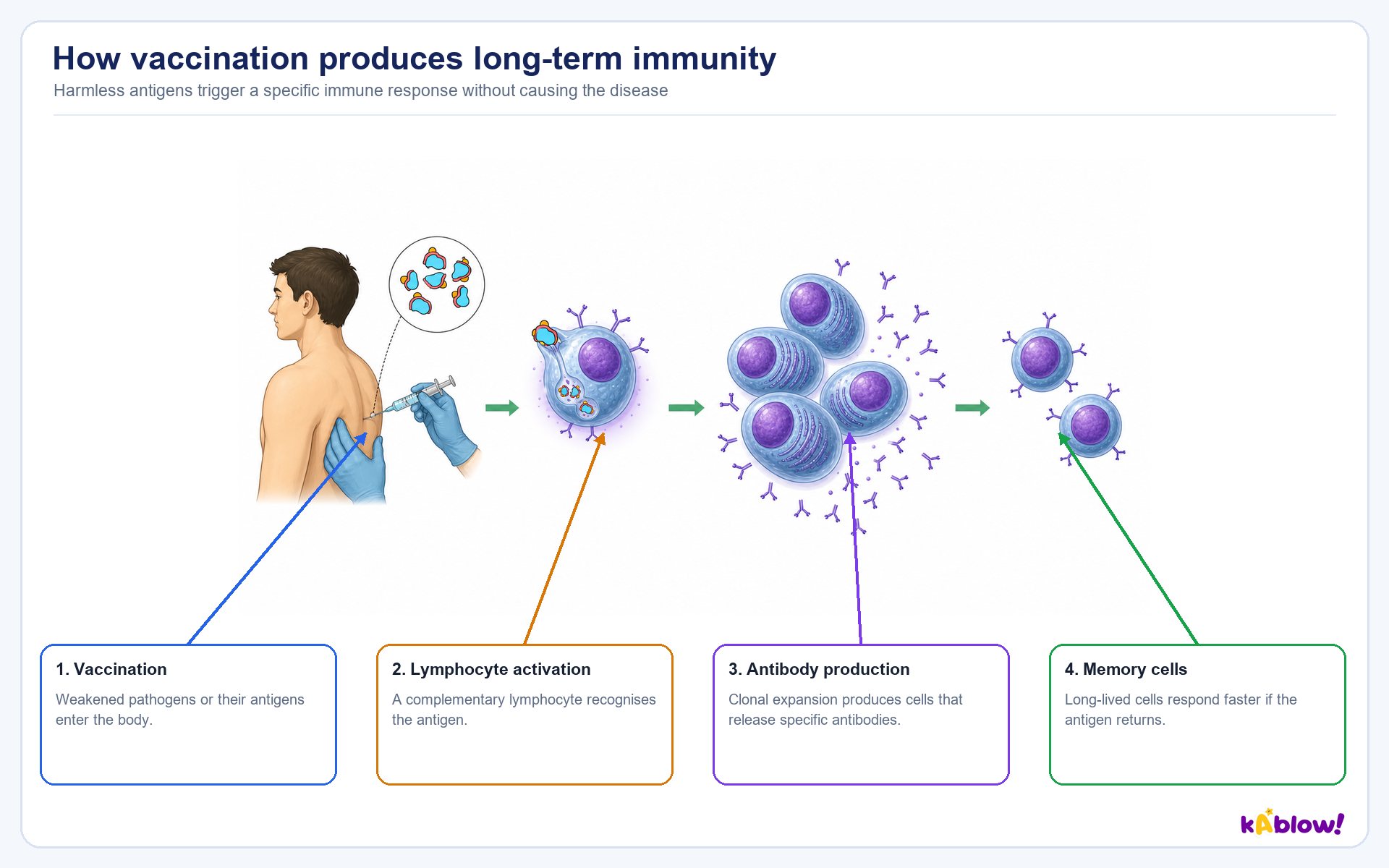
- Vaccination produces long-term immunity by creating memory cells; on re-encounter, these produce a faster, stronger secondary response.
- Herd immunity: if a large enough percentage of the population is vaccinated, the entire population is protected because the pathogen has few places to breed.
- If vaccination rates drop, the rest of the population is at risk of mass infection, increasing infections and deaths.
- Herd immunity prevents epidemics and pandemics; vaccination programmes may aim to eradicate dangerous diseases.
- Smallpox was eradicated in 1980 after a WHO vaccination programme.
How a vaccine produces immunity
Evaluating COVID-19 Data: Skills
- Percentage difference compares two directly comparable values at the same time (e.g. COVID-19 cases in two countries at one point).
- Percentage difference = (difference between two values ÷ average of two values) × 100.
- Percentage change compares two values from the same data set at different times (how a factor changed over time).
- Percentage change = (change ÷ original value) × 100.
- If the original number is larger, the change is a percentage decrease; if smaller, a percentage increase.
- Directly comparable values mean the same thing; e.g. number of cases and number of deaths are not directly comparable.
ஸ்லைடுகள்
Sign up free to view the lesson slides
Step through every slide for this topic — plus flashcards and revision notes — with a free account.
பயிற்சி கேள்விகள்
இலவச முன்னோட்டம் — 60-இல் 8 கேள்விகள். அனைத்தையும் பார்க்க பதிவு செய்யவும்.
1.Which component of blood has a role in preventing pathogens from entering the body?
Easy- ARed blood cells
- BBlood plasma
- CPlatelets
- DWhite blood cells
2.What is the principle purpose of sebum secretions onto the surface of the skin?
Easy- ATo prevent microorganisms from sticking to the skin
- BTo lower skin pH, which slows down the growth rate of microorganisms
- CTo provide a surface texture to the skin that aids the evaporation of sweat
- DTo assist in the formation of blood clots as a way of sealing wounds after a cut or graze
3.The shape of antibody molecules gives each one a particular 3-D configuration. This allows each antibody to be ______________ each individual pathogen.
Medium- A...well suited to...
- B...specific to...
- C...functional against...
- D...the same shape as...
4.Antibodies can protect the body from pathogens in several ways. Which of the options below will not occur following antigen-antibody binding?
Medium- AIncreased susceptibility to phagocytosis
- BNeutralisation of toxins to make them harmless
- CClonal expansion of T-lymphocytes
- DAgglutination of bacteria to reduce their spread
5.A child is given a vaccine for a viral disease. A few months later she is in contact with the same virus. What is the expected response to the second contact with the virus?
Medium- AIncreased number of T-lymphocytes
- BLarge numbers of antibodies are released
- CLarge numbers of antigens are released
- DIncreased number of B-lymphocytes
6.When a B-lymphocyte is activated by an antigen, what action is taken?
Medium- AIt engulfs the infected body cell which displays a complementary antigen
- BIt secretes signalling proteins that stimulate T-lymphocytes to produce plasma cells
- CIt divides repeatedly to form clones of genetically identical plasma cells
- DIt attaches to the infected cell displaying the antigen and destroys it
7.Which type of molecule is most important to directly identify a cell as non-self?
Easy- AProteins
- BPhospholipids
- CCarbohydrates
- DNucleic acids
8.Scientists use theories to explain observed phenomena. Which combination of observed phenomenon and explanation shows how scientists developed the theory that explains antibiotic resistance in bacteria?
Medium- AResistance appears soon after antibiotic use — Bacteria respond to a new antibiotic by developing resistance
- BResistance appears soon after antibiotic use — Bacteria with alleles that provide resistance survive treatment and pass on their alleles
- CBacteria with resistance alleles survive and pass on alleles — The frequency of resistant alleles increases in a bacterial population
- DAntibiotic resistance is increasing in hospitals — Patients in hospitals are more susceptible to infection than the general population
Unlock all 60 questions & more
இந்த தலைப்பிற்கான ஒவ்வொரு கேள்வியையும், ஸ்லைடுகளையும், ஃப்ளாஷ் கார்டுகளையும் மற்றும் திருப்புதல் குறிப்புகளையும் பார்க்க இலவச கணக்கை உருவாக்கவும்.