The Nuclear Atom
விளையாடிக் கற்றுக்கொள்ளுங்கள்
ஆற்றல் சம்பாதிக்க இந்த கேள்விகளுக்குப் பதிலளியுங்கள், பின்னர் மீன் பிடித்து ஆராயுங்கள். கணக்கு தேவையில்லை.
பாட குறிப்புகள்
The Nuclear Model of the Atom
- Atoms contain a positively charged, dense nucleus surrounded by electrons.
- The nucleus is positive because it contains protons.
- It is dense because most of the atom's mass is concentrated there, where the heaviest subatomic particles are found.
- Protons and neutrons are collectively called nucleons.
- Electrons are negatively charged and occupy the space outside the nucleus, sometimes described as a 'cloud' of negative charge.
- The atom is held together by the electrostatic attraction between the positive nucleus and the negative electrons.
The structure of an atom
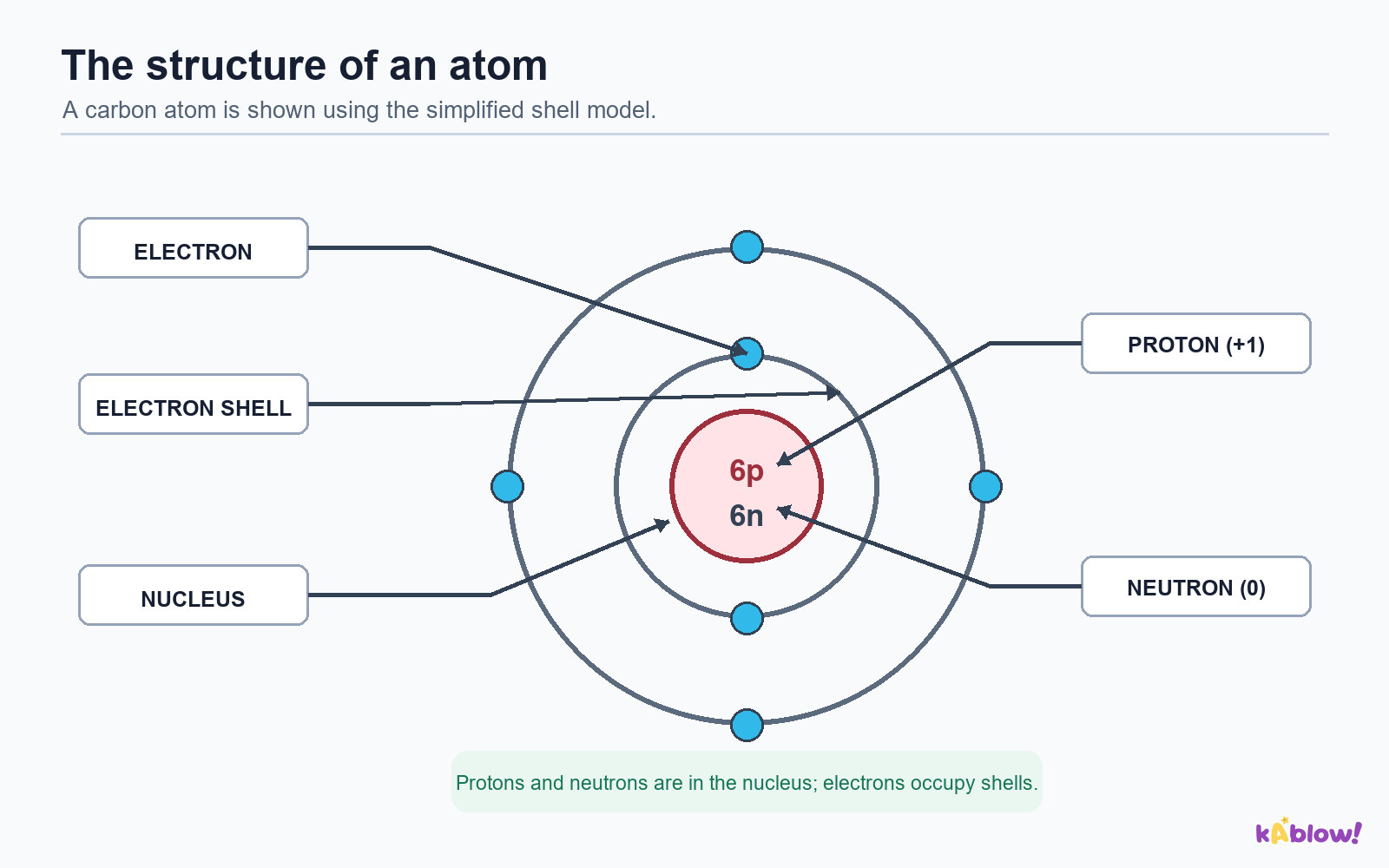
Subatomic Particles: Relative Mass and Charge
- Atoms are made of protons, neutrons and electrons, called subatomic particles.
- Their masses and charges are compared using relative atomic mass and relative charge, not grams or coulombs.
- Proton: relative charge +1, relative mass 1.
- Neutron: relative charge 0, relative mass 1.
- Electron: relative charge –1, relative mass negligible (about 1836 times lighter than a proton or neutron).
Atomic Number, Mass Number and Chemical Symbols
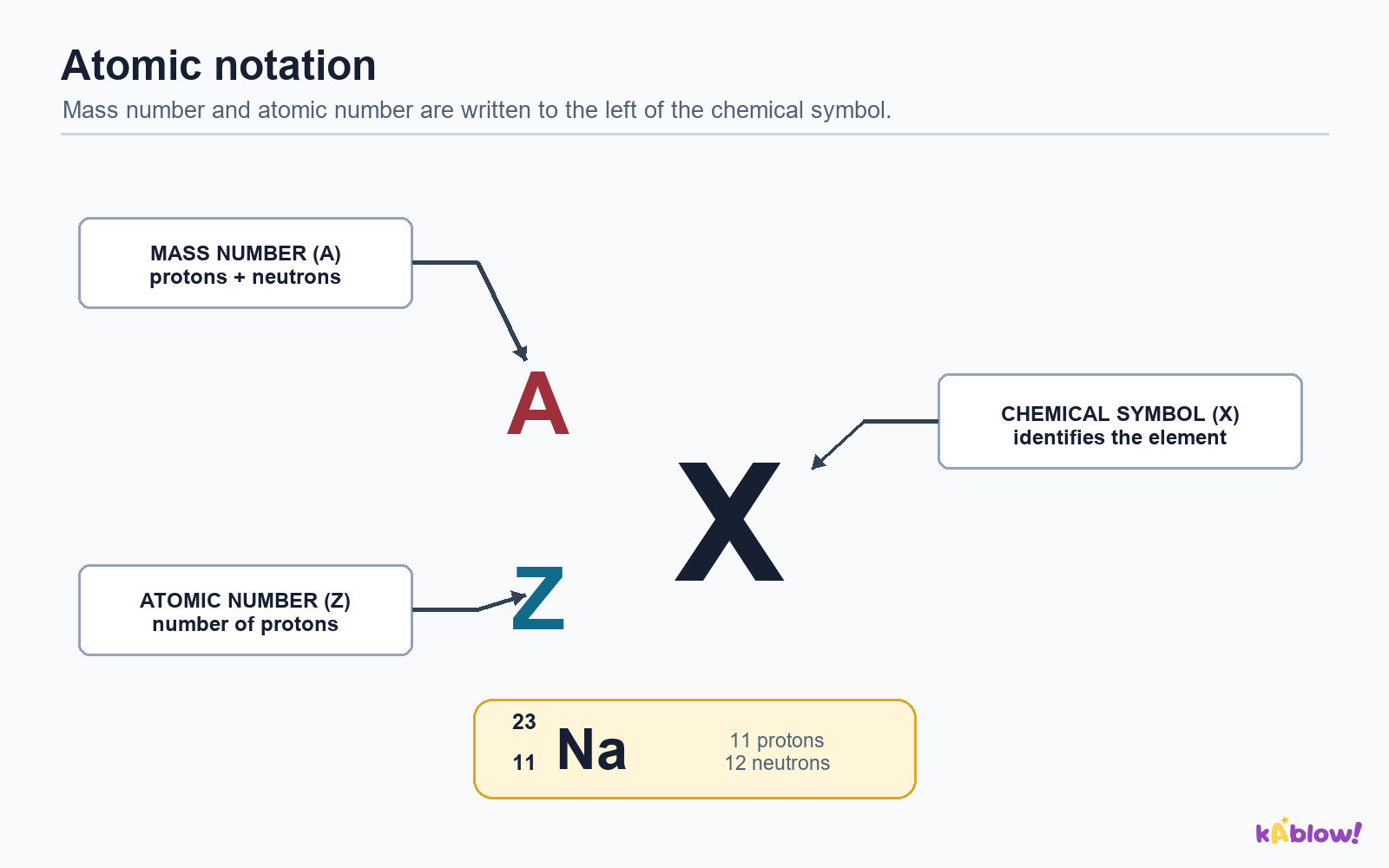
- The atomic number (or proton number), symbol Z, is the number of protons in the nucleus.
- In a neutral atom, the atomic number also equals the number of electrons.
- The mass number (A) is the total number of protons and neutrons (nucleons).
- Each element is represented by its chemical symbol with the mass number and atomic number.
- Number of neutrons = mass number – atomic number.
Atomic number and mass number
Protons, Electrons and Neutrons in Atoms and Ions
- All atoms and ions of the same element have the same number of protons.
- A neutral atom has equal numbers of protons and electrons, so no overall charge.
- A positive ion (cation) has lost electrons, so it has fewer electrons than protons.
- A negative ion (anion) has gained electrons, so it has more electrons than protons.
- Charge = number of protons – number of electrons.
- Number of protons = mass number – number of neutrons.
- Number of neutrons = mass number – number of protons.
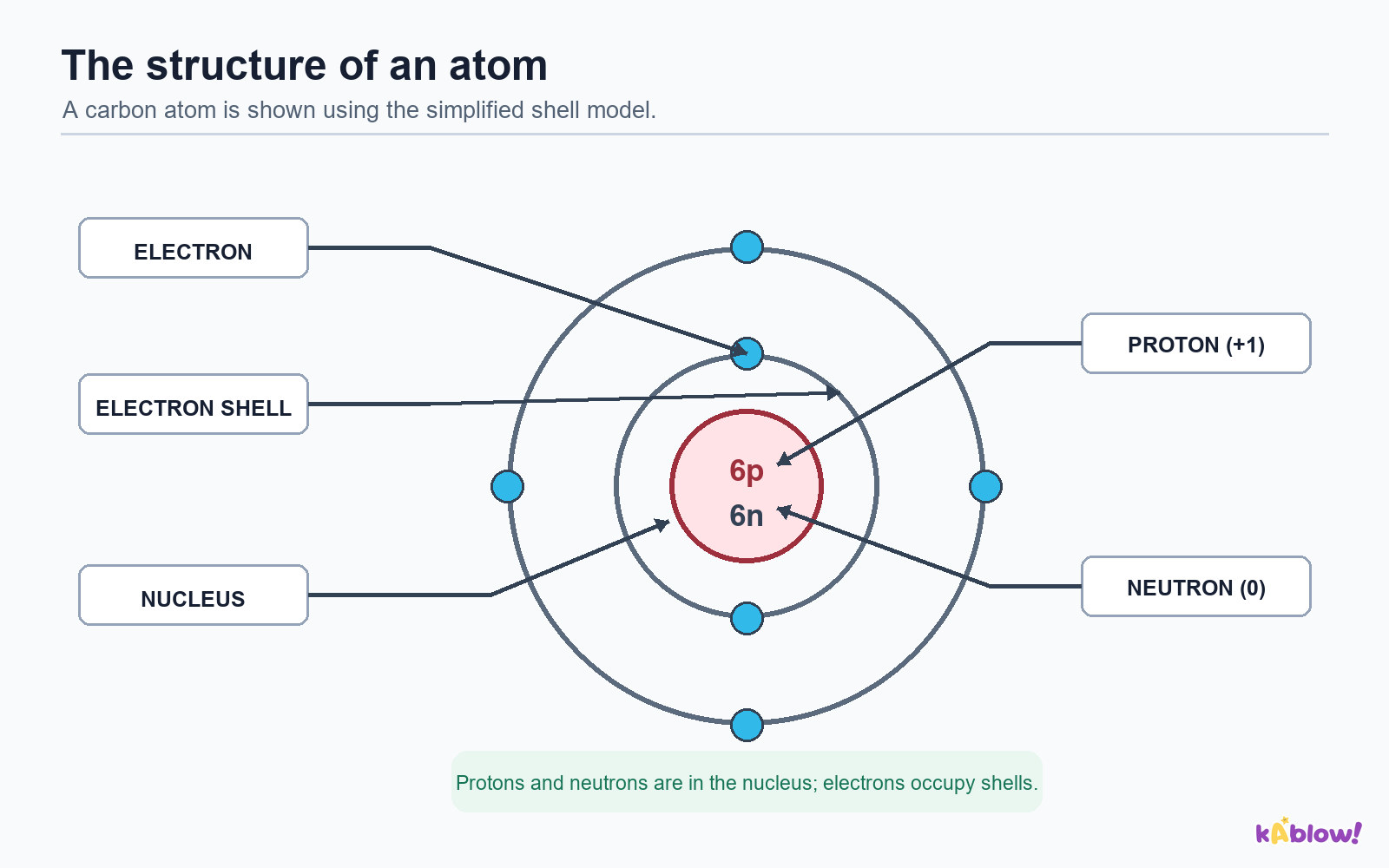
The structure of the carbon atom
Isotopes
- Isotopes are different atoms of the same element with the same number of protons and electrons but a different number of neutrons.
- They have the same atomic number but different mass numbers.
- For example, carbon-12 and carbon-14 contain 6 and 8 neutrons respectively.
- Isotopes have the same chemical properties because they have the same number of electrons and electron configuration.
- Isotopes have different physical properties due to differences in mass number, such as mass, density, melting/boiling point and rate of diffusion.
Relative Atomic Mass
- The relative atomic mass (Ar) is the ratio of the average mass of the atoms of an element to the unified atomic mass unit.
- It is the average mass of one atom of an element compared to one twelfth of the mass of an atom of carbon-12.
- It is calculated using the percentage abundance of each isotope.
- The equation is: Ar = (% abundance × mass + % abundance × mass + …) / 100.
- Percentage or relative abundances are either given or read from a mass spectrum.
- Round only the final answer to the required number of decimal places.
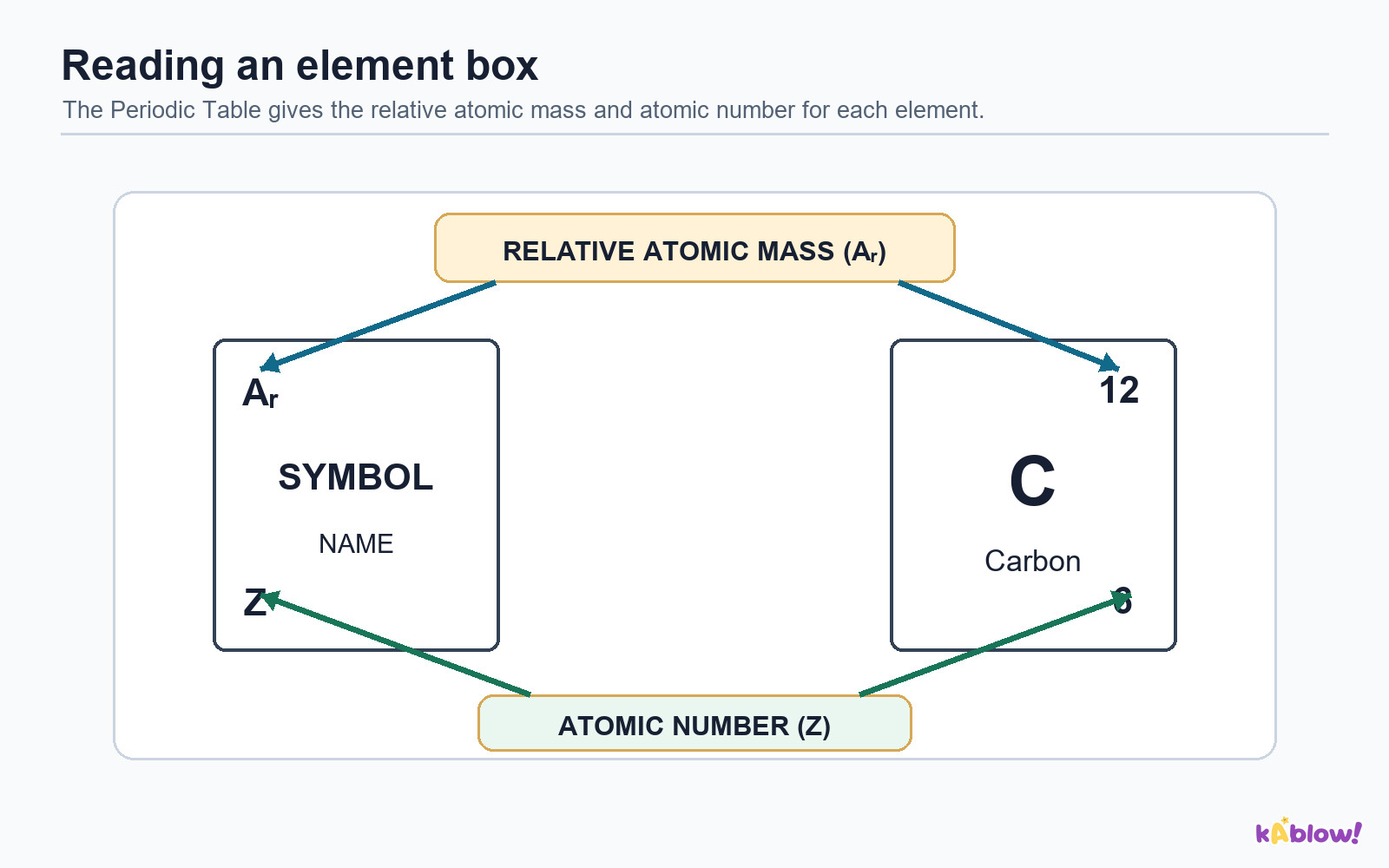
The Periodic Table key showing where relative atomic mass (Ar) and atomic number (Z) are given for each element, using carbon as the example.
ஸ்லைடுகள்
Sign up free to view the lesson slides
Step through every slide for this topic — plus flashcards and revision notes — with a free account.
பயிற்சி கேள்விகள்
இலவச முன்னோட்டம் — 67-இல் 8 கேள்விகள். அனைத்தையும் பார்க்க பதிவு செய்யவும்.
1.Which particles are collectively called nucleons?
Easy- AProtons and neutrons
- BProtons and electrons
- CNeutrons and electrons
- DProtons, neutrons and electrons
2.Which row correctly describes the relative charge and relative mass of a proton, a neutron and an electron?
Easy- AProton: +1, mass 1; Neutron: 0, mass 1; Electron: -1, mass negligible
- BProton: +1, mass 1; Neutron: 0, mass 1; Electron: -1, mass 1
- CProton: 0, mass 1; Neutron: +1, mass 1; Electron: -1, mass negligible
- DProton: +1, mass 1; Neutron: 0, mass negligible; Electron: -1, mass 1
3.The atomic number of an element is equal to the number of protons in its nucleus.
EasyTrue or false?
4.An atom of element X has mass number 63 and 34 neutrons. What is the atomic number of X?
Medium- A29
- B34
- C63
- D97
5.Which of the following correctly describes the nucleus of an atom?
Medium- ASmall, dense and positively charged
- BLarge, dense and positively charged
- CSmall, dense and neutral
- DSmall, low density and negatively charged
6.Which of the following statements about isotopes are correct? (select all that apply)
Medium- AIsotopes of an element have the same number of protons.
- BIsotopes of an element have the same number of neutrons.
- CIsotopes of an element have different mass numbers.
- DIsotopes of an element have the same chemical properties.
- EIsotopes of an element have identical physical properties.
7.The phosphide ion is represented as ³²₁₅P³⁻. What is the composition of this ion?
Medium- A15 protons, 17 neutrons, 18 electrons
- B15 protons, 17 neutrons, 15 electrons
- C15 protons, 17 neutrons, 12 electrons
- D15 protons, 32 neutrons, 18 electrons
8.Which row correctly describes the characteristics of the nucleus and surrounding space in an atom?
Medium- ANucleus: small, dense and positive; surrounding space: mainly empty space
- BNucleus: large, dense and positive; surrounding space: mainly empty space
- CNucleus: small, dense and neutral; surrounding space: densely populated with electrons
- DNucleus: large, dense and neutral; surrounding space: mainly empty space
Unlock all 67 questions & more
இந்த தலைப்பிற்கான ஒவ்வொரு கேள்வியையும், ஸ்லைடுகளையும், ஃப்ளாஷ் கார்டுகளையும் மற்றும் திருப்புதல் குறிப்புகளையும் பார்க்க இலவச கணக்கை உருவாக்கவும்.