Reproduction In Plants & Humans
விளையாடிக் கற்றுக்கொள்ளுங்கள்
ஆற்றல் சம்பாதிக்க இந்த கேள்விகளுக்குப் பதிலளியுங்கள், பின்னர் மீன் பிடித்து ஆராயுங்கள். கணக்கு தேவையில்லை.
பாட குறிப்புகள்
Asexual Reproduction
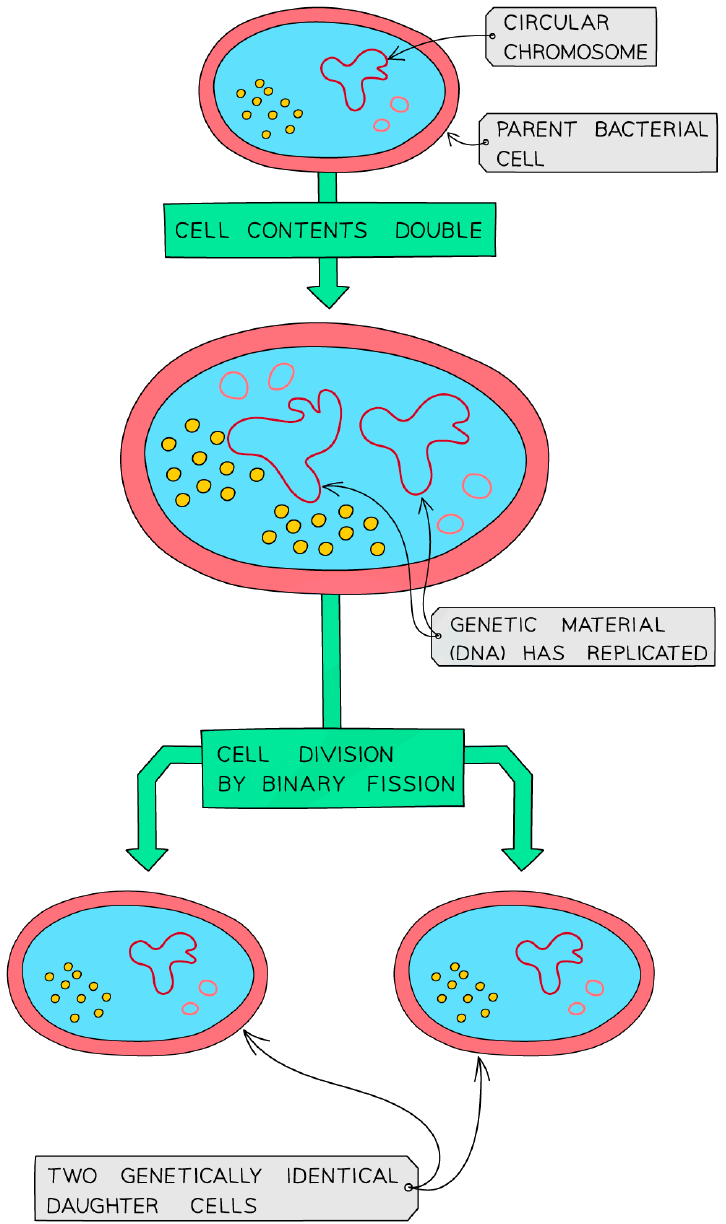
- Asexual reproduction involves one parent, no gametes, no fertilisation.
- Offspring are genetically identical to the parent (clones).
- Examples: bacteria by binary fission; plants by bulbs, tubers, runners.
- Advantages: rapid population growth, exploits suitable environments, energy-efficient.
- Disadvantages: no genetic variation, vulnerable to disease/environmental change.
Binary fission in bacteria
Sexual Reproduction & Gametes
- Sexual reproduction involves fusion of male and female gamete nuclei to form a zygote.
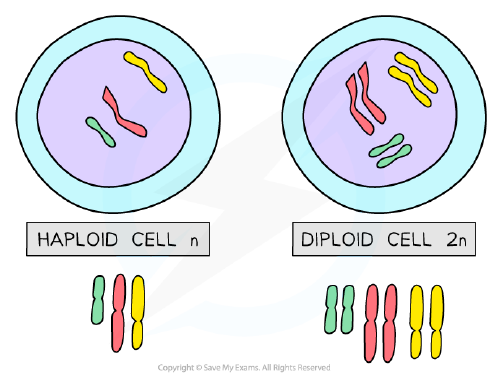
- Gametes have a haploid nucleus (half the chromosome number; in humans, 23).
- The zygote has a diploid nucleus (full chromosome number; in humans, 46).
- Fertilisation = fusion of gamete nuclei, producing genetically varied offspring.
- Advantages: genetic variation helps adaptation; disadvantages: may produce less successful offspring.
Haploid and diploid cells
Sexual Reproduction in Plants
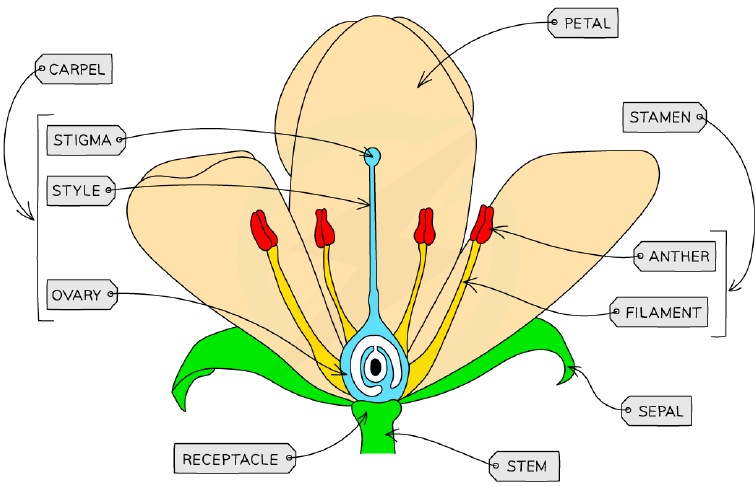
- Flowers are reproductive organs; male gametes in pollen grains, female in ovules.
- Pollination = transfer of pollen from anther to stigma (not fertilisation).
- Insect-pollinated flowers: large, bright petals, scent, nectar, sticky stigma, anthers inside.
- Wind-pollinated flowers: small, dull petals, no scent/nectar, long filaments, feathery stigma.
- After pollination, a pollen tube grows down the style; pollen nuclei fuse with ovum (fertilisation).
- Seed germination requires water, oxygen, and warmth; carbon dioxide not needed.
Structure of an insect-pollinated flower
Male Reproductive System (Human)
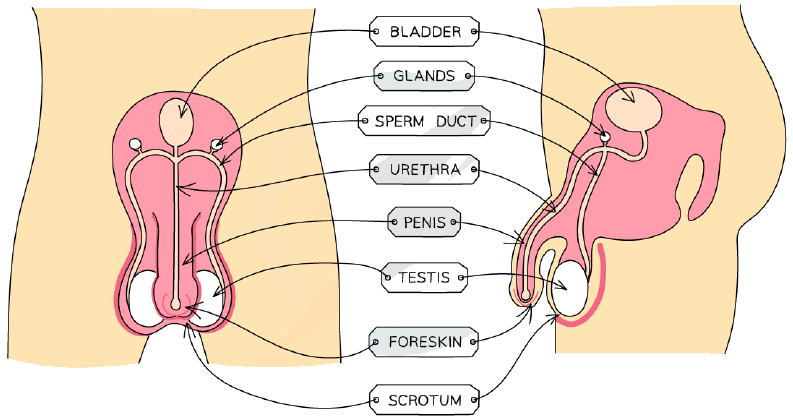
- Testes produce sperm and testosterone; held in scrotum (temperature regulation).
- Sperm duct carries sperm to urethra; prostate gland adds fluid to form semen.
- Urethra runs through penis; carries urine or semen (muscle prevents mixing).
- Penis deposits semen into vagina during intercourse.
The male reproductive system
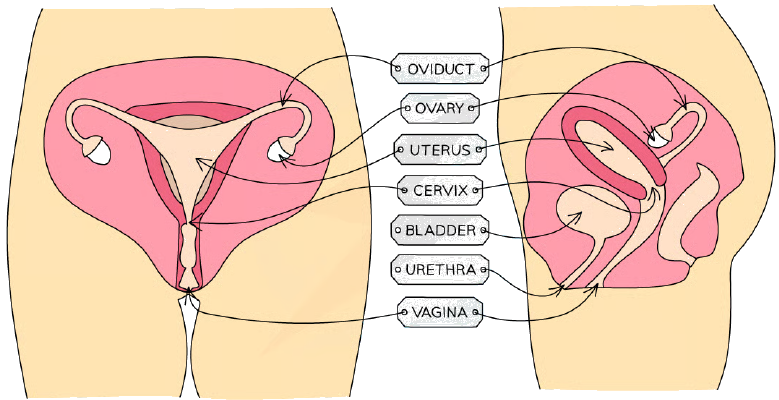
Female Reproductive System (Human)
- Ovaries produce ova (eggs) and oestrogen.
- Oviduct (fallopian tube) is site of fertilisation; lined with cilia to move egg.
- Uterus has thick lining for implantation; cervix is ring of muscle at lower end.
- Vagina receives penis and sperm during intercourse.
The female reproductive system
Gametes & Fertilisation
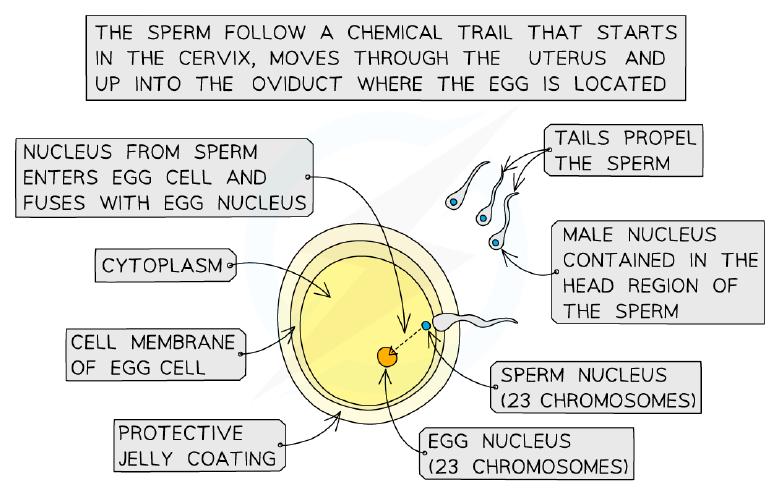
- Sperm adapted: flagellum (swim), mitochondria (energy), acrosome enzymes (penetrate egg).
- Egg adapted: large cytoplasm (food store), jelly coat (prevents multiple sperm after fertilisation).
- Fertilisation occurs in the oviduct; zygote divides to form embryo.
- Embryo implants in uterus lining; becomes fetus after 12 weeks.
Fertilisation of the egg by a sperm
Pregnancy & Placenta
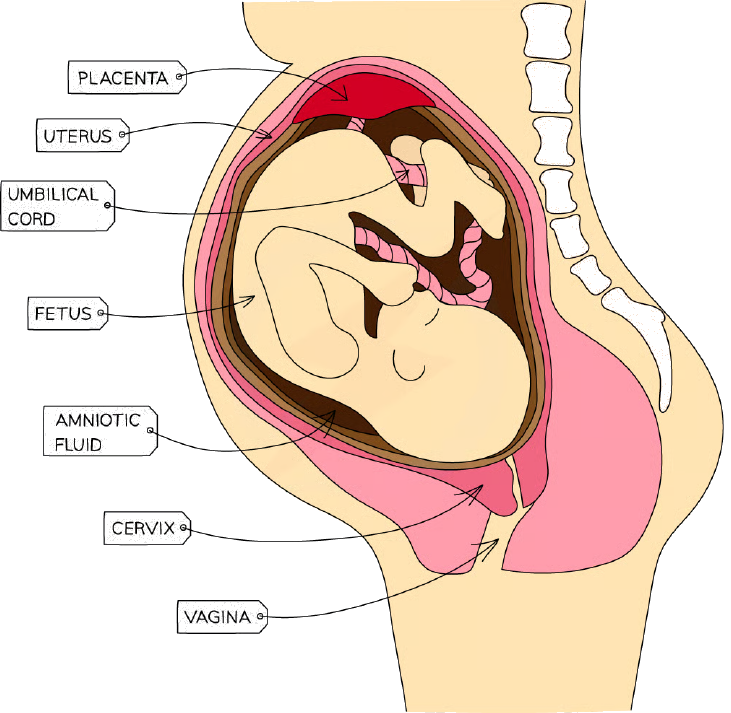
- Placenta exchanges nutrients (glucose, amino acids, oxygen) and wastes (CO₂, urea) by diffusion.
- Umbilical cord connects fetus to placenta; blood flows opposite directions, never mixing.
- Placenta acts as barrier to some toxins/pathogens (but not all, e.g., nicotine).
- Amniotic fluid cushions the fetus.
The fetus in the uterus
Sexual Hormones & Menstrual Cycle
- Testosterone (testes) and oestrogen (ovaries) control secondary sexual characteristics.
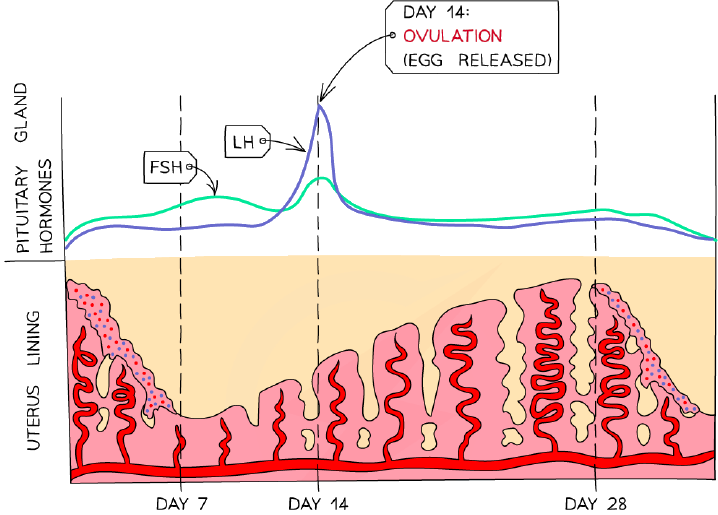
- Menstrual cycle (~28 days): FSH (pituitary) stimulates follicle growth and oestrogen release.
- Oestrogen thickens uterus lining and triggers LH surge (pituitary) causing ovulation (day ~14).
- After ovulation, progesterone from corpus luteum maintains lining; if no fertilisation, progesterone falls → menstruation.
Hormone levels during the menstrual cycle
Sexually Transmitted Infections (STIs)
- STIs spread via exchange of body fluids during unprotected sex.
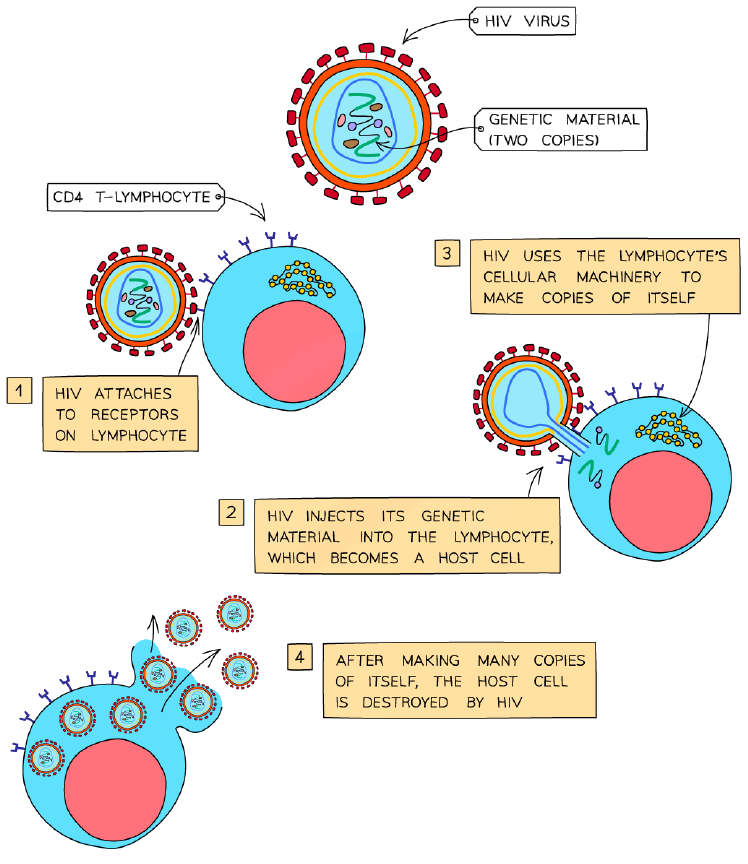
- HIV (virus) infects lymphocytes, reducing immune function, leading to AIDS.
- Spread controlled by: limiting partners, using condoms, testing, education.
- Other STIs: chlamydia (bacterial, treatable with antibiotics).
How HIV affects lymphocytes
ஸ்லைடுகள்
Sign up free to view the lesson slides
Step through every slide for this topic — plus flashcards and revision notes — with a free account.
பயிற்சி கேள்விகள்
இலவச முன்னோட்டம் — 52-இல் 8 கேள்விகள். அனைத்தையும் பார்க்க பதிவு செய்யவும்.
1.Which of the following is a characteristic of asexual reproduction?
Easy- AIt involves the fusion of male and female gametes.
- BIt produces genetically identical offspring from one parent.
- CIt increases genetic variation in offspring.
- DIt requires two parents.
2.Which structure in a flower produces pollen grains?
Easy- AStigma
- BStyle
- CAnther
- DOvary
3.Which hormone is primarily responsible for the development of secondary sexual characteristics in males?
Easy- AOestrogen
- BProgesterone
- CTestosterone
- DFSH
4.Which of the following is an advantage of sexual reproduction over asexual reproduction?
Easy- AOffspring are genetically identical to the parent.
- BIt is faster and requires less energy.
- CIt produces genetic variation in offspring.
- DIt does not require a mate.
5.Which of the following correctly describes the function of the placenta?
Easy- AIt produces oestrogen and progesterone.
- BIt allows the exchange of nutrients and waste between mother and fetus.
- CIt is the site of fertilisation.
- DIt protects the fetus from all pathogens.
6.What is the role of luteinising hormone (LH) in the menstrual cycle?
Medium- AIt stimulates the development of the follicle.
- BIt causes ovulation and stimulates progesterone production.
- CIt maintains the uterine lining.
- DIt inhibits FSH release.
7.A student sets up an experiment to investigate conditions for germination. Four test tubes contain cress seeds on cotton wool. Tube A: dry cotton wool, 20°C; Tube B: moist cotton wool, 20°C; Tube C: moist cotton wool, 4°C; Tube D: moist cotton wool with a layer of oil on top, 20°C. Which tube would not germinate due to lack of oxygen?
Medium- ATube A
- BTube B
- CTube C
- DTube D
8.Which of the following statements about HIV is correct?
Easy- AHIV is a bacterium that destroys red blood cells.
- BHIV infects lymphocytes, reducing the body's ability to fight infections.
- CHIV can be cured with antibiotics.
- DHIV is only transmitted through sexual contact.
Unlock all 52 questions & more
இந்த தலைப்பிற்கான ஒவ்வொரு கேள்வியையும், ஸ்லைடுகளையும், ஃப்ளாஷ் கார்டுகளையும் மற்றும் திருப்புதல் குறிப்புகளையும் பார்க்க இலவச கணக்கை உருவாக்கவும்.