Group Properties & Trends
விளையாடிக் கற்றுக்கொள்ளுங்கள்
ஆற்றல் சம்பாதிக்க இந்த கேள்விகளுக்குப் பதிலளியுங்கள், பின்னர் மீன் பிடித்து ஆராயுங்கள். கணக்கு தேவையில்லை.
பாட குறிப்புகள்
Group I (Alkali Metals) – Physical Properties
- Group I metals are called alkali metals because they form alkaline solutions with water.
- They are soft and can be cut with a knife; softness increases down the group.
- Freshly cut surfaces are shiny and silvery.
- They have low melting points (some melt on a hot day) and low densities compared to other metals.
- Melting point decreases down the group; density generally increases (with an early exception).
- They are good conductors of heat and electricity.
Group I metals on the Periodic Table
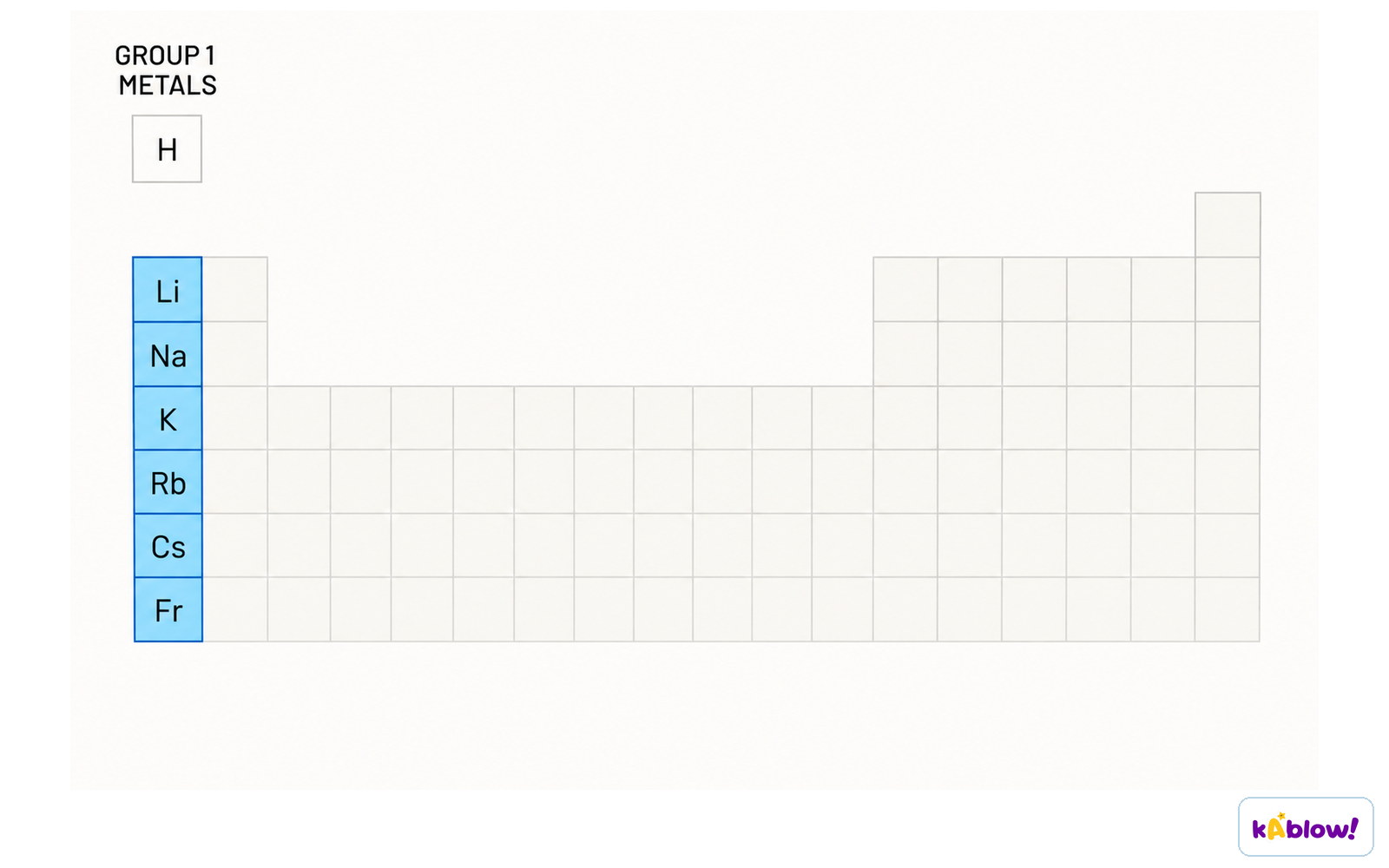
Group I – Chemical Properties & Reactivity
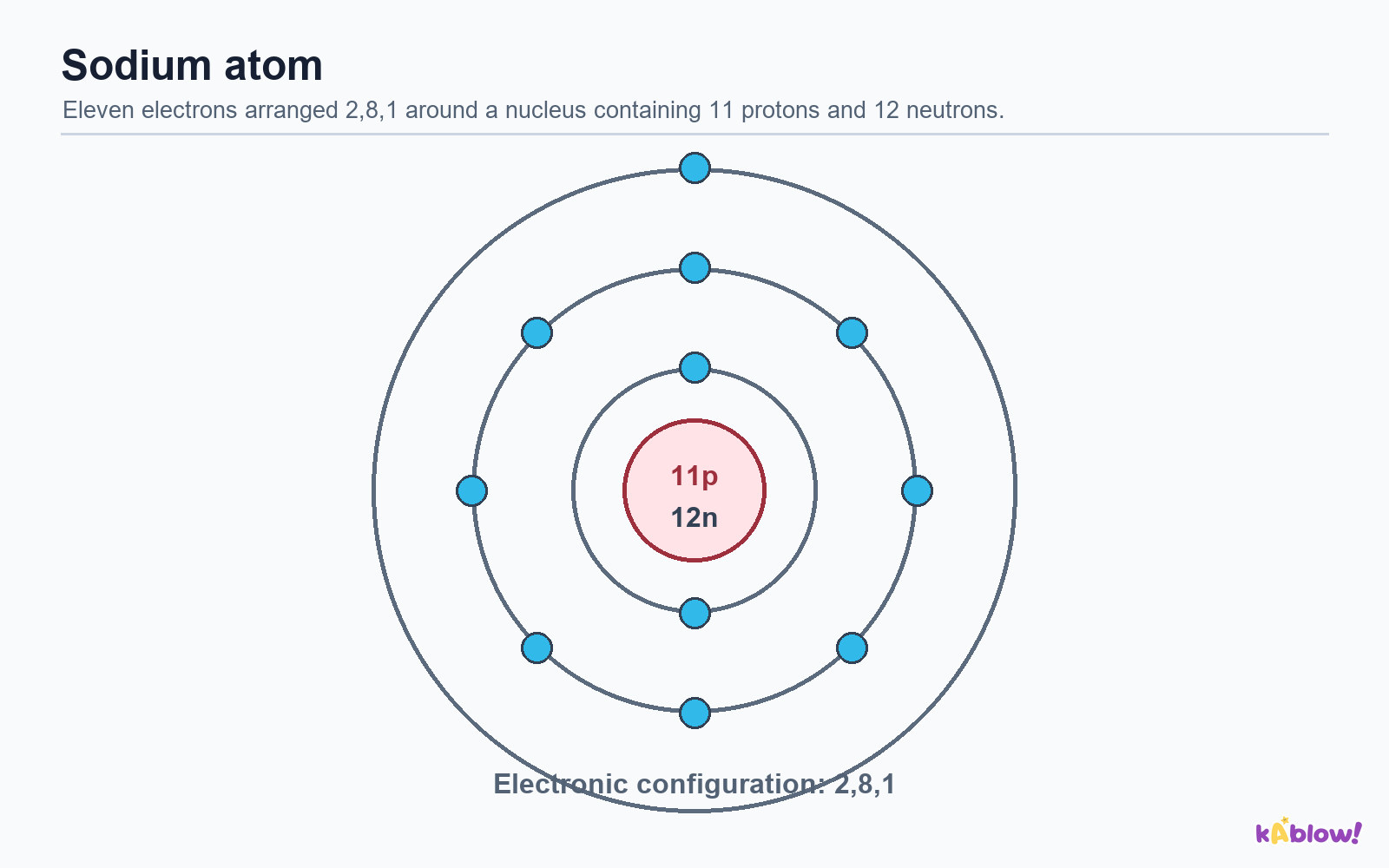
- All have one electron in their outer shell, which they readily lose to form +1 ions.
- They react vigorously with water: 2M(s) + 2H₂O(l) → 2MOH(aq) + H₂(g).
- Reactivity increases down the group (Li < Na < K < Rb < Cs < Fr).
- Lithium: fizzes, moves on surface; Sodium: more vigorous, melts into a ball; Potassium: burns with a lilac flame.
- They react with oxygen and water vapour in air, so are stored under oil.
- Rubidium and caesium react explosively with water; francium is extremely reactive but rare/radioactive.
Sodium atom: electron configuration 2,8,1
Group VII (Halogens) – Physical Properties
- Halogens are diatomic non-metals (F₂, Cl₂, Br₂, I₂, At₂).
- All have seven electrons in their outer shell and gain one electron to form halide ions.
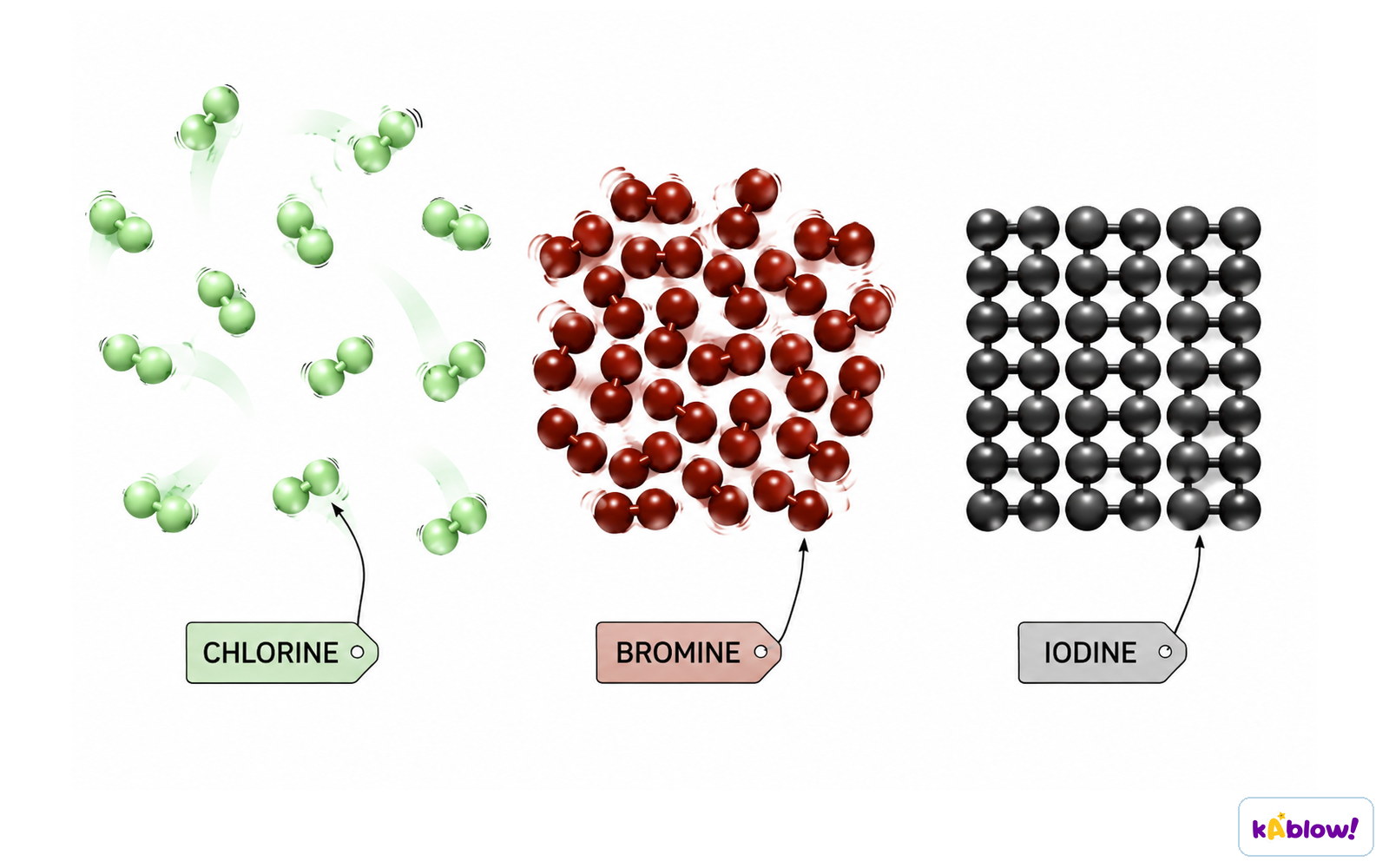
- At room temperature: chlorine is a pale yellow-green gas, bromine is a red-brown liquid, iodine is a grey-black solid.
- Melting and boiling points increase down the group; density also increases.
- Colour darkens down the group: fluorine (yellow), chlorine (pale green), bromine (red-brown), iodine (grey-black), astatine (black).
- Aqueous solutions: chlorine (very pale green, often colourless), bromine (orange/yellow), iodine (brown).
Physical states of the halogens at room temperature
Group VII – Reactivity & Displacement Reactions
- Reactivity decreases down the group (opposite to Group I).
- A more reactive halogen displaces a less reactive halogen from its halide solution.
- Chlorine displaces bromine from KBr: 2KBr(aq) + Cl₂(aq) → 2KCl(aq) + Br₂(aq) (orange colour).
- Chlorine displaces iodine from KI: brown colour of iodine appears.
- Bromine displaces iodine from KI: brown colour of iodine appears.
- No reaction occurs if the halogen is less reactive than the halide (e.g., iodine + KCl).
Summary table of displacement reactions
Transition Elements
- Transition elements are metals found in the centre of the Periodic Table (between Group 2 and 3).
- They are hard, strong, lustrous, and conduct heat and electricity; most have high melting points (except mercury).
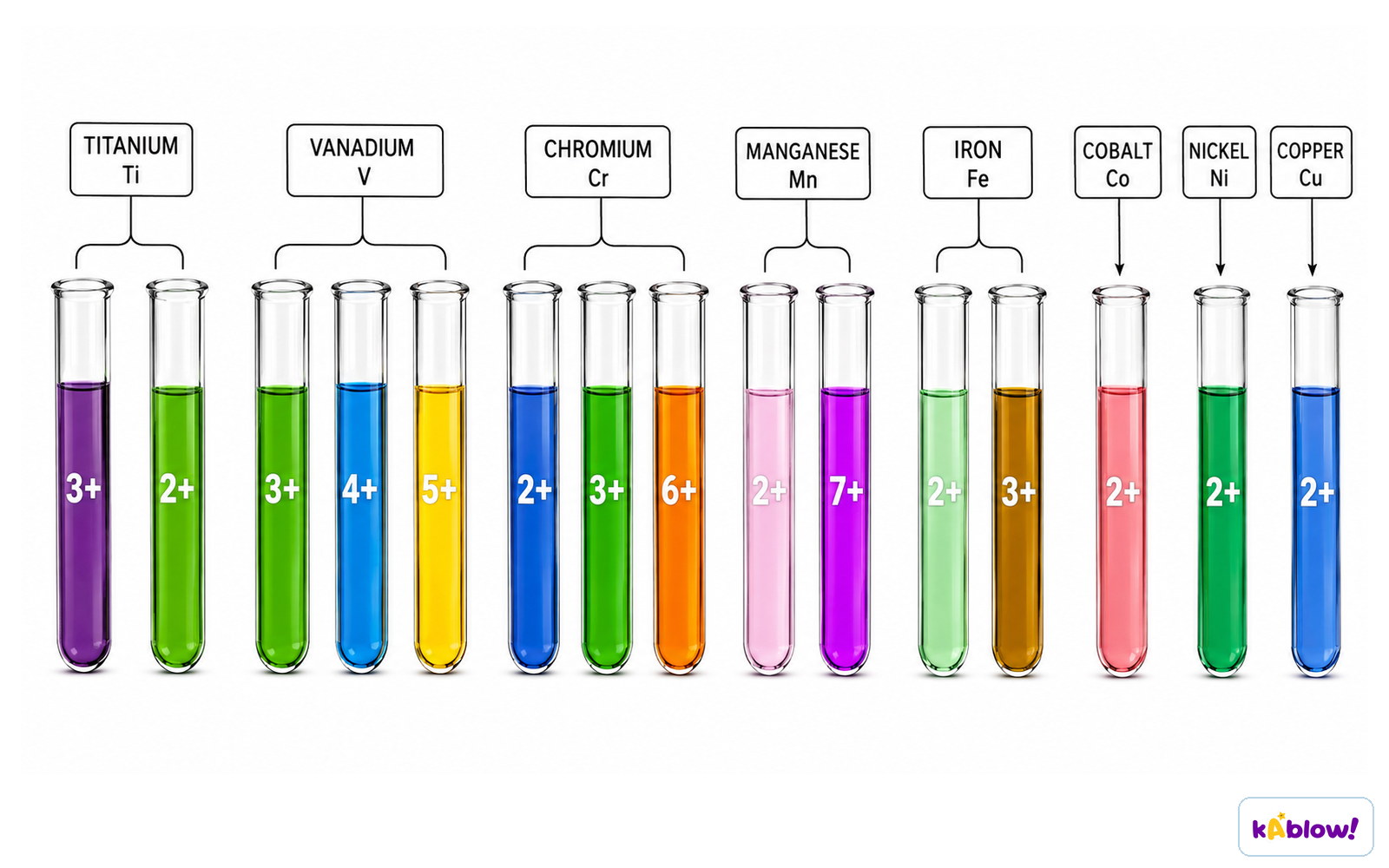
- They form ions with different charges (e.g., Fe²⁺ and Fe³⁺) and have variable oxidation states.
- They form coloured compounds (e.g., copper sulfate is blue, copper oxide is black).
- They are useful as catalysts (e.g., iron in the Haber process).
- Scandium and zinc are not considered transition elements as they have only one oxidation state and form colourless compounds.
Coloured compounds formed by transition metal ions
Noble Gases
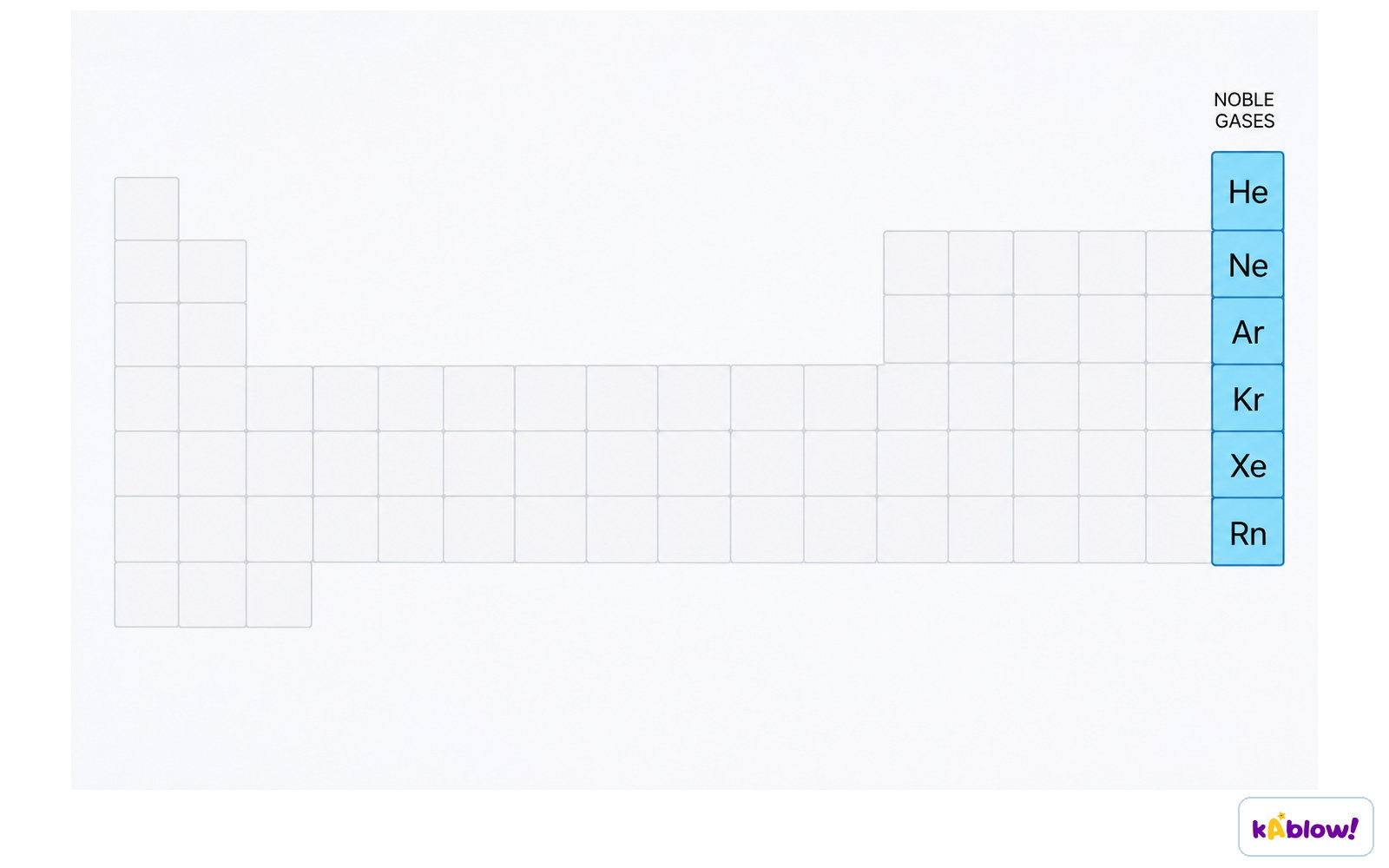
- Noble gases are in Group VIII; they are monatomic, colourless gases at room temperature.
- They have very low melting and boiling points and are unreactive (inert).
- Inertness is due to their full outer electron shells (e.g., He: 2, Ne: 2,8, Ar: 2,8,8).
- Full outer shells mean they have no tendency to gain, lose, or share electrons.
- They are used in lighting (neon signs) and as inert atmospheres (argon in welding).
Noble gases on the Periodic Table
Trends Summary
- Group I: reactivity increases down; melting point decreases; density increases (with early exception).
- Group VII: reactivity decreases down; melting/boiling point increases; colour darkens; density increases.
- Noble gases: all are unreactive; boiling points increase down the group (He lowest, Rn highest).
- Transition elements: high melting points, variable oxidation states, coloured compounds, catalytic activity.
ஸ்லைடுகள்
Sign up free to view the lesson slides
Step through every slide for this topic — plus flashcards and revision notes — with a free account.
பயிற்சி கேள்விகள்
இலவச முன்னோட்டம் — 40-இல் 8 கேள்விகள். அனைத்தையும் பார்க்க பதிவு செய்யவும்.
1.How many electrons are in the outer shell of a Group I metal atom?
Easy- A1
- B2
- C7
- D8
2.Which of the following is a physical property of Group I metals?
Easy- AThey are hard and strong
- BThey have high melting points
- CThey are soft and easy to cut
- DThey are gases at room temperature
3.What is the trend in reactivity of Group I metals as you go down the group?
Easy- AReactivity decreases
- BReactivity increases
- CReactivity stays the same
- DReactivity first increases then decreases
4.Which halogen is a red-brown liquid at room temperature?
Easy- AChlorine
- BBromine
- CIodine
- DFluorine
5.What is the trend in reactivity of Group VII elements as you go down the group?
Easy- AReactivity increases
- BReactivity decreases
- CReactivity stays the same
- DReactivity first decreases then increases
6.When chlorine water is added to potassium bromide solution, what colour change is observed?
Medium- AColourless to brown
- BColourless to orange
- COrange to colourless
- DBrown to colourless
7.Which of the following is a characteristic property of transition elements?
Medium- AThey form colourless compounds
- BThey have only one oxidation state
- CThey form coloured compounds
- DThey are gases at room temperature
8.Why are noble gases unreactive?
Medium- AThey have a full outer shell of electrons
- BThey have one electron in their outer shell
- CThey are diatomic molecules
- DThey have low melting points
Unlock all 40 questions & more
இந்த தலைப்பிற்கான ஒவ்வொரு கேள்வியையும், ஸ்லைடுகளையும், ஃப்ளாஷ் கார்டுகளையும் மற்றும் திருப்புதல் குறிப்புகளையும் பார்க்க இலவச கணக்கை உருவாக்கவும்.