Experimental Techniques
விளையாடிக் கற்றுக்கொள்ளுங்கள்
ஆற்றல் சம்பாதிக்க இந்த கேள்விகளுக்குப் பதிலளியுங்கள், பின்னர் மீன் பிடித்து ஆராயுங்கள். கணக்கு தேவையில்லை.
பாட குறிப்புகள்
Apparatus for Measurements
- Time is measured with a stopwatch or stopclock, accurate to one or two decimal places; units are seconds or minutes.
- Temperature is measured with a thermometer (precision ±0.5 °C) or digital temperature probe (precision ±0.1 °C); units are degrees Celsius (°C).
- Mass is measured using a digital balance (usually to two decimal places); balance must be tared before use and allowed to settle.
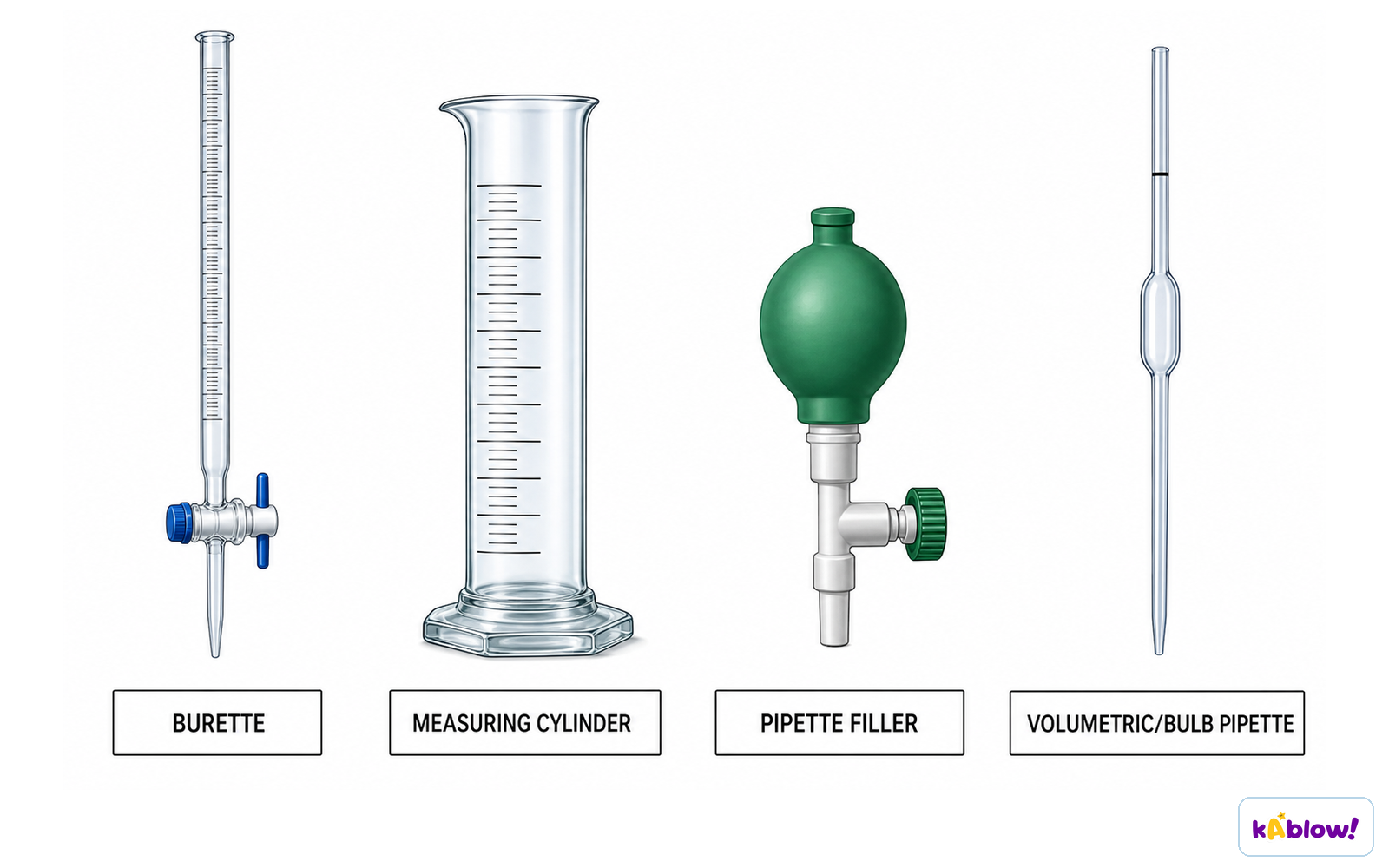
- Volume of liquid is measured with burettes (most accurate for variable volumes, 0–50 cm³), volumetric pipettes (most accurate for fixed volumes, e.g. 10 cm³ or 25 cm³), or measuring cylinders (for approximate volumes).
- Volume of gas is measured using a gas syringe (more precise) or by downward displacement of water (not suitable for soluble gases).
- When reading a burette, read from the bottom of the meniscus; the scale runs from 0.00 cm³ at the top to 50.00 cm³ at the bottom.
Apparatus for measuring volume
Solutions
- Solvent: the liquid in which a solute dissolves (e.g. water in seawater).
- Solute: the substance that dissolves in a solvent (e.g. salt in seawater).
- Solution: the mixture formed when a solute dissolves in a solvent (e.g. seawater).
- Saturated solution: contains the maximum concentration of solute dissolved at a given temperature.
- Soluble substances dissolve; insoluble substances do not dissolve.
- Filtrate: the liquid that passes through a filter; residue: the solid left behind after filtration or evaporation.
Acid-Base Titrations
- Titration determines the concentration of an acid or alkali by neutralisation; can also be used to prepare salts.
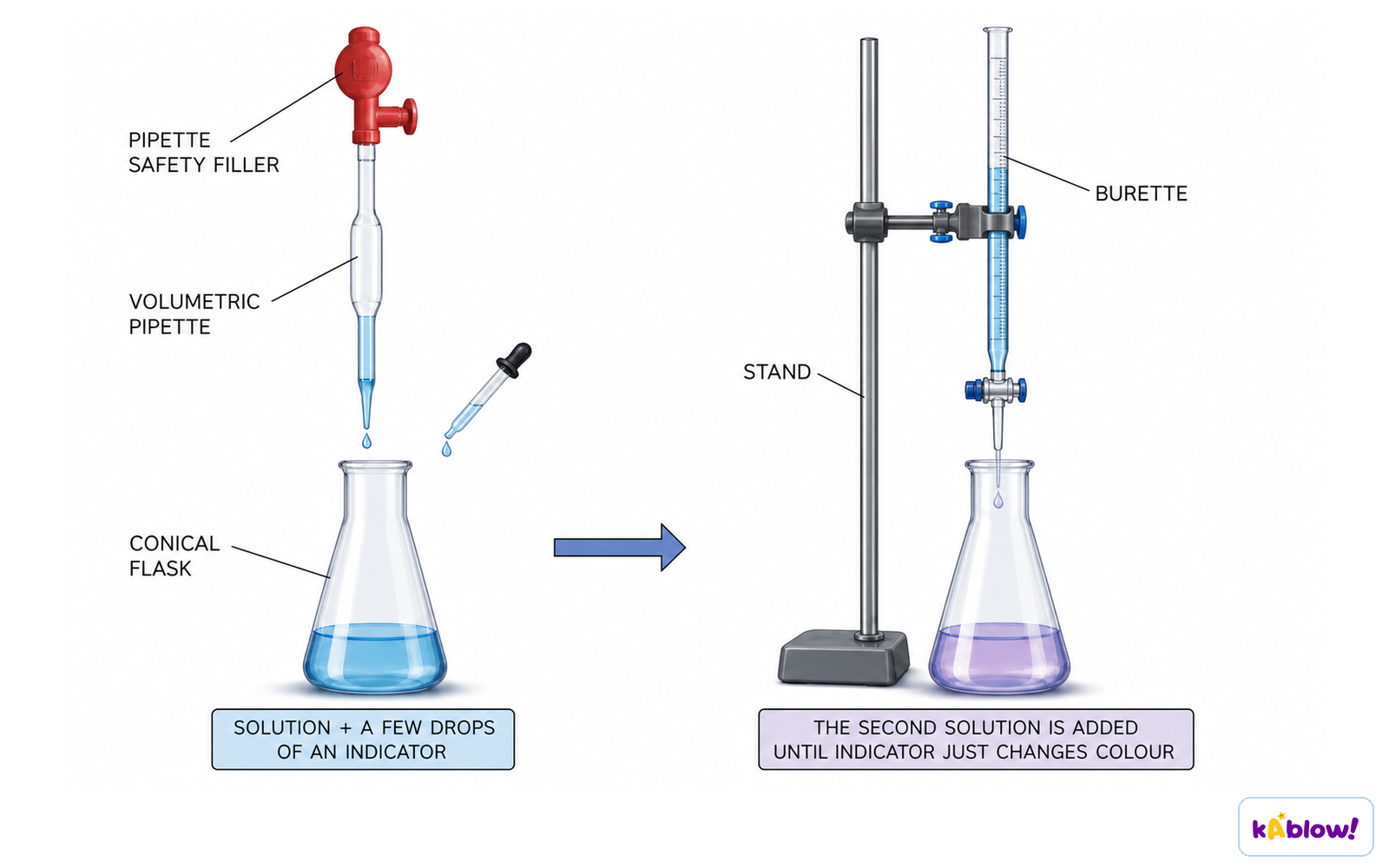
- Apparatus: 25 cm³ volumetric pipette, pipette filler, 50 cm³ burette, 250 cm³ conical flask, funnel, indicator, clamp stand, white tile.
- Method: pipette a fixed volume of alkali into a conical flask, add indicator, then add acid from the burette while swirling until the endpoint (sharp colour change).
- Record burette readings to the nearest 0.05 cm³; repeat until two concordant results (within 0.1 cm³) are obtained.
- Common indicators: methyl orange (red in acid, yellow in alkali, orange at endpoint) and phenolphthalein (colourless in acid, pink in alkali).
- Common errors: not removing the funnel from the burette, not filling the jet space, and reading the burette from the top of the meniscus.
Titration apparatus set-up
ஸ்லைடுகள்
Sign up free to view the lesson slides
Step through every slide for this topic — plus flashcards and revision notes — with a free account.
பயிற்சி கேள்விகள்
இலவச முன்னோட்டம் — 48-இல் 8 கேள்விகள். அனைத்தையும் பார்க்க பதிவு செய்யவும்.
1.Which piece of apparatus is most accurate for measuring a variable volume of liquid between 0 and 50 cm³?
Easy- AMeasuring cylinder
- BBurette
- CVolumetric pipette
- DGas syringe
2.A volumetric pipette is used to measure a fixed volume of liquid accurately.
EasyTrue or false?
3.A stopwatch displays 1:30 (minutes:seconds). What is the time in seconds?
Easy- A99
- B81
- C90
- D108
4.Complete the sentence about titration.
EasyThe endpoint is reached when one drop causes a sharp ____ change.
5.Match each indicator to its colour in acid.
Medium- Methyl orange
- Phenolphthalein
- Litmus
- Red
- Colourless
6.Arrange the following steps in a titration in the correct order.
Medium- Add indicator to conical flask
- Fill burette with acid
- Record initial burette reading
- Perform rough titration
7.Which of the following is the most accurate way to measure a fixed volume of liquid?
Easy- AMeasuring cylinder
- BBurette
- CVolumetric pipette
- DBeaker
8.What term describes a solution that contains the maximum concentration of solute at a given temperature?
Easy
Unlock all 48 questions, flashcards & more
இந்த தலைப்பிற்கான ஒவ்வொரு கேள்வியையும், ஸ்லைடுகளையும், ஃப்ளாஷ் கார்டுகளையும் மற்றும் திருப்புதல் குறிப்புகளையும் பார்க்க இலவச கணக்கை உருவாக்கவும்.