Life processes and unicellular organisms
விளையாடிக் கற்றுக்கொள்ளுங்கள்
ஆற்றல் சம்பாதிக்க இந்த கேள்விகளுக்குப் பதிலளியுங்கள், பின்னர் மீன் பிடித்து ஆராயுங்கள். கணக்கு தேவையில்லை.
பாட குறிப்புகள்
Life Processes (MRS GREN)
- All living organisms perform seven life processes, remembered by the acronym MRS GREN.
- Movement: All living things move; plants grow towards light, animals move to find food or escape danger.
- Respiration: A chemical reaction that releases energy stored in glucose.
- Sensitivity: Living things sense changes in their environment and respond (e.g., humans feel heat, plants grow towards light).
- Growth: Organisms increase in size; unicellular organisms grow by increasing cell size, multicellular by producing more cells.
- Reproduction: The process of producing offspring.
- Excretion: The removal of waste products from the body.
- Nutrition: Plants photosynthesise; animals eat plants or other animals.
Unicellular Organisms
- Unicellular organisms are living organisms made of just one cell.
- Despite their small size, they perform all seven life processes.
- Examples include bacteria, euglena, amoebas, and yeast (a fungus).
Bacteria
- Bacteria are some of the most common and diverse unicellular organisms.
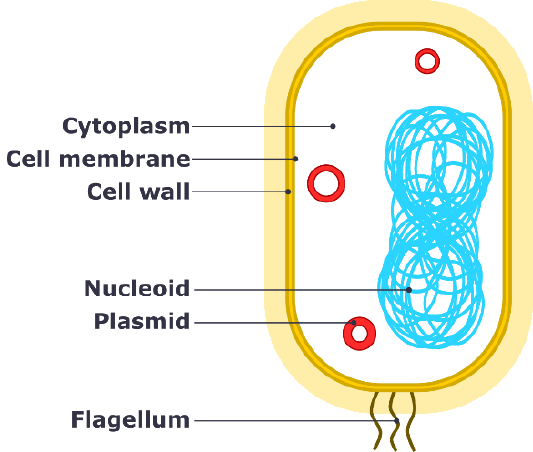
- They do not have a nucleus; genetic material is located in the nucleoid and plasmids.
- Some bacteria have a long tail called a flagellum for movement.
- Bacteria have a cell wall, cell membrane, and ribosomes.
Structure of a bacterium
Euglena
- Euglena is a unicellular organism found in water.
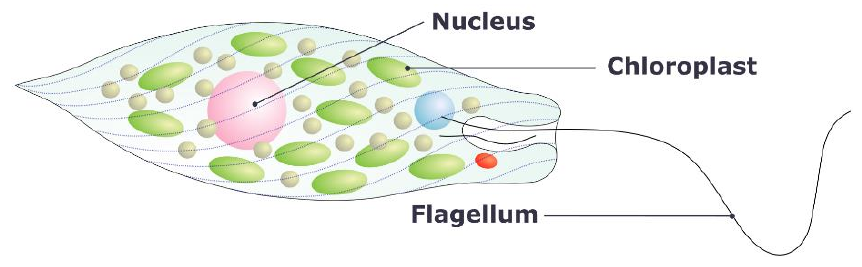
- It has a flagellum to help it swim.
- It contains chloroplasts for photosynthesis.
Structure of Euglena
Other Unicellular Organisms
- Amoebas are unicellular organisms that move and feed using pseudopods.
- Yeast is a unicellular fungus used in baking and brewing.
ஸ்லைடுகள்
Sign up free to view the lesson slides
Step through every slide for this topic — plus flashcards and revision notes — with a free account.
பயிற்சி கேள்விகள்
இலவச முன்னோட்டம் — 26-இல் 8 கேள்விகள். அனைத்தையும் பார்க்க பதிவு செய்யவும்.
1.How many life processes do all living organisms perform?
Easy- ASeven
- BFive
- CSix
- DEight
2.Which of the following is NOT a life process?
Easy- APhotosynthesis
- BRespiration
- CExcretion
- DSensitivity
3.Which statement about unicellular organisms is correct?
Easy- AThey are made of one cell and perform all life processes.
- BThey are made of many cells and perform only some life processes.
- CThey are made of one cell and perform only some life processes.
- DThey are made of many cells and perform all life processes.
4.Which of the following is an example of a unicellular organism?
Easy- ABacterium
- BHuman
- COak tree
- DMushroom
5.Bacteria do not have a nucleus. Where is their genetic material located?
Easy- AIn the nucleoid and plasmids
- BIn the nucleus
- CIn the cytoplasm
- DIn the cell wall
6.What is the function of the flagellum in some bacteria?
Easy- AMovement
- BRespiration
- CReproduction
- DNutrition
7.Euglena is a unicellular organism that can photosynthesise. Which organelle allows it to do this?
Easy- AChloroplast
- BMitochondrion
- CNucleus
- DFlagellum
8.A student observes a unicellular organism under a microscope. It has a flagellum and chloroplasts. Which organism is it most likely to be?
Medium- AEuglena
- BAmoeba
- CYeast
- DBacterium
Unlock all 26 questions, flashcards & more
இந்த தலைப்பிற்கான ஒவ்வொரு கேள்வியையும், ஸ்லைடுகளையும், ஃப்ளாஷ் கார்டுகளையும் மற்றும் திருப்புதல் குறிப்புகளையும் பார்க்க இலவச கணக்கை உருவாக்கவும்.