Photosynthesis
விளையாடிக் கற்றுக்கொள்ளுங்கள்
ஆற்றல் சம்பாதிக்க இந்த கேள்விகளுக்குப் பதிலளியுங்கள், பின்னர் மீன் பிடித்து ஆராயுங்கள். கணக்கு தேவையில்லை.
பாட குறிப்புகள்
What is Photosynthesis?
- Photosynthesis is a chemical reaction that produces glucose (a type of sugar).
- Glucose is used for respiration, where cells release energy.
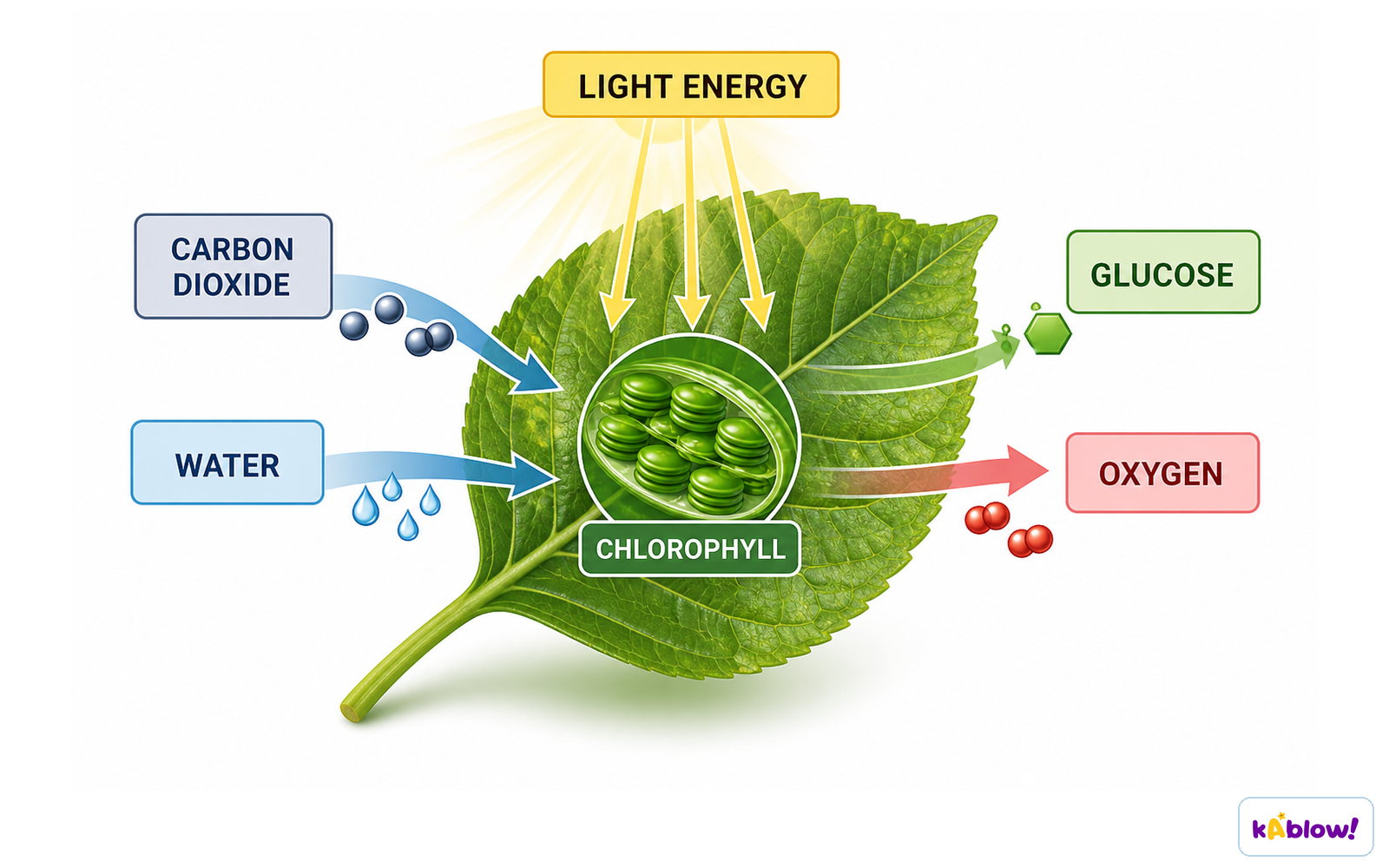
- Plants use sunlight to turn carbon dioxide and water into glucose and oxygen.
- Word equation: carbon dioxide + water → glucose + oxygen.
Carbon dioxide and water are converted into glucose and oxygen using light energy absorbed by chlorophyll.
Where Does Photosynthesis Happen?
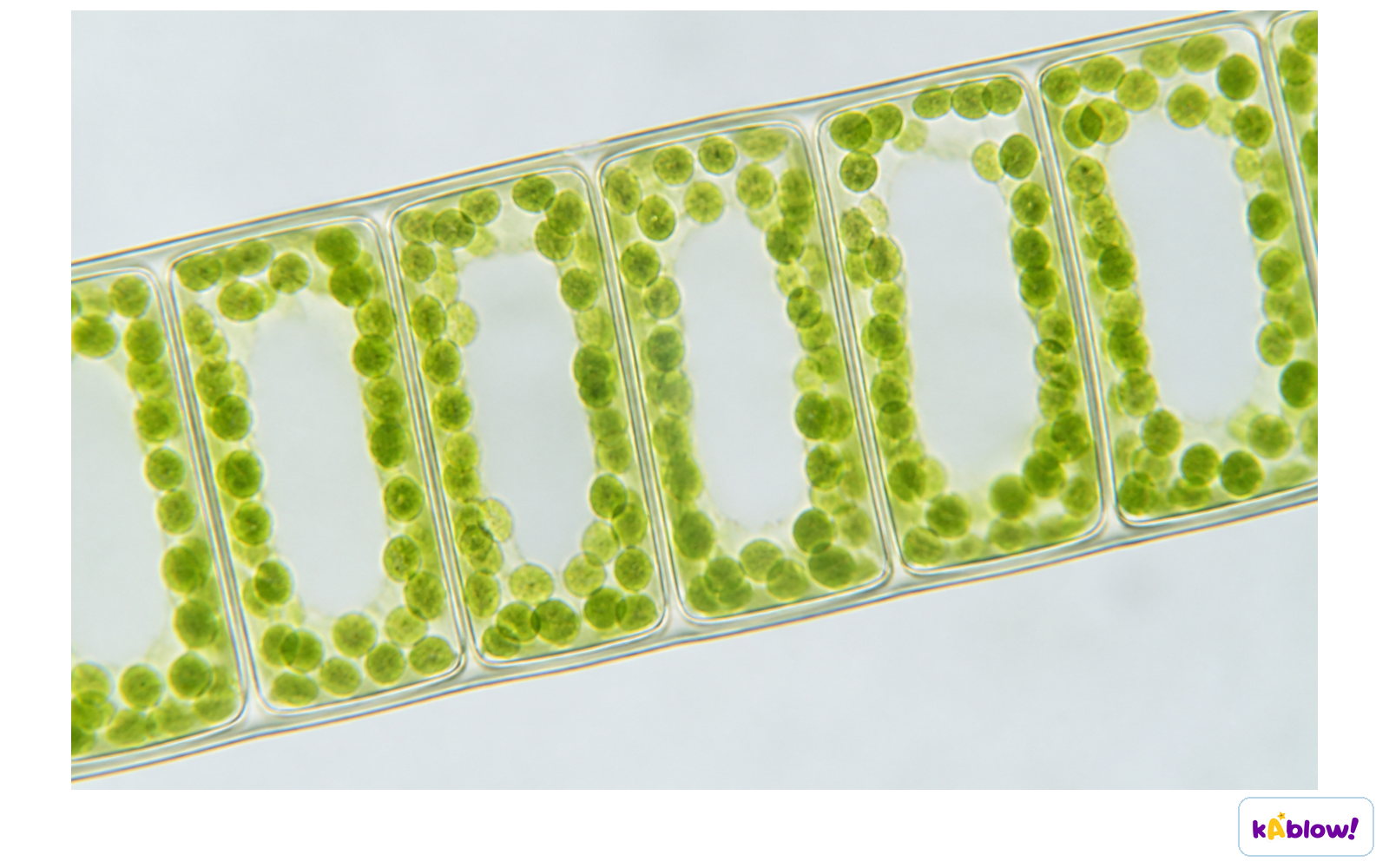
- Photosynthesis occurs in chloroplasts, which contain the green pigment chlorophyll.
- Chloroplasts are an organelle found mainly in leaf palisade cells.
- Palisade cells are near the top of a leaf to get the most light.
- Leaves are adapted with a large surface area for photosynthesis.
Chloroplasts appear green because chlorophyll inside them absorbs light energy.
How Does Carbon Dioxide Enter the Leaf?
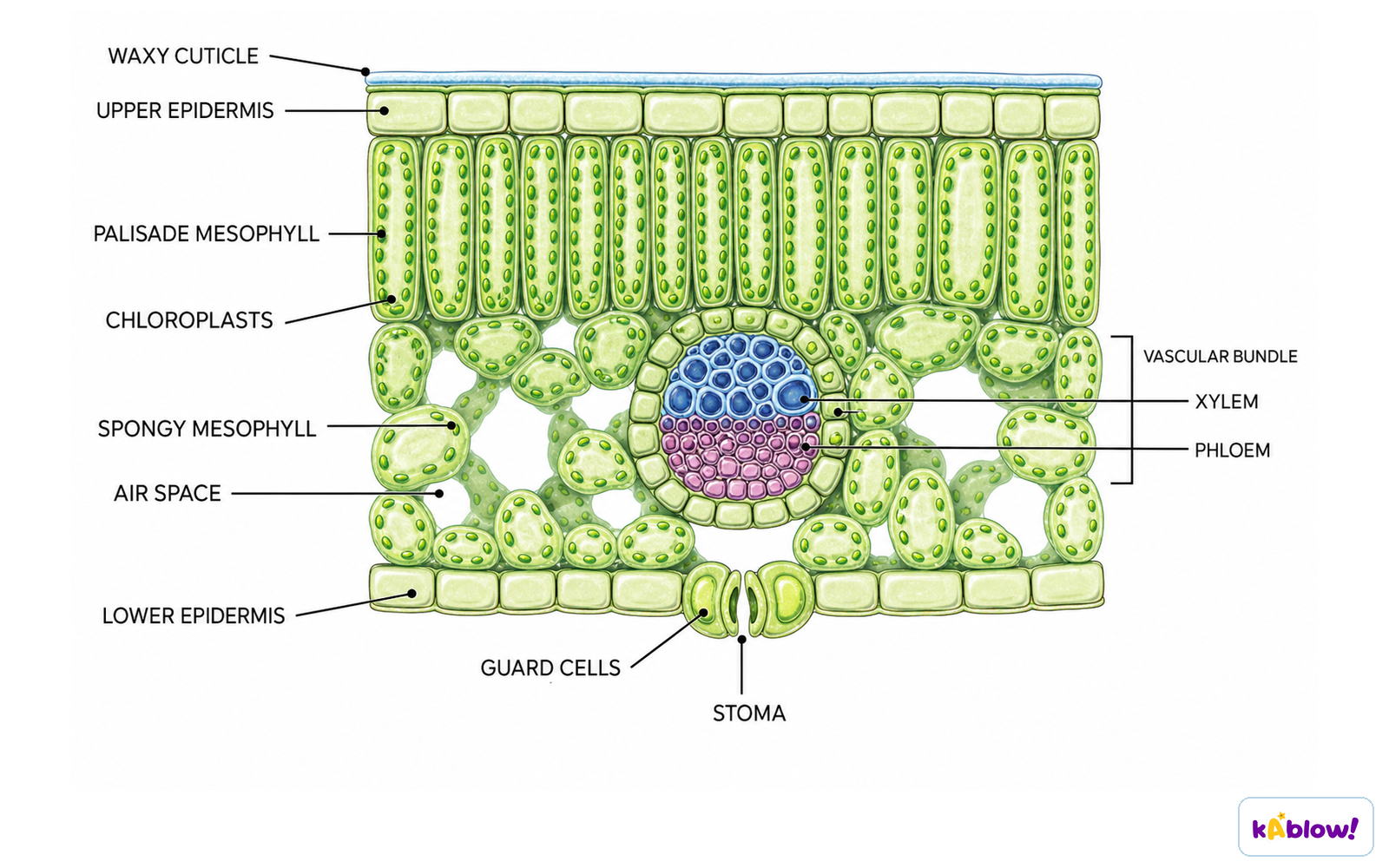
- Carbon dioxide enters the underside of a leaf through stomata.
- The spongy mesophyll layer has loosely arranged cells with air spaces.
- Air spaces allow carbon dioxide to diffuse through the leaf to palisade cells.
A dicotyledonous leaf cross-section showing epidermal layers, mesophyll, air spaces, a vascular bundle, chloroplasts and guard cells.
Factors Affecting the Rate of Photosynthesis
- The rate is affected by light intensity, carbon dioxide concentration, temperature, and water availability.
- An experiment can measure the rate using pondweed in water.
- Cover pondweed with an inverted funnel and place a water-filled test tube over it to capture oxygen.
- Count oxygen bubbles released in one minute to estimate the rate.
- Adjust variables like light intensity or temperature to observe effects.
Internal structure of a leaf showing palisade and spongy mesophyll, stomata, and air spaces.
Chloroplast structure: envelope, stroma, grana, thylakoids, lamellae, and starch grain.
ஸ்லைடுகள்
Sign up free to view the lesson slides
Step through every slide for this topic — plus flashcards and revision notes — with a free account.
பயிற்சி கேள்விகள்
இலவச முன்னோட்டம் — 54-இல் 8 கேள்விகள். அனைத்தையும் பார்க்க பதிவு செய்யவும்.
1.Photosynthesis is a chemical reaction that produces which type of sugar?
Easy- AGlucose
- BSucrose
- CFructose
- DStarch
2.Which of the following statements about photosynthesis is true?
Easy- APhotosynthesis occurs in mitochondria.
- BPhotosynthesis produces carbon dioxide and water.
- CPhotosynthesis is a chemical reaction that produces glucose.
- DPlants do not carry out respiration.
3.Where does photosynthesis occur in plant cells?
Easy- ANucleus
- BChloroplast
- CMitochondrion
- DVacuole
4.What are the products of photosynthesis?
Easy- AGlucose and oxygen
- BCarbon dioxide and water
- CGlucose and carbon dioxide
- DOxygen and water
5.Which leaf cells contain the most chloroplasts and are located near the top of the leaf?
Easy- ASpongy mesophyll cells
- BPalisade cells
- CGuard cells
- DEpidermal cells
6.What is the function of the air spaces in the spongy mesophyll layer?
Medium- AThey allow carbon dioxide to diffuse through the leaf to the palisade cells.
- BThey store water for the leaf.
- CThey provide structural support to the leaf.
- DThey absorb light for photosynthesis.
7.In an experiment using pondweed to measure the rate of photosynthesis, what is collected to estimate the rate?
Easy- ACarbon dioxide bubbles
- BOxygen bubbles
- CGlucose produced
- DChlorophyll released
8.Euglena is a unicellular organism that carries out photosynthesis. Which organelle must it contain?
Medium- AChloroplast
- BMitochondrion
- CNucleus
- DRibosome
Unlock all 54 questions, flashcards & more
இந்த தலைப்பிற்கான ஒவ்வொரு கேள்வியையும், ஸ்லைடுகளையும், ஃப்ளாஷ் கார்டுகளையும் மற்றும் திருப்புதல் குறிப்புகளையும் பார்க்க இலவச கணக்கை உருவாக்கவும்.