Pollination
விளையாடிக் கற்றுக்கொள்ளுங்கள்
ஆற்றல் சம்பாதிக்க இந்த கேள்விகளுக்குப் பதிலளியுங்கள், பின்னர் மீன் பிடித்து ஆராயுங்கள். கணக்கு தேவையில்லை.
பாட குறிப்புகள்
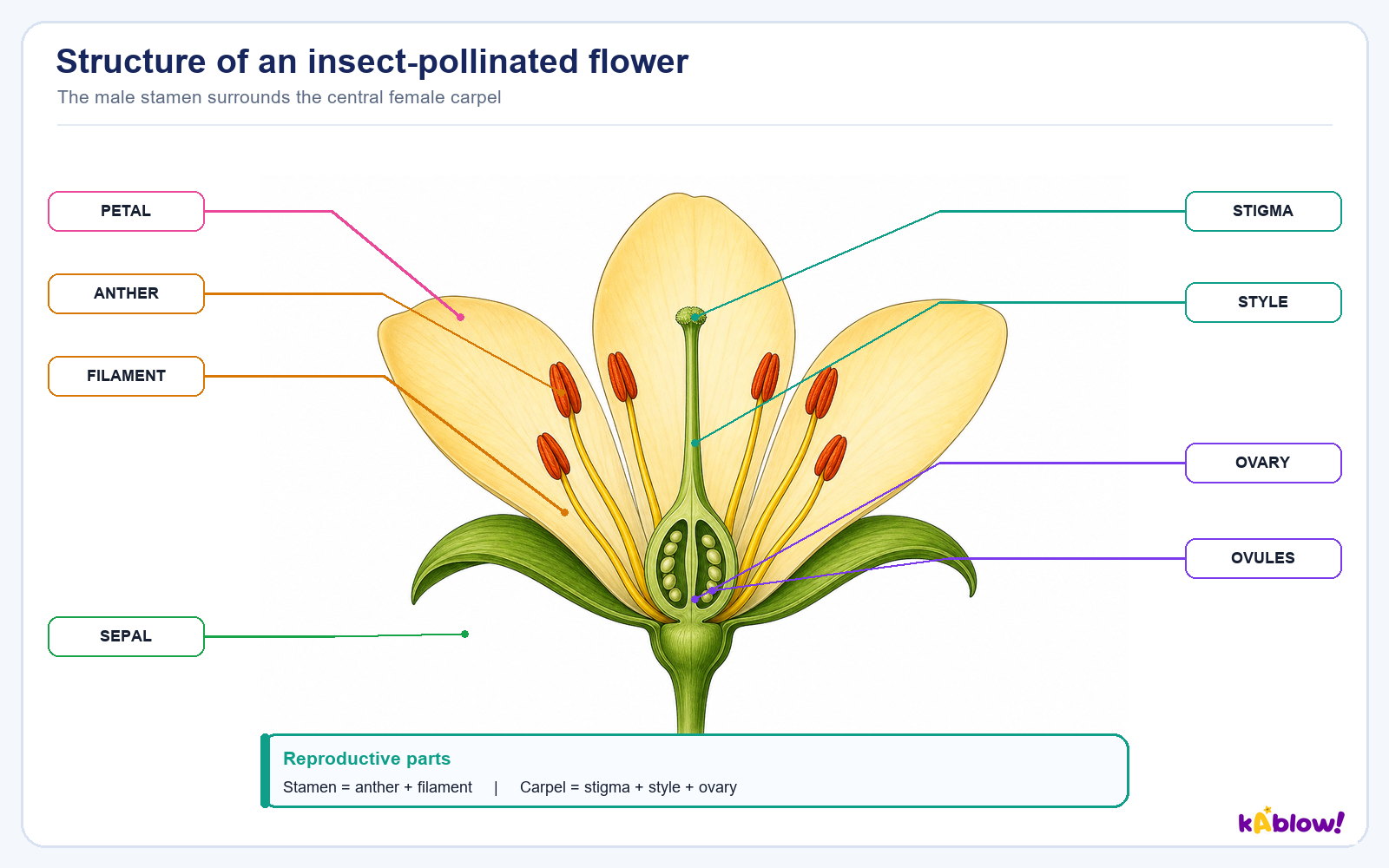
Flower Structure
- The stamen is the male reproductive part, consisting of the anther (produces pollen) and the filament (supports the anther).
- The carpel is the female reproductive part, comprising the stigma (sticky tip), style (tube), and ovary (contains ovules with female sex cells).
- Petals are often brightly coloured to attract pollinators like bees and butterflies.
- Sepals are green, leaf-like structures that protect the flower bud before it opens.
The parts of a flower, the reproductive organ of a plant.
What is Pollination?
- Pollination is the transfer of pollen from the stamen (male part) to the carpel (female part) of a flower.
- It allows plants to reproduce and produce seeds for the next generation.
- Pollen grains contain the male sex cells; they land on the stigma to enable fertilisation.
Self-Pollination
- Pollen from the anther lands on the stigma of the same flower or another flower on the same plant.
- It can occur without external pollinators.
- Leads to less genetic variation in offspring.
Cross-Pollination
- Pollen is transferred from the anther of one flower to the stigma of a flower on a different plant of the same species.
- Often requires pollinators such as insects (bees, butterflies) or wind.
- Increases genetic variation, which can improve survival.
Pollinators
- Common insect pollinators include bees and butterflies.
- Wind can also carry pollen between flowers.
- Brightly coloured petals and scent attract insect pollinators.
ஸ்லைடுகள்
Sign up free to view the lesson slides
Step through every slide for this topic — plus flashcards and revision notes — with a free account.
பயிற்சி கேள்விகள்
இலவச முன்னோட்டம் — 55-இல் 8 கேள்விகள். அனைத்தையும் பார்க்க பதிவு செய்யவும்.
1.Which part of the flower produces pollen grains?
Easy- AAnther
- BFilament
- CStigma
- DOvary
2.What is the function of the stigma?
Easy- ATo produce pollen
- BTo capture pollen
- CTo support the anther
- DTo produce ovules
3.Which of the following is the male reproductive part of a flower?
Easy- ACarpel
- BStamen
- CSepal
- DPetal
4.What is the difference between self-pollination and cross-pollination?
Medium- ASelf-pollination uses wind; cross-pollination uses insects
- BSelf-pollination transfers pollen within the same plant; cross-pollination transfers pollen to a different plant
- CSelf-pollination requires pollinators; cross-pollination does not
- DSelf-pollination produces seeds; cross-pollination does not
5.Which of the following is NOT a pollinator?
Easy- ABee
- BButterfly
- CWind
- DAnther
6.After pollination, where does the pollen grain land?
Easy- AAnther
- BFilament
- CStigma
- DOvary
7.What is the function of the filament?
Easy- ATo produce pollen
- BTo capture pollen
- CTo support the anther
- DTo connect stigma to ovary
8.Which of the following statements about pollination is correct?
Medium- APollination is the transfer of pollen from carpel to stamen
- BPollination allows fertilisation to occur
- CPollination occurs after seed formation
- DPollination only occurs in insect-pollinated plants
Unlock all 55 questions, flashcards & more
இந்த தலைப்பிற்கான ஒவ்வொரு கேள்வியையும், ஸ்லைடுகளையும், ஃப்ளாஷ் கார்டுகளையும் மற்றும் திருப்புதல் குறிப்புகளையும் பார்க்க இலவச கணக்கை உருவாக்கவும்.