Chromatography and distillation
விளையாடிக் கற்றுக்கொள்ளுங்கள்
ஆற்றல் சம்பாதிக்க இந்த கேள்விகளுக்குப் பதிலளியுங்கள், பின்னர் மீன் பிடித்து ஆராயுங்கள். கணக்கு தேவையில்லை.
பாட குறிப்புகள்
Chromatography
- Chromatography separates different substances in a mixture.
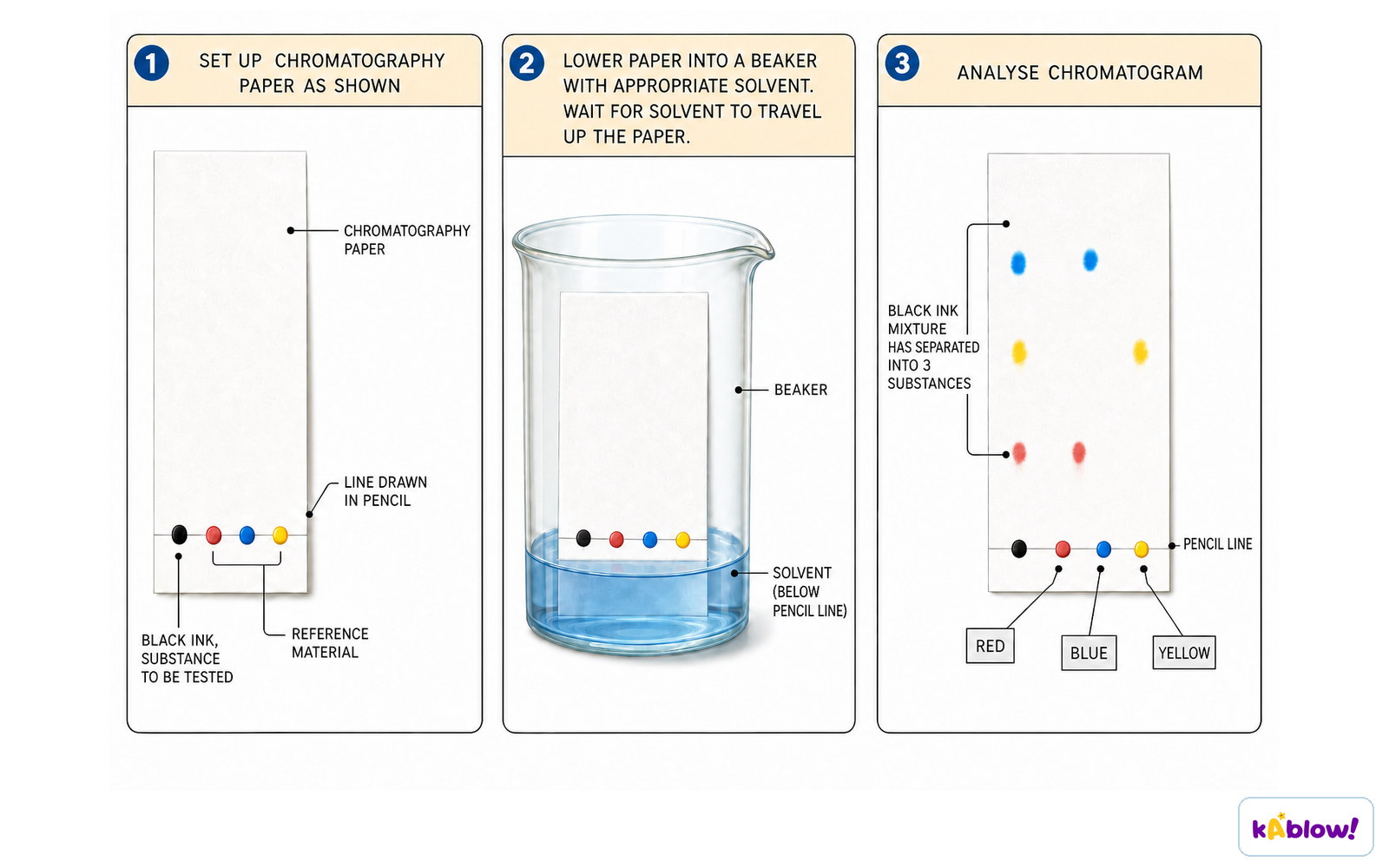
- A spot of ink is placed on chromatography paper and the paper is placed in water.
- Water rises up the paper and acts as a solvent.
- Ink is made of different dyes that are soluble in water.
- As water rises, it brings dyes up the paper; different dyes move at different rates.
- Dyes that travel the same distance up the paper are the same dye.
The three steps of a paper chromatography experiment: spotting the sample on a pencil baseline, lowering the paper into solvent below the baseline, and analysing the separated spots on the chromatogram.
Simple Distillation
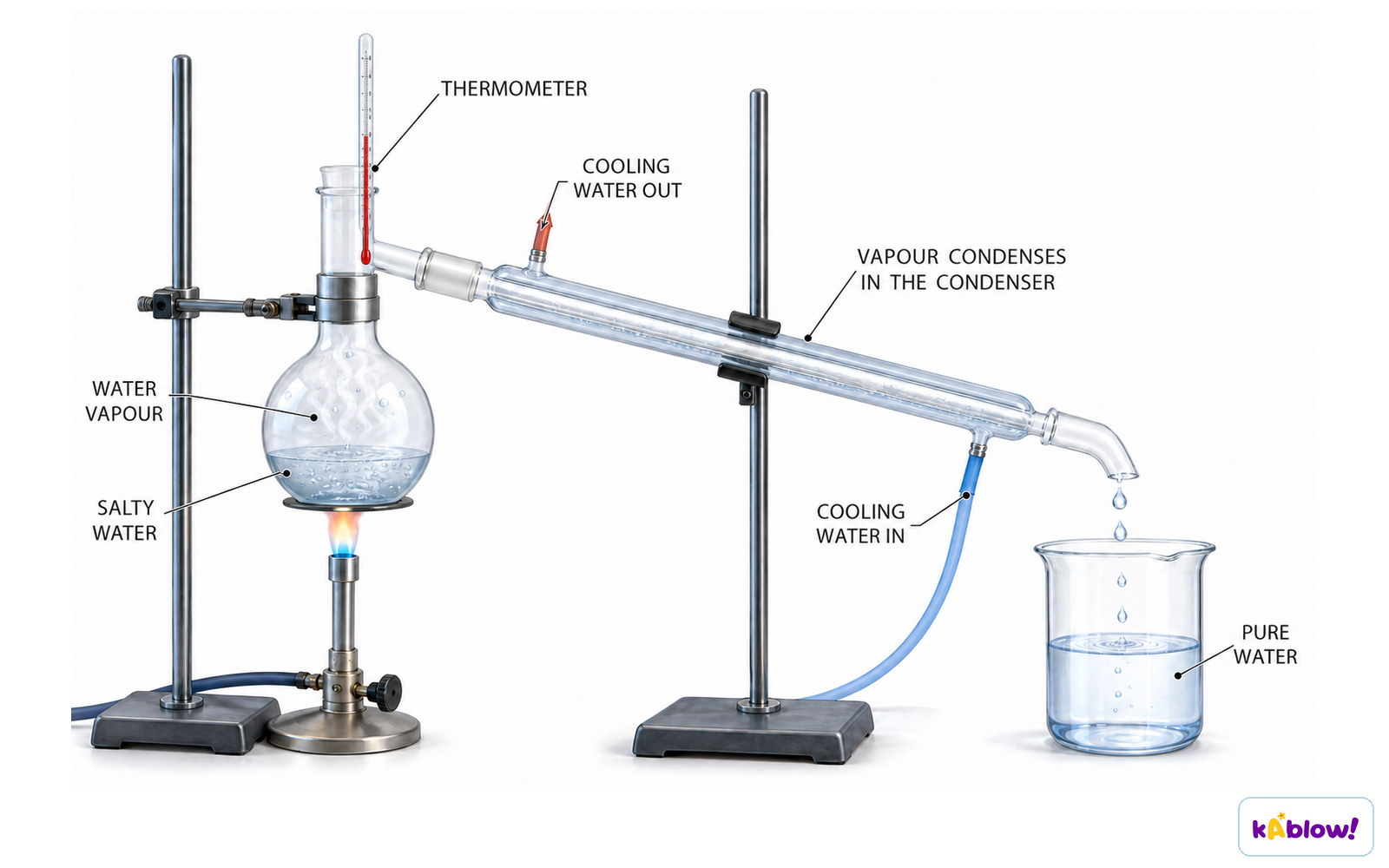
- Simple distillation separates a liquid from a dissolved solid (e.g., salt from seawater).
- A Bunsen burner heats the mixture; the liquid evaporates, leaving the solid behind.
- Vapour travels through a condenser where cooling water passes.
- The cool condenser condenses the vapour back to liquid, collected as distilled water.
- This method can also separate liquids with different boiling points.
Simple distillation of salty water: water vapour rises from the flask, passes through the condenser (cooling water in at the beaker end, out at the flask end), and is collected as pure water.
Key Terms
- Soluble: able to dissolve in a solvent.
- Solvent: a liquid that dissolves a substance (e.g., water in chromatography).
- Evaporation: change from liquid to gas.
- Condensation: change from gas to liquid.
Common Misconceptions
- In chromatography, ink is not the solvent; water is the solvent.
- Chromatography separates mixtures, not elements in a compound.
- Salt cannot be filtered from seawater because salt dissolves; distillation is needed.
Application: Separating Liquids
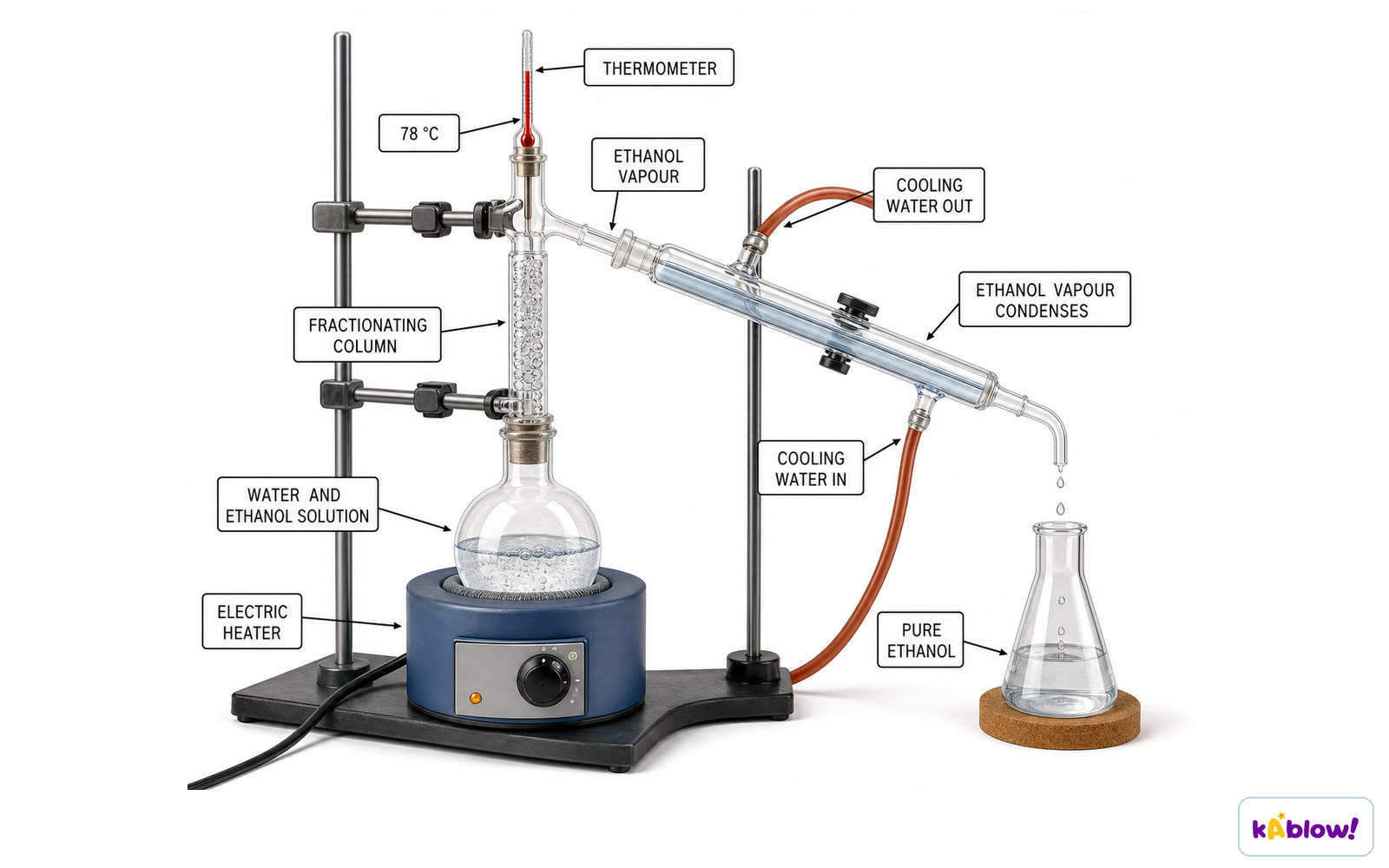
- If two liquids have different boiling points, the one with the lower boiling point evaporates first.
- Example: Liquid A (boiling point 100°C) will evaporate before Liquid B (300°C).
Fractional distillation of a water/ethanol mixture: the fractionating column allows repeated condensation and evaporation so the lower-boiling ethanol distils off first.
States of matter: solid, liquid, gas. Evaporation (liquid to gas) and condensation (gas to liquid) are key in distillation.
ஸ்லைடுகள்
Sign up free to view the lesson slides
Step through every slide for this topic — plus flashcards and revision notes — with a free account.
பயிற்சி கேள்விகள்
இலவச முன்னோட்டம் — 59-இல் 8 கேள்விகள். அனைத்தையும் பார்க்க பதிவு செய்யவும்.
1.In chromatography, what is the solvent?
Easy- AWater
- BInk
- CDye
- DPaper
2.Which statement about chromatography is correct?
Easy- ADyes are soluble in the solvent.
- BThe solvent is the ink.
- CChromatography separates compounds into elements.
- DAll dyes move at the same rate.
3.What is the name of the state change from gas to liquid?
Easy- ACondensation
- BEvaporation
- CBoiling
- DMelting
4.What is the name of the state change from liquid to gas?
Easy- AEvaporation
- BCondensation
- CFreezing
- DSublimation
5.In simple distillation of seawater, what is left behind in the flask?
Easy- ASalt
- BPure water
- CWater vapour
- DCondensed water
6.During simple distillation, what is the purpose of the cooling water in the condenser?
Easy- ATo condense the vapour into liquid
- BTo evaporate the liquid
- CTo heat the vapour
- DTo dissolve the salt
7.A mixture of two liquids is distilled. Liquid A boils at 100°C, liquid B at 300°C. Which liquid is collected first?
Easy- ALiquid A
- BLiquid B
- CBoth together
- DNeither
8.Why can't salt be removed from seawater by filtration?
Easy- ASalt particles are too small to be trapped by filter paper
- BSalt is insoluble in water
- CFilter paper dissolves in seawater
- DFiltration only works for gases
Unlock all 59 questions, flashcards & more
இந்த தலைப்பிற்கான ஒவ்வொரு கேள்வியையும், ஸ்லைடுகளையும், ஃப்ளாஷ் கார்டுகளையும் மற்றும் திருப்புதல் குறிப்புகளையும் பார்க்க இலவச கணக்கை உருவாக்கவும்.