The atom
விளையாடிக் கற்றுக்கொள்ளுங்கள்
ஆற்றல் சம்பாதிக்க இந்த கேள்விகளுக்குப் பதிலளியுங்கள், பின்னர் மீன் பிடித்து ஆராயுங்கள். கணக்கு தேவையில்லை.
பாட குறிப்புகள்
Scientific Models
- A scientific model is a simplified version of an object or phenomenon, making it easier to understand while still representing key features.
- The particle model is one example; it explains and predicts the behaviour of solids, liquids and gases.
- Models are changed and updated over time as new evidence emerges.
Dalton Model of the Atom
- The Dalton model described atoms as indivisible – they could not be broken down into anything smaller.
- This was the earlier model before sub-atomic particles were discovered.
Current Model of the Atom
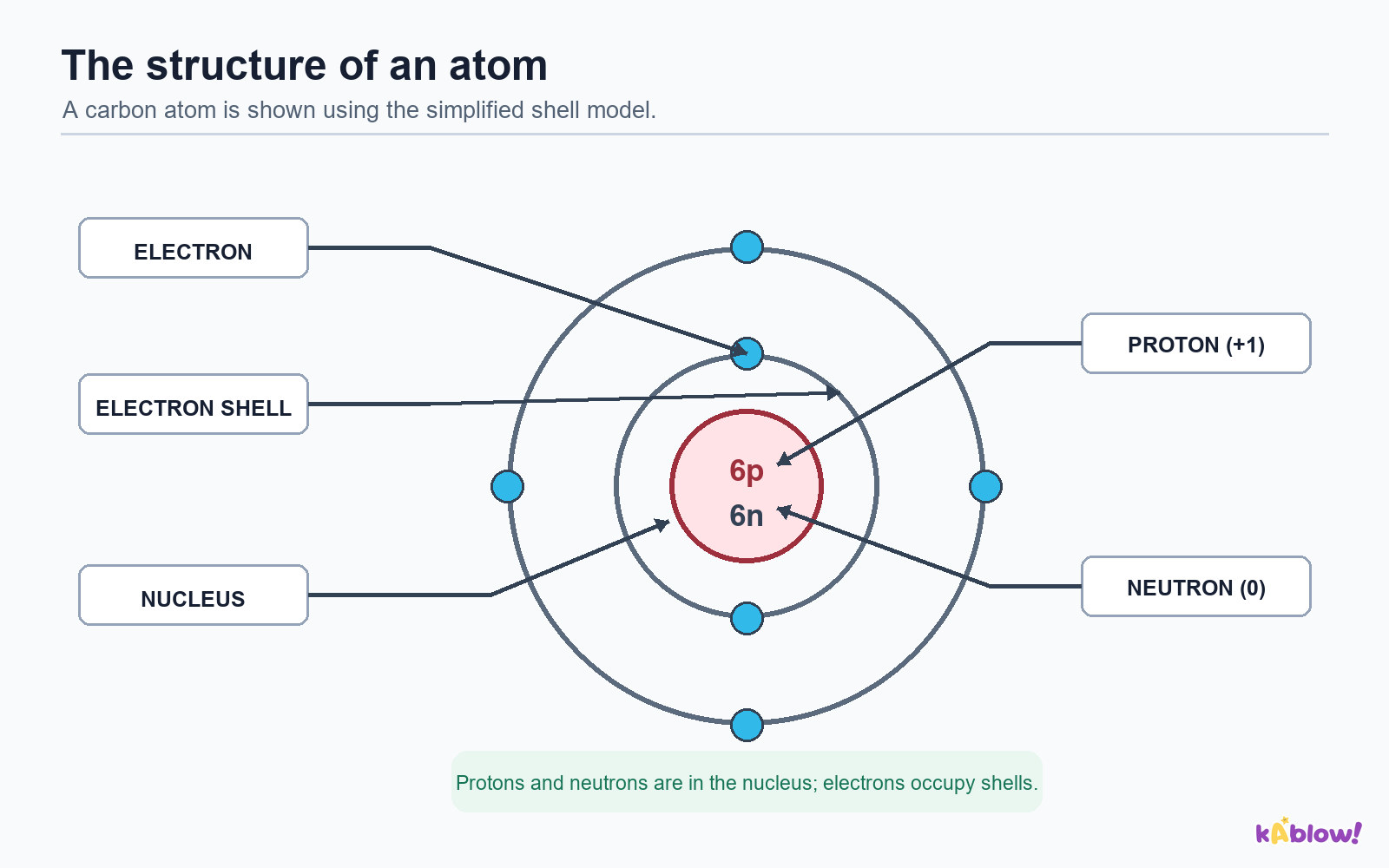
- The atom is made of three sub-atomic particles: protons, neutrons and electrons.
- Protons have a positive charge and are found in the nucleus.
- Neutrons are neutral (no charge) and also in the nucleus.
- Electrons have a negative charge and orbit around the nucleus.
- Most of the atom's mass is in the nucleus; protons and neutrons have about 2000 times more mass than an electron.
- Overall, an atom is neutral because it has equal numbers of protons and electrons.
Protons and neutrons in the nucleus; electrons orbiting in shells.
Peer Review
- Peer review is when other scientists examine new evidence to decide if it is valid.
- It prevents incorrect models and theories from being spread.
- After peer review, research can be published and other scientists may try to reproduce the results to check repeatability.
Bohr model of a sodium atom showing the nucleus (11 protons, 12 neutrons) and electron shells (2,8,1).
Particle arrangement in solids, liquids and gases.
ஸ்லைடுகள்
Sign up free to view the lesson slides
Step through every slide for this topic — plus flashcards and revision notes — with a free account.
பயிற்சி கேள்விகள்
இலவச முன்னோட்டம் — 40-இல் 8 கேள்விகள். அனைத்தையும் பார்க்க பதிவு செய்யவும்.
1.What is the Dalton model of the atom?
Easy- AAtoms are indivisible and cannot be broken down into anything smaller.
- BAtoms are made of protons, neutrons and electrons.
- CAtoms have a nucleus with electrons orbiting.
- DAtoms are mostly empty space.
2.Where is the nucleus of an atom located?
Easy- AIn the centre of the atom.
- BOrbiting the atom.
- COutside the electron shells.
- DScattered throughout the atom.
3.Which two sub-atomic particles are found in the nucleus?
Easy- AProtons and neutrons.
- BProtons and electrons.
- CNeutrons and electrons.
- DProtons, neutrons and electrons.
4.Which sub-atomic particle orbits around the nucleus?
Easy- AElectron
- BProton
- CNeutron
- DPositron
5.What is the charge on a proton?
Easy- APositive
- BNegative
- CNeutral
- DNo charge
6.What is the charge on an electron?
Easy- ANegative
- BPositive
- CNeutral
- DNo charge
7.What is the charge on a neutron?
Easy- ANeutral
- BPositive
- CNegative
- DNo charge
8.Which sub-atomic particle has the least mass?
Easy- AElectron
- BProton
- CNeutron
- DNucleus
Unlock all 40 questions, flashcards & more
இந்த தலைப்பிற்கான ஒவ்வொரு கேள்வியையும், ஸ்லைடுகளையும், ஃப்ளாஷ் கார்டுகளையும் மற்றும் திருப்புதல் குறிப்புகளையும் பார்க்க இலவச கணக்கை உருவாக்கவும்.