Introduction to static electricity
விளையாடிக் கற்றுக்கொள்ளுங்கள்
ஆற்றல் சம்பாதிக்க இந்த கேள்விகளுக்குப் பதிலளியுங்கள், பின்னர் மீன் பிடித்து ஆராயுங்கள். கணக்கு தேவையில்லை.
பாட குறிப்புகள்
Atomic Structure and Charge
- All matter is made of atoms and molecules.
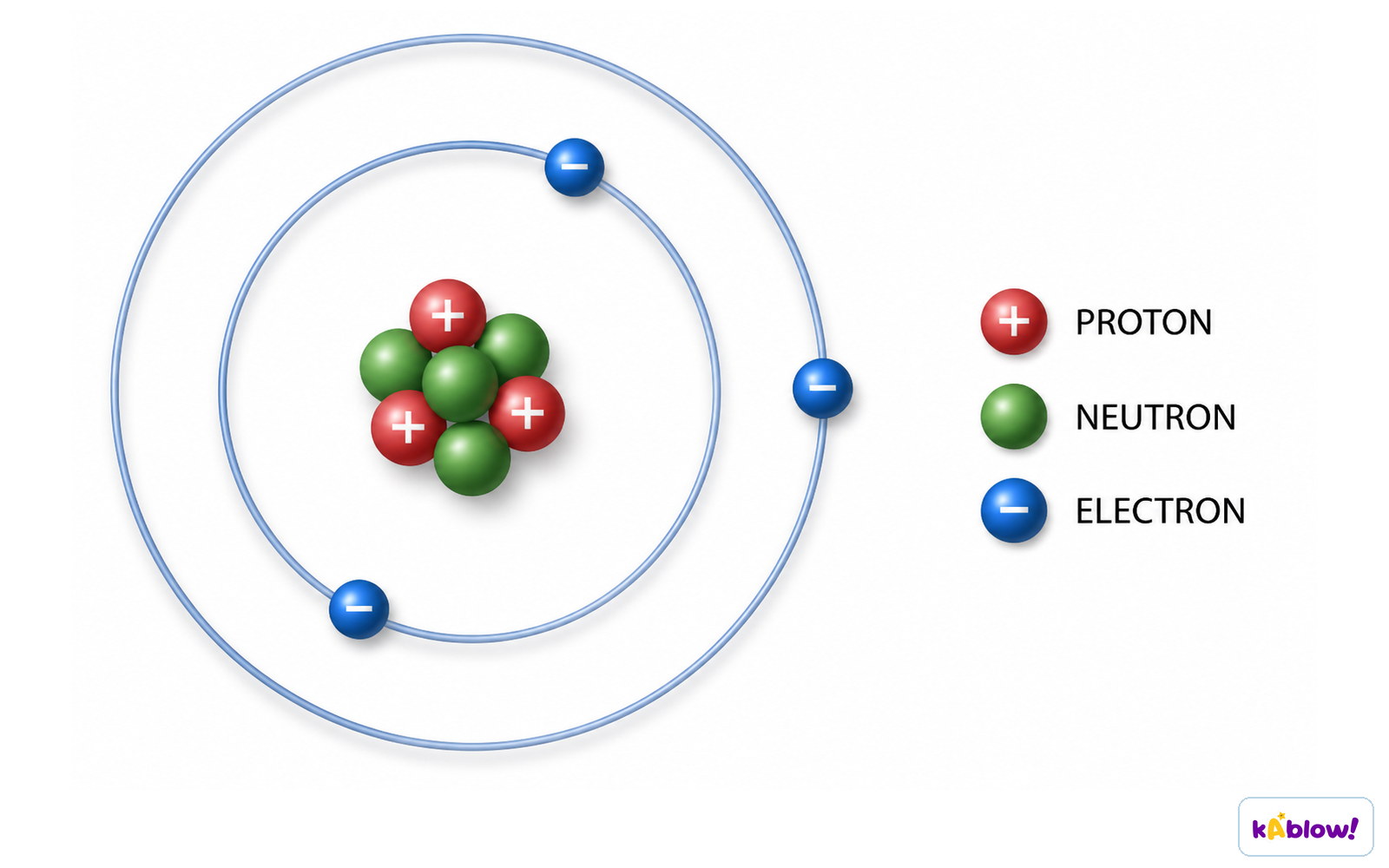
- Atoms have a nucleus containing protons (positive) and neutrons (neutral).
- Electrons (negative) orbit the nucleus.
- Atoms are neutral because they have equal numbers of protons and electrons.
- If an atom loses or gains an electron, it becomes an ion (charged atom).
- Losing an electron gives a positive ion; gaining an electron gives a negative ion.
A neutral atom: protons and neutrons in the nucleus, with electrons in shells around it.
How Objects Gain Static Charge
- Static charge builds up when two objects rub against each other (friction).
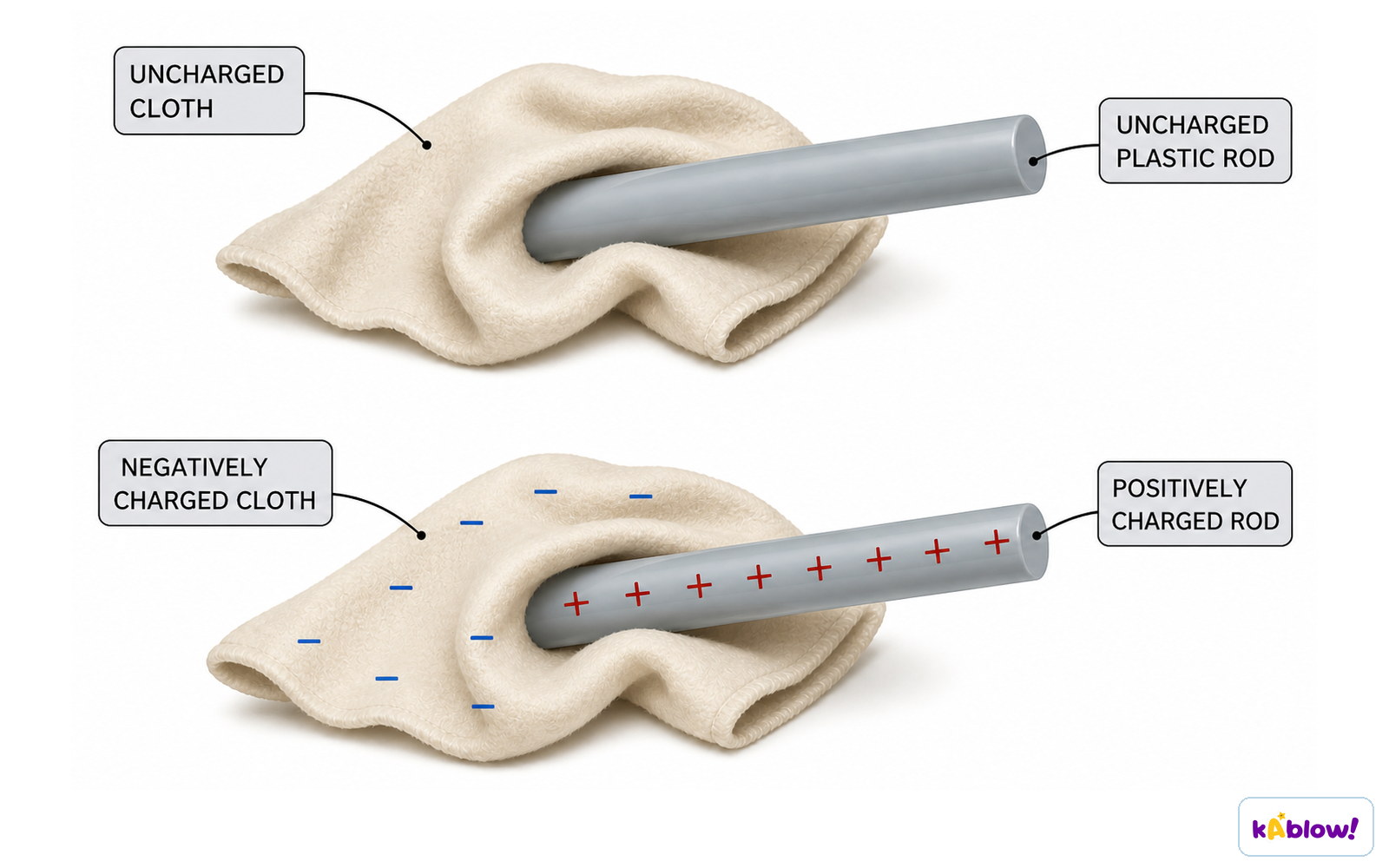
- Friction causes electrons to transfer from one object to the other.
- The object that loses electrons becomes positively charged.
- The object that gains electrons becomes negatively charged.
- Only electrons move; protons stay in the nucleus.
Rubbing transfers electrons: the cloth becomes negatively charged and the plastic rod positively charged.
Electrostatic Forces
- Charged objects exert electrostatic forces on each other.
- These forces are non-contact (they act without touching).
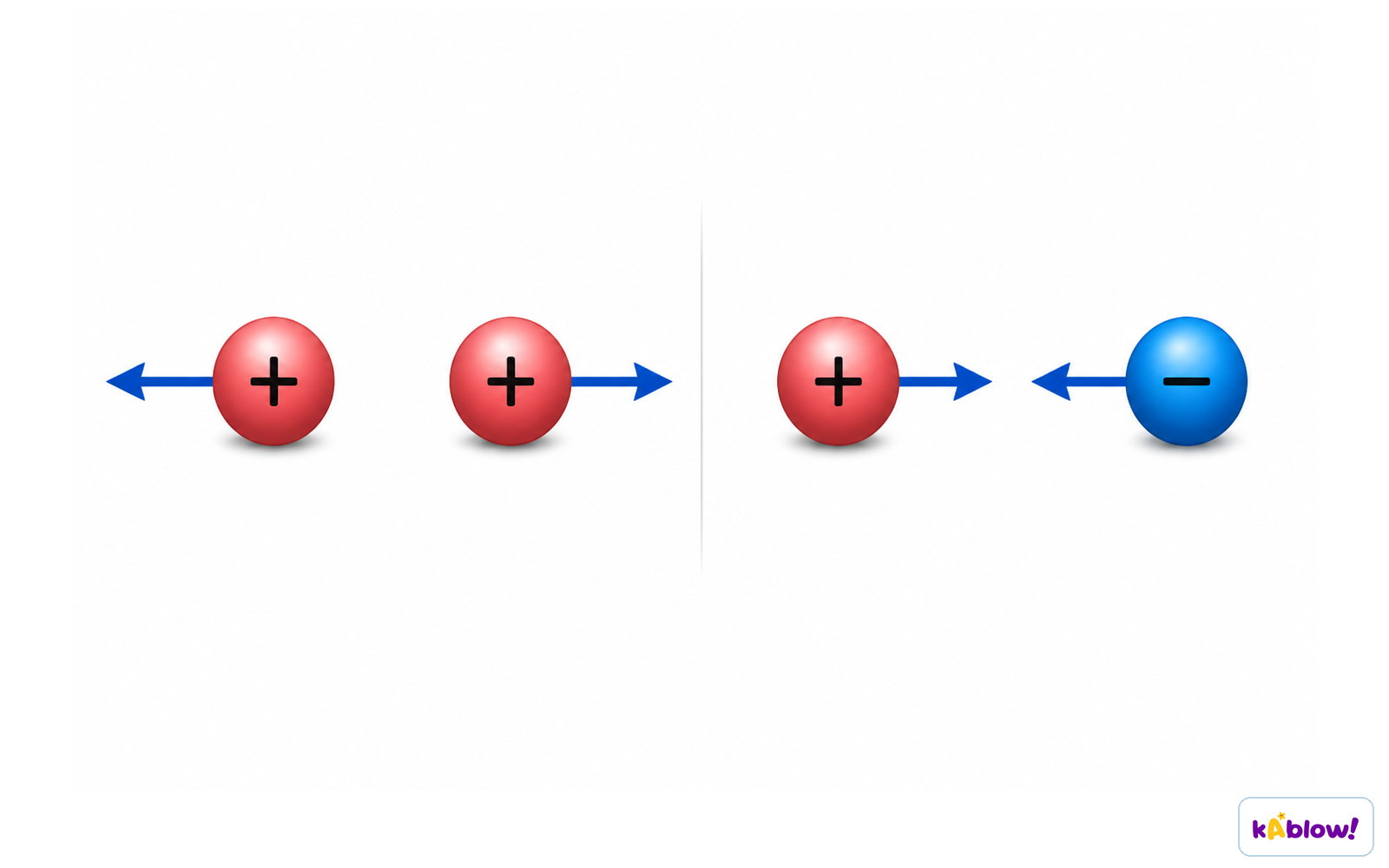
- Like charges repel (positive-positive or negative-negative).
- Unlike charges attract (positive-negative).
Like charges repel each other; opposite charges attract.
Examples of Static Electricity
- Rubbing a balloon on hair transfers electrons from hair to balloon.
- The balloon becomes negatively charged; the hair becomes positively charged.
- The balloon then attracts the hair because opposite charges attract.
- Two negatively charged balloons repel each other.
- A Van de Graaff generator builds up a large static charge.
- If a person touches it (insulated), their hairs gain the same charge and repel, standing on end.
Bohr model of a sodium atom showing nucleus (protons and neutrons) and electron shells.
Particle arrangement in solids, liquids, and gases.
ஸ்லைடுகள்
Sign up free to view the lesson slides
Step through every slide for this topic — plus flashcards and revision notes — with a free account.
பயிற்சி கேள்விகள்
இலவச முன்னோட்டம் — 59-இல் 8 கேள்விகள். அனைத்தையும் பார்க்க பதிவு செய்யவும்.
1.What are the two particles that make up the nucleus of an atom?
Easy- AProtons and neutrons
- BProtons and electrons
- CNeutrons and electrons
- DProtons, neutrons, and electrons
2.Which particle orbits around the nucleus and has a negative charge?
Easy- AProton
- BNeutron
- CElectron
- DIon
3.Are electrostatic forces contact or non-contact forces?
Easy- AContact forces
- BNon-contact forces
- CBoth contact and non-contact
- DNeither
4.What is the name for an atom that has lost or gained an electron?
Easy- AIsotope
- BMolecule
- CIon
- DProton
5.Why do atoms usually have no overall charge?
Easy- AThey have equal numbers of protons and electrons
- BThey have equal numbers of protons and neutrons
- CThey have more protons than electrons
- DThey have more electrons than protons
6.Which statement is true?
Easy- AA positive charge attracts a negative charge
- BA positive charge attracts a positive charge
- CA negative charge attracts a negative charge
- DLike charges attract
7.Which statement is true about electrostatic charging?
Easy- AProtons are transferred from one object to another
- BElectrons are transferred from one object to another
- CNeutrons are transferred from one object to another
- DBoth protons and electrons are transferred
8.A balloon is rubbed against a jumper and becomes negatively charged. What charge does the jumper become?
Medium- ANegative
- BPositive
- CNeutral
- DIt depends on the material
Unlock all 59 questions, flashcards & more
இந்த தலைப்பிற்கான ஒவ்வொரு கேள்வியையும், ஸ்லைடுகளையும், ஃப்ளாஷ் கார்டுகளையும் மற்றும் திருப்புதல் குறிப்புகளையும் பார்க்க இலவச கணக்கை உருவாக்கவும்.