The rock cycle and Earth's materials
விளையாடிக் கற்றுக்கொள்ளுங்கள்
ஆற்றல் சம்பாதிக்க இந்த கேள்விகளுக்குப் பதிலளியுங்கள், பின்னர் மீன் பிடித்து ஆராயுங்கள். கணக்கு தேவையில்லை.
பாட குறிப்புகள்
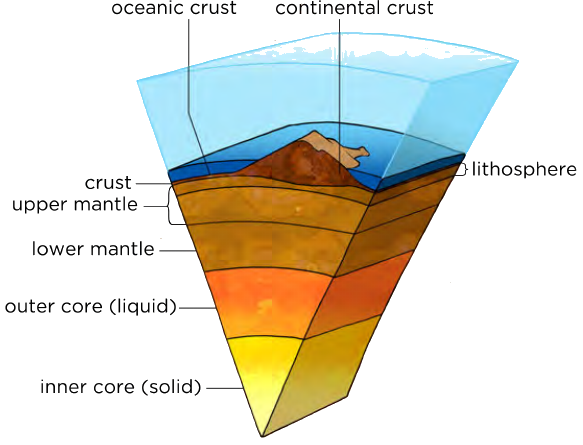
Earth's Layers and the Lithosphere
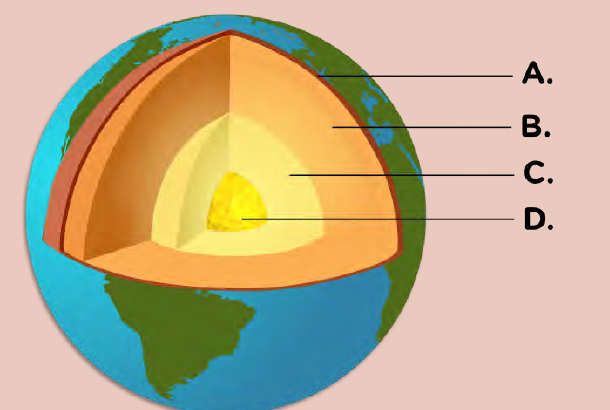
- The Earth is made up of concentric layers: crust, mantle, and core.
- The lithosphere consists of the crust and the brittle upper part of the mantle.
- The crust has two types: continental crust (under continents) and oceanic crust (under oceans).
- The core has an inner core (solid) and an outer core (liquid).
- The mantle is divided into lower mantle and upper mantle.
- The lithosphere, mantle, and core together are called the geosphere.
Cross-section of Earth's layers: crust, mantle, and core, showing oceanic and continental crust, the lithosphere, upper and lower mantle, the liquid outer core, and the solid inner core.
The Rock Cycle: Overview
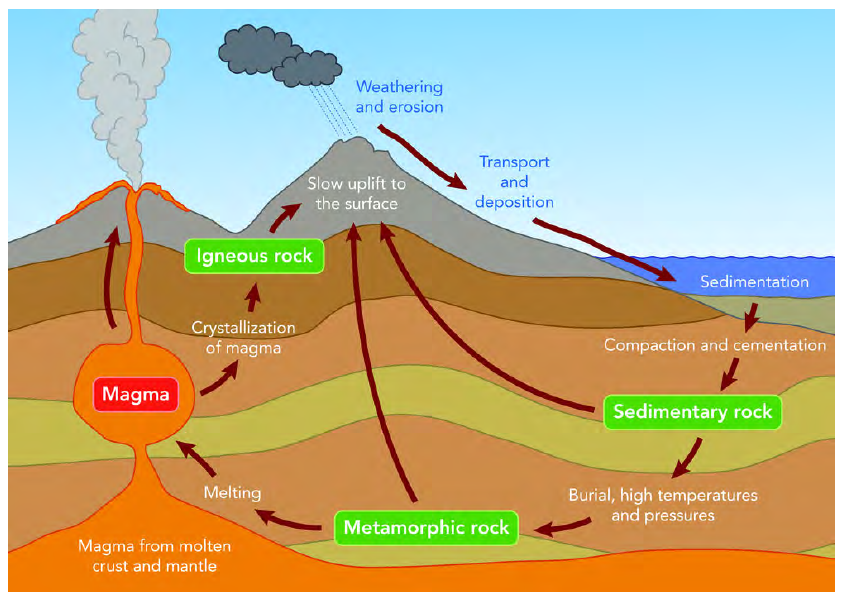
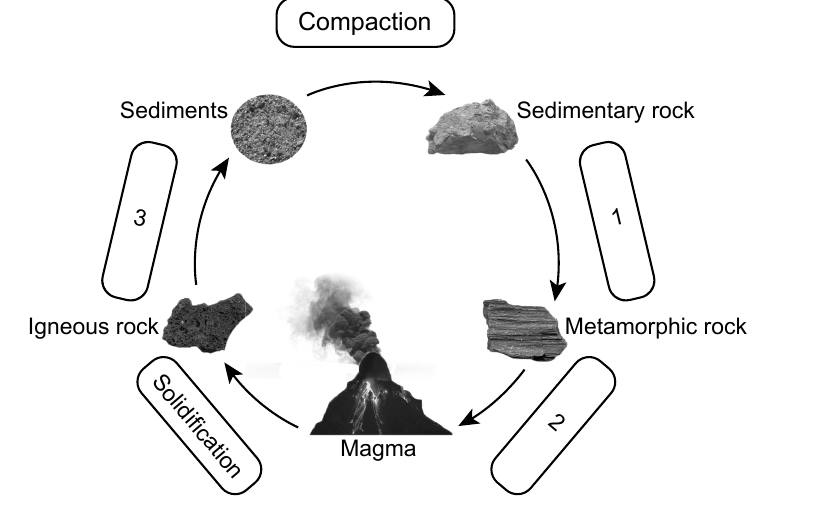
- The rock cycle is a continuous process where rocks form, break down, and re-form over long periods.
- Rocks are classified into three types: igneous, sedimentary, and metamorphic.
- The cycle involves processes like weathering, erosion, deposition, compaction, cementation, melting, and cooling.
- Energy for the rock cycle comes from the sun (surface processes) and Earth's interior (heat and pressure).
- Not all rock on Earth is recycled; thousands of tons of rock fall from space each year.
The rock cycle: magma cools to form igneous rock; weathering, erosion and deposition form sediment that compacts into sedimentary rock; heat and pressure form metamorphic rock; melting returns rock to magma.
Formation of Sedimentary Rocks
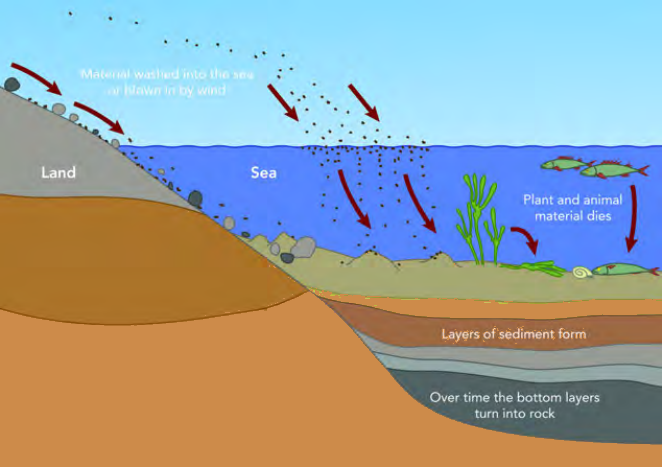
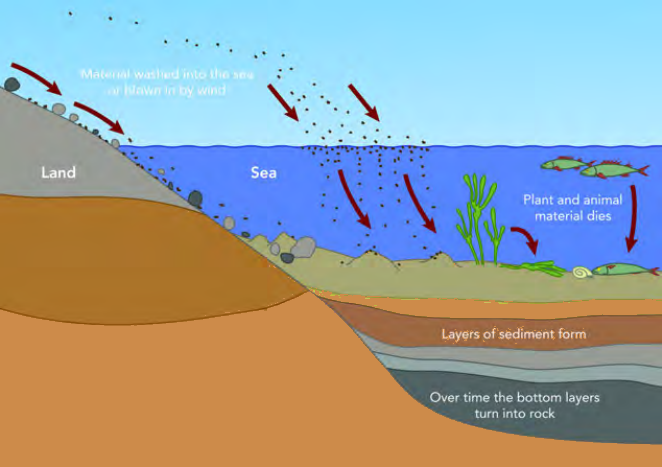
- Sedimentary rocks form from sediments – particles of pre-existing rocks or once-living organisms.
- Weathering breaks down rocks into smaller pieces via wind, water, heat, and cold.
- Erosion transports sediments and deposits them in oceans, lakes, and rivers (deposition).
- Layers of sediment accumulate, and compaction from overlying layers squeezes them together.
- Cementation binds sediments with minerals to form solid rock.
- Examples include sandstone, limestone, dolomite, coal, shale, and conglomerate.
- Fossils are often found in sedimentary rocks because organisms get buried in sediment and preserved.
Formation of sedimentary rocks from land and organic material
Formation of Metamorphic Rocks
- Metamorphic rocks form when existing rocks (igneous or sedimentary) are exposed to high heat and pressure deep underground.
- They do not melt completely; instead, minerals change and crystals are squashed, altering the rock's texture and composition.
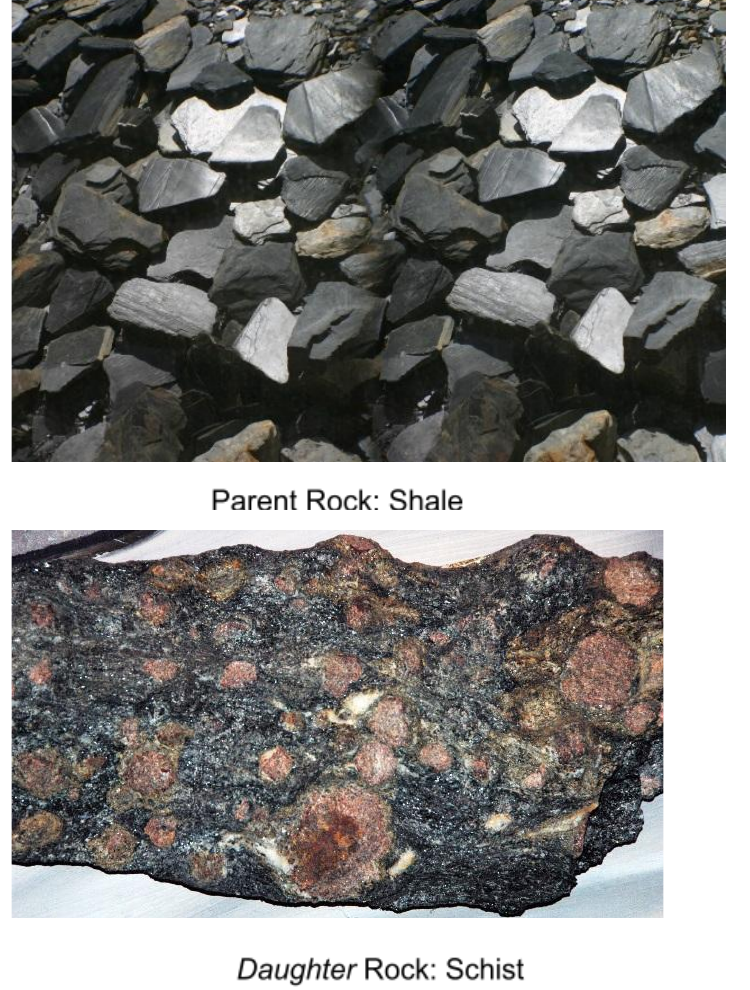
- The original rock is called the parent rock; the new rock is the daughter rock.
- Examples include slate (from shale), marble (from limestone), soapstone, and quartzite (from sandstone).
- Metamorphic rock can be exposed at the surface when overlying layers are eroded away.
Parent rock and daughter rock: shale (a sedimentary rock) metamorphoses into schist under heat and pressure.
Formation of Igneous Rocks
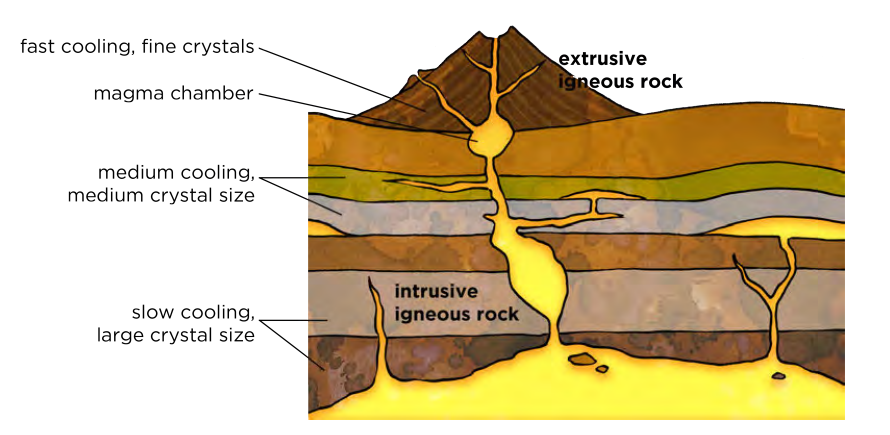
- Igneous rocks form when magma (molten rock underground) or lava (magma on the surface) cools and solidifies.
- Intrusive igneous rocks cool slowly beneath the surface, forming large crystals (e.g., granite).
- Extrusive igneous rocks cool quickly on the surface, forming small crystals or glassy textures (e.g., basalt, pumice).
- The amount of trapped gas affects rock texture; rapid cooling traps gas, creating holes (e.g., pumice).
- Examples include basalt (most common, oceanic crust), granite, and pumice.
Intrusive igneous rock cools slowly underground into large crystals; extrusive igneous rock cools quickly at the surface into fine crystals.
Key Processes in the Rock Cycle
- Weathering: breakdown of rocks by wind, water, heat, and cold.
- Erosion: transport of weathered materials by wind, water, ice, or gravity.
- Deposition: settling of sediments in new locations.
- Compaction: squeezing of sediments under pressure.
- Cementation: binding of sediments by minerals to form solid rock.
- Melting: transformation of rock into magma under high temperatures.
- Cooling and crystallization: formation of igneous rocks from magma/lava.
Minerals in Rocks
- Rocks are made of minerals – naturally occurring solid substances with a regular crystal structure.
- Common minerals include quartz and feldspar, the two most abundant minerals in Earth's crust.
- Different combinations of minerals create different rock types.
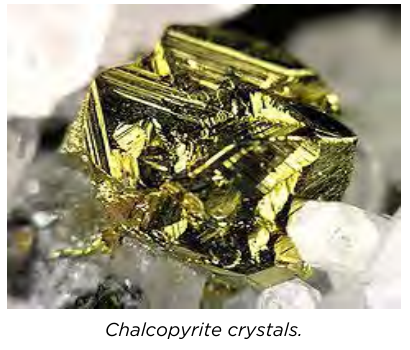
- Minerals are important resources; for example, copper is extracted from ore minerals like chalcocite and chalcopyrite.
- Iron combines with oxygen to form haematite, an important iron ore often found in sedimentary rocks.
Chalcopyrite crystals, a copper-bearing mineral found in rock.
Energy Flow and Matter Cycling
- The rock cycle illustrates the relationship between energy flow and matter cycling.
- Solar energy drives surface processes like weathering and erosion.
- Earth's internal heat drives processes like melting and metamorphism.
- Rocks continuously change from one type to another through these energy-driven processes.
ஸ்லைடுகள்
Sign up free to view the lesson slides
Step through every slide for this topic — plus flashcards and revision notes — with a free account.
பயிற்சி கேள்விகள்
இலவச முன்னோட்டம் — 45-இல் 8 கேள்விகள். அனைத்தையும் பார்க்க பதிவு செய்யவும்.
1.Which of the following is NOT one of the three main types of rocks?
Easy- ASedimentary
- BMetamorphic
- CIgneous
- DMinerals
2.Which type of rock is formed from the cooling and solidification of magma or lava?
Easy- ASedimentary
- BMetamorphic
- CIgneous
- DMinerals
3.Which of the following processes is responsible for turning sediments into sedimentary rock?
Easy- AMelting and cooling
- BHeat and pressure
- CCompaction and cementation
- DWeathering and erosion
4.What conditions are necessary for metamorphic rock to form?
Easy- AHigh temperature and pressure
- BCooling of magma
- CCompaction of sediments
- DWeathering and erosion
5.Which of the following is an example of an igneous rock that forms from lava cooling quickly on the Earth's surface?
Medium- AGranite
- BBasalt
- CMarble
- DSlate
6.Which rock type is most likely to contain fossils?
Medium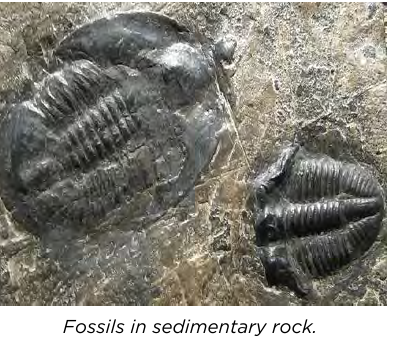
- AIgneous
- BMetamorphic
- CSedimentary
- DAll rock types
7.Magma is molten rock found on the Earth's surface.
EasyTrue or false?
8.Match each rock type with its formation process.
Medium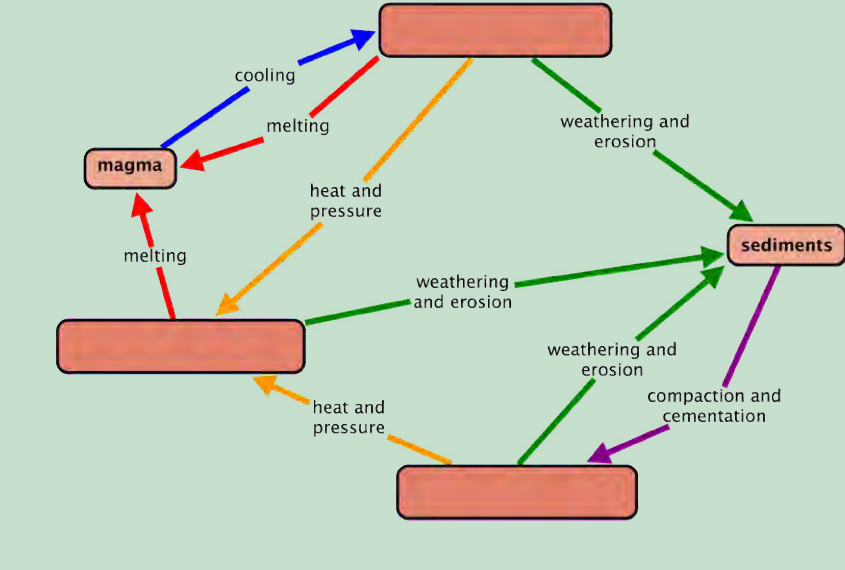
- Igneous
- Sedimentary
- Metamorphic
- Cooling of magma
- Compaction of sediments
- Heat and pressure
Unlock all 45 questions, flashcards & more
இந்த தலைப்பிற்கான ஒவ்வொரு கேள்வியையும், ஸ்லைடுகளையும், ஃப்ளாஷ் கார்டுகளையும் மற்றும் திருப்புதல் குறிப்புகளையும் பார்க்க இலவச கணக்கை உருவாக்கவும்.