Monoclonal antibodies
Học bằng cách chơi
Trả lời những câu hỏi này để kiếm năng lượng, rồi câu cá và khám phá. Không cần tài khoản.
Ghi chú bài học
What Monoclonal Antibodies Are
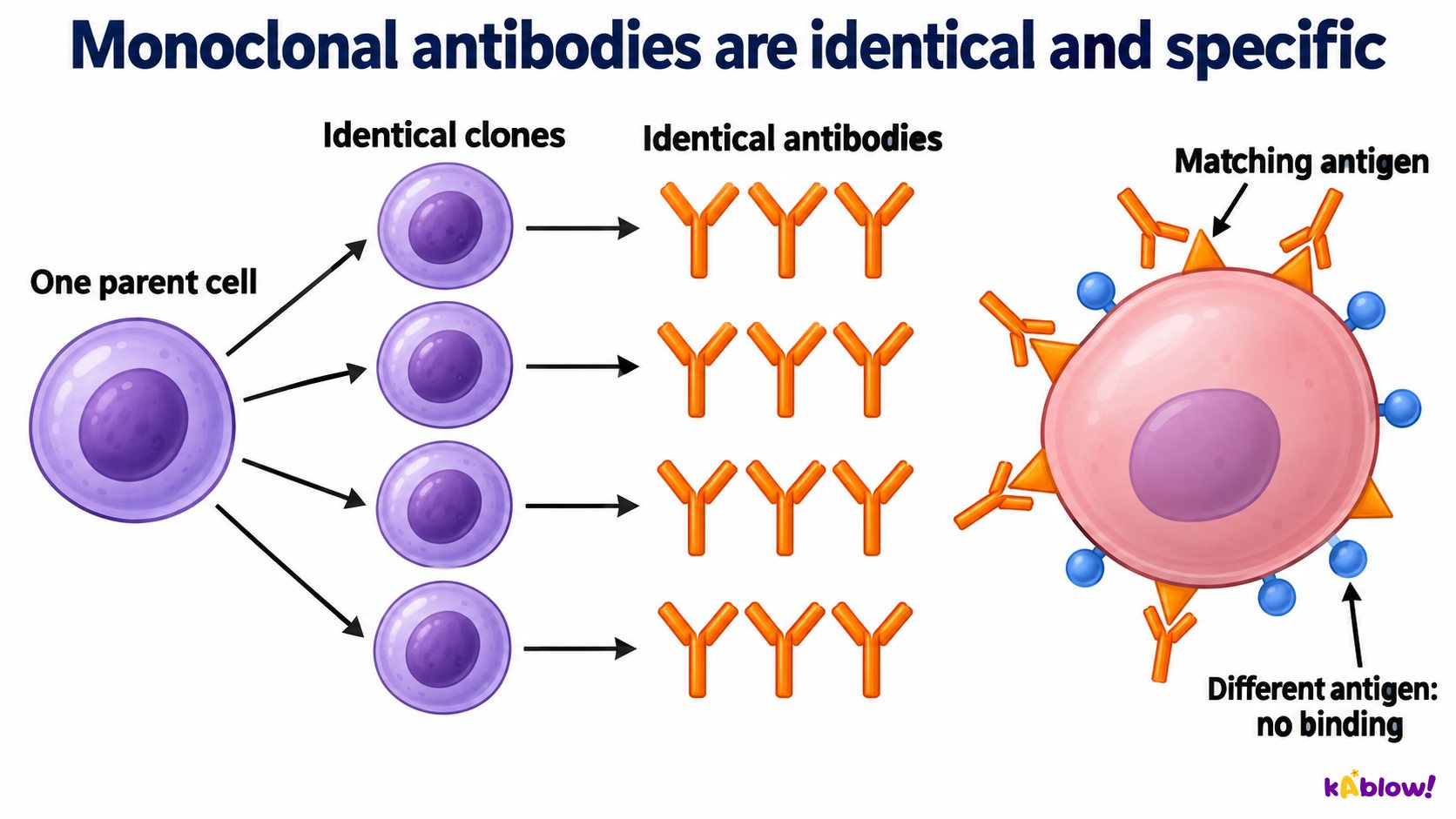
- Monoclonal antibodies are antibodies produced by identical immune cells that are all clones of a single parent cell.
- Antibodies are Y-shaped proteins made by lymphocytes (a type of white blood cell).
- Each antibody is specific to one binding site on one protein antigen, so it can target one specific chemical or specific cell in the body.
- Because they come from one clone, every antibody produced is identical and binds the same target — hence 'monoclonal'.
Monoclonal antibodies are identical and specific
Producing Monoclonal Antibodies
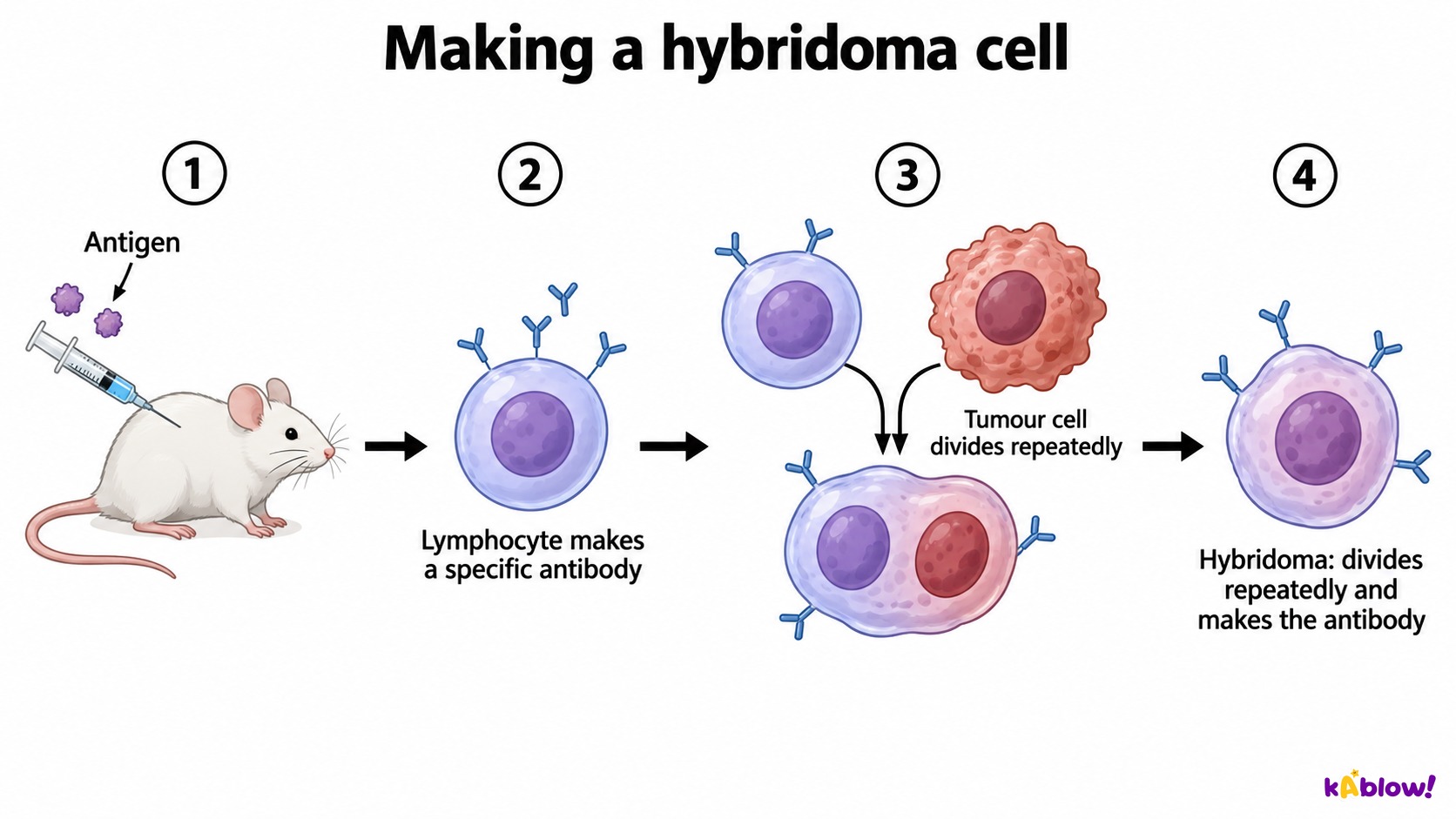
- A mouse is injected with the antigen, which stimulates its lymphocytes to make a particular antibody.
- Lymphocytes that make the wanted antibody are collected and combined with a tumour cell.
- The fused cell is called a hybridoma cell.
- The tumour cell is used because it can divide repeatedly.
- The lymphocyte provides the ability to make the specific antibody.
- The hybridoma cell can therefore both divide and produce the antibody — a white blood cell alone could not keep dividing to make enough antibody.
- Single hybridoma cells are cloned, producing many identical cells that all make the same antibody.
- Large amounts of the antibody are then collected and purified ready for use.
Making a hybridoma cell
Uses of Monoclonal Antibodies
- In pregnancy tests, to detect the hormone HCG in urine.
- In laboratories to measure levels of hormones and other chemicals in blood, such as some cancer proteins.
- To detect pathogens in laboratory tests.
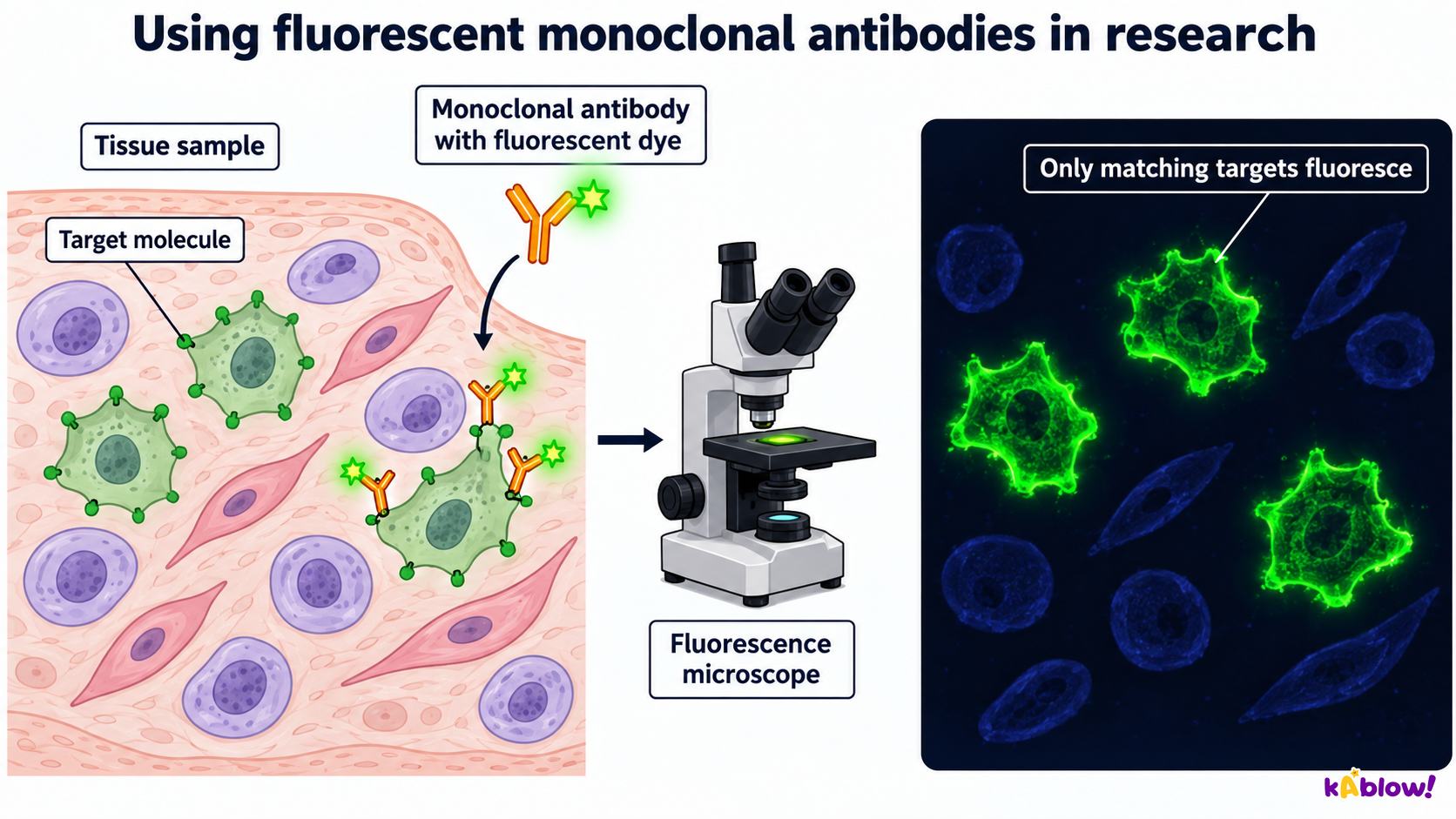
- In research to locate or identify specific molecules in a cell or tissue by binding to them with a fluorescent dye.
- To treat some diseases, including cancer.
Using fluorescent monoclonal antibodies in research
Treating Cancer with Monoclonal Antibodies
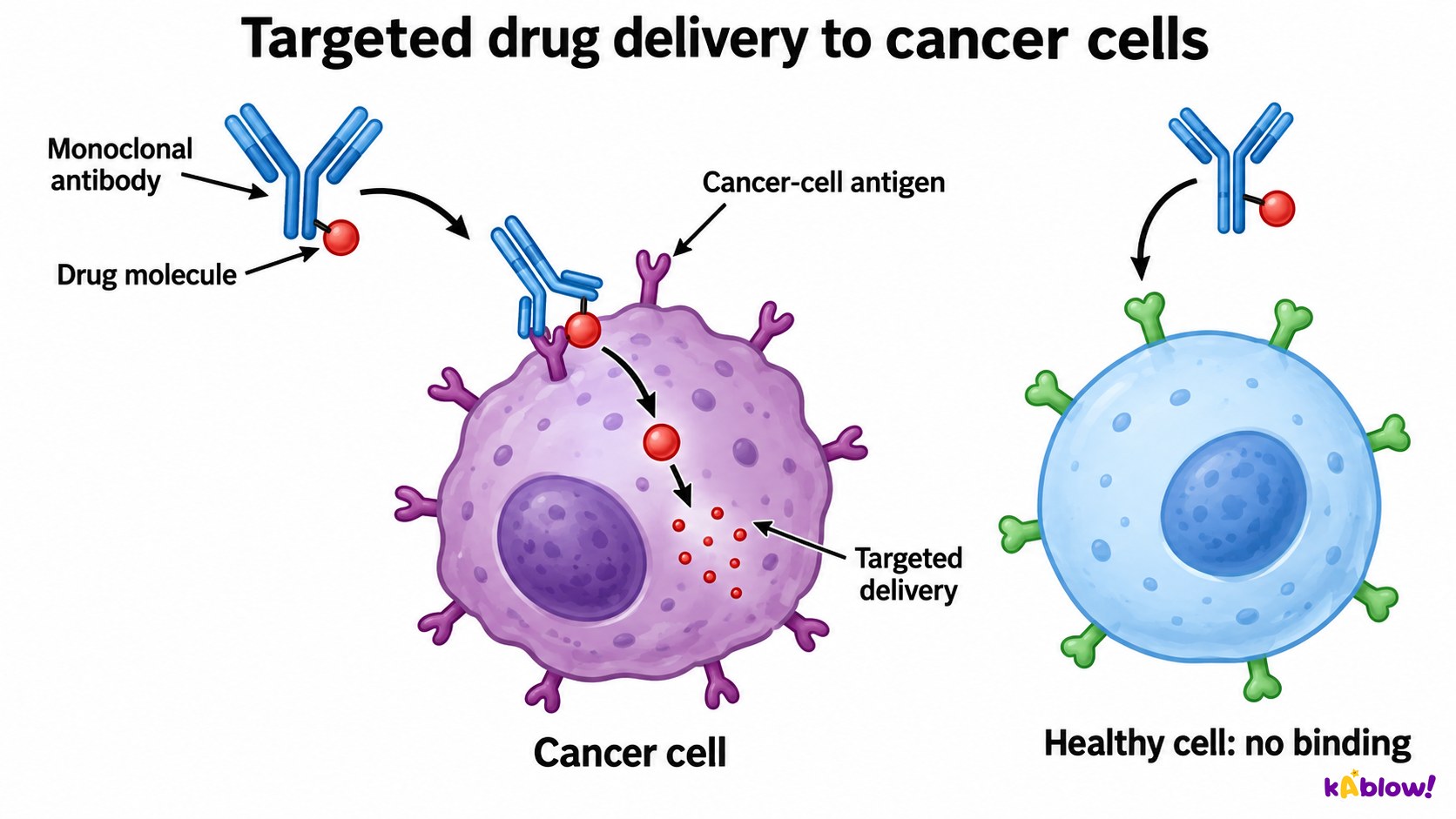
- The monoclonal antibody can be bound to a radioactive substance, a toxic drug, or a chemical that stops cells growing and dividing.
- The antibody carries the substance directly to the cancer cells because it binds only to their specific antigens.
- This is targeted drug delivery — it delivers the substance to cancer cells without harming other cells in the body.
Targeted drug delivery to cancer cells
Advantages and Disadvantages
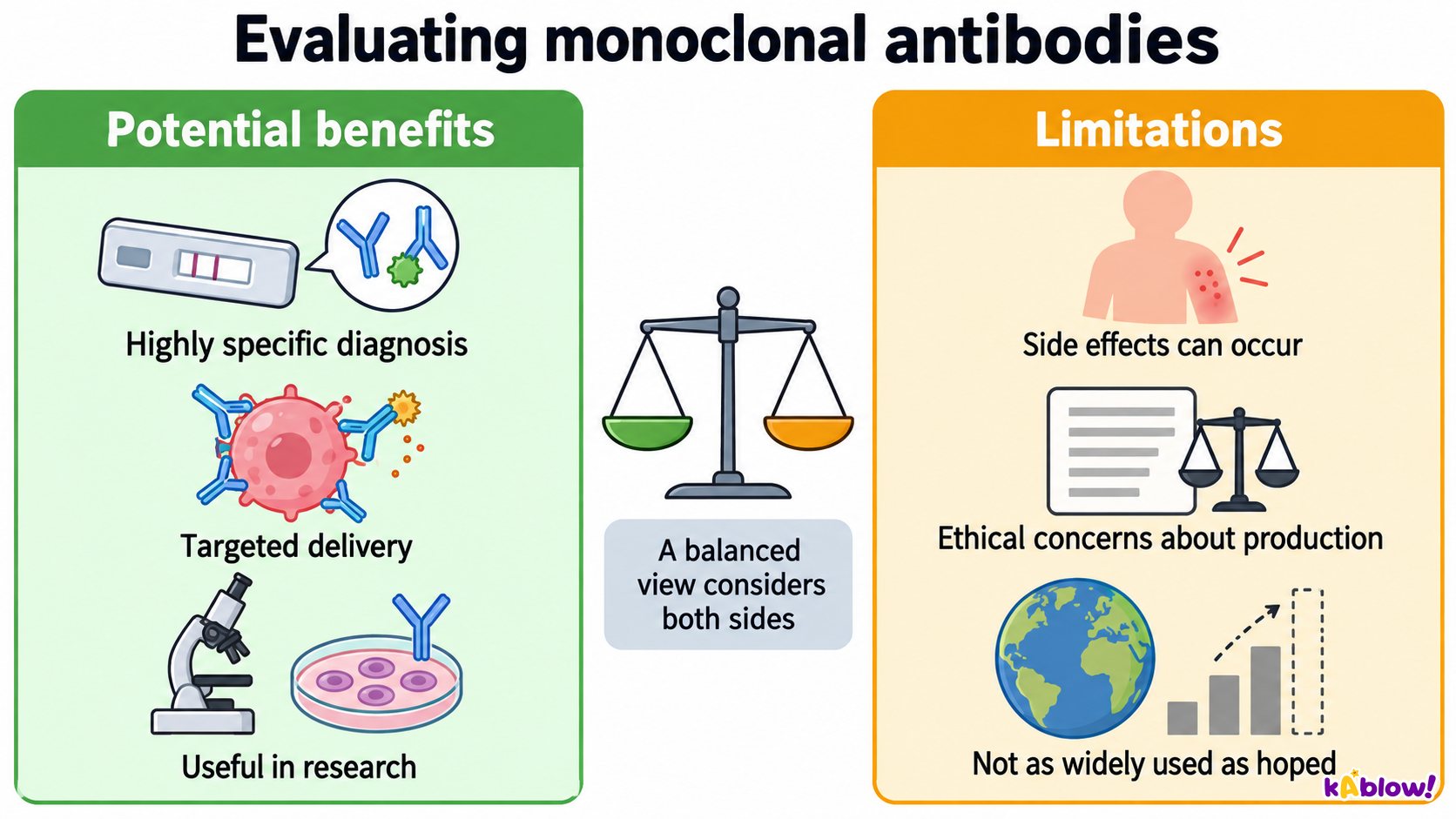
- Monoclonal antibodies have the potential to make big improvements to diagnosis and treatment.
- When first developed, there were hopes their use would become widespread.
- They create more side effects than expected, which has limited how widely they are used.
- They are not yet as widely used as everyone hoped when they were first developed.
Evaluating monoclonal antibodies
Key Points to Remember
- Monoclonal antibodies bind one specific antigen — they do not attack any cell.
- In a hybridoma, the lymphocyte makes the antibody and the tumour cell allows repeated division.
- You may be given information about a specific test or treatment and asked to explain how it works using the principle of antibody specificity.
- Be prepared to evaluate the advantages and disadvantages of monoclonal antibodies, including ethical issues arising from their production and use.
Slide
Sign up free to view the lesson slides
Step through every slide for this topic — plus flashcards and revision notes — with a free account.
Câu hỏi luyện tập
Xem trước miễn phí — 8 trên 63 câu hỏi. Đăng ký để xem tất cả.
1.What are monoclonal antibodies?
Easy- AAntibodies produced from a single clone of identical cells that all make the same antibody
- BA mixture of many different antibodies that each bind to different antigens
- CAntibodies that are able to bind to any antigen they encounter in the body
- DWhite blood cells that engulf and digest pathogens
2.Which of the following is not a use of monoclonal antibodies?
Easy- APregnancy tests
- BDetecting illegal drug use in athletes
- CDiagnosing blood clots
- DAntifungal treatment for plant pathogens, such as rose black spot
3.Monoclonal antibodies are specific to one binding site on one protein antigen. What does this mean they are able to do?
Easy- ATarget a specific chemical or specific cells in the body
- BBind to any protein they come into contact with
- CDestroy all cells that have proteins on their surface
- DChange shape to fit any antigen they meet
4.In the production of monoclonal antibodies, a mouse lymphocyte is combined with a particular type of tumour cell. Why is the tumour cell used?
Medium- AIt can divide repeatedly
- BIt produces antibodies specific to the antigen
- CIt presents antigens to the lymphocyte
- DIt destroys the antigens that are not needed
5.Which of the following are uses of monoclonal antibodies? (select all that apply)
Medium- APregnancy tests
- BMeasuring the levels of hormones or other chemicals in blood
- CLocating or identifying specific molecules in a cell or tissue using a fluorescent dye
- DDelivering a toxic drug or radioactive substance to cancer cells
- EProviding long-lasting immunity by vaccination against all pathogens
6.Which statements about hybridoma cells are correct? (select all that apply)
Medium- AA hybridoma cell is formed by combining a lymphocyte with a tumour cell
- BA hybridoma cell can both divide and produce the antibody
- CSingle hybridoma cells are cloned to produce many identical cells
- DA hybridoma cell is a type of white blood cell that engulfs pathogens
- EA hybridoma cell produces many different types of antibody
7.Monoclonal antibodies are produced from a single clone of cells.
EasyTrue or false?
8.Monoclonal antibodies attack any cell they come into contact with rather than binding to one specific antigen.
EasyTrue or false?
Unlock all 63 questions, flashcards & more
Tạo tài khoản miễn phí để xem mọi câu hỏi, slide, thẻ ghi nhớ và ghi chú ôn tập cho chủ đề này.