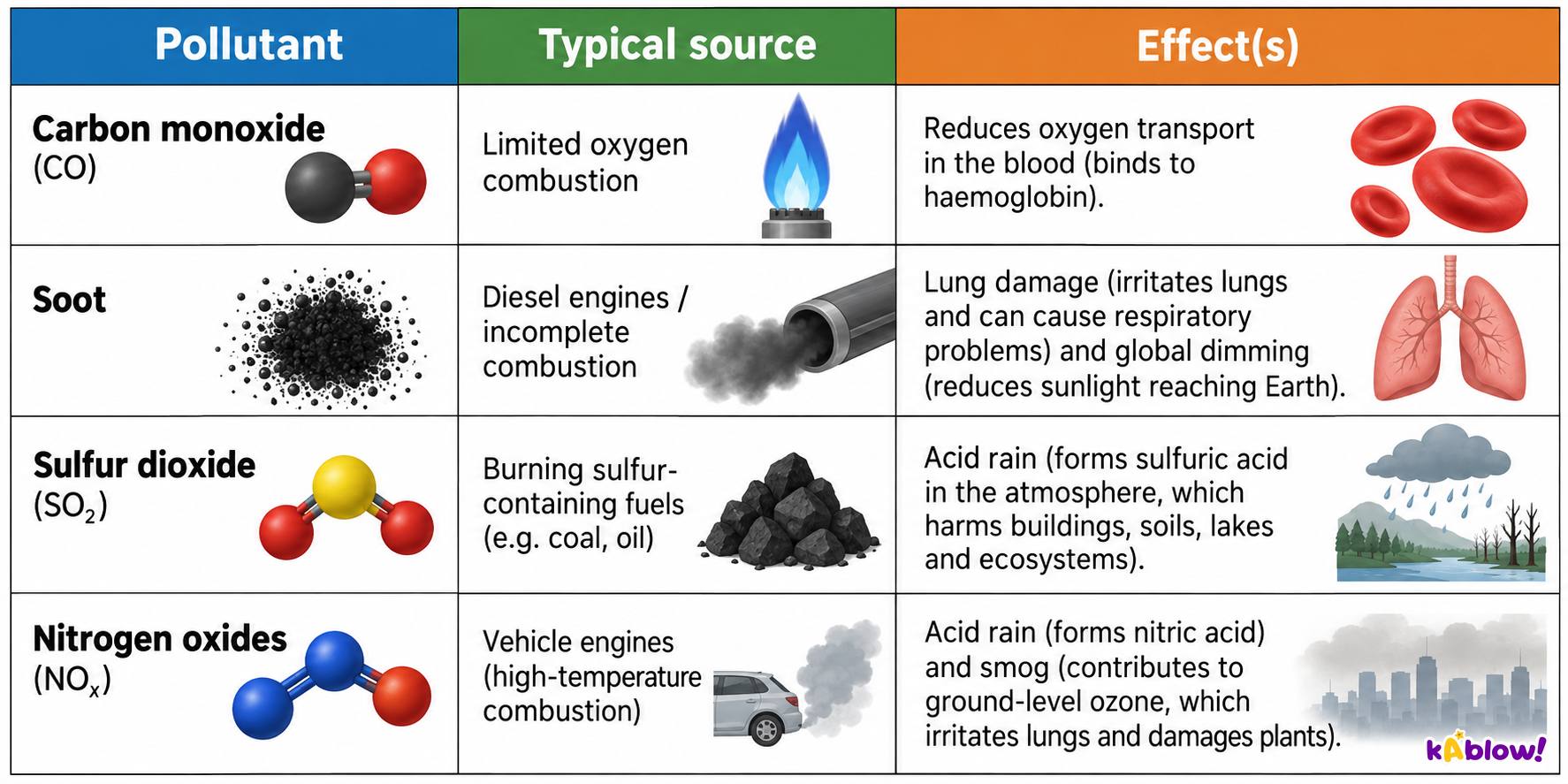
Common atmospheric pollutants and their sources
Học bằng cách chơi
Trả lời những câu hỏi này để kiếm năng lượng, rồi câu cá và khám phá. Không cần tài khoản.
Ghi chú bài học
Fossil Fuels and Combustion
- Fossil fuels include coal, oil, natural gas, oil shales and tar sands.
- They are mainly hydrocarbons, containing carbon and hydrogen, and often small amounts of sulfur.
- Burning fossil fuels releases energy but also produces pollutants that harm the environment and health.
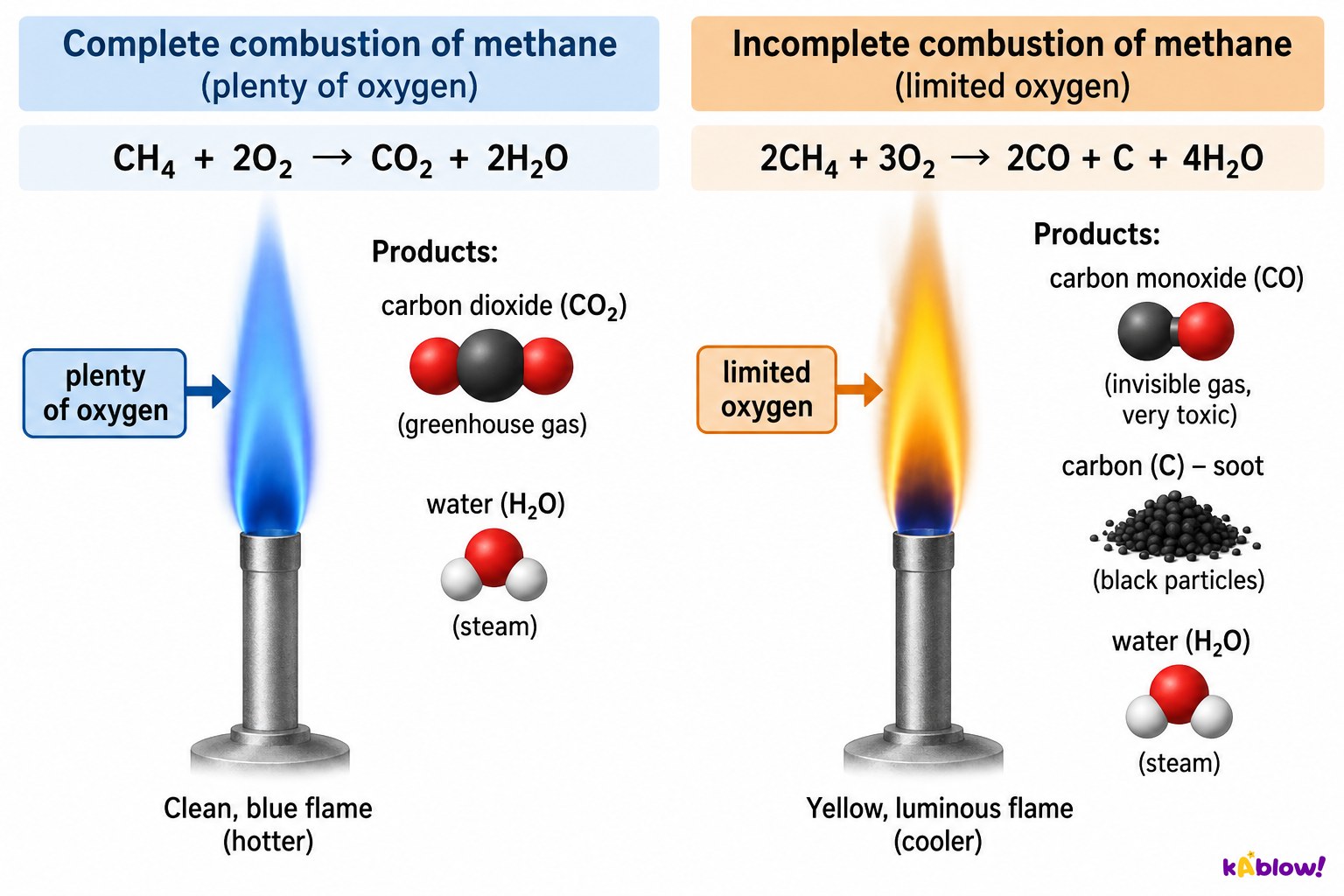
- Complete combustion occurs with plenty of oxygen: hydrocarbon + oxygen → carbon dioxide + water.
- Incomplete combustion occurs when oxygen is limited: hydrocarbon + oxygen → carbon monoxide + water.
- Incomplete combustion is common in engines and poorly ventilated stoves, especially with diesel or limited airflow.
Gases Released by Burning Fuels
- Carbon dioxide (CO₂) and water vapour (H₂O) are produced during complete combustion.
- Carbon monoxide (CO) is produced during incomplete combustion when oxygen is limited.
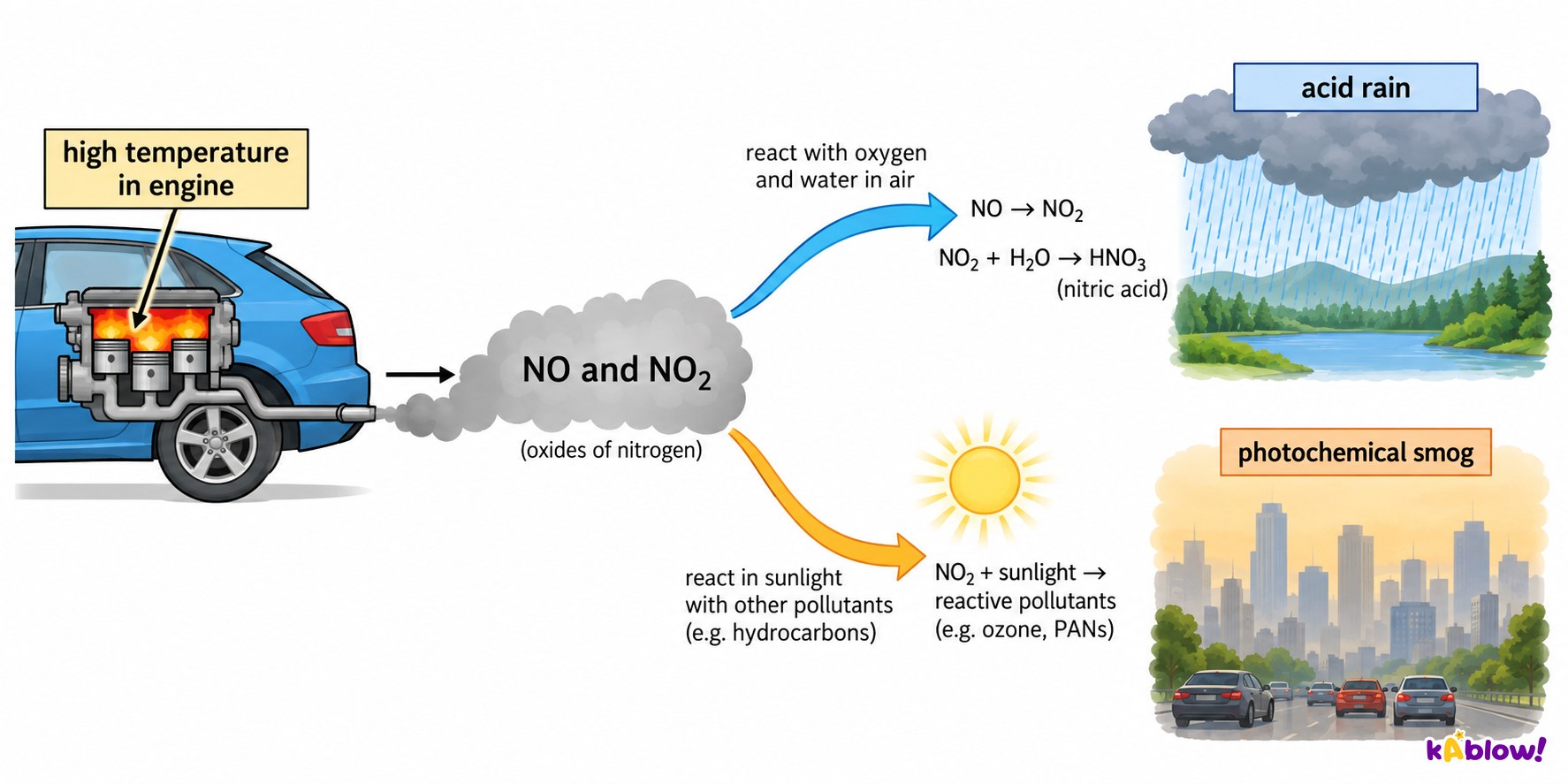
- Oxides of nitrogen (NO and NO₂) form from nitrogen and oxygen in the air at high temperatures in engines.
- Sulfur dioxide (SO₂) is produced from sulfur impurities in the fuel.
- Solid particles and unburned hydrocarbons can also be released, forming soot and contributing to particulate pollution.
Formation of Carbon Monoxide and Soot
- Carbon monoxide forms when fuels burn with limited oxygen; carbon is only partially oxidised.
- Example: 2CH₄ + 3O₂ → 2CO + 4H₂O.
- Soot (carbon particles) forms when there is very little oxygen, causing hydrocarbons to break down without fully combusting.
- Soot appears as tiny solid carbon particles, often seen as black smoke.
- Soot is common in diesel engines and open flames.
- Example: C₈H₁₈ + 8½O₂ → 8C (soot) + 9H₂O.
Combustion Comparison
Formation of Sulfur Dioxide and Oxides of Nitrogen
- Sulfur dioxide forms when sulfur impurities in fuel react with oxygen during combustion.
- Example: S + O₂ → SO₂.
- Oxides of nitrogen form when nitrogen and oxygen from the air react at high temperatures, such as in car engines and power stations.
- These reactions do not happen during normal combustion but occur due to the extreme heat.
- Example: N₂ + O₂ → 2NO, then 2NO + O₂ → 2NO₂.
Nitrogen Oxides
Properties and Effects of Carbon Monoxide
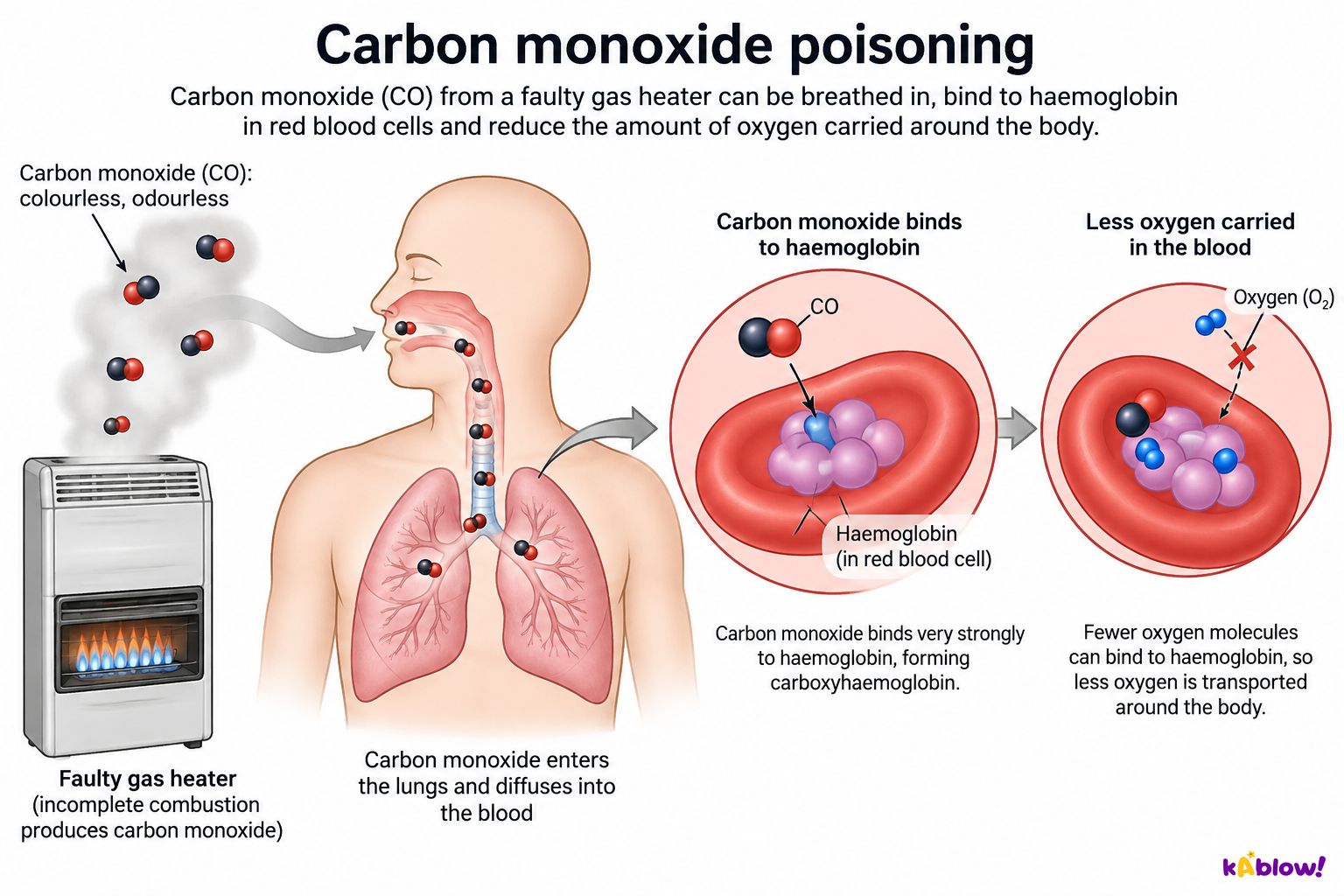
- Carbon monoxide is an extremely poisonous gas.
- It combines with haemoglobin in blood and prevents it from carrying oxygen.
- It is particularly dangerous because it is colourless and odourless, making it difficult to detect.
- A lack of oxygen supply to the brain can lead to fainting, coma or death.
- Carbon monoxide detectors are needed in homes to detect this gas.
Carbon Monoxide
Properties and Effects of Particulates
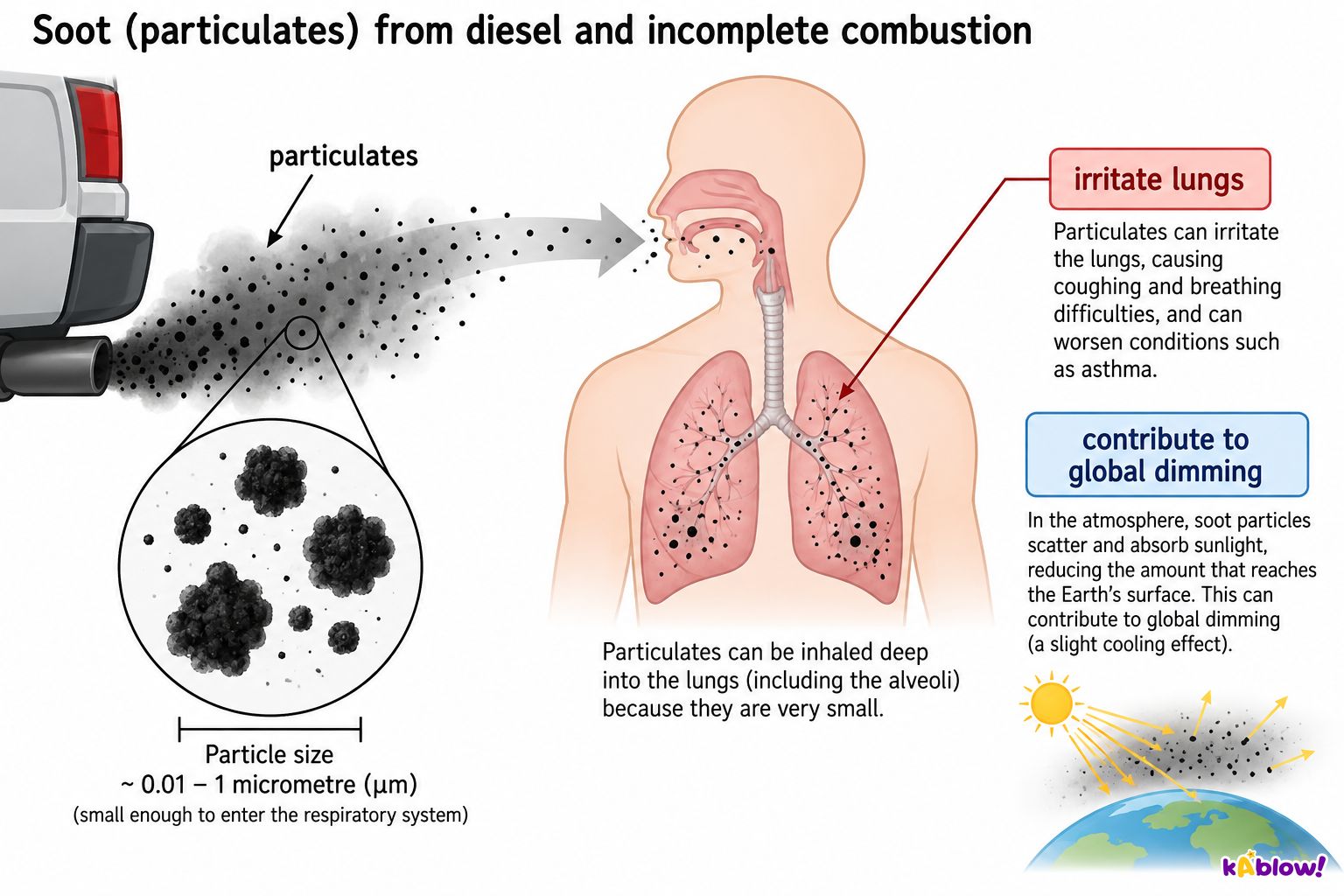
- Solid carbon particles (particulates) released from incomplete combustion clump together to form soot which gradually falls back to the ground.
- If inhaled, particulates can damage the lungs and cause respiratory problems.
- They can cover buildings and statues, making them look unclean and accelerating corrosion.
- They can reflect sunlight back into space, reducing the amount of light reaching the Earth; this is called global dimming.
- Statues and monuments in very polluted areas become blackened over time from soot.
Particulates
Properties and Effects of Sulfur Dioxide
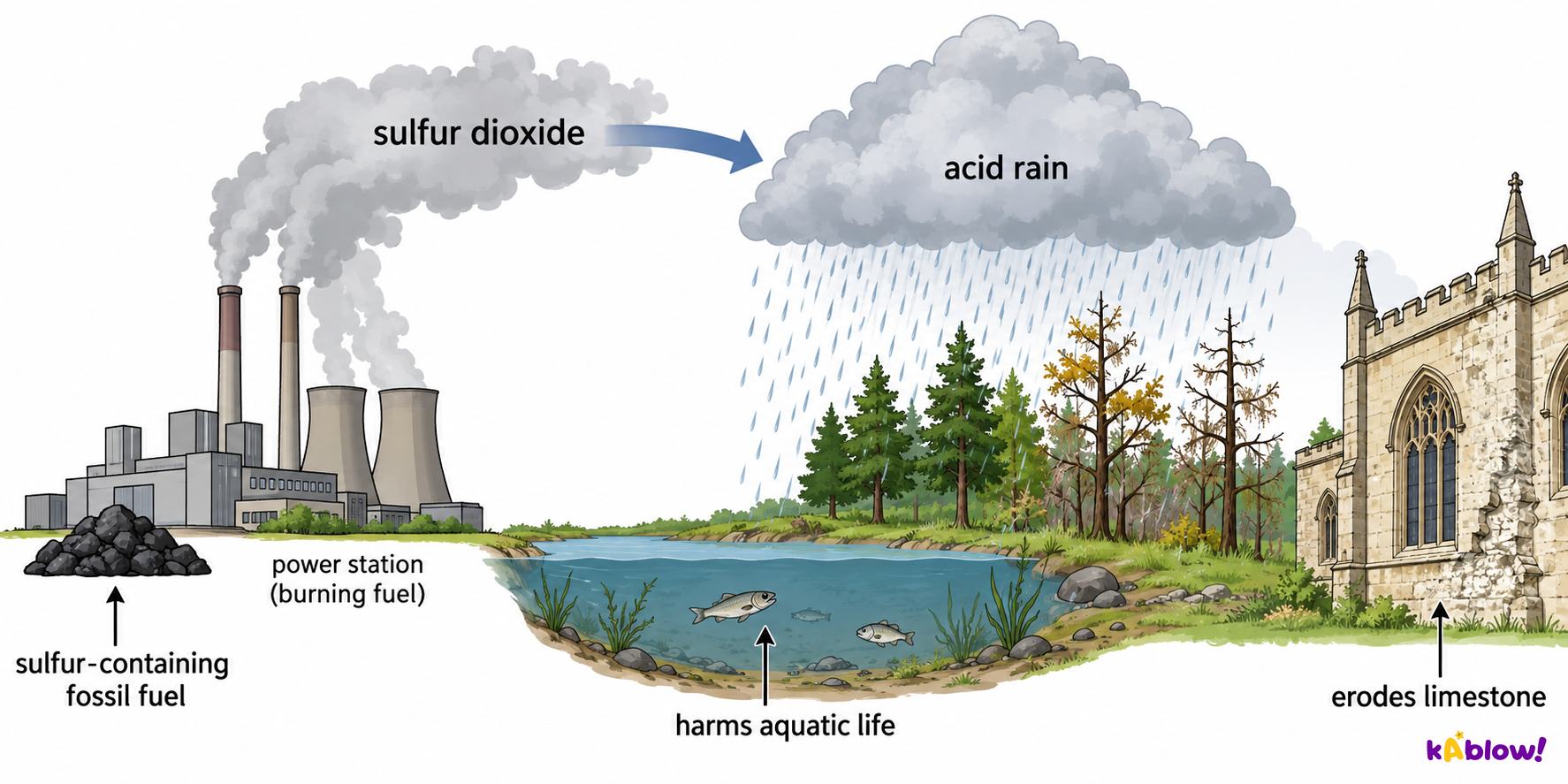
- Sulfur dioxide is a colourless, pungent smelling gas that is a major air pollutant responsible for acid rain.
- It mixes with clouds and readily dissolves in rainwater.
- SO₂ is a non-metal oxide, so it forms an acidic solution in water, forming acid rain (H₂SO₄).
- Acid rain causes corrosion to metal structures, buildings and statues made of carbonate rocks.
- It causes damage to aquatic organisms, pollutes crops and water supplies, and irritates lungs, throats and eyes.
Sulfur Dioxide
Properties and Effects of Oxides of Nitrogen
- Oxides of nitrogen come largely from vehicle exhausts and also contribute to acid rain.
- They are produced when nitrogen and oxygen react at high temperatures reached in a vehicle engine.
- Aside from acid rain, oxides of nitrogen produce photochemical smog.
- They cause breathing difficulties, in particular for people suffering from asthma.
Nitrogen Oxides
Distinguishing Pollutants and Their Effects
- Greenhouse gases and atmospheric pollutants are not the same thing.
- A greenhouse gas causes global warming, whereas a pollutant is something not found in clean air and causes problems close to the ground such as smog and breathing difficulties.
- Carbon dioxide is linked to global warming.
- Sulfur dioxide and oxides of nitrogen cause acid rain and respiratory problems.
- Particulates cause global dimming and health problems.
- Carbon monoxide is toxic.
Summary
Slide
Sign up free to view the lesson slides
Step through every slide for this topic — plus flashcards and revision notes — with a free account.
Câu hỏi luyện tập
Xem trước miễn phí — 8 trên 59 câu hỏi. Đăng ký để xem tất cả.
1.Which gas is produced during the complete combustion of a hydrocarbon fuel?
Easy- ACarbon monoxide
- BCarbon dioxide
- CSulfur dioxide
- DOxides of nitrogen
2.Which gas is produced during the incomplete combustion of a hydrocarbon fuel?
Medium- ACarbon dioxide
- BCarbon monoxide
- CSulfur dioxide
- DNitrogen
3.Which pollutant is formed when nitrogen and oxygen from the air react at the high temperatures inside a car engine?
Medium- ASulfur dioxide
- BCarbon monoxide
- COxides of nitrogen
- DCarbon dioxide
4.Sulfur dioxide is produced when a fossil fuel is burned. Where does the sulfur in this pollutant come from?
Medium- AFrom nitrogen in the air
- BFrom sulfur impurities in the fuel
- CFrom oxygen in the air
- DFrom water vapour in the air
5.Which property of carbon monoxide makes it difficult to detect in a home?
Medium- AIt is acidic
- BIt is colourless and odourless
- CIt is alkaline
- DIt is a particulate
6.Which pollutant causes global dimming by reflecting sunlight back into space?
Medium- ACarbon monoxide
- BSulfur dioxide
- CParticulates
- DOxides of nitrogen
7.Which gas dissolves in rainwater to form sulfuric acid, a major cause of acid rain?
Medium- ACarbon dioxide
- BCarbon monoxide
- CSulfur dioxide
- DMethane
8.Which of the following is the correct effect of carbon monoxide on health?
Medium- AIt causes global warming
- BIt combines with haemoglobin and prevents blood carrying oxygen
- CIt causes acid rain
- DIt causes global dimming
Unlock all 59 questions, flashcards & more
Tạo tài khoản miễn phí để xem mọi câu hỏi, slide, thẻ ghi nhớ và ghi chú ôn tập cho chủ đề này.