Metals and non-metals
Học bằng cách chơi
Trả lời những câu hỏi này để kiếm năng lượng, rồi câu cá và khám phá. Không cần tài khoản.
Ghi chú bài học
Big idea: sorting materials by their properties
- Big idea (key concept): Relationships. The properties of a material, such as how it looks, feels and behaves, are linked to what it is used for.
- Related concept: Function. Whether a material is good for a wire, a pan or a bridge depends on its properties.
- Global context: Globalization and sustainability. Metals are mined in some countries and used all over the world. They are limited resources, so we need to use them wisely and recycle them.
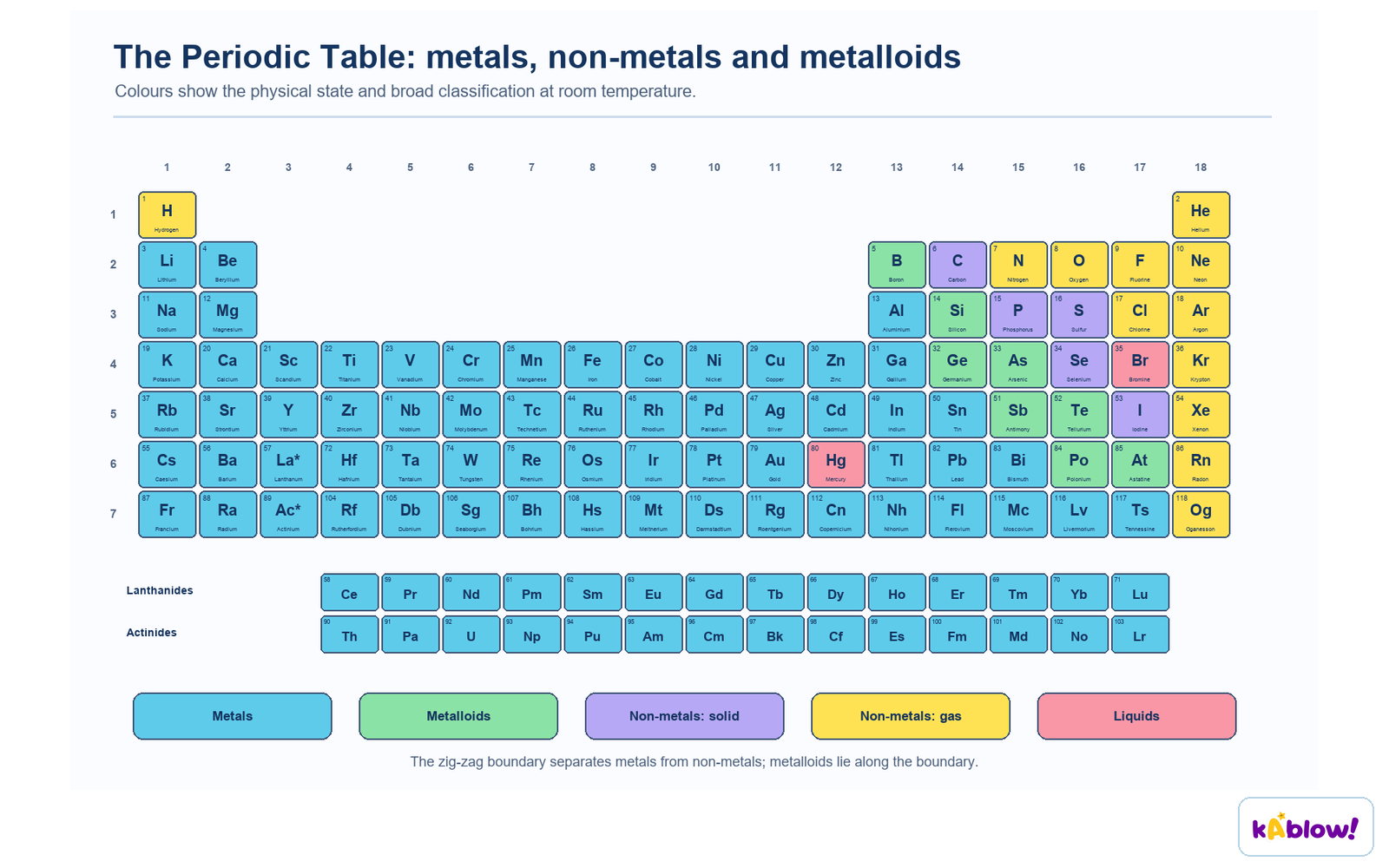
- Every element is either a metal or a non-metal. A few in between, such as silicon, are called metalloids.
- In the periodic table the metals are on the left and in the middle. The non-metals are on the right, and a zig-zag line separates the two groups. Hydrogen is a non-metal even though it sits at the top left.
- Most elements are metals. At room temperature nearly all metals are solids; mercury is the exception because it is a liquid.
Metals, non-metals and metalloids in the periodic table
Properties of metals and non-metals, and what they are used for
- Metals are usually shiny when polished, hard and strong, and they have high melting points and high density.
- Metals are good conductors of heat and electricity. They are malleable (they can be hammered into shape) and ductile (they can be pulled out into wires).
- Non-metals are usually dull and brittle when solid, which means they shatter when hit. They are usually poor conductors and often have lower melting points. Many, such as oxygen and nitrogen, are gases. One exception is graphite, a form of carbon, which does conduct electricity.
- Only a few metals, such as iron, cobalt and nickel, are magnetic. Most metals are not.
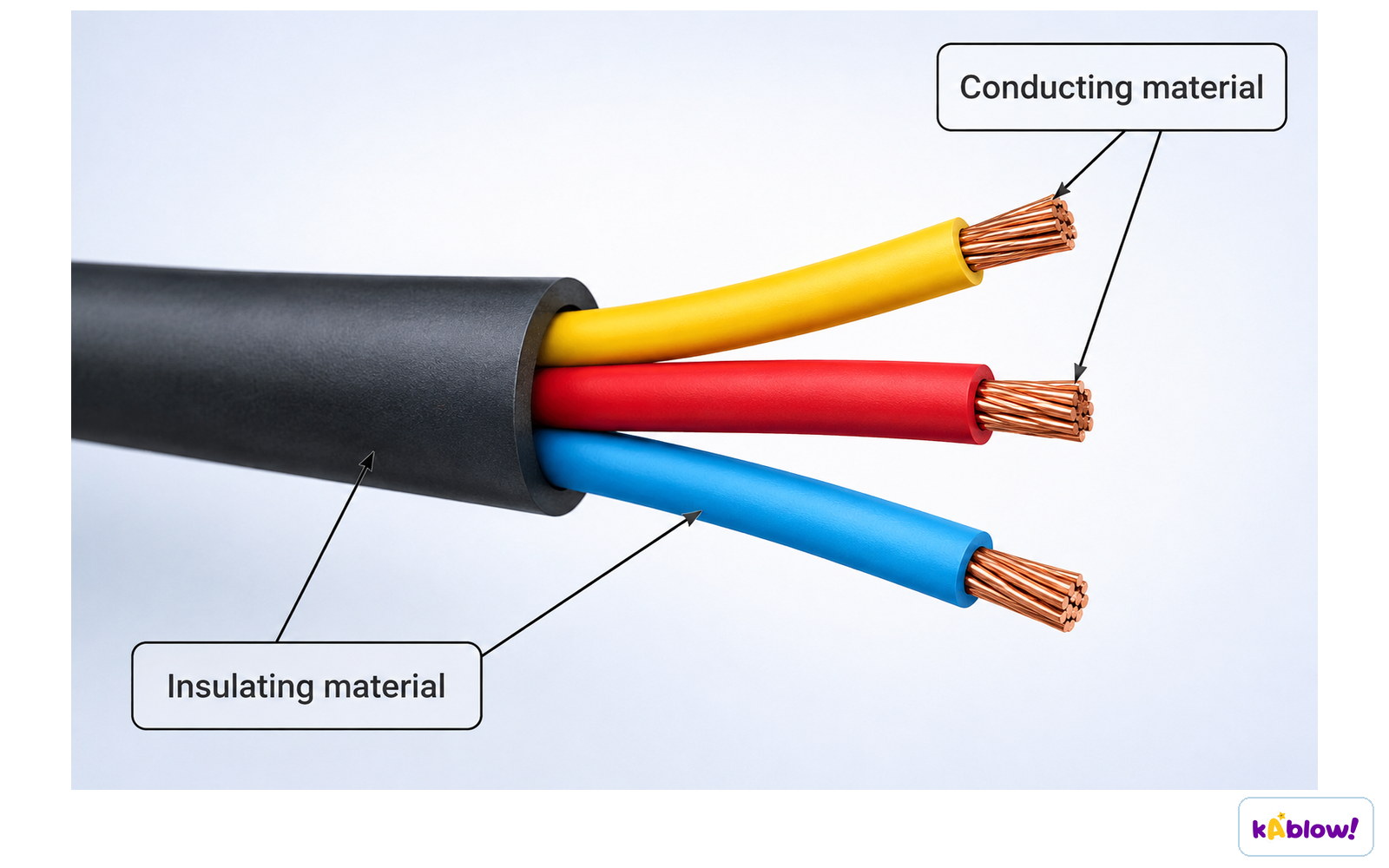
- The wires inside a cable are copper because copper is a good conductor and is ductile. The plastic around them is an insulator, so the electricity stays in the wire and people stay safe.
- A saucepan has a metal base because metals conduct heat well, but a plastic or wooden handle because those are poor conductors and stay cool. Aluminium has a low density, so it is used for aircraft and drinks cans. Gold is very unreactive, so it keeps its shine in jewellery.
A cable: copper wires inside plastic insulation
Alloys and ores
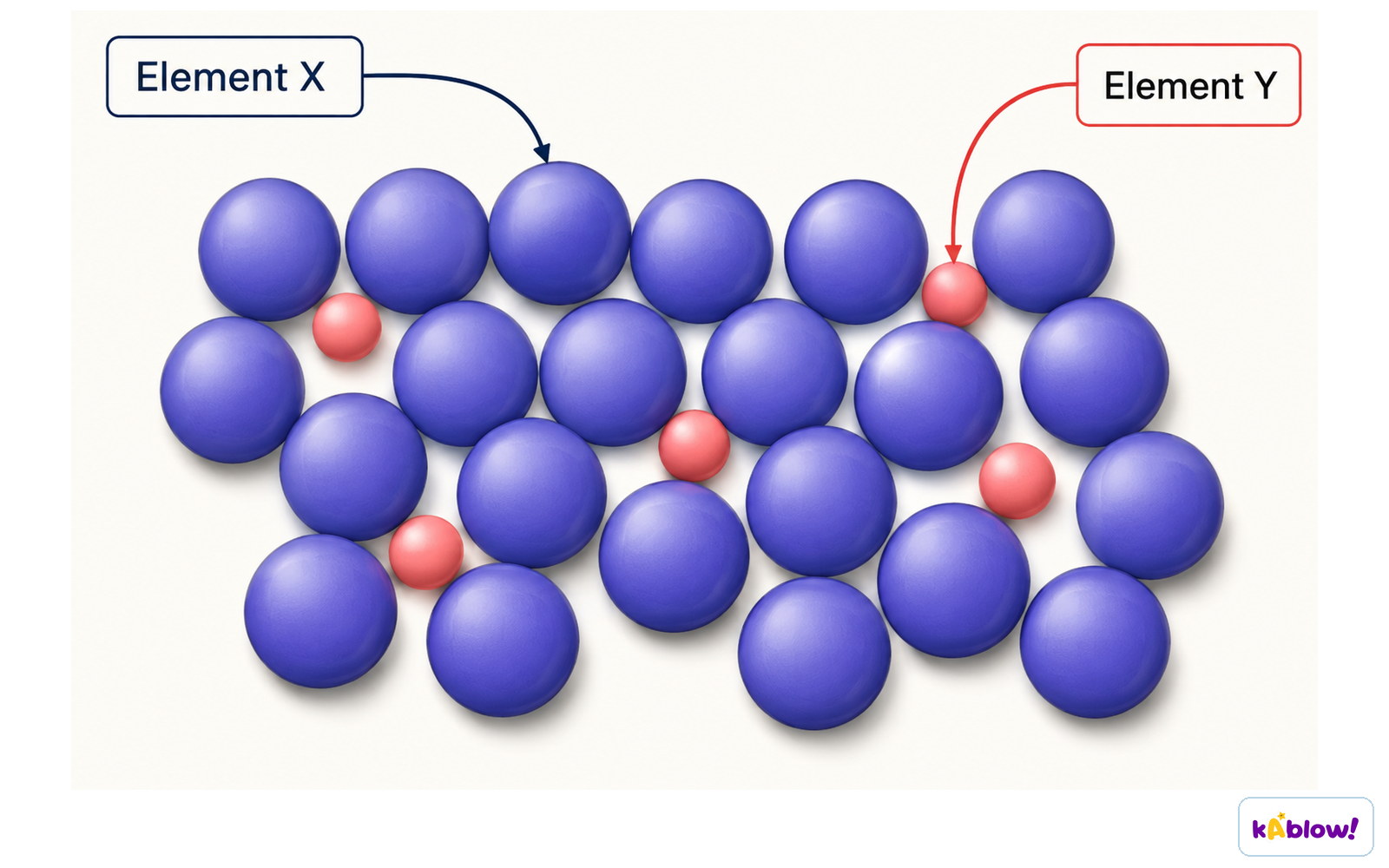
- Pure metals are often too soft for everyday use. Their atoms are arranged in layers that can slide over each other.
- An alloy is a mixture of a metal with at least one other element. The different-sized atoms get in the way, so the layers cannot slide easily and the alloy is usually harder and stronger than the pure metal.
- Steel is an alloy of iron with a little carbon, and it is used in bridges, cars and buildings. Brass is an alloy of copper and zinc, and it is used for musical instruments and door fittings.
- Most metals are found in the ground in ores, which are rocks that contain metal compounds. The metal has to be extracted from the ore before it can be used. Gold is unusual because it can be found as the metal itself.
- Recycling metals means less ore has to be mined, which helps to protect the environment.
An alloy: a second element mixed into a metal
How metals react, and the reactivity series
- A chemical reaction makes new substances. We can show it with a word equation that has the reactants on the left, an arrow, and the products on the right.
- With oxygen: metal + oxygen → metal oxide. In a teacher demonstration, magnesium burns with a very bright white flame to make white magnesium oxide, and learners must not stare at the flame. Copper heated in air turns black as copper oxide forms. Gold does not react with oxygen.
- With water: very reactive metals such as sodium react with cold water to make a metal hydroxide and hydrogen: sodium + water → sodium hydroxide + hydrogen. Only a teacher does this, behind a safety screen. Copper does not react with water.
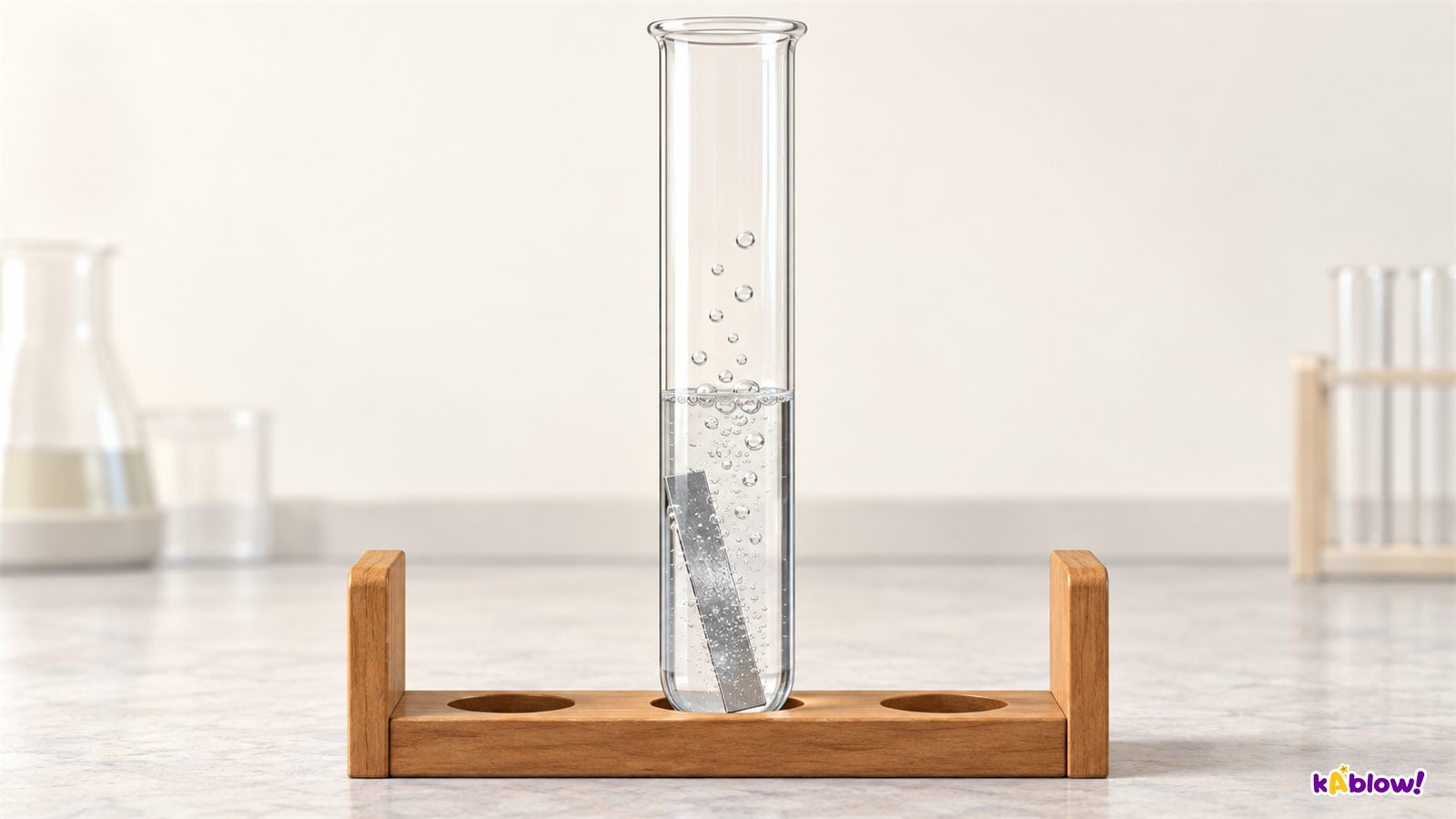
- With dilute acid: metal + acid → salt + hydrogen. For example, magnesium + hydrochloric acid → magnesium chloride + hydrogen. The fizzing is hydrogen gas, and a lit splint gives a squeaky pop. Copper does not react with dilute acid.
- The reactivity series ranks metals from most reactive to least reactive: potassium, sodium, lithium, calcium, magnesium, aluminium, zinc, iron, copper, silver, gold. The more vigorous the reaction, the higher the metal is in the series.
- A more reactive metal can push a less reactive metal out of its compound. This is displacement. An iron nail in blue copper sulfate solution gets a brown coating of copper because iron is more reactive than copper.
A metal strip fizzing in dilute acid
Corrosion and rusting
- Corrosion is when a metal is slowly eaten away because it reacts with substances around it, such as oxygen, water or acids.
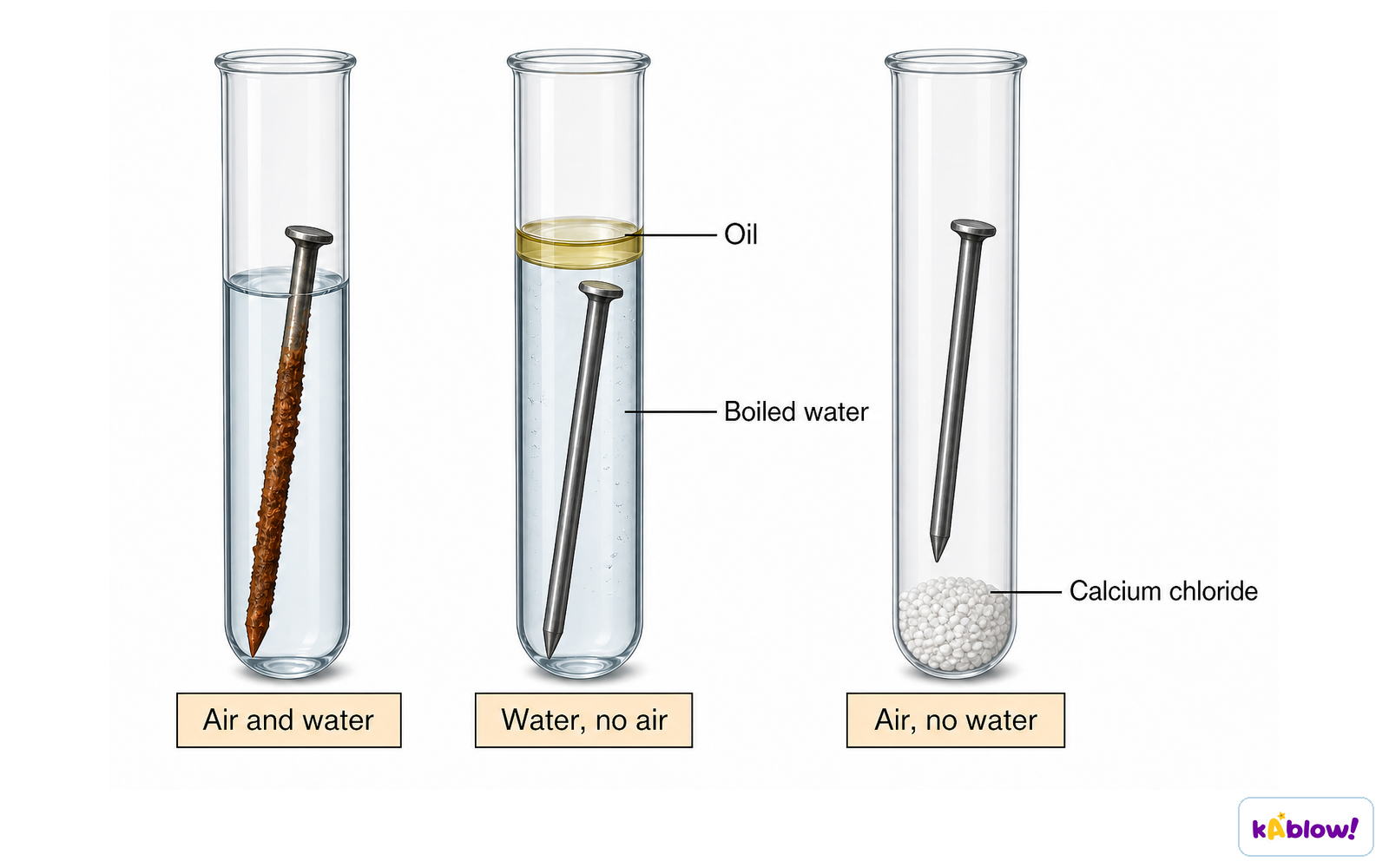
- Rusting is the corrosion of iron and steel. Iron needs both oxygen and water to rust, and the product is orange-brown rust, which is a form of iron oxide. Rust is flaky and falls off, so fresh iron is exposed and the rusting carries on.
- In the three-nail test, only the nail in air and water rusts. Boiling the water removes dissolved air and a layer of oil keeps air out, and calcium chloride dries the air in the third tube. Salt dissolved in the water makes rusting faster.
- Rust can be prevented by keeping oxygen and water away from the iron. Painting, oiling or greasing, and plastic coatings all make a barrier. Galvanising coats iron with zinc.
- Sacrificial protection uses a more reactive metal. Zinc blocks on a ship's hull corrode instead of the steel, because zinc is more reactive than iron.
- Aluminium is more reactive than iron, but it lasts well outdoors. A thin layer of aluminium oxide forms on the surface and sticks tightly, so it stops more air reaching the metal underneath. Gold hardly corrodes at all.
Three iron nails in different conditions
Think like a scientist: investigating rusting
- A good question to test is: does salt water make iron nails rust faster than tap water?
- The independent variable is the one you change: the type of water (tap or salt). The dependent variable is the one you measure: how much rust forms, for example scored from 0 to 5 or the fraction of the nail covered.
- The control variables are kept the same so the test is fair: the same size and type of nail, the same volume of water, the same temperature, the same time and the same containers.
- To make the results more reliable, repeat each test with several nails and compare the mean result. Look out for an anomaly, a result that does not fit the pattern.
- Safe practice: wear eye protection, never taste or sniff chemicals, wash your hands afterwards, and leave reactions of very reactive metals to the teacher.
- Your task: plan an investigation to find out whether painting an iron nail stops it rusting. Write your question, name the three types of variable, list the equipment and explain how you will decide on the result. Then say how you could improve the reliability of your results.
Slide
Sign up free to view the lesson slides
Step through every slide for this topic — plus flashcards and revision notes — with a free account.
Câu hỏi luyện tập
Xem trước miễn phí — 8 trên 52 câu hỏi. Đăng ký để xem tất cả.
1.Which property do most metals have?
Easy- AThey are brittle and shatter when hit
- BThey have very low melting points
- CThey conduct electricity well
- DThey are dull and crumbly
2.Which word describes a metal that can be hammered into a new shape without breaking?
Easy- AMalleable
- BBrittle
- CSoluble
- DDuctile
3.A metal can be pulled out into a long, thin wire. What is this property called?
Easy- AMalleable
- BBrittle
- CMagnetic
- DDuctile
4.Sulfur is a yellow solid that crumbles into powder when it is hit with a hammer. Which property of sulfur does this show?
Easy- AIt is malleable, which is typical of a metal
- BIt is brittle, which is typical of a non-metal
- CIt is ductile, which is typical of a metal
- DIt is a good conductor, which is typical of a non-metal
5.Where are most non-metal elements found in the periodic table?
Easy- AOn the left-hand side
- BOn the right-hand side
- CIn the middle block only
- DIn the bottom row only
6.Which of these elements is a metal that is a liquid at room temperature?
Easy- ABromine
- BSodium
- CSulfur
- DMercury
7.Why is the base of a saucepan made of metal?
Easy- AMetals are good conductors of heat
- BMetals are good insulators of heat
- CMetals are brittle and easy to shape
- DMetals dissolve in hot water
8.Why is the handle of a saucepan often made of plastic?
Easy- AIt conducts heat better than metal, so food cooks faster
- BIt is stronger than metal and never melts
- CIt is a poor conductor of heat so stays cool to hold
- DIt is denser than metal so the pan stays steady
Unlock all 52 questions, flashcards & more
Tạo tài khoản miễn phí để xem mọi câu hỏi, slide, thẻ ghi nhớ và ghi chú ôn tập cho chủ đề này.