Chemical tests for ions and gases
Học bằng cách chơi
Trả lời những câu hỏi này để kiếm năng lượng, rồi câu cá và khám phá. Không cần tài khoản.
Ghi chú bài học
Big idea: chemical tests for ions and gases
- Key concept: Relationships. Identification depends on a specific reagent and observation. Carbon dioxide turns limewater milky; other gas tests use different observations.
- Related concepts: Models and evidence. Use a scientific explanation to make predictions, then test it against observations.
- Global context: Scientific and technical innovation. Analytical tests identify substances in water and manufacturing samples.
Identification of Anions
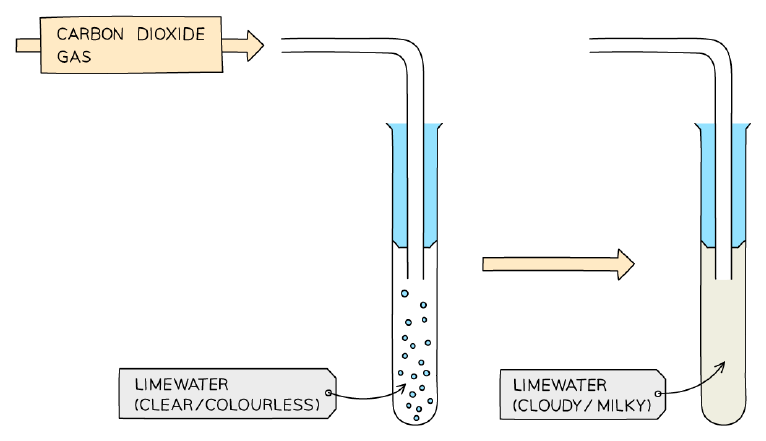
- Carbonate (CO₃²⁻): Add dilute acid → CO₂ gas → bubble through limewater → turns cloudy/milky (white CaCO₃ precipitate).
- Halide (Cl⁻, Br⁻, I⁻): Acidify with dilute HNO₃, add AgNO₃(aq) → coloured precipitate: Cl⁻ = white (AgCl), Br⁻ = cream (AgBr), I⁻ = yellow (AgI).
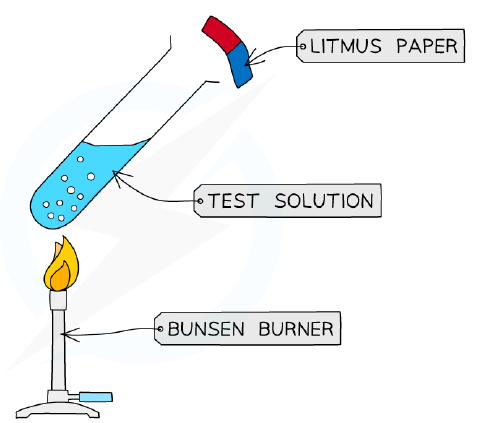
- Nitrate (NO₃⁻): Add aq. NaOH + Al foil, warm gently → ammonia gas (turns damp red litmus blue).
- Sulfate (SO₄²⁻): Acidify with dilute HNO₃, add BaCl₂(aq) or Ba(NO₃)₂ → white precipitate (BaSO₄).
- Sulfite (SO₃²⁻): Add dilute acid, warm, bubble gas through acidified KMnO₄ → purple to colourless.
Testing for carbonate ions
Identification of Cations – NaOH Test
- Add few drops aq. NaOH → observe precipitate colour; then excess NaOH → note solubility.
- Al³⁺: white ppt, soluble in excess NaOH → colourless solution.
- NH₄⁺: ammonia gas on warming (turns damp red litmus blue).
- Ca²⁺: white ppt, insoluble in excess NaOH.
- Cr³⁺: green ppt, soluble in excess NaOH.
- Cu²⁺: light blue ppt, insoluble in excess NaOH.
- Fe²⁺: green ppt, insoluble in excess, surface turns brown on standing.
- Fe³⁺: red-brown ppt, insoluble in excess.
- Zn²⁺: white ppt, soluble in excess NaOH → colourless solution.
Identification of Cations – Ammonia Test
- Add few drops aq. NH₃ → observe precipitate; then excess NH₃ → note solubility.
- Al³⁺: white ppt, insoluble in excess NH₃.
- Ca²⁺: no ppt or very slight white ppt; no change with excess.
- Cr³⁺: green ppt, insoluble in excess NH₃.
- Cu²⁺: light blue ppt, soluble in excess NH₃ → dark blue solution.
- Fe²⁺: green ppt, insoluble in excess, surface turns brown.
- Fe³⁺: red-brown ppt, insoluble in excess.
- Zn²⁺: white ppt, soluble in excess NH₃ → colourless solution.
Flame Tests for Metal Cations
- Clean nichrome or platinum wire by dipping in conc. HCl and heating until no colour.
- Dip wire into sample and hold in blue Bunsen flame.
- Li⁺ = red; Na⁺ = yellow; K⁺ = lilac; Ca²⁺ = orange-red; Ba²⁺ = light green; Cu²⁺ = blue-green.
Identification of Gases
- Ammonia (NH₃): damp red litmus turns blue; sharp choking smell.
- Carbon dioxide (CO₂): bubble through limewater → turns cloudy/milky.
- Chlorine (Cl₂): damp blue litmus turns red then bleached white; toxic – use fume cupboard.
- Hydrogen (H₂): burning splint → squeaky pop (rapid combustion).
- Oxygen (O₂): glowing splint → relights (or glows brightly).
- Sulfur dioxide (SO₂): bubble through acidified KMnO₄ → purple to colourless; sharp choking smell.
Testing for ammonia gas
Key Tips & Common Mistakes
- For carbonate test: describe the test (bubble gas through limewater), not just the result.
- Halide test: use HNO₃ to acidify, not HCl (Cl⁻ would interfere).
- Sulfate test: add HNO₃ first to remove carbonates that also give white ppt.
- Add NaOH/NH₃ slowly – some ppts dissolve in excess, so initial ppt may be missed.
- Distinguish colourless (no colour) vs clear (transparent, may be coloured).
- Flame test: sample must be pure (single cation) to avoid mixed colours.
Think like a scientist
- Compare teacher-demonstrated tests on labelled reference solutions and an unknown solution.
- Comparison: the solution tested. Outcome: the colour or precipitate observed with a specified reagent.
- Control: use equal sample volumes and the same reagent amounts. Explain why this makes the comparison fairer.
- Evidence: Use a consistent method, repeated observations where appropriate and a table with labelled quantities and units. Keep unexpected results and investigate their cause.
- Safety: Practical activities need teacher supervision and an appropriate risk assessment. Use the provided data or simulation where the investigation specifies it.
- Inquiry task: State a testable question, predict the outcome using the science, then explain how your observations would support or challenge the prediction.
Evaluate the science
- Analytical tests identify substances in water and manufacturing samples.
- A single test can be ambiguous; contamination and mixtures can affect results, so use reference samples and confirming tests.
- Evaluation task: Link your conclusion to evidence, identify a limitation and suggest a specific improvement. Distinguish a measured result from an explanation of its cause.
Slide
Sign up free to view the lesson slides
Step through every slide for this topic — plus flashcards and revision notes — with a free account.
Câu hỏi luyện tập
Xem trước miễn phí — 8 trên 48 câu hỏi. Đăng ký để xem tất cả.
1.What is the test for carbonate ions?
Easy- AAdd dilute acid and bubble the gas through limewater; limewater turns cloudy.
- BAdd silver nitrate solution; a white precipitate forms.
- CAdd barium chloride solution; a white precipitate forms.
- DAdd sodium hydroxide and warm; damp red litmus turns blue.
2.Which gas is produced when ammonium ions are warmed with sodium hydroxide solution?
Easy- AAmmonia
- BNitrogen
- CHydrogen
- DOxygen
3.What is the colour of the precipitate formed when chloride ions are tested with silver nitrate solution?
Easy- AWhite
- BCream
- CYellow
- DNo precipitate
4.A solution gives a white precipitate with barium nitrate solution after adding dilute nitric acid. Which ion is present?
Medium- ASulfate
- BCarbonate
- CChloride
- DNitrate
5.A green precipitate forms when sodium hydroxide is added to a solution. The precipitate dissolves in excess sodium hydroxide. Which cation is present?
Medium- AChromium(III)
- BIron(II)
- CCopper(II)
- DAluminium
6.Which gas relights a glowing splint?
Easy- AOxygen
- BHydrogen
- CCarbon dioxide
- DChlorine
7.A student adds dilute hydrochloric acid to a solid and bubbles the gas through limewater. The limewater turns cloudy. What can be concluded?
Medium- AThe solid contains carbonate ions.
- BThe solid contains sulfite ions.
- CThe solid contains hydrogencarbonate ions.
- DThe solid contains carbonate or hydrogencarbonate ions.
8.What is the colour of the flame produced by potassium ions in a flame test?
Easy- AYellow
- BLilac
- CRed
- DGreen
Unlock all 48 questions, flashcards & more
Tạo tài khoản miễn phí để xem mọi câu hỏi, slide, thẻ ghi nhớ và ghi chú ôn tập cho chủ đề này.