Conservation Of Biodiversity
Học bằng cách chơi
Trả lời những câu hỏi này để kiếm năng lượng, rồi câu cá và khám phá. Không cần tài khoản.
Ghi chú bài học
What is Biodiversity?
- Biodiversity is the variety of life that exists in a specified area, from global to local scales.
- It is important for the resilience of ecosystems; more biodiverse ecosystems are more stable and resistant to change.
- Biodiversity is studied at three levels: ecosystem, species, and genetic diversity.
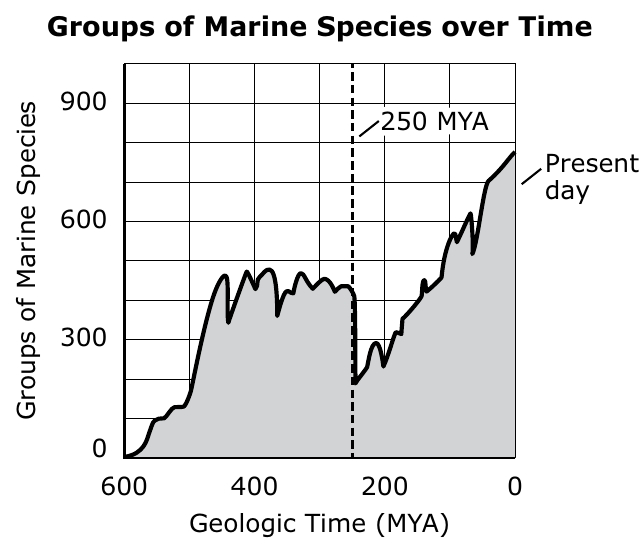
Marine diversity over 600 million years
Ecosystem Diversity
- Ecosystem diversity is the range of different ecosystems or habitats within a particular area.
- A large number of different habitats means high ecosystem diversity; few habitats means low ecosystem diversity.
- Coral reefs are complex with many microhabitats and niches, so they have high ecosystem diversity.
- Large sandy deserts have very low ecosystem diversity because conditions are similar throughout.
Species Diversity
- Species richness is the number of species within an ecosystem.
- Species evenness is the number of individuals of each species within an ecosystem.
- High species diversity requires both high species richness and high species evenness.
- An ecosystem with many species but few individuals of most species has high richness but low evenness.
- An ecosystem with few species but many individuals of each has high evenness but low richness.
- Ecosystems with high species diversity are usually more stable and resilient to environmental changes.
- For example, pine forests dominated by one or two tree species can collapse if a pathogen wipes out a dominant species.
Genetic Diversity
- Genetic diversity is the number of different alleles of genes present in a species or population.
- It depends on the proportion of genes with more than one allele and the number of different alleles each gene has.
- Genetic differences can exist between populations of the same species due to different selection pressures.
- Genetic differences also exist between individuals within a population.
- Genetic diversity helps populations adapt to and survive changes in the environment.
Biodiversity Change Over Time
- Recent estimates suggest there could be around 8.7 million species on Earth, but only about 1.2 million have been recorded and classified.
- The fossil record shows that many past species are now extinct, and there are more species alive today than ever before.
- Speciation increases the number of species; when speciation outpaces extinction, global biodiversity increases.
- Despite recent extinctions, past periods of speciation mean global biodiversity is still higher than ever.
- Classification is subjective; taxonomists may be 'lumpers' (focus on similarities) or 'splitters' (focus on differences).
- Incorrect classification affects estimates: lumping too much makes estimates too small, splitting too much makes them too large.
Anthropogenic Extinction
- Anthropogenic extinction is extinction caused by human activities.
- Scientists believe we are experiencing a mass extinction event, potentially the sixth mass extinction.
- North Island giant moa was a large flightless bird hunted to extinction by humans by 1300.
- Caribbean monk seals were hunted for oil and meat and declared extinct in 2008.
- You need to know three case studies: North Island giant moas, Caribbean monk seals, and a third species of your choice.
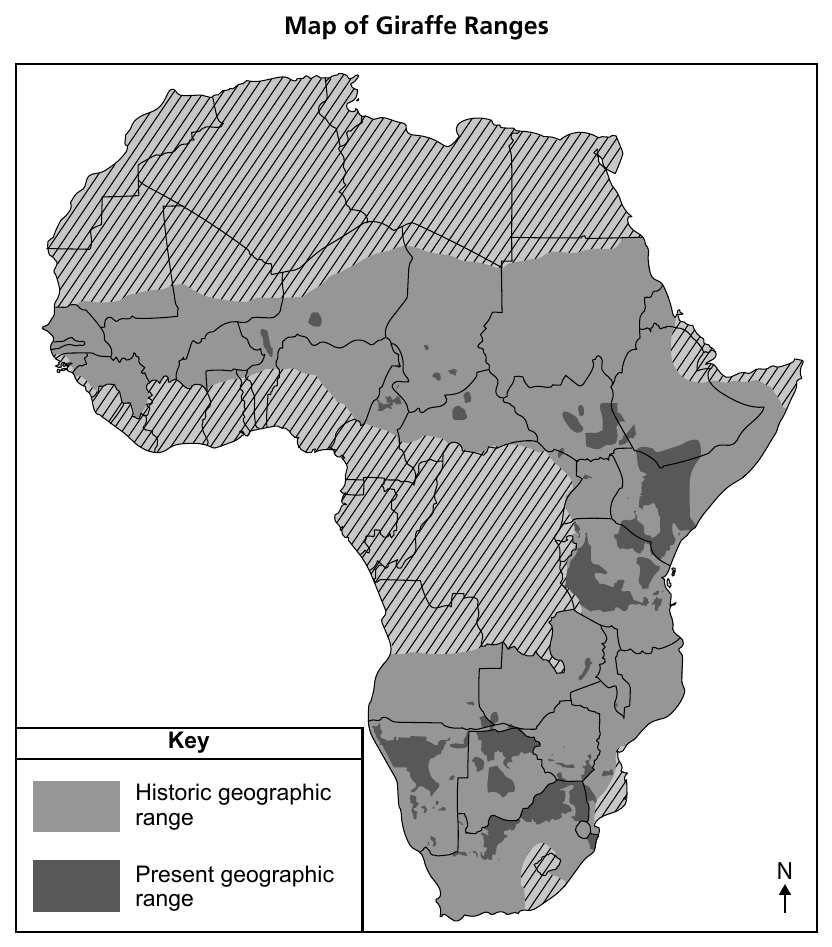
Shrinking range of the giraffe
Ecosystem Loss
- Human activities damage and destroy ecosystems, e.g. deforestation.
- Mixed dipterocarp forests in Southeast Asia are being lost; some areas have lost over 50% of their forests.
- Clear-cutting removes all trees, providing timber and clearing land for agriculture such as palm oil plantations.
- You need to know two case studies: mixed dipterocarp forests and a second ecosystem loss case study of your choice.
Evidence for Biodiversity Loss
- Reliable evidence requires many surveys in a wide range of habitats, repeat data over time, and assessment of both species richness and evenness.
- Citizen scientists are members of the public who help gather data, increasing volume but with a trade-off in quality.
- IPBES gathers information, recommends policies, and communicates findings on global biodiversity.
- IUCN maintains the Red List, which assesses over 150,000 species and lists more than 42,000 as threatened.
- IUCN categories include LC (least concern), NT (near threatened), VU (vulnerable), EN (endangered), CR (critically endangered), EW (extinct in the wild), and E (extinct).
Causes of Biodiversity Loss
- The growth of the global human population (over 8 billion) is likely the main cause of the biodiversity crisis.
- Overexploitation includes overfishing and hunting for ivory, oil, or fur.
- Urbanisation causes direct habitat loss and fragmentation by roads.
- Deforestation clears land for agriculture, timber, mining, and quarries; agriculture often involves monocultures with low biodiversity.
- Pollution includes microplastics and fertiliser runoff into water bodies.
- Invasive species such as grey squirrels, cane toads, and rats damage native habitats.
- Disease can wipe out species, e.g. chytrid fungus has wiped out 90 amphibian species.
How to Preserve Biodiversity
- A mixture of approaches is needed because there is no single solution and conflicts exist between human and natural needs.
- In situ conservation includes protected areas, rewilding, and reclamation.
- Ex situ conservation includes zoos, botanic gardens, seed banks, and tissue banks.
- Protected areas such as national parks and nature reserves restrict human access, regulate industry, and limit hunting.
- Rewilding restores ecosystems to be self-sustaining; active rewilding involves human intervention, passive rewilding leaves nature to recover.
- Reclamation restores areas damaged by human activities, such as abandoned quarries.
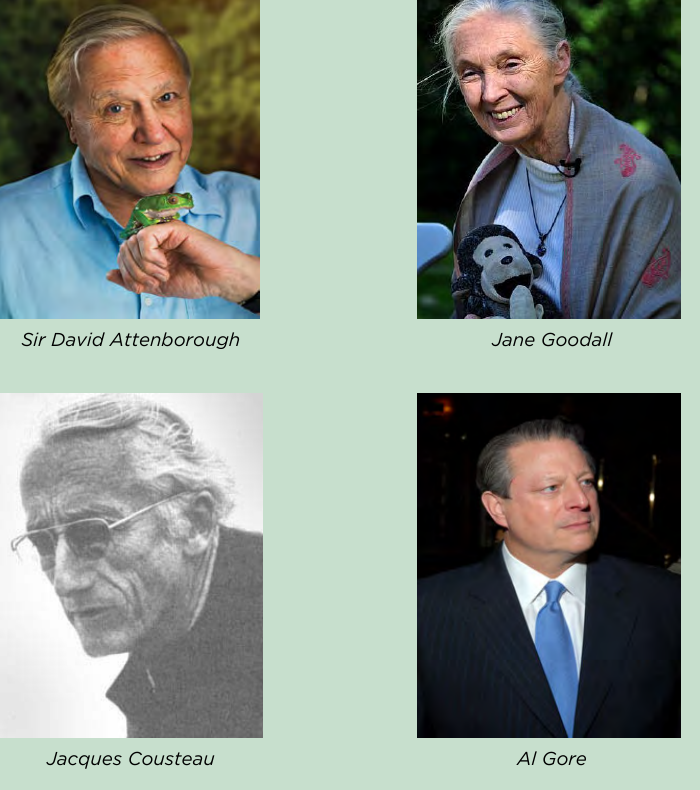
Raising awareness of biodiversity
Ex Situ Conservation Methods
- Zoos use captive breeding and artificial insemination to increase numbers and genetic diversity, and are valuable for research.
- Botanic gardens use cuttings, seeds, tissue culture, and cloning to establish captive plant populations for reintroduction and research.
- Seed banks store dried seeds in cool, temperature-controlled conditions; seeds are periodically grown and replaced to maintain viability.
- The Svalbard Global Seed Vault in Norway stores seeds from almost 1 million plant species.
- Tissue banks (frozen zoos) store genetic material at very low temperatures; germplasm (sperm, eggs, embryos) can be used for breeding, somatic tissue for DNA research and potential cloning.
Prioritising Species for Conservation
- The EDGE programme (Evolutionarily Distinct and Globally Endangered) works with ZSL to prioritise species.
- Priority species must be both evolutionarily distinct (few close relatives, unusual traits) and globally endangered (on the IUCN Red List).
- Examples of EDGE species include largetooth sawfish, Chinese giant salamander, and purple frog.
- EDGE does not make conservation decisions but provides information to stakeholders for debate.
- Complex ethical, environmental, political, social, cultural, and economic issues affect conservation priorities.
Slide
Sign up free to view the lesson slides
Step through every slide for this topic — plus flashcards and revision notes — with a free account.
Câu hỏi luyện tập
Xem trước miễn phí — 8 trên 64 câu hỏi. Đăng ký để xem tất cả.
1.Which of the following best defines biodiversity?
Easy- AThe variety of life that exists in a specified area
- BThe total number of individuals of a single species in an area
- CThe number of different alleles in a population
- DThe total biomass of all organisms in an ecosystem
2.Which of the following is a correct explanation for biodiversity change?
Easy- ASpecies extinctions occur due to anthropogenic extinction.
- BScientists have changed the way species are classified.
- CClassification can be subjective.
- DThere are more species alive today than have been alive in the past.
3.Which of the following describe(s) anthropogenic extinction? (select all that apply)
Medium- ANorth Island giant moas were hunted to extinction between 1200-1300.
- BAn asteroid strike resulted in the extinction of most of the dinosaurs around 65 million years ago.
- CCaribbean monk seals were hunted to extinction to provide oil and food.
- DThe extinction of the dinosaurs was caused by human hunting.
- EThe vaquita declined due to bycatch in gillnets.
4.Biodiversity can be studied at three levels: ecosystem, species, and genetic.
EasyTrue or false?
5.Which statement(s) about biodiversity is/are correct? I. Biodiversity is a measure of the number of species present. II. Biodiversity can be assessed at the ecosystem level. III. Genetic diversity considers the number of genes that a species has.
Medium- AI only
- BI and II only
- CII and III only
- DI, II and III
6.Which of the following is an important factor in mixed dipterocarp ecosystem loss in Southeast Asia?
Easy- AIntroduction of non-native species.
- BEstablishment of nature reserves.
- CClear-cutting of trees to provide agricultural land.
- DChanges in atmospheric oxygen levels.
7.Match each type of biodiversity with its correct description.
Medium- Ecosystem diversity
- Species diversity
- Genetic diversity
- The number of different alleles of genes present
- The range of different ecosystems or habitats within an area
- The number of species and individuals of each species within an ecosystem
8.Which of the statements about conservation is correct?
Medium- AThe EDGE programme is concerned with conserving all evolutionarily distinct species.
- BIn-situ conservation is appropriate for all endangered species.
- CEx-situ conservation provides opportunities for important research.
- DOnly body tissue can be stored in tissue banks.
Unlock all 64 questions & more
Tạo tài khoản miễn phí để xem mọi câu hỏi, slide, thẻ ghi nhớ và ghi chú ôn tập cho chủ đề này.