Gene Expression
Học bằng cách chơi
Trả lời những câu hỏi này để kiếm năng lượng, rồi câu cá và khám phá. Không cần tài khoản.
Ghi chú bài học
Gene Expression: The Basics
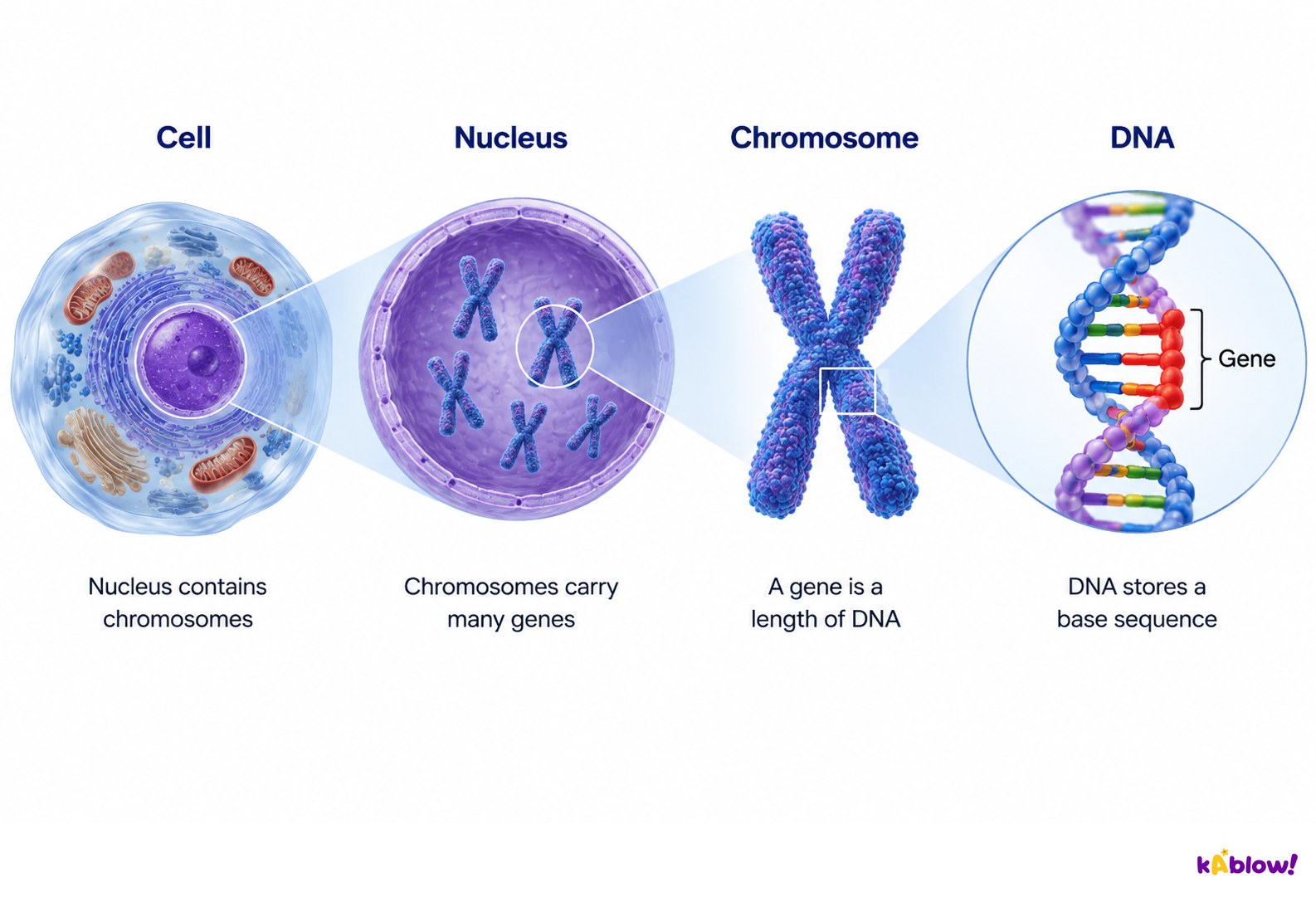
- Gene expression is the mechanism by which the genetic code in DNA affects the phenotype of an organism.
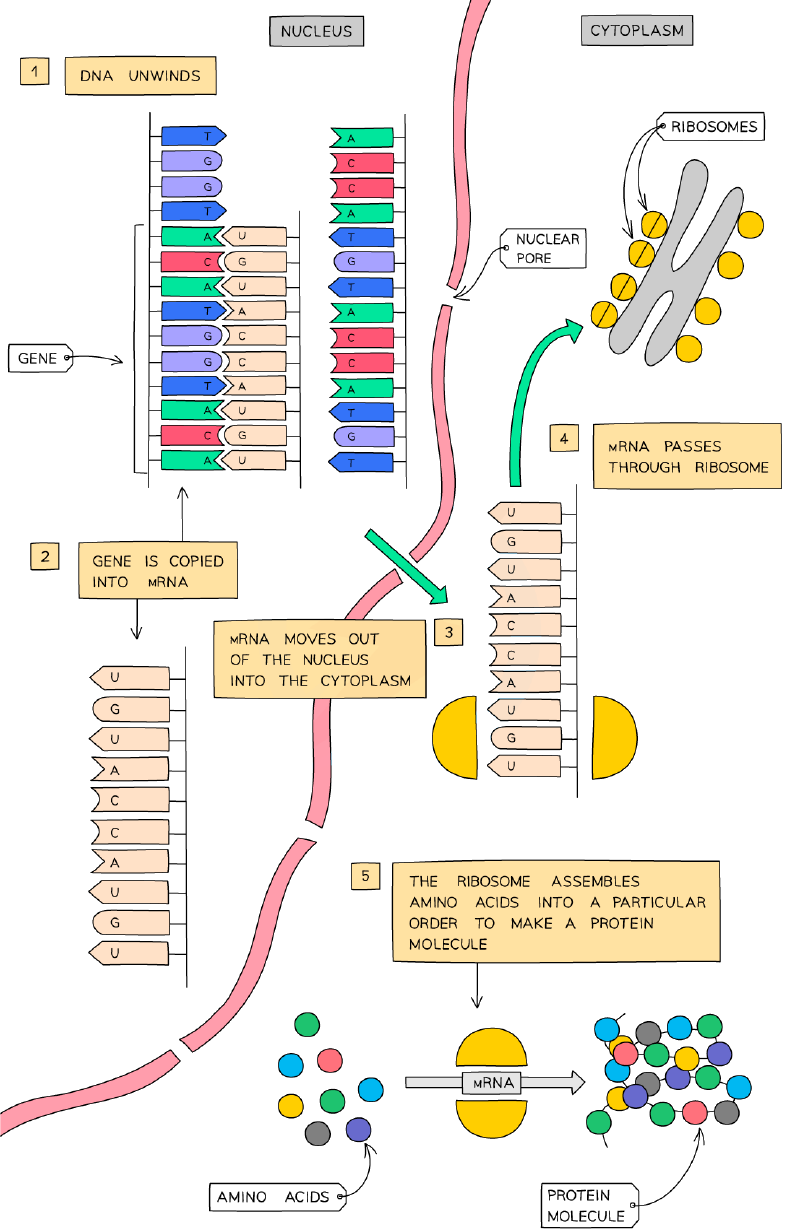
- The main stages are transcription (DNA to mRNA), translation (mRNA to protein at ribosomes), and the function of the protein product (e.g., as an enzyme) which affects the phenotype.
- Transcription is a key stage where gene expression can be switched on or off.
- Only some DNA sequences code for polypeptides; these are called coding sequences.
- Non-coding sequences produce functional RNA molecules (e.g., tRNA) or regulate gene expression (e.g., enhancers, promoters).
From cell to gene
Regulation of Transcription
- The promoter is a non-coding sequence near a gene; enhancers are non-coding regions usually found further away.
- Promoters and enhancers are not transcribed themselves.
- Transcription factors are proteins that bind to promoter or enhancer sequences to help initiate transcription.
- They help RNA polymerase attach to the promoter, increasing the rate of transcription.
- This ensures that only the required genes are expressed in the correct cells, at the correct time, and to the appropriate level.
- This is the most common way cells control gene expression.
Protein synthesis
Regulation of Translation
- After transcription, mRNA is modified and transported to ribosomes in the cytoplasm for translation.
- Once translation is complete, mRNA remains in the cytoplasm until broken down by enzymes called nucleases.
- In human cells, mRNA may take from a few minutes to a couple of days to be broken down.
- Degradation of mRNA regulates translation, ensuring proteins are only synthesised when necessary and removing mRNA that has already been translated.
Epigenesis and Epigenetics
- Epigenesis is the development of differentiation patterns in cells as a multicellular organism develops from a zygote.
- Epigenetics is genetic control by factors other than the DNA sequence; it involves heritable changes in gene function without changes to the DNA sequence.
- In eukaryotes, nuclear DNA is wrapped around histones to form chromatin; chromatin can be chemically modified to alter gene expression.
- Such modifications are called epigenetic tags; collectively they form the epigenome, which is heritable.
- Modifications to the epigenome can be passed on to the next generation at the cellular or whole organism level.
- Since the DNA sequence is not changed, the genotype remains the same while the phenotype changes.
Genome, Transcriptome, and Proteome
- The proteome includes all proteins synthesised in an organism's cells and is determined by the genome.
- Each organism has a unique proteome due to its unique genetic material.
- Different proteins are needed in different cell types, so only the genes for the correct proteins are 'switched on' at any time.
- This avoids energy wastage from expressing all genes in every cell.
- The genome of each cell in an organism is the same, but the proteome varies.
- The transcriptome is the range of mRNA transcripts produced in a cell or tissue type, determined by the pattern of gene expression.
Epigenetic Tags: Methylation
- Methylation involves the addition of a methyl (-CH₃) group; it can occur on DNA or on histones.
- DNA methylation commonly adds a methyl group to cytosine bases of the promoter region.
- Methylation of DNA suppresses transcription by inhibiting the binding of transcription factors, locking genes in the 'off' position.
- DNA methylation can be affected by environmental, lifestyle, or age-related factors.
- Histone methylation adds methyl groups to amino acids of histone tails, making genes more or less accessible to transcription factors, thus activating or deactivating genes.
Epigenetic Inheritance
- When epigenetic tags remain during mitosis or meiosis, they are passed on to daughter cells or gametes.
- Mitosis results in daughter cells with the same epigenetic modifications as the parent cell.
- Meiosis forms gametes containing epigenetic tags that can be passed to offspring after fertilisation.
- This is epigenetic inheritance: phenotypic changes can be inherited without changes in the nucleotide sequence.
- If epigenetic tags are removed during mitosis or meiosis, epigenetic inheritance cannot take place.
Environment & Gene Expression: Examples
- Gene expression can be affected by external conditions such as diet, temperature, chemicals, and air pollution.
- Air pollution chemicals can damage lung tissue, leading to asthma or chronic obstructive pulmonary disease, and negatively impact cardiovascular health.
- Exposure to air pollution may change methyl tags on DNA or histones, altering gene expression and increasing inflammation and disease risk.
- Inflammation in the respiratory system may cause scarring and tissue thickening, decreasing oxygen diffusion into the blood.
- Suggested treatments to reduce air pollution impact include exercise and a diet high in B vitamins.
Removal of Epigenetic Tags and Imprinting
- During egg and sperm development in mammals, most epigenetic tags are removed to prevent environmental changes from being passed on.
- Some tags may be retained and passed on by imprinting.
- During imprinting, epigenetic tags may be added to DNA in sperm and egg cells, so only one copy of a gene is expressed while the other is suppressed.
- Organisms typically inherit two functional copies of a gene, but for imprinted genes only one functional copy is inherited.
- In sperm development, maternal genes are silenced; in egg development, paternal genes are silenced.
Epigenetic Origins of Phenotypic Differences: Tigons and Ligers
- Tigons (male tiger × female lion) are about the same size or smaller than their parents.
- Ligers (male lion × female tiger) are typically larger than both lions and tigers.
- These phenotypic differences are due to genetic imprinting.
- Male lions pass on genes that encourage growth, while female lions have imprinted genes that discourage growth.
- Tigers do not pass down genes that discourage growth.
- A male lion crossed with a female tiger produces a liger that can grow much larger because the female tiger lacks imprinted growth-discouraging genes.
Monozygotic Twin Studies
- Monozygotic (identical) twins originate from the same zygote and are genetically identical.
- Dizygotic (non-identical) twins result from two different eggs fertilised at the same time and are genetically different.
- Monozygotic twin studies help determine the contribution of genetics and environment to phenotypic variation.
- If separated twins show similar traits, genes are likely responsible; significant differences suggest environmental influence.
- Comparing monozygotic and dizygotic twins can indicate the extent of genetic versus environmental effects.
- Even monozygotic twins show variation due to epigenetic changes such as DNA methylation or histone acetylation.
External Factors Impacting Gene Expression: The lac Operon
- Regulatory genes control structural genes; in prokaryotes, structural genes can form an operon controlled by one promoter.
- The lac operon controls production of lactase (β-galactosidase) and two other structural proteins.
- Lactase breaks down lactose for energy; it is an inducible enzyme only synthesised when lactose is present, preventing energy waste.
- Components in order: promoter for structural genes, operator, lacZ (lactase), lacY (permease), lacA (transacetylase).
- Upstream: promoter for regulatory gene and lacI gene coding for the lac repressor protein.
- The repressor has two binding sites: one for the operator and one for lactose.
- When lactose is absent, the repressor binds the operator, preventing RNA polymerase binding and transcription; no lactase is made.
- When lactose is present, it binds the repressor, changing its shape so it cannot bind the operator; RNA polymerase transcribes the structural genes, and lactase is produced.
Slide
Sign up free to view the lesson slides
Step through every slide for this topic — plus flashcards and revision notes — with a free account.
Câu hỏi luyện tập
Xem trước miễn phí — 8 trên 60 câu hỏi. Đăng ký để xem tất cả.
1.Which of the following best describes the term 'gene expression'?
Easy- AThe mechanism by which the genetic code contained within DNA has an effect on the phenotype of an organism
- BThe process by which DNA is replicated before cell division
- CThe random loss of genes from a chromosome during meiosis
- DThe exchange of genetic material between homologous chromosomes
2.Which of the following best describes the importance of regulating gene expression?
Easy- ATo ensure that essential genes are expressed all the time in the relevant cells
- BTo ensure that only the relevant genes in the relevant cells are expressed at certain times
- CTo ensure that only the relevant genes are expressed in the relevant cells at all times
- DTo ensure that the same group of essential genes is expressed in all cells of the organism at certain times
3.Which of these features that affect gene expression are not passed directly from parent to offspring?
Medium- APromoters
- BMethyl groups
- CEnhancers
- DTranscription factors
4.Which of the following statements about DNA methylation are correct? (select all that apply)
Medium- ADNA methylation varies throughout a lifetime.
- BDNA methylation can be affected by environmental factors.
- CAnalysis of DNA methylation patterns can be used in the early detection of disease.
- DDNA methylation patterns are always lost during meiosis.
5.Which of the following are examples of groups that could be added to the tails of histones to chemically modify them? I. Acetyl II. Hydroxyl III. Phosphate IV. Amino
Medium- AI. and III. only
- BII. and IV. only
- CI., II. and III.
- DII., III. and IV.
6.In humans, during periods of hypoxia the transcription factor HIF binds to the Hypoxia Response Element (HRE) sequence and increases transcription of the EPO gene. Which kind of regulatory elements are HIF and HRE?
Medium- AActivator protein and enhancer sequence
- BRepressor protein and silencer sequence
- CEnhancer sequence and activator protein
- DGeneral transcription factor and enhancer sequence
7.Which of the following best describes the outcome of direct methylation of DNA?
Medium- AIt stimulates the expression of the gene.
- BIt prevents guanine from forming hydrogen bonds.
- CIt inhibits the binding of transcription factors.
- DIt causes breaks in the phosphate deoxyribose backbone.
8.Which of the following applies to both mutations and epigenetics? I. It may affect the visible characteristics of an organism II. The DNA base sequence can change and impact the expression of genes III. Environmental factors may play an important role in the development of changes IV. Modifications may be passed on to the next generation at a cellular level V. The amino acid tails of histones are modified by methylation, acetylation and phosphorylation
Hard- AI, IV and V.
- BI, III and IV.
- CII, III and IV.
- DI, III, IV and V.
Unlock all 60 questions & more
Tạo tài khoản miễn phí để xem mọi câu hỏi, slide, thẻ ghi nhớ và ghi chú ôn tập cho chủ đề này.