Drugs In Medicine
Học bằng cách chơi
Trả lời những câu hỏi này để kiếm năng lượng, rồi câu cá và khám phá. Không cần tài khoản.
Ghi chú bài học
What is a drug?
- A drug is any substance taken into the body that modifies or affects chemical reactions in the body.
- Medicinal drugs are used to treat the symptoms or causes of a disease (e.g., antibiotics).
- The liver is the primary site of drug metabolism.
Antibiotics
- Antibiotics are chemical substances made by certain fungi or bacteria.
- They affect bacterial cells by disrupting their structure/function or preventing reproduction.
- Antibiotics are effective against bacteria but not against viruses.
- They target processes/structures specific to prokaryotic cells, so they generally do not harm animal cells.
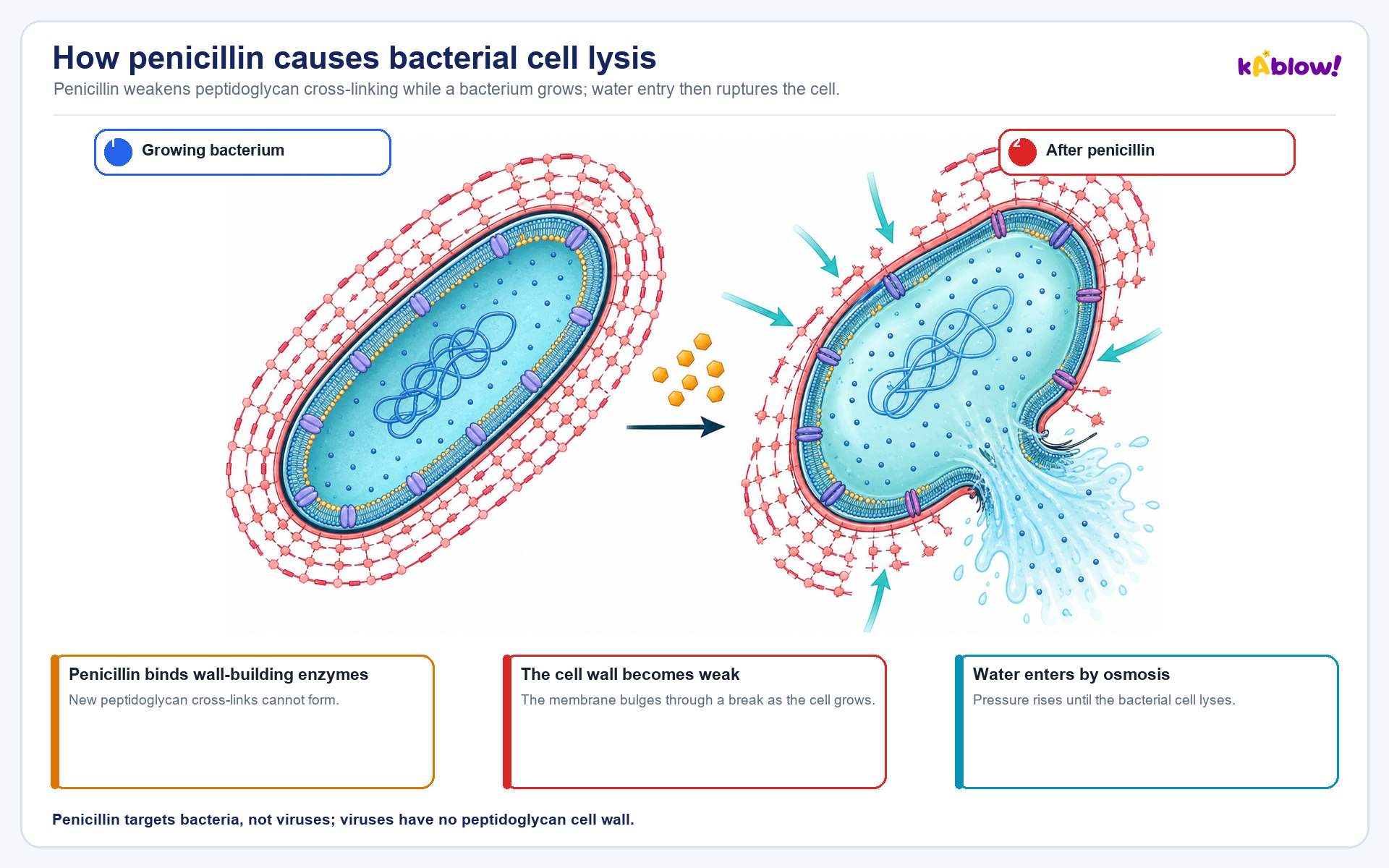
How antibiotics work: penicillin interferes with bacterial cell wall formation
Antibiotic resistance
- Overuse and unnecessary prescribing of antibiotics reduce their effectiveness.
- Patients failing to complete the full prescribed course contributes to resistance.
- Large-scale use in farming (even when animals are not sick) increases resistance.
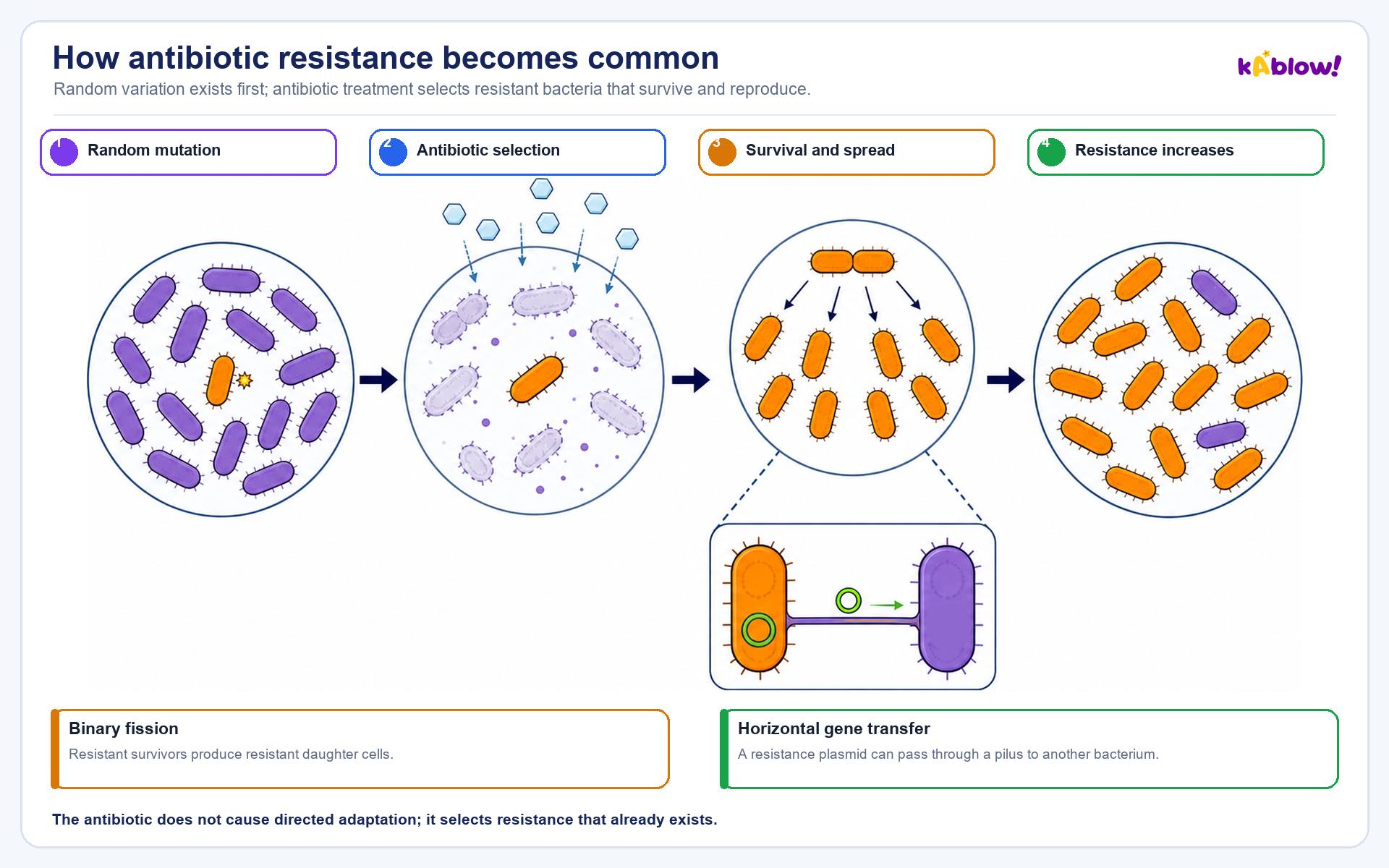
- Resistant bacteria are called superbugs (e.g., MRSA).
Mechanism of antibiotic resistance
Preventing antibiotic resistance
- Only take antibiotics when absolutely essential.
- Always complete the entire prescribed course, even if you feel better.
- Doctors should not prescribe antibiotics for viral infections.
Slide
Sign up free to view the lesson slides
Step through every slide for this topic — plus flashcards and revision notes — with a free account.
Câu hỏi luyện tập
Xem trước miễn phí — 8 trên 42 câu hỏi. Đăng ký để xem tất cả.
1.Which of the following gives the most accurate definition of a drug?
Easy- AAn addictive or harmful substance.
- BA substance taken into the body that modifies or affects chemical reactions.
- CA plant extract that kills bacteria.
- DA substance that produces side effects as well as therapeutic effects.
2.Which organ is the primary site of drug metabolism?
Easy- AKidney
- BLiver
- CHeart
- DLungs
3.Which group of drugs is used to treat the symptoms or causes of a disease?
Easy- AAntibiotics
- BMedicinal drugs
- CPainkillers
- DVaccines
4.Which class of drugs is used to treat bacterial infections?
Easy- AAntibiotics
- BAntivirals
- CPainkillers
- DVaccines
5.Antibiotics are effective against bacteria but not against viruses because
Medium- Aviruses have cell walls that are different from bacterial cell walls
- Bviruses do not have the cellular structures that antibiotics target
- Cviruses are too small for antibiotics to affect
- Dviruses produce enzymes that break down antibiotics
6.A patient feels better after taking only part of a prescribed course of antibiotics. Why is it important to complete the full course?
Easy- ATo ensure all bacteria are killed and reduce the chance of resistance developing
- BTo prevent side effects from stopping early
- CTo make the antibiotics work faster
- DTo avoid the infection becoming viral
7.Which of the following is NOT a reason why antibiotics are becoming less effective?
Easy- AOveruse of antibiotics in farming
- BPatients failing to complete the full course
- CAntibiotics 'wearing out' through overuse
- DBacteria evolving defence mechanisms
8.What is the name of the small circular loop of DNA that can be passed between bacterial cells and can carry antibiotic resistance genes?
Easy- AChromosome
- BPlasmid
- CRibosome
- DNucleoid
Unlock all 42 questions & more
Tạo tài khoản miễn phí để xem mọi câu hỏi, slide, thẻ ghi nhớ và ghi chú ôn tập cho chủ đề này.