Excretion In Humans
Học bằng cách chơi
Trả lời những câu hỏi này để kiếm năng lượng, rồi câu cá và khám phá. Không cần tài khoản.
Ghi chú bài học
Excretion: Definition & Organs
- Excretion is the removal of waste products of metabolic reactions, toxic materials, and substances in excess of requirements.
- The main excretory organs are the lungs (excrete CO₂), kidneys (excrete excess water, salts, and urea), and the liver (produces urea via deamination).
- Egestion (removal of undigested food via the anus) is not excretion.
- CO₂ must be excreted because it dissolves in water to form an acidic solution, lowering pH and reducing enzyme activity.
- Urea is toxic at high concentrations and must be removed.
The Urinary System
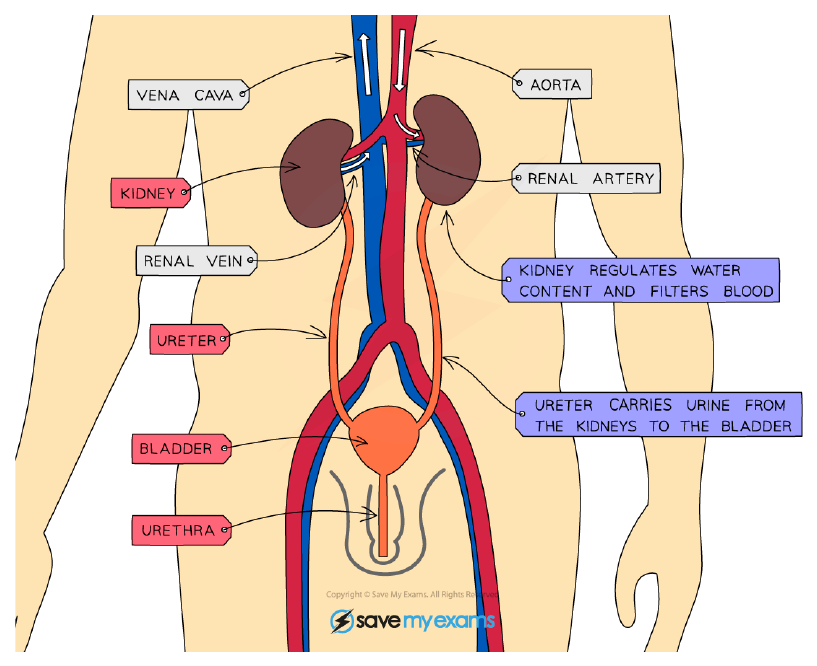
- Kidneys: two bean-shaped organs that filter blood to form urine.
- Ureter: tube connecting each kidney to the bladder.
- Bladder: stores urine until it is released.
- Urethra: tube that carries urine from the bladder to the exterior.
- Note: ureter and urethra are different tubes — do not confuse them.
The excretory system in humans
Kidney Function & the Nephron
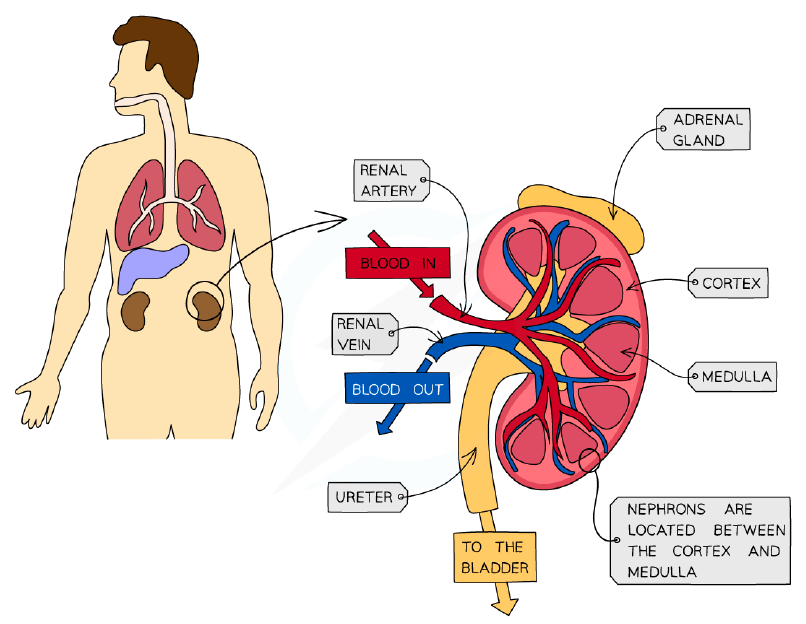
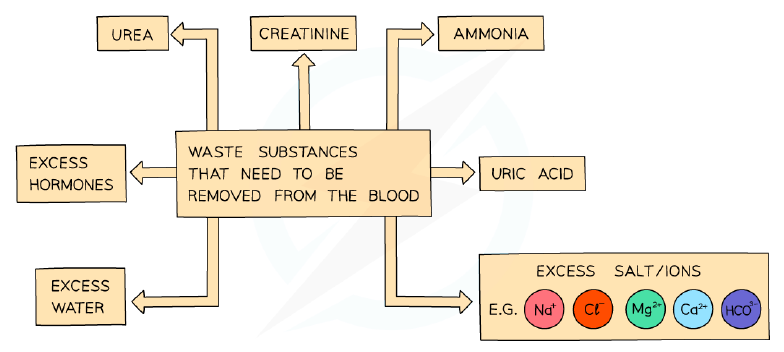
- Kidneys regulate water content of blood (maintains blood pressure) and excrete urea and excess salts.
- Each kidney contains about 1 million nephrons (kidney tubules).
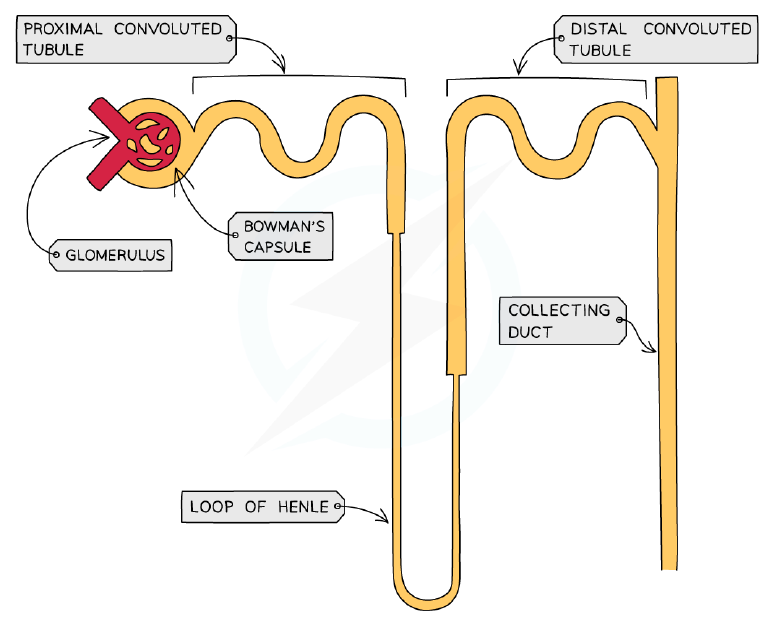
- Nephrons start in the cortex, loop into the medulla, and return to the cortex; urine drains into the renal pelvis then ureter.
The structure of a human kidney
Ultrafiltration
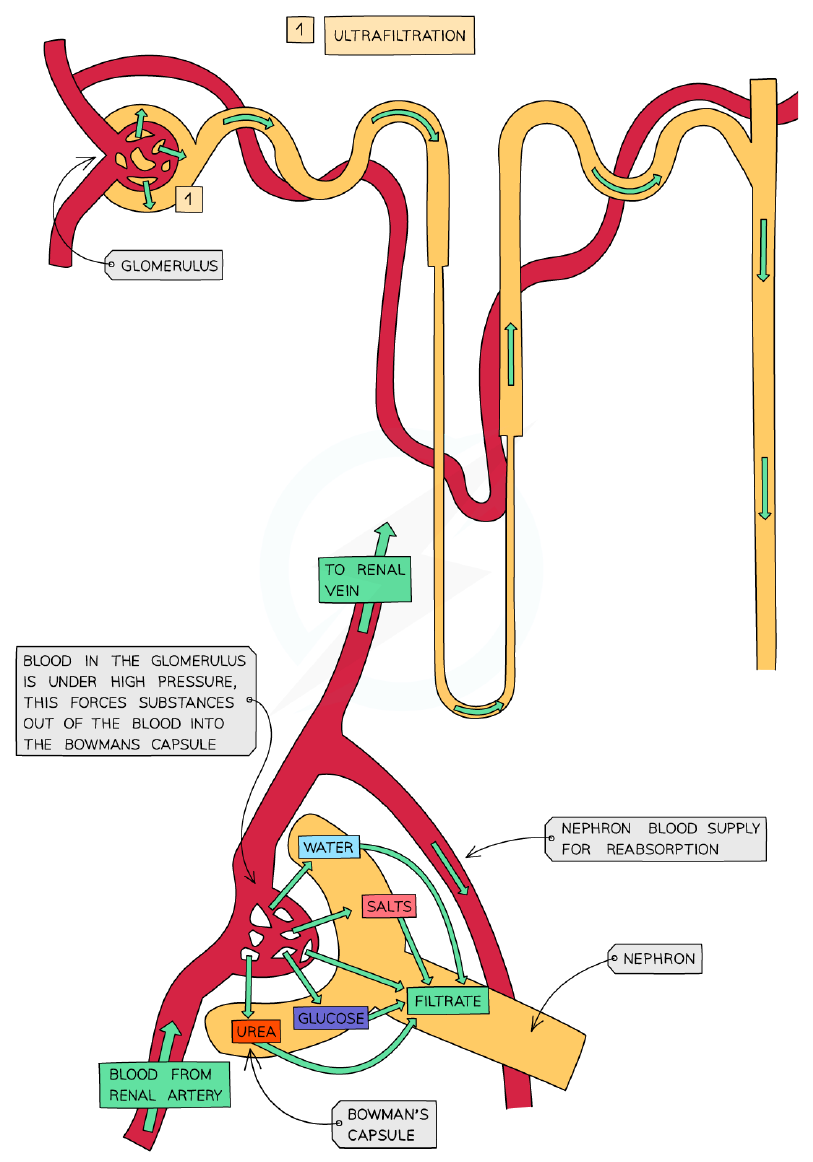
- Blood enters the glomerulus via an afferent arteriole at high pressure.
- Capillaries narrow, increasing pressure, forcing small molecules out into Bowman's capsule — this is ultrafiltration.
- Filtrate contains: glucose, water, urea, salts. Large molecules like proteins remain in blood.
- The filtrate then flows through the nephron for selective reabsorption.
Diagram showing the process of ultrafiltration
Selective Reabsorption
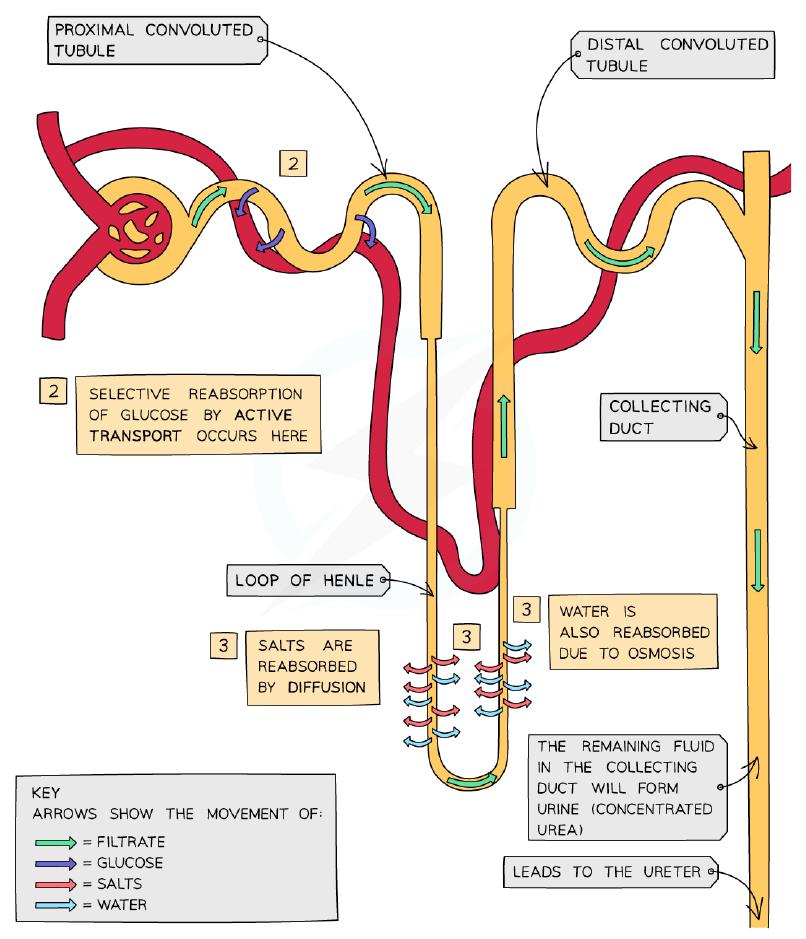
- Glucose is reabsorbed by active transport in the proximal convoluted tubule (PCT).
- PCT cells have many mitochondria to supply energy for active transport.
- In a healthy person, all glucose is reabsorbed; in diabetes, excess glucose remains in urine.
- Salts are reabsorbed in the Loop of Henle by diffusion and active transport; water follows by osmosis.
- Water reabsorption in the collecting duct varies according to the body's needs.
Diagram showing the reabsorption of glucose
Role of the Liver: Deamination
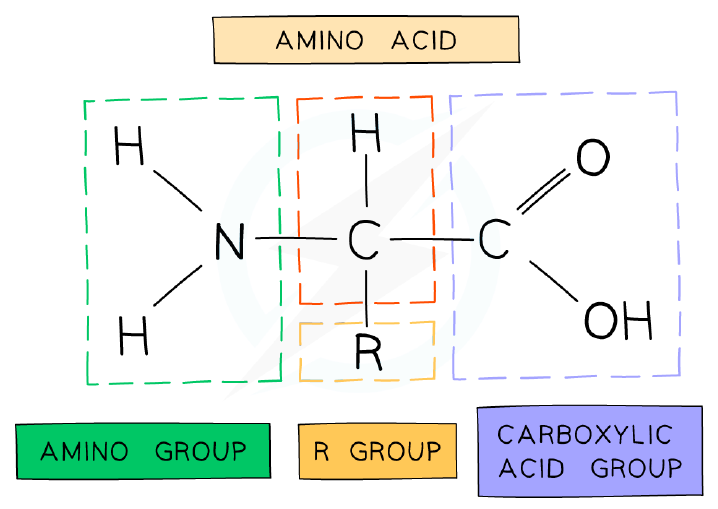
- Excess amino acids cannot be stored and are broken down in the liver by deamination.
- The amino group (-NH₂) is removed; the carbon part is converted to glycogen and stored.
- The nitrogen part is converted to ammonia (highly toxic), then immediately to urea (less toxic).
- Urea dissolves in blood, is carried to the kidneys, and excreted in urine (a small amount in sweat).
- High urea levels can cause cell death, reduced insulin response, and deposits in blood vessels.
Amino acid groups
Excretory Products Summary
- Lungs: excrete CO₂ (from aerobic respiration).
- Kidneys: excrete excess water, salts, and urea.
- Liver: produces urea from deamination of excess amino acids; also breaks down alcohol and toxins.
- Skin: excretes small amounts of urea and salts in sweat.
Waste substances
Slide
Sign up free to view the lesson slides
Step through every slide for this topic — plus flashcards and revision notes — with a free account.
Câu hỏi luyện tập
Xem trước miễn phí — 8 trên 57 câu hỏi. Đăng ký để xem tất cả.
1.What is urea produced from?
Easy- AAmino acids
- BFatty acids
- CGlucose
- DGlycerol
2.Which of the following is a correct example of excretion in mammals?
Easy- AThe removal of excess salts from the blood.
- BThe production of carbon dioxide from aerobic respiration.
- CThe removal of undigested food via the anus.
- DThe release of hormones from glands.
3.Which of the following is not a main function of the kidneys in a healthy person?
Medium- ATo breakdown toxins.
- BTo reabsorb all glucose.
- CTo regulate blood pressure.
- DTo eliminate excess sodium and potassium ions.
4.Which of the following substances would be reabsorbed by the kidneys?
Medium- ASalts and glucose
- BSalts, urea and glycogen
- CSalts and glycogen
- DUrea and glucose
5.Which statement about urea is correct?
Easy- AUrea is formed from excess amino acids in the liver and excreted by the kidneys.
- BUrea is formed from excess amino acids in the kidneys and excreted by the liver.
- CUrea is formed from excess glucose in the liver and egested by the kidneys.
- DUrea is formed from excess glucose in the kidneys and egested by the liver.
- 6.Medium
The table shows the composition of blood entering the kidneys.
Substance Blood (%) Glucose 0.20 Urea 0.01 Protein 7.00 Which row shows the composition of urine in a healthy person?
- Aglucose 0.00%, urea 2.50%, protein 0.00%
- Bglucose 0.00%, urea 2.50%, protein 3.50%
- Cglucose 2.00%, urea 0.00%, protein 7.00%
- Dglucose 0.20%, urea 0.01%, protein 0.00%
7.A person produced 1.75 dm³ of urine on a cool day. How will the volume and concentration of urine change on a hot day, if fluid intake is the same?
Medium- Avolume decreases, concentration increases
- Bvolume increases, concentration decreases
- Cvolume decreases, concentration decreases
- Dvolume increases, concentration increases
8.Which of the following organs are responsible for removing excretory products from the blood?
Easy- AKidneys and lungs
- BBladder and kidneys
- CLungs and liver
- DBladder and liver
Unlock all 57 questions & more
Tạo tài khoản miễn phí để xem mọi câu hỏi, slide, thẻ ghi nhớ và ghi chú ôn tập cho chủ đề này.