Human Diet & Digestion
Học bằng cách chơi
Trả lời những câu hỏi này để kiếm năng lượng, rồi câu cá và khám phá. Không cần tài khoản.
Ghi chú bài học
Diet & Deficiencies
- A balanced diet includes carbohydrates, proteins, lipids, vitamins, minerals, dietary fibre and water in correct proportions.
- Scurvy is a severe vitamin C deficiency causing anaemia, bleeding, gum ulcerations and tooth loss.
- Rickets is caused by vitamin D deficiency, leading to soft, weak bones and poor bone growth in children.
- Vitamin D is needed for calcium absorption; sources include sunlight, fish, eggs and butter.
Digestive System Overview
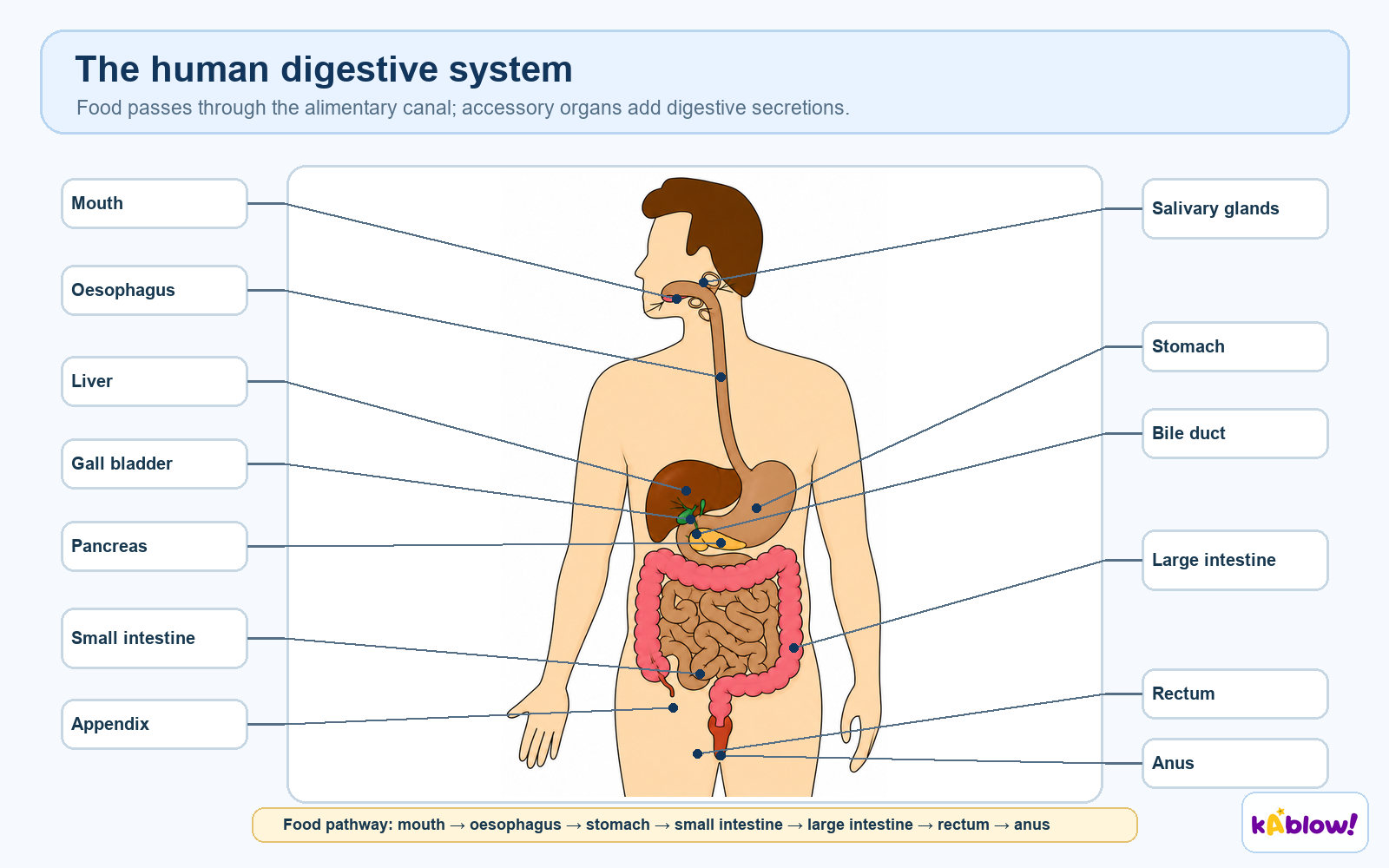
- The digestive system includes the alimentary canal (mouth, oesophagus, stomach, small intestine, large intestine) and accessory organs (salivary glands, pancreas, liver, gall bladder).
- Ingestion – taking food into the mouth.
- Mechanical digestion – breaking food into smaller pieces without chemical change (teeth, stomach churning, bile emulsification).
- Chemical digestion – enzymes break large insoluble molecules into small soluble ones.
- Absorption – digested molecules move into blood/lymph in the small intestine.
- Egestion – undigested food passes out as faeces via the anus.
Organs of the human digestive system
Physical Digestion & Teeth
- Physical digestion increases surface area for enzyme action.
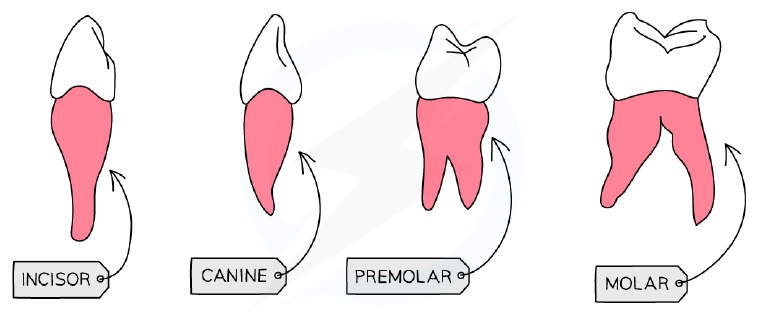
- Teeth types: incisors (biting/cutting), canines (tearing), premolars/molars (grinding).
- Tooth structure: enamel (hard outer layer), dentine (protects nerves), pulp (contains nerves & blood vessels), cement (anchors root).
- Stomach churning mixes food with gastric juices mechanically.
Types of human teeth
The Stomach & Hydrochloric Acid
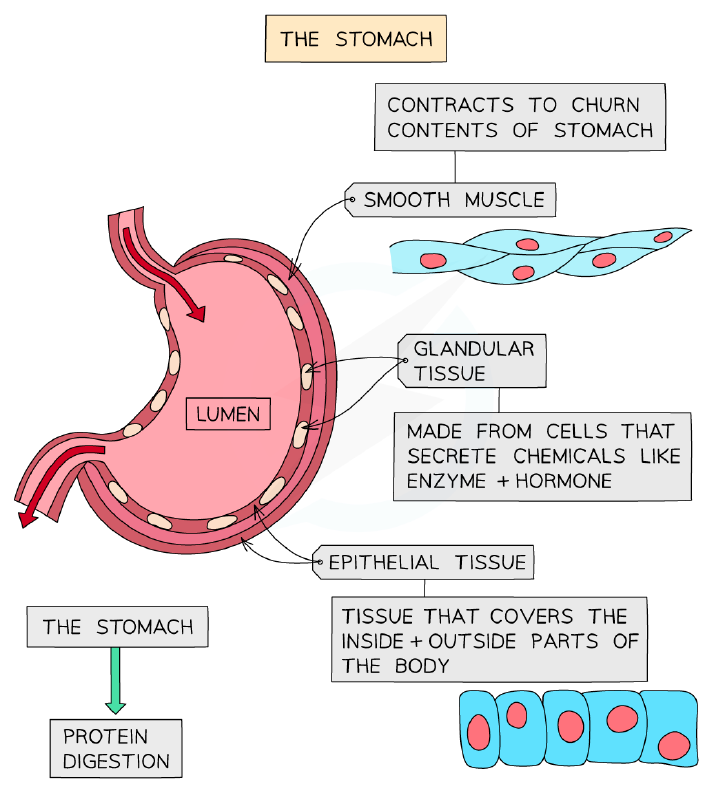
- Stomach produces gastric juice containing hydrochloric acid and pepsin.
- HCl kills bacteria and provides acidic pH (≈2) for pepsin to work.
- Pepsin digests proteins into peptides in acidic conditions.
- Stomach has muscular, epithelial and glandular tissues.
Tissues of the stomach
Chemical Digestion & Enzymes
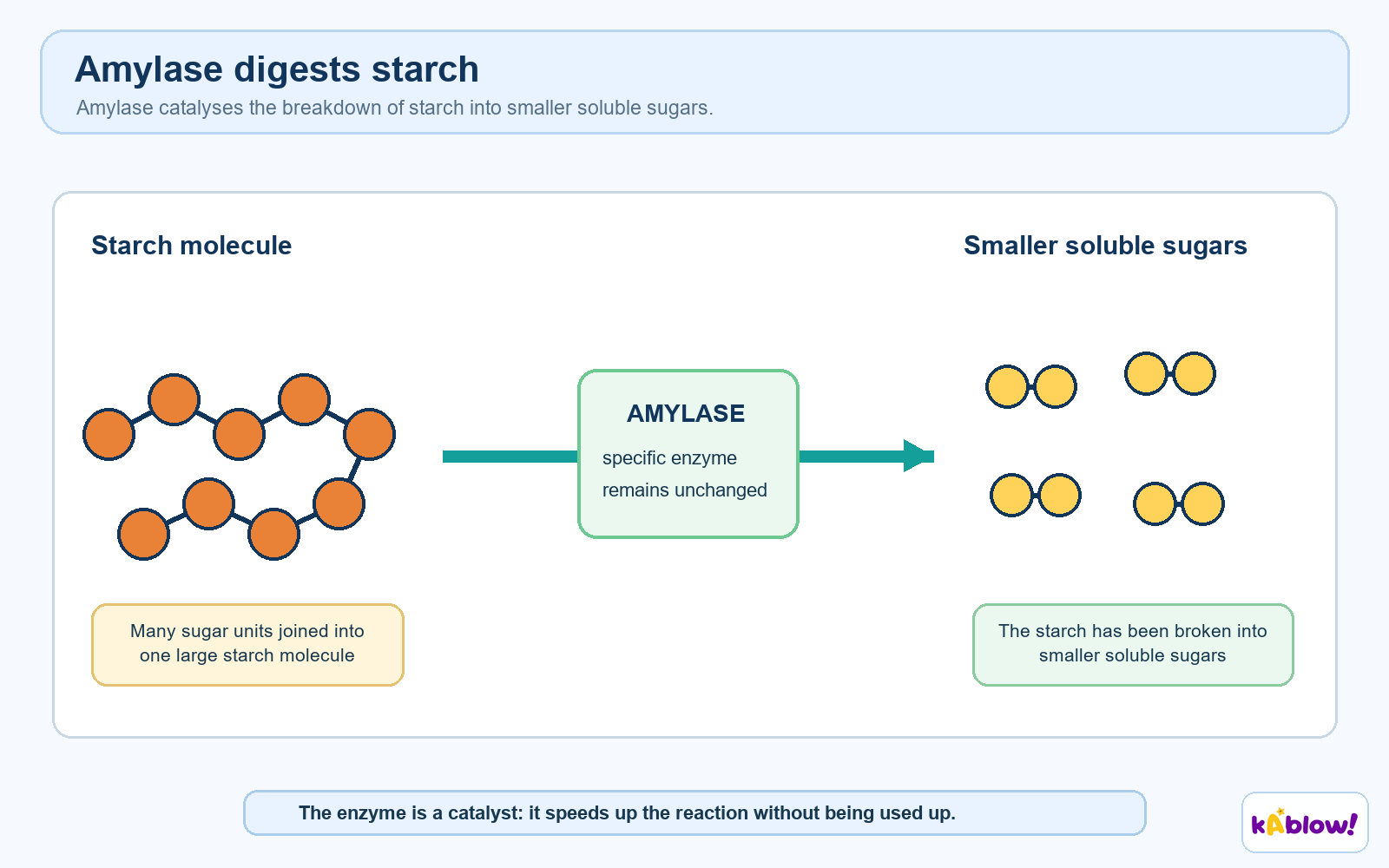
- Amylase (mouth & pancreas) digests starch → maltose; maltase on small intestine epithelium digests maltose → glucose.
- Proteases (pepsin in stomach, trypsin from pancreas) digest proteins → amino acids.
- Lipase (pancreas) digests lipids → fatty acids + glycerol.
- Enzymes are specific; each catalyses one type of reaction.
The digestion of starch
Bile & Emulsification
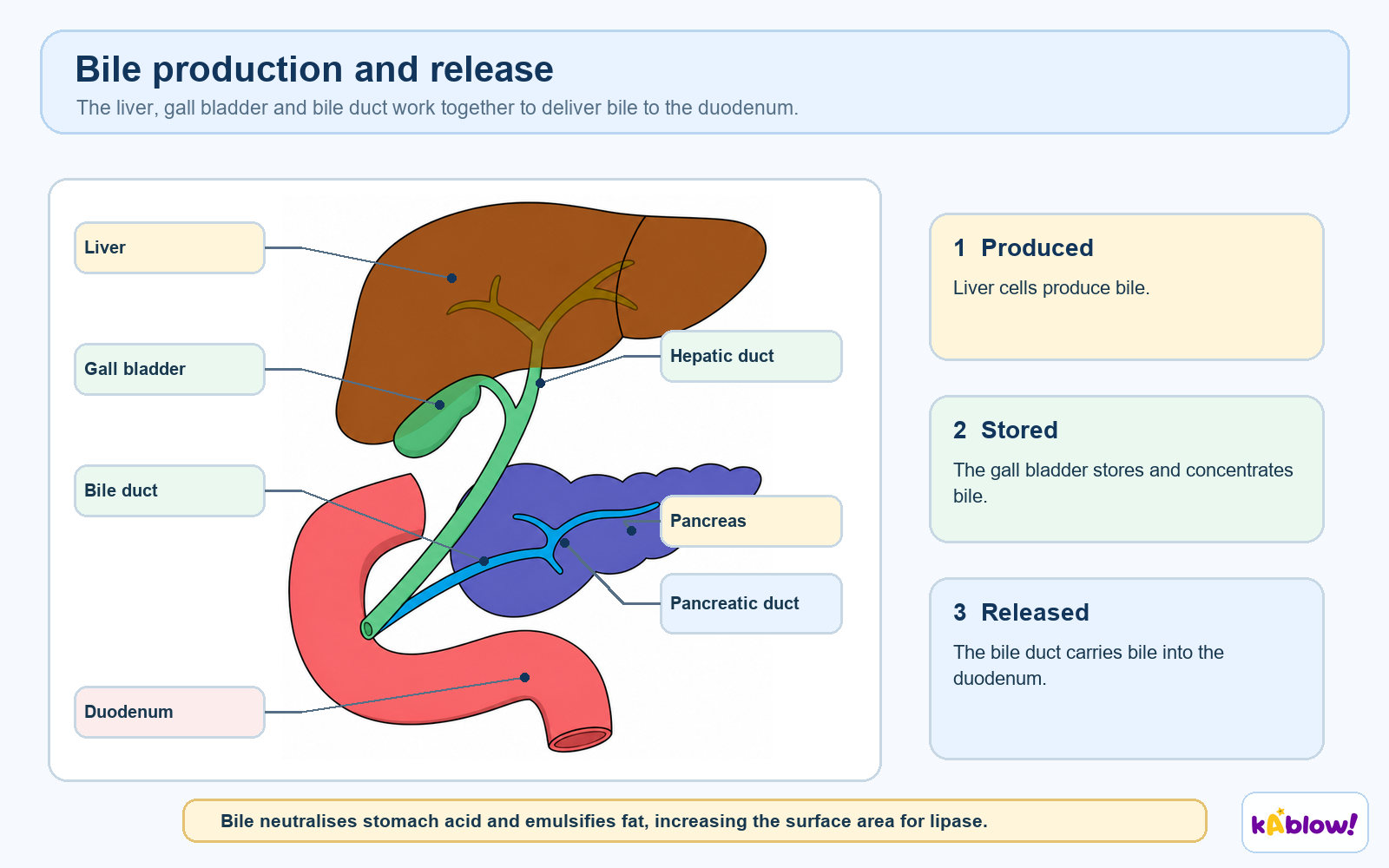
- Bile is produced by the liver, stored in the gall bladder, and released into the duodenum.
- Bile is alkaline – neutralises stomach acid for enzymes in small intestine.
- Bile emulsifies fats (physical digestion) into smaller droplets, increasing surface area for lipase.
- Emulsification is mechanical, not chemical – no bonds are broken.
Bile production and secretion
Absorption & the Small Intestine
- Absorption of glucose, amino acids, vitamins, minerals and water occurs mainly in the small intestine (ileum).
- Fatty acids and glycerol are absorbed into lymph via lacteals.
- Most water (≈80%) is absorbed in the small intestine; the rest in the colon.
- Assimilation – absorbed nutrients are taken up by body cells for growth, repair and energy.
Adaptations of the Small Intestine (Extended)
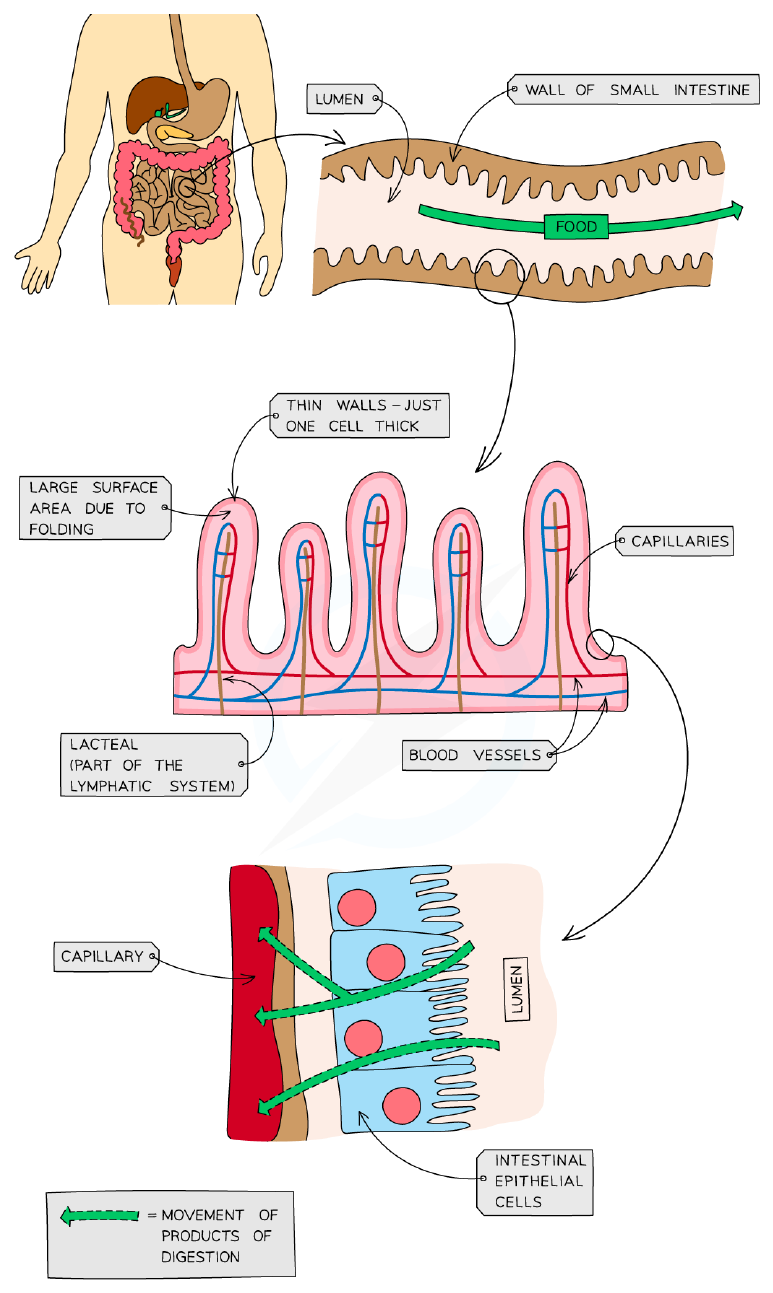
- The ileum is long and has a folded surface with millions of villi (finger-like projections).
- Microvilli on villi further increase surface area.
- Villus wall is one cell thick – short diffusion distance.
- Rich blood capillary network transports glucose and amino acids; lacteal transports fatty acids and glycerol.
Adaptations of the small intestine
Slide
Sign up free to view the lesson slides
Step through every slide for this topic — plus flashcards and revision notes — with a free account.
Câu hỏi luyện tập
Xem trước miễn phí — 8 trên 43 câu hỏi. Đăng ký để xem tất cả.
1.Which of the following is a correct function of bile?
Medium- ATo emulsify proteins
- BTo neutralise the alkaline conditions of food entering the duodenum
- CTo provide enzymes for the digestion of lipids
- DTo increase the surface area of lipids for digestion
2.In which part of the alimentary canal does most of the absorption of water take place?
Easy- AColon
- BOesophagus
- CSmall intestine
- DStomach
3.Which of the following best describes the function of vitamin D in a human?
Medium- AVitamin D forms an essential part of collagen protein which is the main component of skin, hair and nails.
- BVitamin D is needed for strong ligaments and a deficiency may cause ligament tears.
- CVitamin D assists with the absorption of calcium and is therefore needed to build strong bones and teeth.
- DVitamin D is an important component of haemoglobin which is needed for the transport of oxygen to the cells.
4.Which disease can be caused by a lack of vitamin C?
Easy- AAIDS
- BCoronary heart disease
- CRickets
- DScurvy
5.What are the products when proteins are broken down?
Easy- AAmino acids
- BFatty acids
- CGlycerol
- DSimple sugars
6.What is the dietary importance of fibre in humans?
Easy- AFor growth and repair of cells
- BTo help food move through the alimentary canal
- CTo maintain strong bones and teeth
- DTo provide energy
7.Which of the following is a correct cause and effect?
Medium- AIron deficiency causes brittle bones (rickets)
- BIron deficiency causes anaemia
- CVitamin D deficiency causes anaemia
- DVitamin D deficiency caused by lack of red meat causes brittle bones
8.Which row correctly matches the enzyme to what it breaks down?
Medium- AAmylase breaks down fats
- BMaltase breaks down starch
- CPepsin breaks down starch
- DTrypsin breaks down protein
Unlock all 43 questions & more
Tạo tài khoản miễn phí để xem mọi câu hỏi, slide, thẻ ghi nhớ và ghi chú ôn tập cho chủ đề này.